Executive Overview
For decades, the concept of the "Song of the Summer" acted as a cultural anchor. From the hypnotic, nationwide line-dancing prompted by Los del Río’s "Macarena" in the mid-1990s to the sun-drenched dominance of Katy Perry’s own "California Gurls" in 2010, popular culture was periodically unified by a singular, inescapable anthem. These tracks served as the auditory backdrop to barbecues, road trips, and beach vacations, creating a shared generational memory across demographics and geographic borders.
Yet, in 2026, that unified monoculture is all but dead. Contemporary media consumption is radically fractured, partitioned by hyper-personalized algorithms, niche digital subcultures, and sprawling demographic divides. Today, it is functionally impossible to identify a single track that commands the universal attention of an entire country. Instead, what defines the modern "Song of the Summer" is a patchwork phenomenon dictated by regional nuances, localized trends, and demographic micro-communities.
In this decentralized landscape, TikTok remains one of the few platforms powerful enough to simulate a collective cultural experience. Rather than propelling an entirely new, freshly minted pop track to the top of the charts, the platform’s viral machinery has achieved something far more fascinating: the retroactive coronation of a fifteen-year-old deep cut.
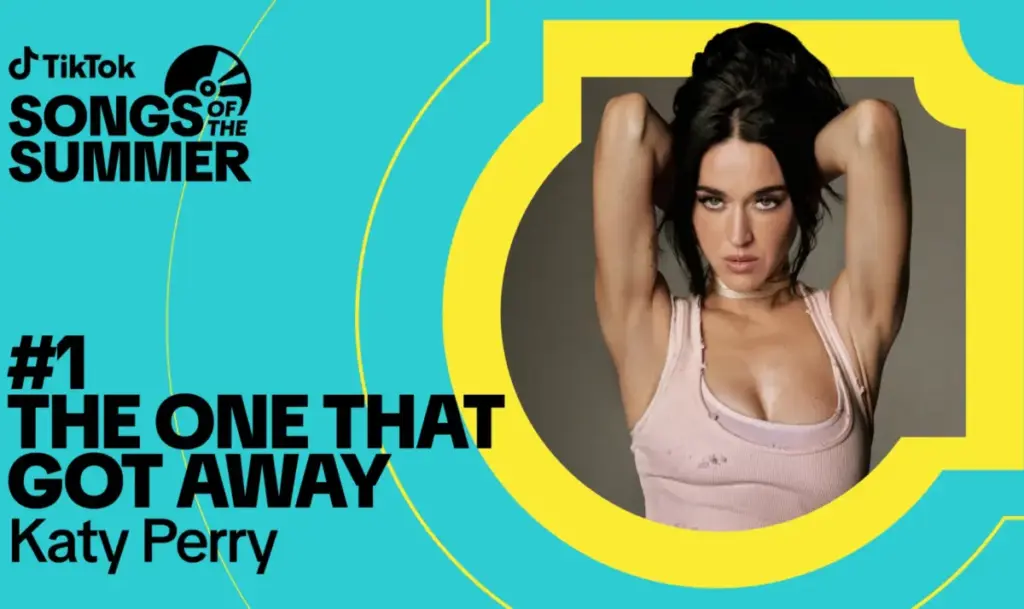
According to TikTok’s official global and U.S. metrics, the undisputed Song of the Summer for 2026 is Katy Perry’s "The One That Got Away"—a melancholic ballad originally released in 2011 as part of her diamond-certified Teenage Dream era. Racked up across 42 million user-generated videos and pulling in an astronomical 55 billion views, the track’s unexpected resurgence highlights a broader, defining cultural current of the mid-2020s: Gen Z’s unquenchable thirst for historical escapism through hyper-curated nostalgia.
Detailed Chronology: From 2011 Afterthought to 2026 Megahit
To understand the improbable triumph of "The One That Got Away" in 2026, one must first look back at its humble origins. When Perry released Teenage Dream in August 2010, it spawned a record-tying run of five Billboard Hot 100 number-one singles, matching Michael Jackson’s Bad. The era was defined by explosive, technicolor party anthems like "California Gurls," "Teenage Dream," "Firework," "E.T.," and "Last Friday Night (T.G.I.F.)."
Amidst these club-ready juggernauts sat "The One That Got Away," released as the album’s sixth single in late 2011. While it performed respectably—peaking at number three on the Billboard Hot 100—it was largely overshadowed by the sheer commercial hyper-velocity of its predecessors. It was viewed at the time as a competent, emotional palette cleanser rather than a defining cultural milestone.
Fast forward fifteen years. The pop landscape of 2026 is unrecognizable compared to the early 2010s. The traditional album rollout has been upended by short-form video discovery loops, where music is frequently resurrected, chopped up, and repurposed years—or decades—after its initial commercial window has closed.
The revival of older tracks on TikTok is not entirely unprecedented. Just last year, the platform served as a crucible for retroactive hits, most notably when viral posts detailing vacations gone terribly wrong thrust Jess Glynne’s 2015 uplifting single "Hold My Hand" back into the global spotlight. Fueled by the darkly comedic "Jet2holidays" meme, Glynne’s track became the defining audio export of the 2025 dog days, proving that the platform possessed an insatiable appetite for dusting off forgotten mid-2010s catalog music.
However, the 2026 phenomenon surrounding Katy Perry’s ballad dwarfs previous viral revivals. Rather than serving merely as a background track for a passing meme, "The One That Got Away" became a blank canvas for Gen Z creators processing themes of lost youth, changing relationships, and the passage of time. Its lyrics—evoking a youthful romance abruptly cut short—struck a profound, resonant chord with a generation grappling with post-pandemic anxieties and a relentless acceleration of digital time. By mid-summer 2026, the track had thoroughly infiltrated the platform’s algorithm, transitioning from a nostalgic curiosity into an inescapable cultural tidal wave.
Supporting Context & Metrics: The Anatomy of a Viral Revival
The sheer scale of "The One That Got Away" renaissance is staggering when quantified through platform analytics. TikTok’s official 2026 Song of the Summer data reveals metrics that rival, and in some cases exceed, the original chart-topping runs of contemporary releases:
- Video Creations: The track was utilized in over 42 million distinct user-generated videos globally during the peak summer months.
- Viewership: Those 42 million creations compounded to generate an astonishing 55 billion collective views, making it one of the most-watched audio trends in the platform’s history.
- The Nostalgia Ecosystem: The song did not chart in a vacuum. TikTok’s broader Song of the Summer rundown reads like a sonic time capsule, populated by legacy cuts such as Lenny Kravitz’s smooth 1991 groove "It Ain’t Over ’Til It’s Over" and Mac Miller’s enduring cult classic "Cinderella."
Even brand-new releases captured this retrospective sentiment. Noah Kahan’s wistful acoustic offering "End of August" mirrored the melancholic mood of late-summer transitions, while Shakira’s "Dai Dai" drew explicit sonic comparisons to her 2010 FIFA World Cup anthem "Waka Waka," a deliberate nod to a simpler, more globally unified pop-cultural era.
This heavy reliance on the past points to a profound psychological shift in how younger demographics consume media. Nostalgia, once sociologically mapped as the exclusive psychological real estate of Millennials longing for the 1990s and early 2000s, has been aggressively adopted and redefined by Gen Z. Twentysomethings today are openly romanticizing the early-to-mid 2010s—the "2016 vibes" trend being a prime example—infusing their digital identities, fashion choices, and entertainment consumption with markers of that decade.
When Gen Z logs onto TikTok, they are not merely seeking entertainment; they are actively searching for escapism. In an era defined by economic instability, rapid technological disruption, and relentless global news cycles, looking backward offers a psychological sanctuary. Music like "The One That Got Away" provides an emotional proxy for a simpler time, allowing younger users to project memories they may not have even personally experienced onto a cinematic, universally understood pop melody.
Official Statements and Industry Reactions
The unexpected second life of her 2011 track has not gone unnoticed by Katy Perry herself. Speaking on the global resurgence, the pop icon expressed profound astonishment at how organic discovery continues to reshape the lifecycle of recorded music.
"It’s surreal to see The One That Got Away having this moment, all these years later," Perry shared in an official statement released via TikTok. "The thing about music is that you never really know where a song is going to end up, or when someone is going to find it. From seeing it being chosen in the ‘choose your own adventure’ section of my Lifetimes Tour concert film to seeing people discover it on TikTok and make it part of their own stories has been really special to watch."
Industry analysts note that Perry’s experience points to a broader structural transformation in the music business. Catalog exploitation is no longer just a financial strategy for legacy acts looking to sell their publishing rights; it is an active, dynamic ecosystem where platforms like TikTok serve as primary A&R (Artists and Repertoire) scouts. Songs are no longer subjected to a rigid three-month marketing campaign followed by permanent retirement. Instead, they exist in a permanent state of potential reinvention, waiting for the right algorithmic spark to catapult them back to the cultural forefront.
Furthermore, artists are learning to lean into these unexpected trajectories. By integrating the organic fan response into her live performances—such as the interactive "choose your own adventure" segments on her Lifetimes Tour—Perry successfully bridged the gap between her historical catalog and her current artistic output, turning a digital meme into a tangible, live-concert experience.
Future Outlook: The Shared Spirit of a Fractured Culture
As the dust settles on the summer of 2026, music critics and cultural commentators are left to reevaluate what the "Song of the Summer" actually means in an era devoid of monocultural consensus.
The verdict is clear: while the monolithic radio hit that forces an entire nation to dance to the exact same tune may be a relic of the past, the collective emotional spirit that powered those moments has not vanished. It has simply mutated. Today’s pop culture is driven not by a single song, but by shared moods, collective emotional states, and synchronized digital behaviors.
When tens of millions of users across the globe simultaneously turn to a fifteen-year-old Katy Perry ballad to soundtrack their summer heartbreaks, road trips, and lazy afternoons, they are participating in a decentralized mass ritual. They may not be listening to the exact same radio station, and they may be consuming content through hyper-customized algorithmic funnels, but they are undeniably sharing a unified cultural heartbeat.
The death of the monoculture has birthed something far more complex: a dynamic, nostalgia-driven digital commons where the past is constantly re-engineered to make sense of the present. And while Katy Perry likely never anticipated that "The One That Got Away" would define the dog days of 2026, she—and the millions of Gen Z creators singing along to her lyrics—will undoubtedly take a little extra shine from the moment.