Executive Overview
The terrain of modern hip-hop is littered with fractured alliances, but few relationships have mirrored the volatile emotional pendulum of the dynamic between Scott "Kid Cudi" Mescudi and Kanye "Ye" West. For nearly two decades, these two visionaries functioned as twin pillars of a musical renaissance, shaping the sonic architecture of 21st-century rap and alternative culture. Yet, their bond has equally been defined by high-profile public fractures, ideological clashes, and deeply personal betrayals.
When Kid Cudi famously declared in a 2008-era post-breakup trajectory that it would take "a motherf***ing miracle" and a monastic lifestyle conversion for him to ever reconcile with West, few observers expected that prophecy to unravel quite the way it did. Years later, following a high-profile reunion at West’s homecoming concert in Chicago, the music industry watched in a mixture of bewilderment and cynicism. Critics and cultural commentators—most notably hip-hop media personality Peter Rosenberg—quickly voiced their disappointment, accusing Cudi of enabling West’s well-documented history of erratic, offensive, and destructive public behavior.
Instead of retreating, Cudi drew a stark, uncompromising line in the sand. In a series of pointed public statements, the Cleveland-born polymath defended his renewed brotherhood with West, invoking the intimate parameters of a relationship forged over nearly twenty years. Cudi’s defense was not merely an emotional knee-jerk reaction; it was a nuanced assertion of personal boundaries, historical context, and the complex mechanics of accountability among lifelong friends.
This report provides an exhaustive examination of the reconciliation between Kid Cudi and Kanye West. We analyze the historical trajectory of their partnership, the breaking point that nearly destroyed it permanently, the structural realities of public outrage versus private loyalty, and what this high-profile reunion signals for the psychological and creative future of two of rap’s most defining artists.
Detailed Chronology: From Proteges to Adversaries and Back
To understand the weight of Kid Cudi and Kanye West’s recent reunion, one must chart a timeline that spans almost two decades of creative symbiosis, professional friction, and ideological divergence.
Phase I: The G.O.O.D. Music Golden Era (2008–2012)
The partnership began when Kanye West recognized the raw, melancholy brilliance of a young Scott Mescudi, signing him to his G.O.O.D. Music imprint via Def Jam. Cudi’s distinct vocal hums, existential lyricism, and genre-blurring aesthetics fundamentally altered West’s creative trajectory, most notably on West’s autotune-drenched masterpiece 808s & Heartbreak (2008), where Cudi co-wrote several tracks and lent his haunting vocals.
During these formative years, the duo operated as creative soulmates. Cudi’s debut studio album, Man on the Moon: The End of Day (2009), bore the imprint of West’s mentorship, establishing Cudi as a trailblazer who could merge hip-hop with indie rock sensibilities and deep psychological vulnerability. However, even in these early stages, underlying tensions existed. Cudi’s fiercely independent spirit frequently clashed with the corporate machinery and dominant personality of West, leading to Cudi’s eventual departure from G.O.O.D. Music in 2013. Despite the formal business split, their creative interdependence remained an unwritten rule of modern music; whenever one artist sought to plumb the depths of emotional despair, the other was never far away.
Phase II: Public Rifts and the "Miracle" Ultimatum (2016–2022)
As West’s public persona became increasingly volatile and politically charged in the late 2010s, strains within the friendship began to bleed into the public eye. In 2016, Cudi took to social media to air grievances against West and Drake, calling them out for lacking authenticity and turning their backs on him when he was struggling with mental health issues. West, performing in Sacramento during his Saint Pablo Tour, famously retaliated, telling Cudi to respect his elders and boasting about his own industry dominance—though he extended an olive branch shortly after upon learning of Cudi checking himself into rehab for depression and suicidal urges.
The temporary peace shattered permanently in early 2022. When West launched a public campaign targeting Kim Kardashian and her then-boyfriend Pete Davidson—with whom Cudi shared a close friendship—West retaliated against Cudi for his loyalty to Davidson. West publicly removed Cudi from his Donda 2 album, declaring that Cudi would not be featured due to his association with Davidson.
The betrayal prompted Cudi to draw a hard line. In a scathing profile with Esquire magazine later that year, Cudi closed the door on the relationship completely. He famously distanced himself from the transactional nature of mainstream rap beefs, explicitly differentiating himself from artists like Drake, who frequently engaged in cyclical public feuds and reconciliations. Cudi asserted that his word was absolute:
*"With all due respect, I’m not Drake, who’s about to take a picture with him next week and be friends again, and their beef is squashed. That’s not me. What I say, I mean. I will be done with you… It’s gonna take a motherf**ing miracle for me and that man to be friends again. I don’t see it happening. He gon’ have to become a monk."
Phase III: The Chicago Homecoming and the Realignment (2024–Present)
For four years, the silence between the two artists remained absolute. Cudi focused on his multifaceted career—launching his animated Netflix special Entergalactic, starring in major Hollywood films, and touring his musical projects. Meanwhile, West continued to court catastrophic controversy, culminating in a series of antisemitic tirades, erratic business ventures, and public alienation from much of the entertainment industry.
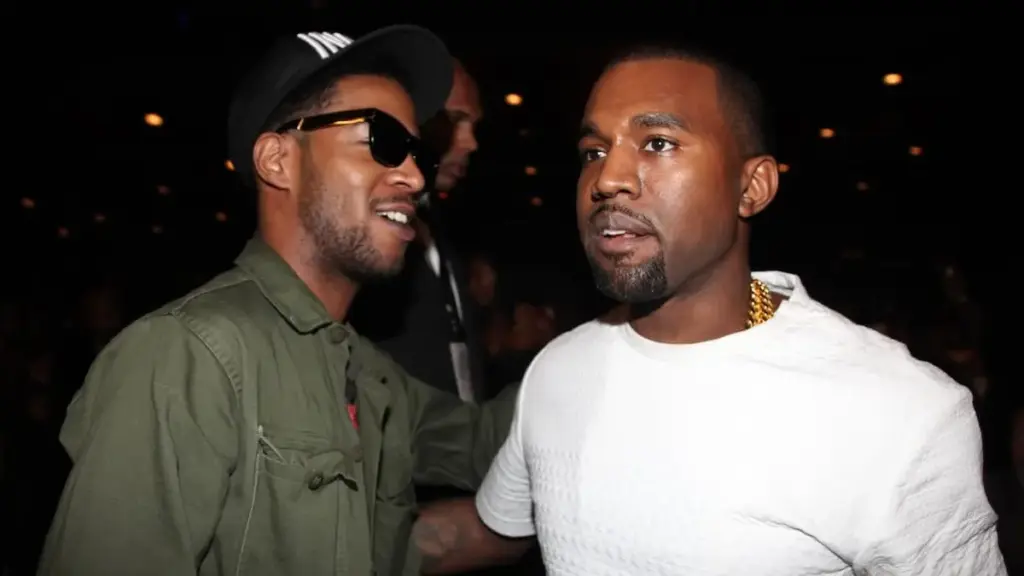
Yet, human dynamics in the upper echelons of celebrity often defy public ultimatums. The "miracle" Cudi once deemed nearly impossible materialized quietly behind the scenes. Following private conversations, accountability checks, and observed behavioral shifts, Cudi appeared alongside West at his second homecoming listening event in Chicago. The reunion sent shockwaves through social media, thrilling nostalgic fans while immediately triggering intense backlash from cultural critics who viewed Cudi’s association with West as an endorsement of his past hateful rhetoric.
Supporting Context & Metrics: Navigating Public Outrage vs. Private Brotherhood
The public reaction to Cudi and West’s reconciliation highlights a growing tension in contemporary culture: the friction between public morality and private human relationships. In an era defined by cancel culture, parasocial accountability, and ideological purity tests, audiences often expect public figures to sever ties instantly with individuals who commit social or moral infractions.
When Cudi embraced West in Chicago, media figures and commentators rushed to condemn the move. Peter Rosenberg, a prominent voice in hip-hop radio and media, voiced public disappointment, echoing the sentiment of many fans who felt that Cudi—an artist celebrated for championing mental health advocacy and progressive values—was compromising his integrity by forgiving a figure who had weaponized hate speech and anti-Semitic rhetoric.
Cudi’s response, however, exposed a philosophical chasm between how the public views public figures and how those figures experience their own interpersonal realities.
The Metrics of Longevity and Loyalty
To contextualize Cudi’s defense, one must examine the timeline of their shared history. For nearly two decades, Cudi and West navigated the brutal landscape of the music industry together. They witnessed the rise of digital streaming, the evolution of social media culture, and the crushing pressures of global fame.
In psychological terms, relationships forged in the crucible of early-career struggle often develop trauma bonds and familial dependencies that transcend standard friendships. When Cudi asserts that West is "family," he is invoking a category of relationship that standard public accountability metrics fail to capture. While the public can cancel, boycott, or disengage from a public figure with the click of a button, a person cannot easily erase twenty years of shared creative blood, sweat, and emotional survival.
The Accountability Factor
Crucially, Cudi’s defense of West was not an unconditional blank check. In his statements, Cudi explicitly highlighted that his return to West’s life was contingent upon real, substantive change and personal accountability:
- Behavioral Assessment: Cudi noted that his private interactions with West revealed a man who had returned to the grounded, visionary state he knew when he was first signed to G.O.O.D. Music.
- Mental Health Context: Cudi acknowledged West’s well-documented struggles with mental health—a topic Cudi has championed passionately throughout his own career. By framing West’s past outbursts through the lens of psychological distress, Cudi invoked the principle of grace.
- Direct Confrontation: Unlike enablers who simply look the other way, Cudi asserted that he was "the hardest on him out of anybody" and actively "held him accountable" for his actions, resulting in a sincere apology from West.
Official Statements and Social Media Discourse
The public exchange between Kid Cudi and media personality Peter Rosenberg on X (formerly Twitter) provides a fascinating primary-source window into the ideological battleground surrounding the reconciliation.
Addressing Rosenberg directly, Cudi wrote:
"I understand ur frustration Peter, I fcks w u, but I dont really care if ur disappointed in me. That man is my brother. U dont have a relationship w him like I do. Damn near 2 decades of art and friendship. U not family. So I get it."*
Cudi elaborated further on the current state of West’s mental health and the internal work that facilitated their reunion:
"Ive been around Ye, and I can honestly say talking to him now is how it use to be when I first signed to him, but even better. He was dealing w mental health struggles for years and now hes good. Everyone deserves some grace when they family. I was the hardest on him out of anybody. I held him accountable. He apologized and it was sincere. But like I said, u not family so I get it."
These statements underscore a vital distinction in modern cultural discourse: the difference between parasocial intimacy and authentic interpersonal connection. Rosenberg and the broader public operate from a place of parasocial observation—reacting to the public-facing, highly publicized misdeeds of Kanye West. Cudi operates from a place of direct interpersonal history—navigating the messy, complicated reality of a human being he has known, loved, and fought with for the majority of his adult life.
Future Outlook: Creative Horizons and Cultural Implications
As the dust settles on Kid Cudi and Kanye West’s reunion, the broader cultural and musical implications of their renewed alliance remain a subject of intense speculation across the entertainment industry.
1. The Potential for Musical Collaboration
The most immediate question on the minds of hip-hop aficionados is whether this reconciliation will translate back into the recording studio. The creative synergy between Cudi and West has historically yielded some of the most influential music of the 21st century. Whether through uncredited vocal contributions, collaborative project revivals (such as a potential spiritual successor to their acclaimed 2018 Kids See Ghosts project), or mutual mentorship, a united front between Cudi and West injects a powerful creative current back into the rap landscape.
2. The Limits of Public Forgiveness
Cudi’s staunch defense of West also forces a broader cultural reckoning regarding the limits of public forgiveness. In an era where redemption arcs are heavily scrutinized, Cudi’s position suggests that true rehabilitation and reconciliation cannot happen solely on a public stage via curated PR apologies. Instead, true accountability often requires the hard, ungllamorous labor of private friends who are willing to call out destructive behavior, demand genuine introspection, and—when true change is demonstrated—extend the grace of forgiveness.
3. Personal Boundaries and Public Perception
For Kid Cudi, navigating this terrain requires an extraordinary balancing act. As an artist who has built much of his contemporary brand on radical honesty, vulnerability, and mental health advocacy, aligning himself with an unapologetically polarizing figure like Kanye West carries real reputational risk. Yet, by owning his decision with absolute clarity and unapologetic conviction, Cudi has established a firm boundary between his personal loyalties and the expectations of the public square.
Ultimately, the reconciliation between Kid Cudi and Kanye West serves as a reminder that human relationships are rarely black and white. Beneath the sensationalized headlines, viral video clips, and internet outrage lies the messy, complex reality of two veterans of the music industry finding their way back to one another through the fog of time, trauma, and enduring brotherhood.