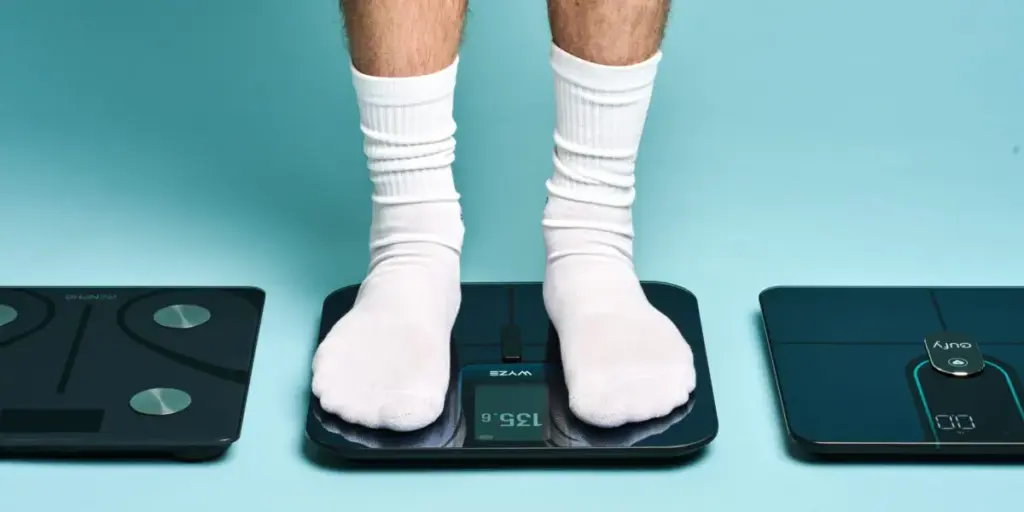
In the modern landscape of personal fitness and preventative healthcare, the humble bathroom scale has undergone a radical metamorphosis. No longer limited to delivering a single, anxiety-inducing numeric figure representing gravity’s pull on total mass, today’s digital smart scales function as sophisticated bio-impedance laboratories. These devices bridge the gap between clinical diagnostics and domestic convenience, offering an array of metrics that span body composition, cardiovascular health, and autonomic nervous system activity.
As cardiovascular disease remains a leading global health crisis—with nearly half of all American adults projected to develop some form of heart condition—the democratization of health data has never been more critical. Preventative healthcare is shifting away from reactive medicine and toward continuous self-monitoring. Smart scales now serve as early-warning systems, tracking visceral fat, resting heart rates, vascular age, and even performing electrocardiograms (ECGs) from the comfort of a tiled bathroom floor.
However, the market is currently saturated with options varying wildly in price, capability, and ecological integration. From high-end, medically certified flagships costing upwards of $400 to ultra-affordable, Bluetooth-enabled entry models priced below $25, choosing the right smart scale requires a nuanced understanding of metrics, accuracy variances, and software ecosystems. This report delivers an exhaustive analysis of the top smart scales on the market, evaluating their precision, feature sets, app accessibility, and value proposition for the dedicated fitness enthusiast and health-conscious consumer alike.
Detailed Chronology and Technological Evolution
To understand how we arrived at the current era of multi-frequency bioelectrical impedance analysis (BIA) and integrated ECG monitoring, it is helpful to trace the technological progression of home body-fat measurement.
The Analog Era to Early Digital (Pre-2010s)
For generations, personal weight measurement relied purely on mechanical spring-loaded or balanced-beam scales. These devices measured gross mass with little regard for composition. In the late 20th century, the introduction of single-frequency BIA scales allowed manufacturers to pass a low, imperceptible electrical current through the lower extremities to estimate total body water and, by extension, body fat percentage. However, these early models were notoriously plagued by hydration fluctuations, skin temperature variables, and poor algorithmic modeling, leading to high margins of error.
The Rise of the Connected Ecosystem (2010–2018)
The proliferation of smartphones catalyzed the birth of the "smart scale." Brands like Withings introduced Wi-Fi and Bluetooth connectivity, allowing users to automatically sync their weight and BMI to cloud-based apps. This eliminated the need for manual record-keeping. Platforms like Apple Health and Google Fit emerged as centralized hubs, encouraging tech companies to expand their hardware metrics to include muscle mass, bone density, and visceral fat ratings.
The Clinical-Grade Domestic Era (2018–Present)
The modern smart scale market is defined by convergence with clinical-grade diagnostics. The integration of handlebar attachments, multi-frequency currents, and FDA-cleared ECG sensors transformed bathroom scales into holistic wellness stations. Companies began utilizing eight-point or dual-frequency sensors to map segmental fat distribution—distinguishing between arm, leg, and torso fat storage. Furthermore, the advent of rechargeable lithium-ion batteries, high-resolution color displays, and seamless multi-device cross-compatibility (linking scales directly with wearables like the Oura Ring, Apple Watch, and Garmin ecosystem) has elevated these tools from passive monitoring devices to active lifestyle coaches.
Supporting Context, Product Analysis, and Metrics
Evaluating the current market requires a rigorous breakdown of the leading contenders across various price points and use cases. Below is an in-depth analysis of the top-performing smart scales evaluated for accuracy, feature depth, and software ecosystem integration.
For users seeking the absolute pinnacle of domestic health data insights, the Withings Body Scan stands unmatched. Widely regarded as the "Rolls-Royce" of smart scales, it goes far beyond standard body composition by incorporating a retractable handlebar equipped with advanced clinical-grade sensors.
Its standout feature is the 6-lead ECG capability. Given that nearly half of all Americans will develop some form of cardiovascular disease, having a reliable mechanism to capture early warning signs of arrhythmias—such as atrial fibrillation—at home represents a monumental leap in preventative care. Beyond cardiology, the scale delivers weight readings accurate to 50 grams (a mere 0.05 percent variance for a 200-pound individual) driven by a four-sensor platform, alongside an impressive 3 to 5 percent accuracy margin for body fat percentage.
Encased in a sleek, premium tempered-glass design that syncs seamlessly with Apple Health and Google Fit via the Withings Health Mate app, the Body Scan justifies its steep investment for those treating personal longevity as a priority.
2. Hume Body Pod: The Data-Heavyweight Champion
Price: $229
Connectivity: Bluetooth
Key Metrics: Weight, BMI, Body Fat Percentage, Muscle Mass, Bone Mass, Protein Mass, Body Water Percentage, Visceral Fat, BMR, Metabolic Age, Subcutaneous Fat, Skeletal Muscle, Lean Body Mass, Fat-Free Body Weight, Body Score, Segmental Fat/Muscle Analysis (arms, legs, torso).
The Hume Body Pod is engineered for the data-obsessed athlete who wants an exhaustive breakdown of every biological compartment. Backed by extensive celebrity and athletic endorsements, this scale utilizes eight precision sensors to yield an astonishing 45 distinct metrics.
What sets the Body Pod apart is its segmental fat and muscle analysis. Traditional scales provide a generalized body fat percentage, but Hume’s eight-point system isolates specific regions—separating the left arm, right arm, torso, left leg, and right leg. This allows users to identify muscular imbalances or localized fat retention that would otherwise remain masked. According to brand studies, the Body Pod boasts a 98 percent accuracy correlation when compared against clinical DEXA (Dual-Energy X-ray Absorptiometry) scans. Furthermore, its native integration with leading wearables like the Apple Watch, Oura Ring, and Fitbit makes it an exceptional ecosystem anchor.
3. Renpho Smart Scale: The Budget-Friendly Pioneer
Price: $19.99
Connectivity: Bluetooth
Key Metrics: Weight, Muscle Mass, Body Fat, Subcutaneous Fat, BMR, Body Water, Visceral Fat, Skeletal Muscle, Bone Mass, Protein, Fat-Free Body Weight, BMI, Metabolic Age.
A common misconception in the consumer technology space is that advanced capabilities require a triple-digit price tag. Renpho’s Smart Scale shatters this paradigm, offering a robust suite of 13 tracked metrics for less than the cost of a casual lunch.
Despite its ultra-accessible price point, the Renpho scale does not compromise on ecosystem compatibility. It syncs smoothly with universal health tracking platforms including Apple Health, Samsung Health, MyFitnessPal, and Fitbit. It supports an unlimited number of user profiles—making it ideal for large households or communal living situations—and tracks core metrics with commendable reliability using three standard AAA batteries. For users wanting a modest step-up, Renpho also offers premium iterations like the MorphoScan Nova, while maintaining an aggressive pricing strategy that undercuts major market competitors.
4. Wyze Smart Scale: The Connected Smart Home Hub
Price: $38
Connectivity: Bluetooth
Key Metrics: Weight, Body Fat Percentage, Heart Rate, Muscle Mass, BMI, Body Water Percentage, Lean Body Mass, Bone Mass, Protein Percentage, Visceral Fat, BMR, Metabolic Age.
Known primarily for dominating the smart home security camera and robotic vacuum markets, Wyze has successfully leveraged its software infrastructure to produce a top-tier smart scale. The defining advantage of the Wyze Smart Scale is its unified application interface.
For households already utilizing Wyze security cameras, smart lighting, or vacuums, adding the scale to the ecosystem requires zero new app learning curves. The Wyze app serves as a centralized dashboard tracking 12 essential health metrics over time, with effortless export capabilities to Apple Health, Google Fit, and Fitbit. Supporting up to eight distinct user profiles and featuring heart rate monitoring alongside standard body composition diagnostics, it delivers impressive functionality wrapped in a clean, minimalist, and deeply affordable package.
5. Garmin Index S2: The Endurance Athlete’s Companion
Price: $199.99
Connectivity: Wi-Fi and Bluetooth
Key Metrics: Weight, BMI, Body Fat Percentage, Skeletal Muscle Mass, Bone Mass, Body Water Percentage.
For dedicated runners, cyclists, and triathletes already entrenched in the Garmin ecosystem, the Garmin Index S2 is a natural hardware extension. While it tracks a relatively conservative six metrics, its value proposition lies entirely within the Garmin Connect platform.
The Index S2 automatically syncs morning weigh-ins alongside sleep scores, training loads, and VO2 max data into a single, comprehensive dashboard. This allows endurance athletes to monitor how heavy training blocks impact hydration, weight, and muscle mass over micro- and macro-cycles. Additionally, the Garmin community network enables users to share stats and milestones with friends and family, gamifying fitness goals and fostering social accountability.
6. Homedics Smart Glo Scale: Simplicity and Streamlined Tracking
Price: $55.99
Connectivity: Bluetooth
Key Metrics: Weight, BMI, Body Fat Percentage, Skeletal Muscle Mass, Bone Mass, Body Water Percentage, Metabolic Age.
For consumers who find modern health technology intimidating or overly complex, the Homedics Smart Glo Scale offers a refreshing, friction-free user experience. Shipped with batteries pre-taped inside the compartment, setup requires little more than unboxing and stepping onto the glass platform.
The accompanying Homedics Scales app provides intuitive data visualization, complete with trend graphs that make tracking fluctuations in skeletal muscle mass or body fat straightforward. Crucially, the app features a frictionless "guest mode," allowing visitors to step on the scale and record measurements without forcing them to create permanent user accounts or memorize login credentials. Seamlessly syncing with Apple Health, Google Fit, and Fitbit, it strikes an ideal balance between smart functionality and analog simplicity.
Comparative Specifications Table
Product Name
Price Range
Primary Connectivity
Key Metrics Count
Standout Feature
App Ecosystem
Withings Body Scan
$399.00
Wi-Fi / Bluetooth
10+ (incl. ECG, Vascular Age)
6-lead ECG & Handlebar Sensors
Withings, Apple Health, Google Fit
Hume Body Pod
$229.00
Bluetooth
45
Segmental Fat/Muscle Analysis
Hume+, Apple Health, Oura, Fitbit
Renpho Smart Scale
$19.99
Bluetooth
13
Incredible Price-to-Performance
Renpho, Apple Health, MyFitnessPal
Wyze Smart Scale
$38.00
Bluetooth
12
Unified Smart Home App Hub
Wyze, Apple Health, Google Fit
Garmin Index S2
$199.99
Wi-Fi / Bluetooth
6
Garmin Connect Ecosystem Sync
Garmin Connect, Apple Health
Homedics Smart Glo
$55.99
Bluetooth
7
Hassle-Free Guest Mode
Homedics, Apple Health, Fitbit
Official Industry Insights and Expert Perspectives
As the line between consumer electronics and medical telemetry continues to blur, fitness experts and medical professionals emphasize the importance of context when interpreting smart scale data.
Charles Thorp, Fitness and Reviews Editor at Men’s Health and a NASM-certified trainer who has spent years collaborating with elite athletes across the NFL, UFC, and Olympic training centers, notes that bio-impedance metrics should be viewed as directional trends rather than absolute clinical truths.
"When working with high-performance individuals, daily weight and body composition fluctuations are normal and often driven by glycogen storage, sodium intake, and hydration status rather than sudden tissue loss or gain," Thorp explains. "The real power of a modern smart scale isn’t what it tells you on any single Tuesday morning—it’s the three-month moving average. Devices like the Withings Body Scan and Hume Body Pod give users the high-resolution data needed to spot real trends over time, which is where true habit formation and physical transformation happen."
Furthermore, cardiologists and preventative medicine specialists have lauded the introduction of domestic ECG and vascular age assessments. By shifting cardiovascular screening out of clinical settings and into daily morning routines, consumers are empowered to catch silent anomalies—such as early-stage vascular stiffening or electrical irregularities—long before they manifest as acute medical emergencies.
Future Outlook: Where Are Smart Scales Heading?
The trajectory of smart scale technology points toward even deeper integration with artificial intelligence, machine learning, and predictive healthcare analytics.
As sensors become more sensitive and processing power migrates to the edge, future iterations of smart scales are expected to incorporate:
Advanced Hydration Biomarkers: Moving beyond simple water-weight percentages to analyze cellular hydration states and electrolyte balance instantly.
AI-Driven Nutritional Coaching: Direct synchronization with dietary tracking apps that automatically adjust daily caloric and macronutrient recommendations based on real-time muscle mass and metabolic rate shifts captured during morning weigh-ins.
Non-Invasive Blood Biomarker Detection: Early research points toward the potential integration of optical and spectroscopic sensors capable of estimating blood glucose or lipid panels through the soles of the feet, further reducing the need for invasive testing.
Ultimately, the modern smart scale has evolved from a simple bathroom accessory into an indispensable cornerstone of personal health infrastructure. Whether investing in the clinical-grade diagnostic depth of the Withings Body Scan, the granular segmental analysis of the Hume Body Pod, or the accessible everyday tracking of the Renpho and Wyze models, consumers now possess unprecedented agency over their physical well-being. By treating health data as a continuous narrative rather than a daily judgment, users can leverage these tools to invest in their most valuable asset: longevity.