Executive Overview
For decades, the pursuit of youthful, resilient skin has led consumers down endless beauty aisles and deep into the digital rabbit hole of skincare blogs. At the epicenter of this quest is collagen—the structural protein that acts as the skin’s ultimate scaffolding, responsible for maintaining its firmness, elasticity, and smooth texture. However, as we age, our body’s natural collagen reserves steadily deplete, a destructive process accelerated by cumulative sun exposure, high sugar consumption, and environmental stressors.
This reality has birthed a multi-billion-dollar market split between topical skincare formulations and oral ingestible supplements, all promising to restore what time and lifestyle have eroded. Yet, navigating the terrain of collagen versus collagen peptides can feel profoundly confusing. Can drinking a morning powder truly smooth out fine lines? Does slathering a collagen cream on your face actively rebuild your dermal matrix?
According to leading board-certified dermatologists, the reality is far more nuanced than marketing slogans suggest. Re-upping your skin’s supply is not as straightforward as simply consuming or applying mass quantities of the protein. Whole collagen molecules are typically too large to penetrate the skin barrier or pass intact through the digestive tract. Instead, modern science points toward hydrolyzed collagen peptides and targeted ingredients that stimulate the body’s own natural synthesis. This comprehensive investigation explores the biological mechanics of collagen, evaluates the efficacy of top topical and oral interventions, and provides an authoritative guide on what truly works—and what merely pads the pockets of the wellness industry.
Detailed Chronology: The Evolution of Collagen in Skincare and Wellness
To understand how collagen became a cornerstone of modern beauty regimens, it is helpful to trace its journey from medical laboratories to mainstream wellness culture.
- Pre-2010s: The Medical and Topical Infancy
Initially, collagen was primarily recognized in dermatology for its medical applications, such as wound healing and injectable dermal fillers (like early bovine collagen variants). In cosmetics, basic topical creams began introducing crude, whole-molecule collagen. However, these formulations offered little more than surface-level hydration, as scientists widely understood that the protein molecules were far too massive to penetrate the stratum corneum. - The Mid-2010s: The Rise of Ingestibles
The wellness industry underwent a paradigm shift with the advent of "bone broth culture" and powdered supplements. Brands began introducing ingestible animal-derived proteins. Early iterations faced intense skepticism from the medical community, who argued that consuming protein simply broke it down into generic amino acids with no guarantee of targeting the skin. - The Late 2010s to 2020s: The Peptide Revolution and Hydrolysis
The scientific narrative began to shift as researchers isolated "hydrolyzed collagen" and specific peptide chains. By breaking large proteins down into smaller, bioavailable fragments, manufacturers created supplements and serums that could actually signal cellular machinery. Clinical trials began emerging, pointing toward modest improvements in skin hydration, elasticity, and wrinkle reduction after consistent, long-term use. - Present Day: The Era of Precision Ingredients and Dual-Action Routines
Today, the conversation has moved beyond raw collagen consumption. Dermatologists now advocate for a holistic, dual-action approach: combining clinically backed hydrolyzed peptide supplements with topical powerhouses—such as retinoids, growth factors, and signal peptides—that actively trick the skin into ramping up its own endogenous collagen production.
Supporting Context & Metrics: The Biology of Depletion and Absorption
To evaluate whether collagen products live up to their claims, one must first examine the biological realities of how the human body processes and loses this essential protein.
The Anatomy of Skin Scaffolding
Collagen makes up approximately 75% of our skin’s dry weight. It works in tandem with elastin (which provides bounce) and hyaluronic acid (which retains moisture) to maintain a firm, plump visage. Unfortunately, starting in our mid-twenties, our bodies experience a natural decline in collagen production of roughly 1% to 1.5% each year. This decline is drastically accelerated by:
- Ultraviolet (UV) Radiation: Sunlight generates free radicals that break down existing collagen fibers and inhibit the production of new ones (photoaging).
- Glycation: A biochemical process driven by dietary sugar consumption, where sugar molecules attach to proteins like collagen, forming advanced glycation end-products (AGEs) that make the structural scaffolding rigid and brittle.
- Oxidative Stress and Lifestyle Factors: Pollution, lack of sleep, and smoking deplete antioxidant stores and degrade structural proteins prematurely.
The Science of Oral Ingestion vs. Topical Application
When you consume a standard collagen drink or pill, your gastrointestinal tract does not absorb the intact protein structure and route it directly to your crow’s feet. Instead, digestion breaks the protein down into individual amino acids and small peptide chains.
As board-certified dermatologist Dr. Jenna Queller explains, these components provide the body with essential building blocks for collagen synthesis. However, your body allocates these resources based on systemic need—prioritizing vital internal organs, bone density, muscle repair, and joint health over facial aesthetics.
This is why dermatologists emphasize the importance of clinical specificity. Specific patented peptide blends—such as Verisol (studied for skin elasticity and fine lines) and Fortibone (studied for bone matrix support)—have undergone randomized, placebo-controlled trials demonstrating that certain bioactive peptides can survive digestion intact enough to stimulate dermal fibroblasts.
Official Statements & Expert Insights
Navigating the crowded marketplace requires cutting through marketing hype with rigorous dermatological expertise. Here is what top specialists have to say about the current state of collagen science.
The Shift in Medical Perception
"I’ve become more open to collagen supplementation as the research has accumulated," notes Dr. Melanie Palm, M.D., a board-certified dermatologist based in La Jolla, California. While she acknowledges that early studies lacked teeth, newer data on hydrolyzed collagen peptides presents a more compelling argument. However, she offers a crucial caveat: "The key word is ‘modestly.’ Drinking collagen for a month won’t transform your skin."
Dr. Palm stresses that oral supplements should never be viewed as a silver bullet. "I consider it an adjunct, not a replacement for a balanced diet, sunscreen, retinoids, or other evidence-based skincare."
The Challenge of Topical Penetration
Regarding topical products, Dr. Jenna Queller, M.D., a board-certified dermatologist in Boca Raton, Florida, issues a similar warning about direct replacement.
"Collagen molecules are generally too large to penetrate deeply into the skin and directly replace the collagen that is lost with aging," Dr. Queller explains. While hydrolyzed topical ingredients can improve surface hydration and suppleness, they do not inherently rebuild the deeper dermal matrix on their own.
To achieve true structural improvement, experts recommend shifting focus toward active ingredients that signal the skin to manufacture its own collagen from within.
Top Dermatologist-Recommended Products to Stimulate Collagen
Because topical collagen acts primarily as a humectant and hydrator rather than a structural savior, dermatologists recommend utilizing formulations that combine peptides, retinoids, and growth factors. Below is a curated breakdown of standout products frequently recommended by clinical experts:
1. Neocutis Bio Cream Firm
- Category: Topical Treatment / Anti-Aging Cream
- Key Actives: Proprietary Peptides & Growth Factors
- Why Experts Recommend It: Eschewing raw topical collagen, this cream relies on growth factors and signaling peptides designed to support both collagen and elastin production while simultaneously elevating moisture levels and refining overall skin quality.
2. Paula’s Choice Pro-Collagen Peptide Plumping Moisturizer
- Category: Lightweight Daily Moisturizer
- Key Actives: Multi-Peptide Blends
- Why Experts Recommend It: Serving as both a hydrator and a targeted treatment, this formulation uses advanced peptides to trigger the skin’s natural renewal pathways, resulting in a visibly firmer, plumper complexion without feeling heavy.
3. Medik8 Liquid Peptides Advanced MP Serum
- Category: High-Performance Serum
- Key Actives: Matrixyl 3000, Copper Peptides, and Growth Factor-Derived Proteins
- Why Experts Recommend It: An intensive serum that pairs multi-weight peptides with proteins to comprehensively boost levels of collagen, elastin, and hyaluronic acid across multiple layers of the skin.
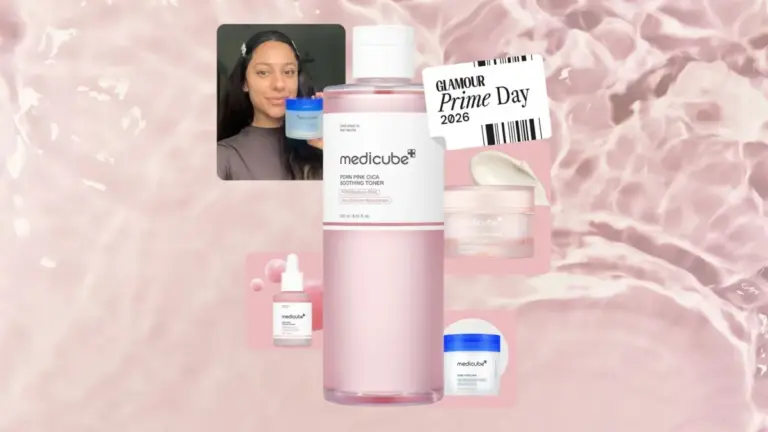
4. Medicube Collagen Jelly Cream
- Category: Hydrating Jelly Treatment
- Key Actives: Hydrolyzed Collagen, Elastin, and Humectants
- Why Experts Recommend It: Ideal for those seeking an immediate bouncy texture, this unique formula pairs hydrolyzed marine collagen with moisture-locking agents to rapidly quench and plump dehydrated skin.
Future Outlook: The Long-Term Commitment of Skin Health
As the wellness and dermatology sectors continue to converge, the future of anti-aging science is moving toward personalized supplementation and biotechnology-derived signaling molecules. However, the fundamental truth of skincare remains unchanged: consistency is king.
What to Expect: The Timeline for Results
Consumers accustomed to instant gratification must recalibrate their expectations when tackling collagen depletion.
- Weeks 1–4: Initial improvements in skin hydration and surface smoothness due to enhanced moisture retention.
- Weeks 8–12: Clinical studies on oral hydrolyzed collagen peptides and targeted topical peptides typically demonstrate measurable improvements in skin elasticity and a reduction in the depth of fine lines around this window.
- Long-Term (6+ Months): As Dr. Queller notes, supplementation and preventative skincare are long-term commitments. "The goal is not an overnight transformation, but helping maintain healthier, more resilient skin over time."
Final Takeaway
Ultimately, winning the war against declining collagen requires an integrated, multi-pronged strategy. Pair a reputable, third-party-tested hydrolyzed collagen peptide powder—ideally featuring clinically studied blends like Verisol—with a high-performance topical regimen rich in peptides, retinoids, and daily broad-spectrum SPF. By respecting the biological realities of how your body synthesizes and protects its structural proteins, you can cultivate a firmer, more radiant complexion that stands the test of time.