Executive Overview
The landscape of modern dermatology has undergone a quiet yet profound revolution over the past decade. No longer confined to heavy, occlusive cold creams, the pursuit of radiant, resilient skin in later decades now relies on advanced, targeted molecular engineering. At the heart of this evolution is the facial serum—a lightweight, fast-absorbing vehicle designed to deliver high concentrations of active ingredients deep into the epidermis and dermis.
For mature skin, which frequently contends with declining collagen production, diminished moisture retention, cellular slowdown, and cumulative environmental damage, serums are no longer viewed as optional luxuries. Instead, top-tier dermatologists consider them indispensable clinical tools.
According to leading skin health experts, the unmatched efficacy of serums comes down to physics and chemistry: their minute particle sizes and lightweight formulations allow them to bypass the heavy lipid barriers of standard lotions, delivering potent concentrations of peptides, retinoids, antioxidants, and growth factors precisely where they are needed most.
This comprehensive guide explores the structural mechanics of aging skin, examines the gold-standard ingredients backed by dermatological science, breaks down a curated selection of the industry’s most revered serums across multiple categories, and provides an authoritative roadmap for building an effective, personalized anti-aging regimen.
Detailed Chronology: The Evolution of Topical Anti-Aging Science
Understanding why modern serums are so effective requires a brief look backward at how topical skin care has transformed from basic moisturization to cellular-level intervention.
- The Era of Occlusion (Pre-1980s): For generations, anti-aging skincare was synonymous with heavy face creams and petroleum-based balms. These formulations operated primarily through occlusion—trapping moisture on the surface of the skin to temporarily soften the appearance of fine lines without altering skin architecture.
- The Retinoid Breakthrough (1970s–1980s): The introduction of topical vitamin A derivatives (tretinoin and later over-the-counter retinol) marked the dawn of true biochemical anti-aging. Dermatologists discovered that these molecules could bind to retinoic acid receptors in the skin, actively stimulating cellular turnover and collagen synthesis.
- The Antioxidant Revolution (1990s): Pioneers in cosmetic dermatology proved that topical L-ascorbic acid (Vitamin C) could neutralize free radicals generated by UV radiation and pollution, establishing the concept of preventative environmental defense.
- The Rise of the Modern Serum (2000s–2010s): Cosmetic chemists perfected stable, low-viscosity delivery systems. By stripping away heavy emulsifiers and waxes, formulators created fluid serums capable of suspending fragile, high-potency actives like hyaluronic acid, peptides, and growth factors in concentrations previously thought impossible.
- The Biomimetic and Regenerative Age (Present Day): Today’s serums move far beyond basic hydration and exfoliation. Modern formulations utilize bio-engineered peptides, exosome technology, human fibroblast conditioned media, and advanced neuro-peptides to mimic natural cellular repair mechanisms, offering non-invasive structural support that bridges the gap between topical care and in-office dermatological procedures.
Supporting Context & Metrics: The Anatomy of Mature Skin
To select the appropriate serum, one must first understand the physiological shifts that occur as skin matures. Dermatological studies indicate that intrinsic aging—driven by genetics and natural internal cellular slowdown—begins as early as our mid-20s, but its visible manifestations accelerate dramatically around perimenopause and menopause.
- Collagen Depletion: Research shows that women lose approximately 30% of their dermal collagen in the first five years following menopause, with a continued annual decline of about 2.1% thereafter. This structural collapse leads directly to loss of firmness, sagging, and deep-set wrinkles.
- Impaired Barrier Function: The skin’s natural lipid barrier thins over time, resulting in chronic trans-epidermal water loss (TEWL). Consequently, mature skin is inherently more prone to dehydration, sensitivity, and dullness.
- Cellular Turnover Sluggishness: In youth, skin cells cycle approximately every 28 days. By age 50 and beyond, this cellular turnover rate can double, leading to a buildup of dead surface cells that dull the complexion and reduce the efficacy of surface-level products.
- Melanocyte Irregularity: Cumulative sun exposure damages melanocytes—the cells responsible for skin pigment. This manifests as age spots, sun spots, and uneven skin tone, which can be just as aging to the eye as wrinkles.
Official Statements & Expert Insights: The Dermatological Consensus
Navigating the crowded marketplace of anti-aging products requires guidance from those on the front lines of clinical dermatology. Top specialists emphasize that while a serum cannot perform the structural feats of a surgical facelift or a deep laser resurfacing treatment, consistent application of the right formula yields undeniable, measurable improvements in skin quality.
"Think of serums as lightweight products with very small particle sizes," explains Dr. Erum Ilyas, a board-certified dermatologist in Pennsylvania. "They do not have the thickness or weight of a lotion or a cream and can penetrate the skin more effectively. This penetration helps deliver ingredients that can target a host of common issues for mature skin types."
Dr. Cheryl Karcher, a board-certified dermatologist based in New York City, elaborates on the specific functions of key active ingredients:
"Serums are most effective at improving the appearance of fine lines, uneven tone, dullness, dehydration, and loss of firmness. For example, vitamin C can help brighten skin and defend against environmental damage; retinoids can support collagen production and improve fine lines and texture; niacinamide can help with uneven tone, redness, and barrier function; and hydrating ingredients such as hyaluronic acid and glycerin can temporarily plump the look of dehydrated skin."
When designing a routine, Dr. Karcher advises simplicity and consistency:
"One well-chosen treatment serum, used consistently, is often enough. Some people may add a second serum with a different purpose, such as an antioxidant serum in the morning and a retinoid or other treatment serum at night. I would introduce products one at a time and avoid combining too many potentially irritating actives."
Echoing this sentiment, Dr. Howard Sobel, a clinical attending cosmetic dermatologic surgeon at Lenox Hill Hospital in New York, notes:
"I recommend my patients use serums to reduce visible signs of aging, increase skin firmness, and decrease moisture loss to reveal radiant skin."
Curated Evaluation: The Best Serums for Mature Skin
Based on expert recommendations, clinical formulation analysis, and performance metrics, the following face serums represent the pinnacle of anti-aging skincare for mature skin types.
1. Best Overall: SkinCeuticals P-Tiox Serum
- Price: $150
- Primary Focus: Expression lines, smoothing, and overall skin architecture.
- Why It Wins: SkinCeuticals has long been a titan in clinical skincare. The P-Tiox serum utilizes an advanced peptide-forward formulation designed to target stubborn expression lines and smooth the cutaneous surface, offering a refined, glass-like finish that complements professional tightening treatments.
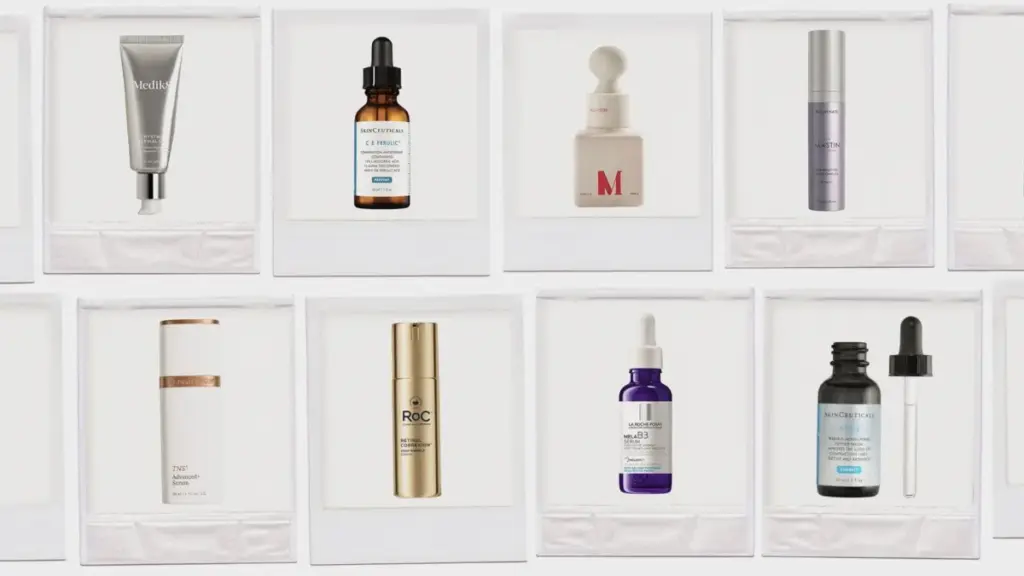
2. Best Retinol: Medik8 Crystal Retinal 10 Serum
- Price: $111
- Primary Focus: Collagen stimulation, texture refinement, and deep anti-aging.
- Why It Wins: Traditional retinol can be notoriously irritating to mature, delicate skin barriers. Medik8 utilizes retinaldehyde (retinal)—a molecule sitting just one step away from prescription retinoic acid—which works up to 11 times faster than standard retinol without the associated flaking and inflammation. Encapsulated in crystal technology, it releases slowly through the night to firm and smooth.
3. Best Peptide Serum: Alastin Restorative Skin Complex
- Price: $258
- Primary Focus: Volumizing, restoring elasticity, and clearing damaged elastin.
- Why It Wins: Utilizing Alastin’s proprietary TriHex Technology, this rich serum is specifically engineered to support the skin’s natural ability to clear out damaged elastin and collagen fragments while encouraging the production of fresh, healthy structural proteins. It is a powerhouse for skin that has begun to lose its natural bounce and density.
4. Best Growth Factor Serum: SkinMedica TNS Advanced+ Serum
- Price: $295
- Primary Focus: Sagging skin, coarse wrinkles, and comprehensive cellular regeneration.
- Why It Wins: A legendary staple in medical spas, SkinMedica’s TNS Advanced+ features a dual-chamber system that combines next-generation growth factors with active peptides and marine extracts. It is clinically proven to address sagging skin and improve the appearance of coarse wrinkles by signaling skin cells to behave in a younger, more active manner.
5. Best Regenerative Serum: Dr. Diamond’s Instafacial Plasma Bioactive Serum
- Price: $110
- Primary Focus: Bioactive rejuvenation, healing support, and radiance.
- Why It Wins: Crafted by renowned plastic surgeon Dr. Jason Diamond, this serum harnesses advanced bio-active science to mimic the regenerative power of in-office plasma facials. It delivers concentrated growth factors and peptides to accelerate cell turnover and restore a youthful, post-procedure glow.
6. Best Exosome Serum: Plated Intense Serum
- Price: $258
- Primary Focus: Cutting-edge cellular communication and extreme repair.
- Why It Wins: Exosomes represent the absolute cutting edge of biotechnology in skincare. Acting as microscopic messengers, exosomes deliver direct instructions to skin cells to repair damage, reduce inflammation, and ramp up collagen production. Plated’s Intense Serum is among the most advanced options available for compromised or intensely aged skin.
7. Best Drugstore Serum: RoC Retinol Correxion Deep Wrinkle Serum
- Price: $30 (Frequently on sale)
- Primary Focus: Deep wrinkles, affordability, and proven efficacy.
- Why It Wins: Proving that high-performance anti-aging does not require a luxury budget, RoC’s formulation pairs pure, stabilized retinol with an exclusive mineral complex. It is clinically proven to visibly reduce the appearance of both fine lines and deep expression wrinkles with consistent nightly use.
8. Best Vitamin C Serum: SkinCeuticals C E Ferulic
- Price: $185
- Primary Focus: Environmental protection, hyperpigmentation, and collagen synthesis.
- Why It Wins: Widely considered the gold standard of antioxidant serums, this iconic patent-protected formula combines 15% pure L-ascorbic acid (Vitamin C) with 1% Vitamin E and 0.5% ferulic acid. It neutralizes damaging free radicals, protects against photoaging, and brightens age spots with unmatched stability.
9. Best for Hyperpigmentation: La Roche-Posay Mela B3 Serum
- Price: $45
- Primary Focus: Stubborn age spots, melasma, and uneven melanin production.
- Why It Wins: Powered by Melasyl™—a breakthrough multi-patented ingredient designed to intercept excess melanin before it forms dark spots—combined with 10% niacinamide, this dermatological serum gently and effectively targets stubborn hyperpigmentation common in mature skin.
Future Outlook: The Next Frontier in Anti-Aging Serums
As biotechnology continues to merge with cosmetic chemistry, the future of serums for mature skin points toward hyper-personalization and regenerative medicine.
- Microbiome-Optimized Formulations: Future serums will increasingly incorporate pre-, pro-, and post-biotics designed to support the skin microbiome, recognizing that a balanced micro-ecosystem is vital for maintaining barrier strength and reducing age-related inflammation.
- AI-Driven Customization: Advances in artificial intelligence and skin-imaging diagnostics will allow consumers to receive bespoke serum formulations synthesized in real-time to match their exact biochemical and structural deficiencies.
- Sustainable Bio-Engineering: Laboratory-grown growth factors, plant-derived exosomes, and sustainably harvested marine peptides will replace animal- and human-derived ingredients, offering ethical, high-purity alternatives with unprecedented molecular stability.
Ultimately, while the aging process is an immutable biological reality, the tools available to manage its visible progression have never been more scientifically sophisticated. By understanding individual skin needs, investing in clinically validated ingredients, and maintaining a consistent daily regimen, achieving vibrant, healthy skin at any age is entirely within reach.