Executive Overview
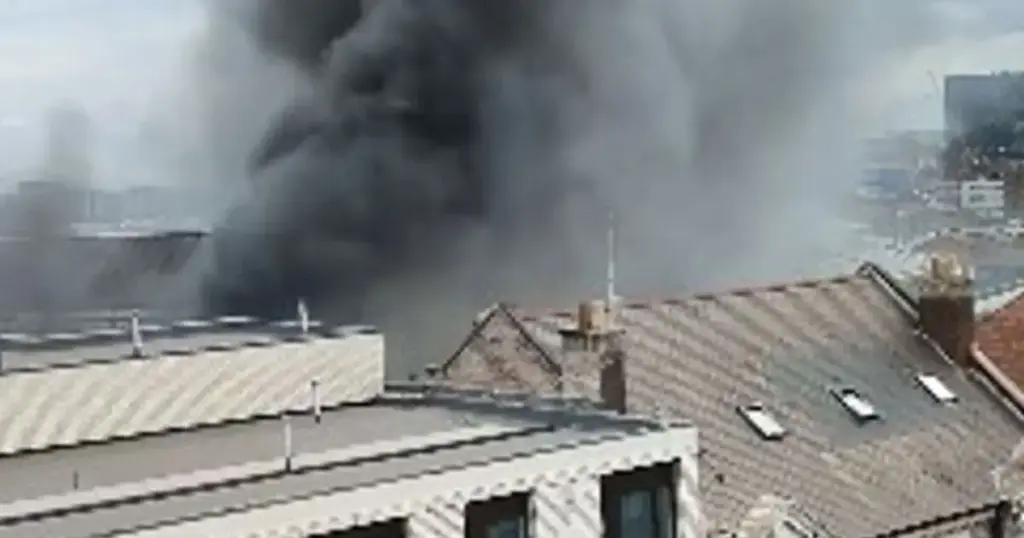
BIRMINGHAM, UK — A colossal fire erupted in the heart of Birmingham city centre on Friday morning, September 4, 2026, sending towering plumes of thick, black smoke billowing high into the atmosphere and prompting immediate, widespread emergency responses. The blaze, which reportedly originated on or near the bustling thoroughfare of Great Hampton Street, has caused severe localized disruptions, leading to immediate road closures and bringing portions of the city’s vital transport network to a standstill.
As visuals of the billowing smoke quickly saturated social media platforms—drawing widespread concern from residents, commuters, and business owners alike—local authorities and transport agencies mobilized rapidly. West Midlands Roads and regional emergency services issued urgent warnings to the public, advising individuals to steer clear of the area as fire crews work tirelessly to contain the flames and mitigate potential hazards.
While the precise cause of the fire remains under active investigation and comprehensive casualty reports are still pending, the incident has once again highlighted the vulnerabilities of densely populated urban spaces to sudden industrial and structural fire emergencies. This report synthesizes the unfolding events, eyewitness testimonies, official traffic and safety advisories, and the broader context of urban fire safety infrastructure in the United Kingdom’s second-largest city.
Detailed Chronology of Events
Morning Breakthrough and Visual Impact
The emergency unfolded during the peak of Friday morning’s commuter rush. At approximately 11:00 AM BST, witnesses across various quarters of Birmingham noticed an ominous darkening of the skyline. Within minutes, social media channels—most notably X (formerly Twitter)—were flooded with photographs and video footage depicting a dense, impenetrable cloud of black smoke ascending from the vicinity of Great Hampton Street and Constitution Hill.
The smoke column, visible for miles across the West Midlands, immediately signaled a high-severity incident. Local office workers, motorists, and pedestrians stopped to capture the unfolding spectacle, with many reporting the distinct smell of burning materials and acrid smoke drifting across neighboring streets.
Official Response and Road Closures
Recognizing the immediate danger posed by the unfolding blaze and the compromised visibility surrounding the site, regional authorities moved swiftly to secure the perimeter. At 11:54 AM BST, West Midlands Roads issued an official bulletin via social media channels:
"Great Hampton Row off of Constitution Hill #Birmingham. Road closed. Fire incident."
The implementation of these emergency cordons caused immediate gridlock along adjacent feeder roads, forcing public transport operators—including bus networks servicing the north-west corridor of the city center—to implement emergency diversions. Pedestrians were pushed back from the immediate perimeter by police officers and emergency personnel to ensure unobstructed access for incoming fire engines, water bowsers, and ambulance services.
Supporting Context & Metrics: Urban Fire Dynamics in the UK
To fully grasp the gravity of Friday’s incident in Birmingham, it is essential to examine the structural and logistical context of urban fires in major British metropolitan areas.
The Geography of the Incident
Great Hampton Street and Constitution Hill lie within the historical and commercial matrix of Birmingham—an area characterized by a complex architectural blend of legacy Victorian industrial buildings, modern commercial developments, and multi-story residential conversions. This architectural diversity, while vibrant and economically vital, often presents unique firefighting challenges. Older structures may feature shared roof cavities, timber frames, or restricted access points that can complicate rapid internal suppression efforts.

Emergency Response Metrics
In metropolitan areas like the West Midlands, the standard benchmark for an initial fire appliance response is typically within five to seven minutes of a 999 call. Given the dense urban geography and the immediate visual confirmation by multiple callers, emergency dispatchers deployed multiple pumping appliances and specialized aerial ladder platforms to tackle the elevated smoke and potential roof-level fire spread.
- Primary Affected Area: Great Hampton Street / Great Hampton Row (Junction with Constitution Hill).
- Impact Radius: Partial to full closures affecting key arterial routes connecting the Jewellery Quarter to the core central business district.
- Environmental Impact: Significant particulate matter emission, temporarily degrading hyper-local air quality indices and prompting health advisories for vulnerable populations in the immediate vicinity.
Official Statements and Witness Accounts
Eyewitness Testimonies
Residents and workers stranded near the cordon described scenes of rapid escalation. One local worker, who requested anonymity, noted:
"We just saw the sky turn completely black within a span of ten minutes. The sirens started wailing almost simultaneously, and police were moving everyone back down the street before we even realized how close we were to the source."
Another commuter driving into the city center reported seeing the plume from miles away on the A38 Aston Expressway, initially mistaking the dark clouds for an incoming storm front before realizing the industrial nature of the smoke.
Local Authority and Emergency Services Guidance
Authorities have maintained a firm posture regarding public safety, repeatedly emphasizing the necessity of avoiding the area to prevent bottlenecking emergency vehicle routes.
In a joint statement released during the initial hours of the crisis, regional travel management bodies urged commuters to check real-time journey planners before attempting to transit through the north-west quadrant of Birmingham city centre. Employers in the immediate vicinity of Constitution Hill and the Jewellery Quarter were advised to allow staff flexibility regarding remote working or delayed arrivals as civil engineers and safety inspectors evaluate structural integrity following the fire’s suppression.
Future Outlook and Ongoing Investigations
As the smoke gradually begins to clear and firefighters transition from aggressive suppression to dampening down hotspots, the focus of the operation is shifting toward post-incident evaluation and recovery.
The Investigation Phase
In the coming days, fire investigators from the West Midlands Fire Service, alongside forensic teams and structural engineers, will enter the affected premises to determine the origin and ignition source of the blaze. Questions will inevitably be raised regarding:
- Compliance and Safety Standards: Whether the building(s) involved adhered strictly to modern fire safety regulations and containment protocols.
- Economic Impact: The extent of structural damage sustained by local businesses and the projected timeline for reopening closed roadways.
- Preventative Measures: What further steps can be implemented to safeguard high-density urban corridors in Birmingham against similar sudden-onset industrial or commercial fires.
Long-Term Urban Resilience
Incidents of this magnitude serve as a stark reminder of the perpetual need for robust urban infrastructure, highly responsive emergency services, and rigorous safety oversight. As Birmingham continues its ambitious trajectory of urban regeneration and development, municipal leaders will face renewed pressure to ensure that emergency response frameworks and building safety audits keep pace with the city’s physical and economic expansion.
Further updates regarding casualties, structural assessments, and road re-openings will be provided as official briefings are released by West Midlands Police and the Fire Service.