Two decades after it first infiltrated American living rooms, Fox’s early-aughts phenomenon The Swan remains a chilling cultural artifact of a bygone era. At the time of its 2004 broadcast, the series—which sequestered self-described "broken women" to undergo grueling, simultaneous plastic surgeries, mandatory starvation, and psychological breaking down before parading them in a beauty pageant—was consumed as standard tabloid entertainment. It was the peak of the reality TV "makeover" craze, an epoch defined by shock value, ritual humiliation, and a collective cultural tolerance for behavioral cruelty that now reads as grotesque.
However, the release of the Hulu documentary The Swan: Behind The Mirror has forced a profound and unsettling reexamination of the show. For investigative journalists and medical professionals who have tracked the evolution of aesthetic medicine over the past ten years, the documentary is more than a nostalgic trip down a toxic memory lane; it is a disturbing exposure of institutionalized misogyny, medical malpractice-adjacent oversight, and the commodification of human vulnerability.
The documentary lays bare the systemic mechanics of a production that treated human beings as raw material. Contestants were subjected to up to ten hours of continuous anesthesia while surgical teams performed comprehensive, high-impact overhauls—stacking procedures in a manner that contemporary medical standards view with utter alarm. As former contestants grapple with ruptured implants, destroyed dental work, and deep-seated psychological trauma, and as the original surgeons attempt to navigate their public legacies in 2026, the cultural footprint of The Swan demands a rigorous post-mortem. This investigation explores the mechanics of the show, the harrowing realities behind the scenes, the evolving ethics of modern plastic surgery, and the enduring scars left on the women who traded their bodily autonomy for prime-time exposure.
Detailed Chronology: The Rise, Fall, and Re-examination of The Swan
The Genesis of a Spectacle
When Fox greenlit The Swan in 2004, the network pitched the concept to the public as an inside-out transformation. The premise promised viewers that contestants would receive not only cutting-edge cosmetic interventions but also a holistic framework of self-improvement: personal training, nutritional guidance, psychotherapy, and life coaching overseen by the show’s creator, Nely Galán.
Yet, the lofty promises of empowerment rapidly disintegrated behind closed doors. As one anonymous The Swan producer reveals in the Hulu documentary, the network’s true, unvarnished mission was starkly cynical: "We’re gonna take ugly chicks and make them hot."
For three months, the participants were subjected to rigorous isolation, mandatory multi-procedure cosmetic surgeries, extreme dental restructuring, restrictive calorie counts, and grueling exercise regimens. The psychological pressure was amplified by the show’s defining structural trap: contestants were strictly forbidden from seeing mirrors or reflective surfaces during the transformation process. Their first encounter with their altered reflections occurred during a dramatic, highly orchestrated onscreen reveal, immediately after which they were thrust into a competitive beauty pageant wearing lingerie and swimsuits.
Nely Galán defended this requirement at the time as the ultimate psychological motivator, remarking infamously in a 2004 interview, "It’s enough to kill yourself." Disturbingly, interviews in Behind the Mirror reveal that the contestants were kept entirely in the dark about the beauty pageant component until weeks into filming, stripping away any vestige of informed consent regarding how their bodies would be publicly displayed and judged.
The Near-Tragedy of Season Two
Behind the Mirror wastes no time establishing the perilous stakes of the production, opening with a harrowing flashback from season two. Contestants and sisters Kari and Gina Bravata recount their experiences, anchored by archival footage of Kari lying unconscious on the operating table. In the clip, her vital signs visibly tank as medical staff scramble desperately to rouse her from deep anesthesia.
Cut to the present day: Kari is alive and well, sitting beside her sister on a documentary sofa, delivering a line that encapsulates the casual barbarism of early-aughts television: "I almost died for reality television."
This near-death experience was not an isolated anomaly, but rather a predictable byproduct of a production model that prioritized dramatic visual reveals over patient safety.
Supporting Context & Metrics: The Anatomy of a Medical Spectacle
To understand the sheer magnitude of the physical interventions on The Swan, one must examine the operational metrics driving the operating rooms. The show relied heavily on two primary plastic surgeons: Dr. Randal Haworth, who cultivated a persona of ruthless, cutting critiques, and Dr. Terry Dubrow, who played the "good cop" role of the warm and humorous physician.
In a 2024 video series for Vice TV, Dr. Dubrow reflected on the breakneck pace of the production:
"I think in the two weeks of everyday surgery that we did, we did something like 200 plastic surgery operations on these patients. That was more than [what] a typical plastic surgeon would do in an entire year."
Patients were routinely rendered unconscious under general anesthesia for up to ten hours at a time. During these marathon sessions, surgeons stacked an aggressive array of procedures—rhinoplasties, breast augmentations, liposuctions, brow lifts, and extensive dental overhauls—to engineer an instantaneous, high-impact transformation.
The Aftermath of Aggressive Aftercare
The human cost of these stacked procedures became glaringly apparent during the postoperative recovery phase. Following a single day in professional aftercare facilities, the battered and swollen contestants were shuttled back to shared apartments. According to participant testimonies, a single nurse was often left responsible for monitoring upwards of 20 post-op women simultaneously.
Left to fend for themselves, the Swans managed their own misery: coping with weeping liposution scars, endless ice packs, debilitating homesickness, and crushing clinical depression. Compounding this isolation, production pressures continued unabated; during filming, one contestant lost a beloved uncle, another received a devastating cancer diagnosis, and a third was served divorce papers.
Worse still, while still sporting prominent nasal splints and rigid chin straps, the women were forced back into the gym environment twice daily to endure berating training sessions. Their early recovery nutrition consisted of sponsored, microwavable Jenny Craig meals that, as one contestant bluntly recalls, "tasted like bad decisions and regret."
Official Statements & Industry Reckoning
Two decades later, the architects of The Swan maintain prominent, successful careers in Beverly Hills, leveraging their reality TV past to sustain thriving practices. Yet their responses to the Hulu documentary reveal a sharp divide in accountability, contrition, and perspective.
Dr. Randal Haworth’s Perspective
Dr. Haworth remains unabashedly vocal, continuing to feature The Swan prominently on his professional website as a cornerstone of his practice’s origin. In the documentary, he offers an uncompromising description of his former work: "Plastic surgery is barbaric. You’re putting a cold scalpel onto flesh and certain things fail."
When approached by Allure for comment following the documentary’s release, Dr. Haworth provided a nuanced statement reflecting on his participation:
"I agreed to participate in the documentary in good faith and spoke candidly because I believed it was important to have the perspective of someone who was actually there. Having now watched it, I do feel some of my comments lost important context in the edit. The former contestants deserved the space to tell their stories fully, and I only wish some of my own explanations had been given the same room."
He added:
"I’ve changed enormously in 22 years, both as a surgeon and as a person, and I’m comfortable looking critically at the show through the lens of 2026. There are aspects of the format, the language, and the way physical transformation was presented that I would approach differently today… The Swan absolutely deserves to be reexamined, including its shortcomings. My hope is that the conversation can make room for both the women’s experiences and the full context of what happened behind the scenes."
Dr. Terry Dubrow’s Response
Dr. Dubrow—who went on to cement his reality television footprint with E!’s long-running Botched and Bravo’s The Real Housewives of Orange County—declined to be interviewed for Behind the Mirror. While initial reports by Vanity Fair suggested his refusal was tied to demands for an excessive financial appearance fee (a claim director Erin Lee Carr noted was untenable), Dr. Dubrow’s representative ultimately issued a formal statement to the press:
"Twenty-three years ago, I was one of two plastic surgeons on The Swan. Today, I sat down and listened to the stories of Delisa, Gina, Kari, Tawnya, Kristy, Cindy, Beth, Dore, and Kelly. I want to thank each of them for sharing their experiences so openly. Their voices deserve to be heard, and I recognize the weight of what they’ve shared. I take seriously my role in the series and the responsibility that comes with revisiting that chapter of television history. I wish each of them continued healing and peace moving forward."
The Contestants’ Reality
For the women who lived through the experiment, the physical and psychological toll has been lifelong. Beth Lay, the first runner-up from season one, reflected on the clinical detachment of the medical staff: "I think they had to dehumanize us, because ultimately we were just a job." She noted that she was explicitly informed that refusing any recommended procedure on her prescribed surgical list would result in immediate expulsion from the show.
Decades later, many Swans continue to manage the physical fallout of accelerated, mass surgical interventions: hardened and ruptured breast implants, degraded jawbones, structural gum damage from faulty veneers, and chronic pain. Beyond the physical deterioration, the psychological scars run deep. As Lay admitted in the documentary: "I went home feeling emotionally scarred from the situation. It makes me feel so frustrated and ashamed [to know] that I participated in and fed into the world’s view of beauty."
Future Outlook: Reconciling Past Excess with Modern Aesthetic Ethics
The chasm between the production values of The Swan in 2004 and the contemporary practice of aesthetic medicine in 2026 is vast, yet it forces a critical interrogation of the beauty industry’s enduring undercurrents.
Modern plastic surgery marketing heavily emphasizes patient safety, rigorous informed consent, psychological screening, tailored aftercare protocols, and conservative, natural results. Today’s premier surgeons utilize advanced tissue-sparing techniques, deliberately limit general anesthesia exposure to safe thresholds (often capping procedures at six hours), and mandate comprehensive postoperative recovery frameworks complete with hyperbaric oxygen therapy, lymphatic drainage massages, and dedicated nursing care.
Yet, as social media culture normalizes cosmetic enhancements and drives a new wave of "glow-up" transparency, experts are left to ponder an uncomfortable question: Have we truly evolved past the toxic dynamics of The Swan, or have we simply sanitized them?
While modern patients enjoy far greater bodily autonomy and medical safety than the contestants of 2004, the cultural obsession with instantaneous physical perfection remains entirely intact. The legacy of The Swan serves as a permanent, cautionary monument to the dangers of weaponizing medical technology for prime-time entertainment. It challenges both patients and practitioners to ensure that the pursuit of aesthetic enhancement is never again built upon a foundation of dehumanization, coercion, and shame.
Ultimately, as season two contestant Gina Bravata reflects, the lingering trauma of the experience does not invalidate the choice to alter one’s body, but rather condemns the predatory system that executed it:
"What people expect us to regret the most is the surgery—that was the taboo or bad part. I don’t regret the surgeries. I just regret that the process… tore us down quite a bit."


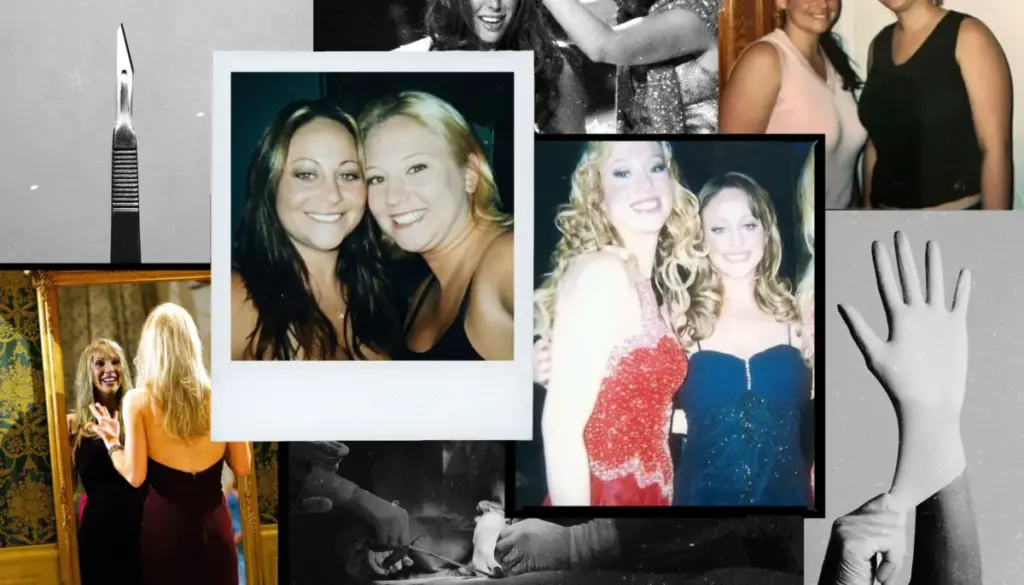

%2520L%2520to%2520R%2520-%2520Gina%2520and%2520Kari%2520BEFORE%2520The%2520Swan%2520S2.jpeg)
%2520L%2520to%2520R%2520-%2520Kari%2520and%2520Gina%2520during%2520production%2520S2%2C%25202004.jpeg)