Executive Overview
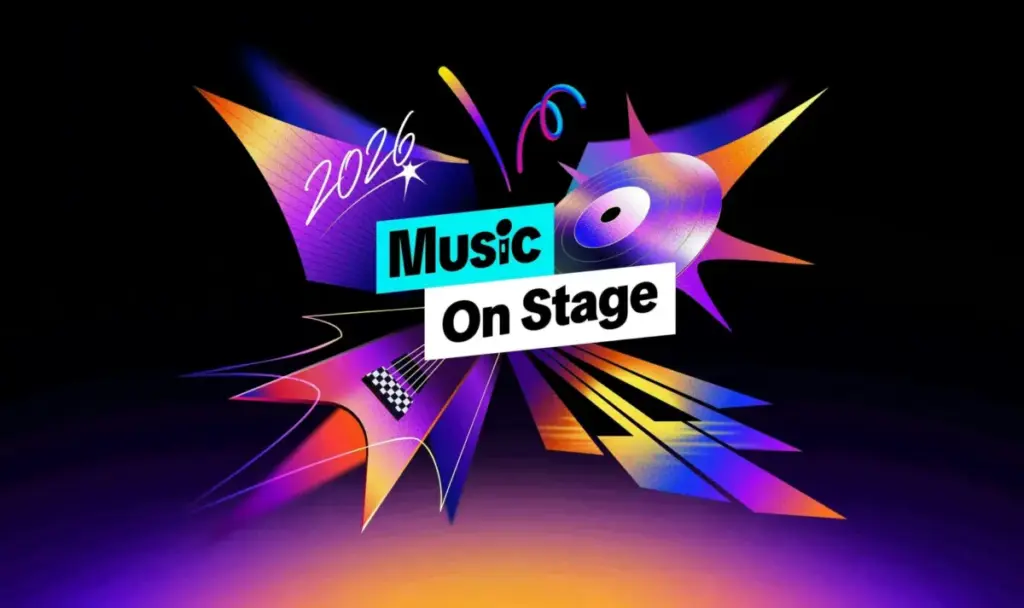
Imagine the cross-continental spectacle of the Eurovision Song Contest, the star-making machinery of American Idol, and the digital distribution power of TikTok’s in-house music marketing platform, SoundOn, fused into a single, high-stakes streaming event. The result is Music On Stage, TikTok’s flagship global music competition designed to unearth, develop, and propel the next generation of international superstars entirely through the medium of TikTok LIVE.
Following a powerhouse inaugural run that pulled in staggering metrics—including 8.2 billion impressions and 1.4 million live concurrent and total broadcast viewers during its Global Finals—TikTok has officially brought back Music On Stage for its highly anticipated second iteration. Spanning more than 20 regions worldwide, the contest invites aspiring singer-songwriters, bedroom pop icons, and indie vocalists to perform live from their bedrooms, studios, and street corners to a truly global audience.
Yet, Music On Stage is far more than a digital talent show. In the broader landscape of digital media wars, it represents TikTok’s strategic counter-offensive against legacy platforms like YouTube, which has heavily entrenched its footprint in traditional mega-events like the Eurovision Song Contest. By leveraging TikTok LIVE’s robust monetization ecosystem, integrating its proprietary music marketing and distribution arm SoundOn, and offering physical festival slots at major American music events like the Breakaway Carolina Festival and All Things Go NYC, ByteDance is attempting to rewrite the rules of artist development.
This in-depth report explores the mechanics, cultural impact, geopolitical division of regions, and industry implications of TikTok’s Music On Stage, examining how social media platforms are transforming from mere promotional tools into fully realized, vertically integrated record labels and broadcast networks.
Detailed Chronology: From Concept to Global Phenomenon
The Inception: The 2025 Pilot Program
When TikTok first conceptualized Music On Stage, the platform was searching for a way to bridge the gap between algorithmic virality and sustained, long-term music careers. While millions of tracks had found fleeting fame via short-form video loops, turning a viral moment into a dedicated fanbase required a structured pipeline.
Introduced to the community as a pilot project, the inaugural season of Music On Stage gathered an initial cohort of rising musical stars to test the limits of TikTok LIVE as a broadcast medium. The event proved that audiences were hungry for high-production, long-form musical engagement within a vertical video environment.
The crown jewel of the inaugural season was Anyelique Solorio, whose powerhouse vocals and compelling live streams captured the imagination of voters and judges alike. Solorio’s subsequent rise demonstrated that winning Music On Stage was not just a vanity title, but a legitimate launchpad. By building a rock-solid foundation on TikTok—and leveraging the app’s ecosystem to cross-pollinate audiences on Spotify, Apple Music, and Instagram—Solorio became the blueprint for what TikTok hoped the competition could achieve.
The 2026 Return: Registration, Auditions, and Regional Expansion
Building upon the monumental success of the pilot, TikTok officially announced the return of Music On Stage with expanded parameters, a larger prize pool, and a more streamlined global framework.
- August 1–14: Registration officially opened across participating territories. Creators were invited to use the hashtag
#MusicOnStage, set up their microphones, adjust their ring lights, and hit the "GO LIVE" button to register their official submissions. - August 15: Auditions officially kicked off, plunging thousands of hopefuls into weeks of rigorous live-streamed elimination rounds, fan voting battles, and technical showcases.
- September: The high-stakes Global Finals. Much like the structure deployed in the previous year, the 2026 competition is strategically divided into two massive geographical hemispheres: EMEA (Europe, Middle East, and Africa) and APAC (Asia-Pacific).
To anchor these massive regions, TikTok enlisted heavyweight musical talent to serve as hosts and mentors. The EMEA bracket is anchored by acclaimed British singer-songwriter Cat Burns, whose emotionally resonant pop anthems and genuine connection with fans make her an ideal guide for developing artists. Meanwhile, the APAC bracket is spearheaded by prominent Thai singer-songwriter Songkarn, bridging diverse Asian music markets and spotlighting regional pop sensibilities on a global stage.
Supporting Context & Metrics: The Anatomy of a Digital Empire
To truly understand the weight of Music On Stage, one must look at the data driving TikTok’s live-streaming ambitions and how the platform measures success in an increasingly saturated attention economy.
The Numbers That Matter
- 8.2 Billion Impressions: Generated globally throughout the duration of the inaugural campaign, proving that the
#MusicOnStagehashtag and associated promotional material successfully permeated global feeds far beyond the core music community. - 1.4 Million Viewers: Tuned into the broadcast of the Global Finals, cementing TikTok LIVE as a viable competitor to traditional cable television viewership numbers for music specials.
- 20+ Regions: The geographic footprint of the 2026 competition, showcasing TikTok’s ability to coordinate simultaneous, multi-language, cross-cultural entertainment events at scale.
The Prize Ecosystem: Beyond Digital Clout
In the early days of social media contests, winners were often rewarded with little more than digital badges, algorithmic boosts, or token cash prizes. Music On Stage, however, offers a tangible, career-altering suite of rewards designed to bridge the digital-physical divide:
- SoundOn Developmental Opportunities: Winners receive priority access, promotional support, and artist services through SoundOn, ByteDance’s music marketing and distribution platform. This allows artists to retain 100% of their royalties while receiving label-tier distribution and playlist pitching.
- Major Festival Slots: Digital stardom is great, but physical performance is where artists build real-world credibility and merchandise revenue. Music On Stage winners secure coveted live slots at major music festivals, including the Breakaway Carolina Festival and All Things Go NYC, thrusting bedroom creators directly onto physical stages in front of thousands of screaming fans.
- TikTok LIVE Fest Integration: Winners are fast-tracked into TikTok’s annual flagship global streaming event, TikTok LIVE Fest, which celebrates the platform’s top-performing creators across all verticals.
The Strategic Battleground: TikTok vs. YouTube and Eurovision
The structural DNA of Music On Stage bears an undeniable resemblance to the Eurovision Song Contest. For 70 years, Eurovision has united countries through pop music, theatrical performance, and national pride. It has also served as the career launchpad for global icons and viral sensations alike—including England’s Sam Ryder, a musician who leveraged his massive TikTok following to capture the hearts of Eurovision audiences worldwide.
However, the battle for music streaming supremacy is fierce. While TikTok dominates short-form discovery and live-streaming engagement, YouTube remains a titan in long-form music broadcasting. YouTube has long been the digital home of Eurovision, cementing its status in 2026 by becoming an official Eurovision broadcaster and expanding its coverage to match the contest’s expansion into Asia with Eurovision Asia.
TikTok’s launch and rapid scaling of Music On Stage is a direct calculated response to YouTube’s dominance in musical event broadcasting. By controlling the pipeline from initial creation to live-streamed competition, and subsequently funneling artists into SoundOn and TikTok’s e-commerce and tipping monetization streams (bolstered by acquisitions like Lyve.com and aggressive pushes into live shopping), TikTok is building a closed-loop ecosystem. Creators do not just perform on TikTok; they monetize, distribute, and tour because of TikTok.
Official Statements and Cultural Impact
TikTok’s leadership has consistently framed Music On Stage not merely as an entertainment broadcast, but as a democratization of the global music industry.
In its official press release announcing the return of the event, TikTok emphasized its ongoing mission to discover the next generation of global music stars without the traditional gatekeeping of legacy record labels. "Every star has a beginning," notes the official @tiktoklive_onstage campaign channel. "Microphone, lights, ready… GO LIVE! Welcome to #TikTokLIVE #MusicOnStage—where stars are born. Show the world your sound, and the next music star could be YOU!"
Music industry analysts have praised the initiative for shifting the power dynamics of artist discovery. In the past, an aspiring artist in rural Thailand or a small town in the UK would need to finance travel to major media hubs like London, Los Angeles, or Bangkok to audition for television talent scouts. Music On Stage eliminates these geographical and financial barriers. Armed with nothing more than a smartphone, a stable internet connection, and raw talent, artists can beam their performances directly to millions of viewers and international judges from their own living rooms.
Furthermore, artists participating in the event have noted the unique intimacy of TikTok LIVE. Unlike heavily edited television singing shows where performances are polished, autotuned, and cut together in post-production, TikTok LIVE is raw, unfiltered, and immediate. Mistakes happen in real-time, genuine emotional connections are forged in the comment sections, and fans feel a profound sense of ownership over the artists they vote for.
Future Outlook: The Next Era of Digital Entertainment
As the September Global Finals of Music On Stage approach, the stakes for TikTok, its parent company ByteDance, and the participating artists have never been higher.
The success of this year’s event will likely dictate the trajectory of digital-first talent incubators for the remainder of the decade. If Music On Stage continues to expand its viewer metrics and successfully transitions digital creators into viable, touring festival acts, we can expect to see an aggressive pivot from traditional media conglomerates toward vertical-first programming.
Several key trends are poised to emerge in the wake of Music On Stage’s 2026 run:
- Deeper Label Integration: Expect platforms like SoundOn to evolve from distribution tools into fully functioning virtual artist-management agencies, signing top-performing live-streamers directly to specialized development contracts.
- Hybrid Festival Models: The collaboration between digital platforms and physical festivals (such as Breakaway and All Things Go) will become the industry standard, as festival organizers look to digital algorithms to de-risk their booking lineups and guarantee pre-existing ticket-buying fanbases.
- The Death of Traditional Gatekeeping: As global audiences continue to fragment across digital platforms, localized talent shows on legacy television networks will increasingly be viewed as relics of the past, replaced by decentralized, borderless streaming competitions like Music On Stage.
For now, all eyes are on the EMEA and APAC brackets. As Cat Burns and Songkarn prepare to crown this year’s regional champions, thousands of hopeful artists are adjusting their ring lights, checking their audio levels, and preparing to show the world that the future of global pop music will not be televised—it will be streamed live on TikTok.
To catch the latest auditions, follow the competition, and stream the upcoming Global Finals, search for the #MusicOnStage hashtag directly within the TikTok app.