Executive Overview
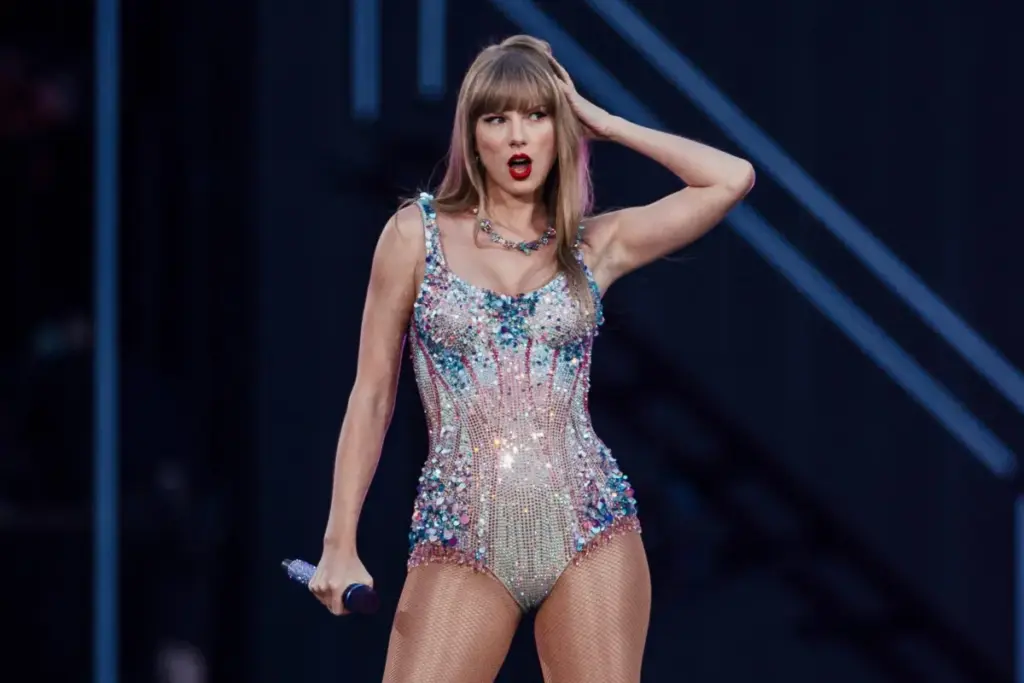
For nearly two decades, Taylor Swift has been synonymous with a very specific, sun-kissed aesthetic. From the honey-gold corkscrew curls of her self-titled 2006 debut to the platinum highlights of her 1989 era and the shimmering, buttery blond locks of the record-breaking Eras Tour, her hair has acted almost as an independent character in the grand narrative of her career.
Yet, following a recent high-profile appearance and intimate performance at the Grammy Museum, the pop cultural ecosystem found itself embroiled in an unexpectedly fierce debate—one not centered on surprise song mashups, upcoming album announcements, or her relationship status, but on a fundamental optical question: Is Taylor Swift still a blonde?
Within the offices of fashion and culture publications alike, the discourse quickly escalated to rival the internet-breaking "Is the dress blue and black or white and gold?" phenomenon of a decade ago. Beauty directors launched impromptu social media polls, thousands of Swifties weighed in across TikTok and X (formerly Twitter), and colorists began dissecting the undertones of her recent public outings.
While physical evidence—bolstered by moody event lighting and natural root growth—points toward a significantly deeper, richer hue, the psychological and brand-identity attachment to "Blond Taylor" remains remarkably stubborn. This in-depth report explores the anatomy of Swift’s shifting aesthetic, examines historical precedents of her hair transformations, analyzes public and editorial polling data, and investigates whether the multi-grammy-winning artist has quietly, deliberately crossed the threshold into her official brunette era.
Detailed Chronology: A History of Tresses and Eras
To understand the weight of Swift’s current hair color shift, one must trace the evolutionary timeline of her locks. Hair, within the meticulous world of Taylor Swift’s easter-egg-laden branding, is never accidental. Every snip, dye, and structural shift has historically signaled a transition from one sonic and emotional landscape to the next.
1. The Country Roots (2006–2008): The Golden Corkscrews
When a teenage Taylor Swift burst onto the Nashville scene with her debut single "Tim McGraw," her hair was a defining element of her approachable, girl-next-door persona. Cascading in voluminous, natural, honey-gold corkscrew curls, her hair anchored her firmly in the traditional aesthetic of mid-2000s country music. It was bright, golden, and undeniably warm-toned. This foundational look carried through her sophomore blockbuster album, Fearless (2008), establishing "blond" as the non-negotiable default setting for the Swiftian brand.
2. The Straightening and Polishing (2010–2014): Speak Now, Red, and 1989
As Swift transitioned from pure country to pop-crossover royalty, her styling evolved accordingly. The wild curls were smoothed out into sleek, romantic blowouts for Speak Now and the autumnal, textured waves of Red. By the time 1989 arrived in 2014, signaling her official, permanent graduation to pop music, Swift debuted a sharp, collarbone-grazing lob (long bob) with a modern fringe, dyed in a brighter, more neutral-to-cool blond. This era cemented her as a quintessential modern pop star, visually divorced from her Nashville roots.
3. The Edgy Intermissions (2016–2020): Bleach Blonde and Beyond
If hair is an indicator of artistic state of mind, the mid-2010s were turbulent and experimental. At the 2016 Met Gala, Swift shocked the fashion world by stepping onto the red carpet with an edgy, grunge-inspired, platinum-bleached bob—a harbinger of the moodier, retaliatory aesthetics of Reputation (2017). Though she returned to warmer, multi-dimensional honey tones for Lover (2019) and the cottagecore forest-dwelling vibrations of Folklore and Evermore (2020), her baseline remained firmly within the blond family.
4. The Grammy Museum Phenomenon (2025/2026): The Darker Shift
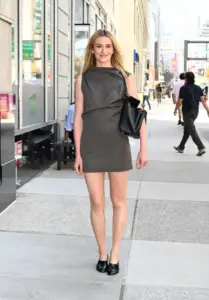
Fast-forward to her recent appearance at the Grammy Museum. Observers immediately noted that Swift’s hair appeared remarkably subdued. Stripped of the bright, high-lift foil highlights that have characterized her stadium tours, her strands exhibited a much deeper, ashier, and decidedly neutral-to-dark dimension. While some attributed the visual shift to the dramatic, moody museum lighting, beauty experts and editors alike realized that this was not merely a shadow effect: Taylor Swift’s hair is darker now than it has been in years.
Supporting Context & Metrics: The Great Beauty Debate
The realization that Swift’s hair had drifted away from its traditional golden standard sparked an immediate statistical inquiry within the beauty journalism community.
The Bazaar Instagram Poll Metrics
To gauge public perception against professional critique, Harper’s Bazaar Beauty Director Jenna Rosenstein took to her personal Instagram account to poll hundreds of beauty-conscious followers. The results highlighted a fascinating psychological disconnect between empirical observation and brand perception:
- Physical Reality vs. Spiritual Identity: When asked to categorize her current look, approximately 60 percent of respondents voted "Brunette," while 40 percent voted "Blond."
- The "Spiritual Blonde" Phenomenon: Qualitative responses revealed a deep-seated psychological attachment to her identity. One prominent follower noted, "Physically she’s brunette, but spiritually she’s blond." Another added, "She’s blond only in my head."
This dichotomy illustrates the sheer power of branding. Even when the physical pigment leans toward a dark, mousey brown or deep dark-blonde, the cultural memory of decades of golden hair overrides what the naked eye is seeing.
Historical Easter Eggs: When Swift Goes Dark
While permanent or semi-permanent transitions to brown are rare for Swift, she is no stranger to temporary dark-hair transformations for cinematic storytelling. Fans vividly remember her dramatic brunette alter-ego in the 2015 cinematic music video for "Wildest Dreams," where she adopted a deep, Old Hollywood chocolate-brown wave.
Similarly, eagle-eyed fans have pointed out previous temporary forays into darker tones in music videos like "You Belong With Me" (where her character wears a brunette wig) and conceptual deep-dives across various eras. However, the current shift is distinct: it is happening organically in real life, off-stage, and outside of a scripted music video narrative.
Official Perspectives and Expert Analysis
To dissect whether Swift has officially entered a "brunette era," professional colorists and cultural commentators have weighed in on the chemical and stylistic reality of celebrity hair maintenance during intensive touring schedules.
The Maintenance Factor
Industry experts note that sustaining a bright, high-lift celebrity blonde while maintaining a grueling, multi-hour global performance schedule (such as The Eras Tour) is structurally and chemically punishing on hair integrity. Allowing natural roots to grow out or opting for a lower-maintenance, richer, low-light-infused "expensive brunette" or bronde (brown-blonde blend) is a common trajectory for artists seeking relief from bleach damage.
The Editorial Verdict
In the words of industry insiders: “Physically, the singer has officially entered her brunette era.” Even if external factors like ambient lighting played a minor role in accentuating the darkness of her locks during her Grammy Museum appearance, the baseline color has objectively retreated from the gold standards of her past.
Yet, true to the enigmatic nature of her career, Swift leaves the final definition up to interpretation. Borrowing a phrase from her own fiercely protective 2017 album, when it comes to labeling her hair color brown or blond, the ultimate consensus is simple: call it what you want.
Future Outlook: What Next for the Swiftian Aesthetic?
As Swift continues to write the next chapters of her historic career, her aesthetic choices will undoubtedly continue to be scrutinized, dissected, and celebrated. Whether her current darker tresses are a temporary reprieve from chemical processing or the deliberate aesthetic foundation of an entirely new musical era remains to be seen.
Historically, major hair transformations in the Swift canon precede seismic shifts in her artistic direction. If her current hair signals a transition into a moodier, more grounded, or introspective phase of her artistry, fans should prepare themselves for a sonic departure just as striking as her visual one.
Until then, the world will keep watching, polling, and debating. Whether physically brunette or spiritually blond, Taylor Swift proves once again that she holds a monopoly on global pop cultural attention—capturing headlines simply by letting her hair grow out.