Executive Overview
The protracted military conflict involving the United States, Israel, and Iran—which escalated into open hostilities in February 2026—has triggered a cascading series of economic shocks felt across the globe. From soaring jet fuel costs forcing carriers like Virgin Atlantic to slap additional surcharges onto passenger tickets, to severe warnings from British fiscal authorities regarding an austere autumn budget, the geopolitical fallout shows no signs of abating.
Amid this economic turbulence, aviation mogul Sir Richard Branson has launched a blistering critique against international leadership, directly tying the current inflationary climate to the decision to abandon the landmark Iranian nuclear accord. As governments grapple with rising borrowing costs and stalled economic growth, a stark divergence has emerged between the grounded financial realities faced by business leaders and the dismissive characterization of the conflict by the White House, where President Donald Trump recently brushed off the multi-billion-dollar military campaign as "small potatoes."
This comprehensive report examines the multifaceted ramifications of the Iran conflict, analyzing airline financial strategies, macroeconomic impacts in the United Kingdom, geopolitical friction between transatlantic allies, and the long-term outlook for global energy markets.
Detailed Chronology: From Diplomatic Rupture to Military Escalation
To understand the current economic pain points, one must trace the trajectory of the crisis back to its geopolitical roots and the sudden escalation that took place in early 2026.
The Breakdown of the Iran Nuclear Deal
For years, the Joint Comprehensive Plan of Action (JCPOA)—negotiated under the Obama administration alongside major European partners—stood as a fragile yet functional framework designed to curb Iran’s nuclear ambitions in exchange for sanctions relief. Despite broad international consensus that the accord was successfully delaying Tehran’s nuclear development, shifting political tides in Washington ultimately led to the unraveling of the pact.
Critics of the original agreement argued it failed to address Iran’s regional proxy networks and ballistic missile programs. However, defenders of the diplomatic route, including Sir Richard Branson and numerous European diplomats, consistently warned that tearing up the treaty without a viable diplomatic alternative would inevitably steer the region toward confrontation.
The February 2026 Escalation
The diplomatic freeze shattered in February 2026 when coordinated military strikes by the United States and Israel targeted strategic infrastructure within Iran. What began as a high-intensity offensive rapidly morphed into a prolonged theater of intermittent airstrikes, asymmetric naval skirmishes in the Persian Gulf, and retaliatory drone and missile deployments.
Rather than a swift, decisive campaign, the hostilities settled into a grinding war of attrition. The resulting instability severely disrupted critical oil extraction, refining, and maritime transportation routes across the Middle East—most notably through the Strait of Hormuz, a vital chokepoint through which a significant portion of the world’s petroleum passes.
Supporting Context & Metrics: The Economic Toll of a Protracted War
The immediate casualty of the conflict’s persistence has been global energy stability. As crude oil output plummeted and supply chains fractured, energy markets reacted with extreme volatility.
Airline Industry Disruption and Surcharges
For the commercial aviation sector, fuel represents one of the largest and most volatile operating expenditures. The spike in global crude prices directly translated into skyrocketing costs for jet fuel (Aviation Turbine Kerosene).

Faced with compressed profit margins, major carriers were forced to adapt quickly to protect their bottom lines. Virgin Atlantic, founded by Sir Richard Branson, announced the reintroduction of fuel surcharges on ticket prices—a move mirrored across much of the international aviation industry. Passengers booking long-haul flights now find themselves shouldering the direct financial burden of the Middle East conflict, as airlines pass on the inflated costs of operation.
Industry analysts note that these surcharges threaten to cool post-pandemic travel demand, particularly as household budgets across North America and Europe are simultaneously squeezed by broader cost-of-living crises.
The UK Macroeconomic Shock and Government Borrowing
The ripple effects of the energy crisis have struck hard at the heart of the British economy. Earlier in September 2026, government borrowing figures leaped significantly higher than forecasted, reflecting mounting anxiety among institutional lenders regarding persistent, war-driven inflation.
The situation has placed immense pressure on UK Chancellor John Healey as he prepares for his inaugural Budget on October 28. In interviews with financial publications, Healey made it clear that the upcoming fiscal package will necessitate difficult choices to safeguard the nation’s financial standing.
"What’s happening in the Middle East is hitting inflation, it’s hitting growth, it’s hitting borrowing costs," Healey stated, characterizing the current climate as part of an increasingly dangerous and unpredictable world order.
To combat these vulnerabilities, the Chancellor has signaled his intention to establish a robust "buffer against uncertainty" within the upcoming budget, implying that taxpayers and public services may need to brace for a period of fiscal consolidation.
Official Statements and Political Friction
As the economic costs mount, a sharp public debate has erupted between aggrieved business leaders, cautious European finance ministers, and the Trump administration in Washington.
Branson’s Scathing Critique
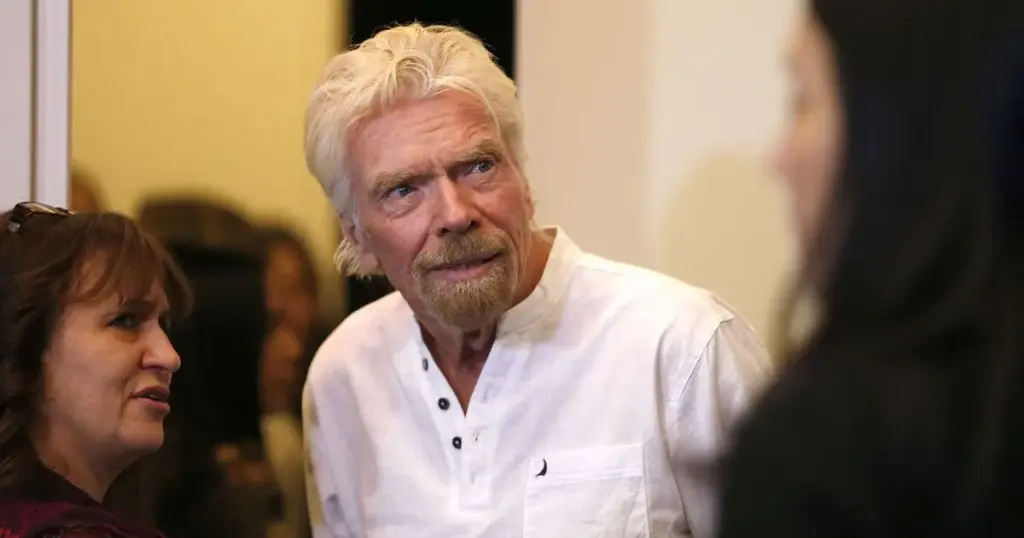
Speaking candidly to the BBC, Sir Richard Branson did not mince words when assessing the architects of the current geopolitical landscape. Laying the blame squarely at the feet of "foolish" world leaders, Branson pointed directly to the abandonment of the Obama-era nuclear agreement as the original sin of the current crisis.
"The Iran conflict was completely unnecessary," Branson declared. "There was a nuclear agreement between Iran and the rest of the world that had been negotiated by President Obama and a lot of European people. It was working, so there was no need to rip it up… And this war has just resulted in much higher oil prices all over the world. And inflation has been one of the consequences."
Branson’s remarks reflect widespread frustration within the global business community, where private sector growth is continually held hostage by geopolitical maneuverings.

Washington’s Dismissive Stance: "Small Potatoes"
In stark contrast to the alarm sounded by European officials and industry executives, the White House has downplayed the severity and cost of the ongoing military campaign.
Facing questions regarding comments made by Vice President JD Vance—who asserted that months of intermittent conflict do not technically constitute a "war"—President Donald Trump defended the administration’s framing during an Oval Office exchange. Acknowledging that the US military continues to execute targeted strikes against Iranian assets, Trump minimized the scope of the operation.
"I can understand what he’s saying… I call it a military conflict because it’s small potatoes for us. It’s not a big thing."
This characterization stands in sharp relief against the human and financial toll registered to date. Department of Defense metrics indicate that the military campaign has already cost US taxpayers upwards of $37.5 billion, while tragic confirmation notes that at least 18 US service members have lost their lives in the line of duty. Critics argue that labeling such an operation "small potatoes" trivializes both the human sacrifice of American military personnel and the severe inflationary shock experienced by global consumers.
Future Outlook: Navigating an Era of Permanent Uncertainty
As the world looks toward the final quarter of 2026, the trajectory of the Iran conflict remains deeply uncertain, casting a long shadow over global economic recovery.
Energy Market Vulnerability
Energy analysts warn that until a durable diplomatic breakthrough or a secure reopening of major maritime transit lanes occurs, oil prices will remain artificially elevated. Any sudden escalation in the Persian Gulf threatens to trigger secondary price spikes, instantly complicating central banks’ efforts to lower interest rates and tame inflation.
The Political and Fiscal Road Ahead
For the United Kingdom, Chancellor Healey’s October 28 Budget will serve as a critical test of resilience. If borrowing costs continue to climb in tandem with international energy prices, the government may be forced to implement aggressive fiscal tightening, testing the patience of the British electorate.
At the same time, aviation giants like Virgin Atlantic will be forced to walk a tightrope between maintaining profitability through fuel surcharges and preserving consumer demand in an environment where leisure and business travel are becoming increasingly expensive luxuries.
Ultimately, the crisis sparked in February 2026 serves as a sobering reminder of the interconnectedness of modern geopolitics. Whether through the price of an airline ticket, the yield on government bonds, or the rhetoric emanating from the Oval Office, the war with Iran has fundamentally altered the economic landscape, proving that foreign policy decisions made in Washington and Tehran instantly reverberate into the daily lives of citizens across the globe.