Executive Overview
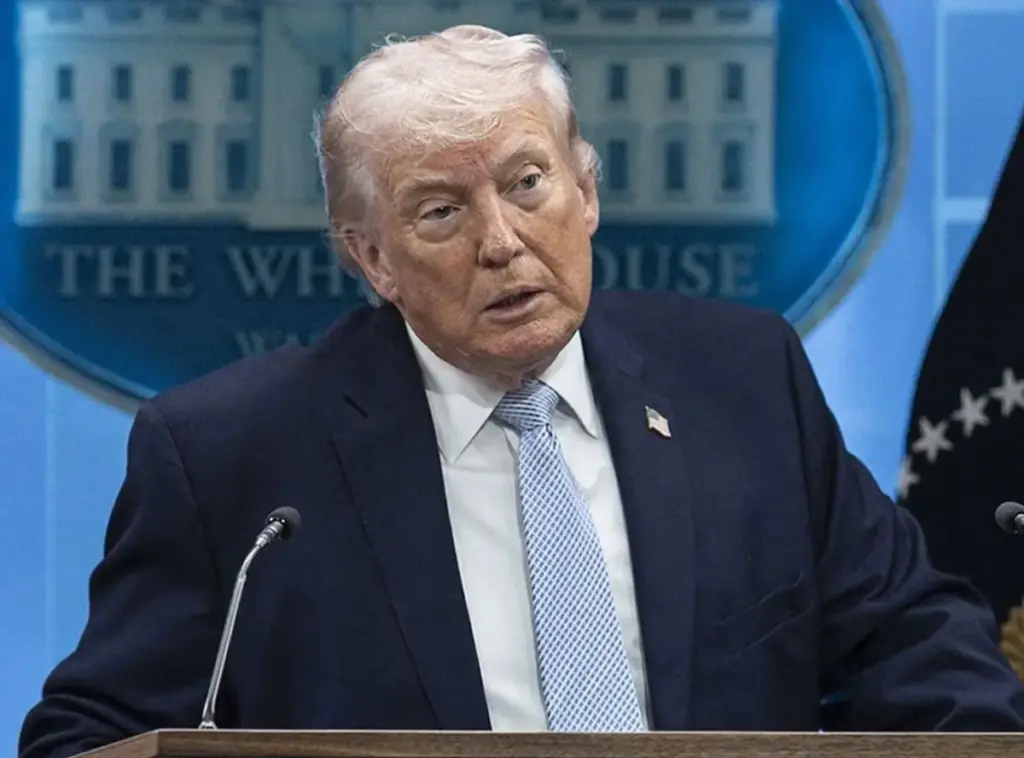
In a candid assessment of his legacy and his ongoing physical reshaping of the nation’s capital, Donald Trump has openly acknowledged what critics have long asserted: his ambitious, multi-billion-dollar architectural initiative in Washington, D.C., is driven by a self-directed effort to secure his place in American history. Speaking in an extensive interview with New York Magazine, Trump concurred with a characterization offered by Georgia Democratic Senator Jon Ossoff, who suggested that the president is aggressively constructing monuments to himself out of a conviction that subsequent administrations will not do so on his behalf.
"That’s true," Trump stated in response to Ossoff’s critique. "Nobody will do it once I’m gone. When I leave here, nobody will."
This frank admission underscores a unprecedented era of executive-driven capital construction. Across the District of Columbia, the administration has initiated or completed renovations, additions, and new structural endeavors affecting more than 100 federal properties. With collective expenditures topping $1 billion—including a controversial $800 million White House ballroom expansion and a gold-accented triumphal arch near Arlington National Cemetery—the scale of physical transformation is unlike anything seen in the capital in decades.
While American history is replete with presidential memorialization, such efforts have traditionally been spearheaded posthumously or managed by non-partisan commissions, congressional acts, and private foundation fundraising long after an administration vacates office. Trump’s direct, hands-on control over federal design, combined with public funding allocations and expedited judicial pathways, represents a fundamental shift in how presidential legacies are physically carved into the federal realm.
Detailed Chronology of the Capital Transformation
The current structural reshaping of Washington is the culmination of a multi-year effort to reassert classical design principles and expand executive facilities, marked by major legal, administrative, and physical milestones.
+-----------------------------------------------------------------------------------+
| CHRONOLOGY OF THE CAPITAL ARCHITECTURAL OVERHAUL                                  |
+-----------------------------------------------------------------------------------+
| • Executive Mandates Revived: Executive orders codify classical revival style.    |
| • White House Ballroom Unveiled: Plans introduced for $800M ballroom project.     |
| • Judicial Injunctions & Appeals: Preservation groups file federal lawsuits.       |
| • Supreme Court Clearance: High Court allows construction during litigation.     |
| • Arlington Arch Excavation: Sec. Burgum breaks ground on Great Triumphal Arch.   |
| • Legacy Acknowledgment: Trump confirms self-monumentalization motivation.        |
+-----------------------------------------------------------------------------------+
The Foundations of Executive Architectural Directives
The policy groundwork for the administration’s urban overhaul was established through early executive mandates prioritizing classical regional architecture for federal public buildings. By establishing explicit aesthetic criteria, the administration sought to standardise civic design while asserting executive authority over oversight bodies like the U.S. Commission of Fine Arts and the National Capital Planning Commission (NCPC).
The White House Ballroom Proposal and Legal Challenges
Among the most ambitious projects inside the District is the comprehensive expansion of the White House complex to include an 800-million-dollar, state-of-the-art ballroom. Intended to host massive state dinners and international summits, the project drew immediate criticism from historic preservation organizations and congressional Democrats regarding environmental impact, historic conservation laws, and federal expenditure limits.
Legal challenges brought before federal district courts briefly halted initial ground preparation, citing potential non-compliance with the National Historic Preservation Act. However, following expedited appeals, the case reached the United States Supreme Court, which issued a ruling allowing initial construction and site clearing to proceed while underlying legal challenges move through the appellate court system.
Groundbreaking on the Great Triumphal Arch
Parallel to the White House alterations, plans were finalized for a monumental arch adjacent to the gateway of Arlington National Cemetery. On Thursday, Secretary of the Interior Doug Burgum officially announced that excavation operations had commenced on the gold-accented "Great Triumphal Arch." When pressed by reporters regarding the designated honoree of the grand structure, Trump’s response was characteristically direct: "Me."
The New York Magazine Interview
The culmination of these initiatives was addressed in the recent New York Magazine interview, where Trump confronted the motives behind his rapid architectural expansion. By affirming Senator Ossoff’s analysis, Trump explicitly reframed these physical developments not merely as infrastructure upgrades, but as a deliberate safeguard against future institutional erasure.
Supporting Context & Metrics
To contextualize the scale of this capital transformation, it is necessary to examine the financial allocations, structural footprint, and comparative historical frameworks of federal civic projects.
Financial Breakdown and Capital Allocation
The administrative drive to alter Washington’s physical environment encompasses significant budgetary appropriations drawn from a blend of federal executive funds, discretionary infrastructure accounts, and private donations.
| Project Facility | Estimated Cost | Primary Funding Mechanism | Status / Phase |
|---|---|---|---|
| White House Grand Ballroom | $800 Million | Public Appropriations / Private Allocations | Excavation / Active Construction |
| Great Triumphal Arch (Arlington) | Undisclosed (Multi-Million) | Department of the Interior Capital Fund | Excavation Commenced |
| Federal Building Alterations (100+ Sites) | $200+ Million (Cumulative) | Executive Discretionary Real Estate Budget | In Progress / Varied |
| Total Estimated Capital Footprint | ~$1.0+ Billion | Combined Federal & Private | Active Nationwide/DC Operations |
Historical Precedents in Capital Construction
Presidential alterations to the fabric of Washington, D.C., are not without historical precedent, though the scope and explicitly personal nature of the current drive stand apart.
- Harry S. Truman (1948–1952): Executed a total structural reconstruction of the White House interior due to severe historic deterioration, alongside the addition of the famous "Truman Balcony." The effort was framed entirely around structural preservation and safety.
- Franklin D. Roosevelt (1933–1948): Substantially expanded the West Wing and oversaw the construction of the Pentagon to accommodate wartime administrative demands.
- The McMillan Plan (1902): A broader civic effort led by Senator James McMillan that re-established L’Enfant’s original grid, created the National Mall, and established space for future presidential monuments (Lincoln, Jefferson) executed long after their deaths.
By contrast, the present administration’s modifications are distinguished by their rapid execution within an active presidential term, driven directly by executive order rather than long-term congressional planning commissions.
HISTORICAL PERSPECTIVE: PRESIDENTIAL MONUMENTALIZATION TIMELINES

TRADITIONAL MODEL:
[Administration] ---> [Decades of Public/Congressional Debate] ---> [Posthumous Memorial]

CURRENT MODEL:
[Executive Order] -> [Direct Capital Allocation / Immediate Construction] -> [Active Term Realization]
Official Statements and Political Dynamics
The explicit strategy of self-monumentalization has drawn sharp reactions across the political spectrum, sparking intense debate among lawmakers, executive officials, and legal scholars over executive power, public expenditure, and the symbolism of national civic spaces.
Executive Branch Perspectives
Within the administration, officials have presented the construction initiatives as a long-overdue restoration of American greatness and national grandeur.
Interior Secretary Doug Burgum emphasized the aesthetic and national value during the announcement of the Arlington arch excavation:
"This initiative represents a bold step forward in restoring dignity, strength, and timeless classicism to our nation’s capital. These structures will stand for generations as symbols of American resolve and historical achievement."
When questioned directly by New York Magazine about whether his name would ultimately be affixed to the monumental White House ballroom, Trump expressed clear sentiment:
"It should. I don’t know if it will, but it should."
His admission regarding Senator Jon Ossoff’s critique highlights a distinct brand of pragmatic self-awareness:
"Jon Ossoff says I’m building monuments to myself because nobody else will do it for me? That’s true. Nobody will do it once I’m gone. When I leave here, nobody will."
Opposition and Congressional Critique
Democratic leaders and congressional oversight committees have repeatedly condemned the scale of spending and the diversion of resources toward decorative executive monuments.
Senator Jon Ossoff (D-GA), whose initial comments sparked the broader debate, reiterated his concerns regarding administrative priorities:
"At a time when working families are dealing with economic pressures and critical public infrastructure requires funding, allocating hundreds of millions of dollars to personal vanity projects in Washington is an extraordinary misuse of taxpayer priorities. Civic architecture should honor the public, not the politician occupying office."
Historic Preservation and Legal Challenges
Historic preservation organizations, including representatives from national heritage trusts, have expressed concern over the bypassing of traditional architectural review boards. Legal counsel representing preservation groups before the federal courts emphasized the statutory safeguards designed to protect Washington’s historic core:
"The architectural framework of Washington, D.C., is governed by statutes meant to ensure public participation, historical integrity, and careful oversight. Bypassing these established processes to expedite personal monuments undermines the statutory framework that protects our national heritage."
Future Outlook and Legacy Implications
As construction crews proceed with site work at both the White House and near Arlington National Cemetery, the long-term political, legal, and structural ramifications of this monumental push remain a central subject of debate in the capital.
POTENTIAL FUTURE OUTLOOK FOR DC MONUMENTAL PROJECTS
+--------------------+-----------------------------------------------------------------------+
| SCENARIO           | POTENTIAL CONSEQUENCES                                                |
+--------------------+-----------------------------------------------------------------------+
| Legal Continuation | Ongoing appellate challenges could stall completion or force design   |
|                    | modifications under environmental/preservation compliance.            |
+--------------------+-----------------------------------------------------------------------+
| Legislative Relief | Future Congresses could enact funding restrictions, condition maintenance|
|                    | funds, or mandate naming rights oversight on completed structures.    |
+--------------------+-----------------------------------------------------------------------+
| Permanent Alteration| Completed stone and steel edifices become permanent elements of the   |
|                    | capital's landscape, shifting the baseline of executive footprint.    |
+--------------------+-----------------------------------------------------------------------+
Institutional and Legal Precedents
The Supreme Court’s willingness to allow construction to proceed pending final legal resolution sets a significant administrative precedent. Future executives may view this as an open door to initiate major infrastructure or architectural overhauls directly from the White House, relying on executive orders to create facts on the ground before judicial or legislative challenges can fully clear the courts.
The Permanence of Physical Infrastructure
Unlike policy decisions, statutory regulations, or executive orders—which can be swiftly rescinded, altered, or struck down by subsequent administrations—massive stone-and-steel physical infrastructure carries a high degree of permanence. Once completed, structures like the White House ballroom and the Great Triumphal Arch become enduring elements of the Washington landscape.
Subsequent administrations face steep political, financial, and logistical barriers should they seek to alter or demolish completed federal structures. Consequently, regardless of future political shifts, the physical footprint of Trump’s architectural overhaul is positioned to remain an indelible fixture of the American capital’s core for decades to come.