Executive Overview
The landscape of modern episodic television continues to fracture and evolve at a dizzying pace, pushed forward by changing consumer attention spans and the relentless rise of bite-sized digital media. Enter Coven Academy, a supernatural teen drama created by Tim Federle and jointly distributed by Freeform and Disney+. Set against the atmospheric, jazz-tinged backdrop of New Orleans, the series positions itself at a curious cultural crossroads: it merges the high-concept, gothic-mystical aesthetic of streaming hits like The Chilling Adventures of Sabrina and Wednesday with the rapid-fire pacing and hyper-condensed format typically reserved for vertical-video platforms or web-series microdramas.
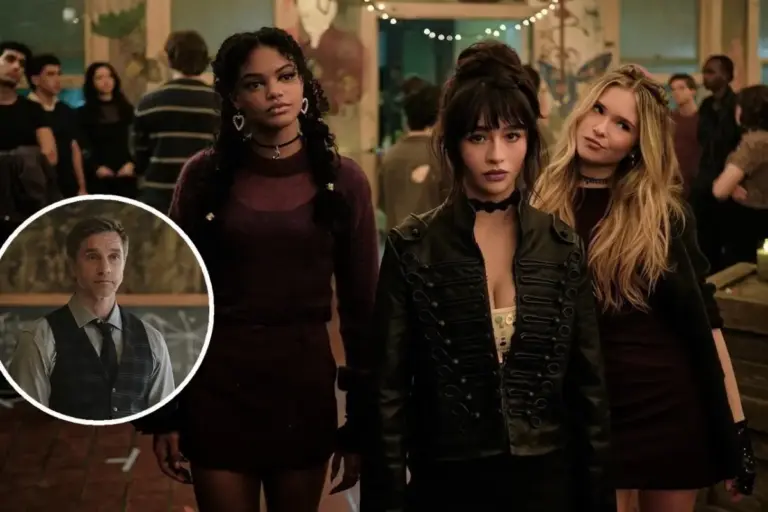
Consisting of 21 fast-paced episodes—each running a lean 12 to 18 minutes devoid of commercial padding—Coven Academy chronicles the harrowing initiation of Briar (portrayed by Malina Weissman), a troubled Brooklyn transplant thrust into the secretive world of the Crescent Veil Academy. Alongside her newfound covenmates Tegan (Ora Duplass) and Sasha (Jordan Leftwich), Briar must quickly learn to harness volatile magical abilities as the historic French Quarter faces an escalating terror: a covert culling of students orchestrated by local vampires and potentially far more ancient, malevolent entities.
While the series arrives with the weight of ambitious institutional backing, it occupies an experimental middle ground. It tests whether traditional television narrative arcs can successfully be compressed into micro-durations without sacrificing character depth or world-building. Critical reception of the series highlights a compelling dichotomy: while the show struggles with early budgetary constraints, visible CGI limitations, and foundational tonal wobbles from veteran supporting talent, it simultaneously benefits from an infectious, magnetic chemistry among its young core cast. Furthermore, its relentless cliffhanger structure and brisk momentum suggest a new frontier for young adult (YA) fantasy programming. This review provides an exhaustive analysis of Coven Academy, examining its narrative architecture, production mechanics, performances, and long-term implications for the future of platform-exclusive microdramas.
Detailed Chronology & Narrative Breakdown
The Opening Gambit: Blood on Bourbon Street
Coven Academy wastes no time establishing its stakes. The series premiere opens on the neon-lit, frenetic chaos of New Orleans’ iconic Bourbon Street. Three teenage girls wander the historic corridor, enveloped in the sensory overload of jazz, alcohol, and revelry. A seemingly charming young man intercepts them under the guise of casual street safety, offering a warm smile and a cautionary reminder to "stay safe."
The tone flips instantly from whimsical travelogue to classic survival horror as the young man reveals his true nature: a predatory vampire. He spearheads a violent, coordinated ambush against the girls. This terrifying set-piece immediately establishes the supernatural perimeter of the series. New Orleans is not merely a scenic backdrop; it is a battleground where ordinary mortals walk unaware among ancient predators. The surviving victims—and the institutional panic that follows—prompt a rapid mobilization within the hidden supernatural educational infrastructure of the city.
Arrival at Crescent Veil: Briar’s Awakening
The narrative shifts focus to Briar, played with brooding resilience by Malina Weissman. Transported to the imposing gates of Crescent Veil Academy following a disciplinary meltdown in Brooklyn, Briar is entirely ignorant of her true heritage. She is ushered into the cavernous office of Headmistress Ms. Graves (Tiffani Thiessen).
Thiessen’s Graves attempts to establish institutional authority, interrogating Briar regarding her expulsion and suburban infractions. However, the interrogation is cut short when Briar’s mounting frustration taps into a dormant, explosive wellspring of magical power. A localized kinetic burst shatters the ambient composure of the office, catching both Briar and Graves off-guard.
Fleeing the administrative wing in a state of shock, Briar finds herself targeted by external forces lurking on the academy’s gothic grounds. She is saved from immediate peril by a quick-thinking classmate, Tegan (Ora Duplass), who guides her through a labyrinthine, cloaked masonry entrance accessible only to those possessing innate magical aptitude.
+-----------------------------------------------------------------+
                 CRESCENT VEIL ACADEMY: KEY PLAYERS
+-------------------+----------------------+----------------------+
| Character         | Actor                | Supernatural Ability |
+-------------------+----------------------+----------------------+
| Briar             | Malina Weissman      | Volatile Kinetic/    |
|                   |                      | Raw Magic            |
| Tegan             | Ora Duplass          | Temporal Manipulation|
|                   |                      | (Time-Rewind)        |
| Sasha             | Jordan Leftwich      | Empathic Telepathy / |
|                   |                      | Feeling Reading      |
| Jake              | Malachi Barton       | Warlock / Elemental  |
|                   |                      | Combat               |
| Ollie             | Louis Thresher       | Vampire Enforcer     |
| Ms. Graves        | Tiffani Thiessen     | Headmistress / Caster|
+-------------------+----------------------+----------------------+
Formation of the Coven and Unresolved Grief
Within the sanctuary of Crescent Veil, Tegan introduces Briar to Sasha (Jordan Leftwich). Here, the expansive nature of the school is revealed: it serves as a co-educational boarding facility for witches and warlocks, populated by students like the formidable warlock Jake (Malachi Barton).
The magic system within Coven Academy is immediately functionalized through the students’ specialized gifts. Tegan possesses the ability to rewind localized streams of time, while Sasha exhibits hyper-sensitive empathic telepathy, capable of reading emotional subtext and hidden trauma in real-time. This dynamic introduces instant narrative friction. Sasha immediately senses that Briar is concealing a deep-seated secret.
Sasha’s intuition proves correct. Beneath Briar’s prickly exterior lies a year-old wound: the unsolved, brutal murder of her mother in Brooklyn—a trauma that continues to fuel her volatile outbursts.
While Sasha is momentarily distracted by teenage infatuation—fixating on Ollie (Louis Thresher), the enigmatic young man who drove Briar to the campus—the broader student body faces an existential threat. Warlocks are organizing underground investigative cells to locate three missing students presumed dead or captured by the expanding vampire coalition operating in the French Quarter. No one, however, understands the precise nature of Ollie’s interest in Briar, setting up a slow-burn romantic and psychological mystery.
Supporting Context & Metrics
The Microdrama Format: A High-Risk, High-Reward Experiment
The most significant aspect of Coven Academy—beyond its supernatural plotlines—is its structural format. Industry analysts tracking Disney+ and Freeform note that Coven Academy represents a calculated foray into the "microdrama" format for traditional media conglomerates. Historically, microdramas (episodes ranging from 1 to 5 minutes or, in this case, 12 to 18 minutes) have been the exclusive domain of mobile-first, vertical platforms such as ReelShort, DramaBox, or TikTok-adjacent creators. These platforms rely on extreme narrative velocity, near-constant cliffhangers, and low-cost, high-turnover production cycles.
By bringing this structural philosophy to a Disney-backed ecosystem, Coven Academy tests whether Gen Z and Alpha audiences will embrace a traditional horizontal streaming experience that mimics the breakneck pacing of short-form apps.
+-------------------------------------------------------------------+
                 EPISODIC METRICS & FORMAT COMPARISON
+-------------------------+------------------+----------------------+
| Feature                 | Traditional YA   | Coven Academy        |
+-------------------------+------------------+----------------------+
| Episode Count           | 8 - 10 episodes  | 21 episodes          |
| Episode Duration        | 45 - 60 minutes  | 12 - 18 minutes      |
| Commercial Interruption | Variable         | Commercial-Free      |
| Narrative Hook Frequency| Act breaks       | End-of-episode cliff |
|                                            | hangers              |
+-------------------------+------------------+----------------------+
Budgetary Constraints and Aesthetic Trade-offs
A critical examination of the series reveals the structural hurdles inherent in producing 21 distinct episodes under a compressed schedule. Reviewers and technical critics have pointed out visible budgetary limitations. The CGI work during magical combat sequences and vampire transformations occasionally feels unpolished, bearing the hallmarks of expedited post-production timelines. Sets within Crescent Veil Academy, while adequately gothic, occasionally lean into a theatrical minimalism that contrasts sharply with the high-gloss production values of major franchise counterparts like Disney+’s Percy Jackson and the Olympians.
However, these financial constraints are partially mitigated by inventive cinematography in the exterior New Orleans shots. The production leverages the authentic textures of the French Quarter, utilizing natural gas lamps, cobblestones, and shadowy courtyards to ground the fantastical elements in a gritty, tactile reality.
Official Statements & Industry Perspectives
While promotional materials from Disney Branded Television emphasize Coven Academy as a groundbreaking fusion of classic supernatural lore and contemporary youth culture, behind-the-scenes insights shared by creator Tim Federle and trade journalists illuminate the experimental nature of the production.
Industry observers have noted that the greenlighting of a 21-episode, short-run series signals a major shift in how networks commission young adult content. Rather than committing to massive 60-minute blocks that require extensive character filler, networks are pivoting toward "high-frequency engagement models."
In interviews accompanying the series release, critics and showrunners have debated the efficacy of the micro-format. Proponents argue that stripping away narrative bloat forces writers to focus entirely on momentum, ensuring that viewers are never more than ten minutes away from a plot revelation or supernatural confrontation. Conversely, veteran television critics have cautioned that this hyper-compressed structure can stunt character development, leaving emotional beats—such as Briar’s mourning process over her mother—compressed into fleeting conversational asides rather than given the room to breathe that they would receive in a traditional 45-minute format.
Character Dynamics & Performance Analysis
The Youth Ensemble: Chemistry as the Core Anchor
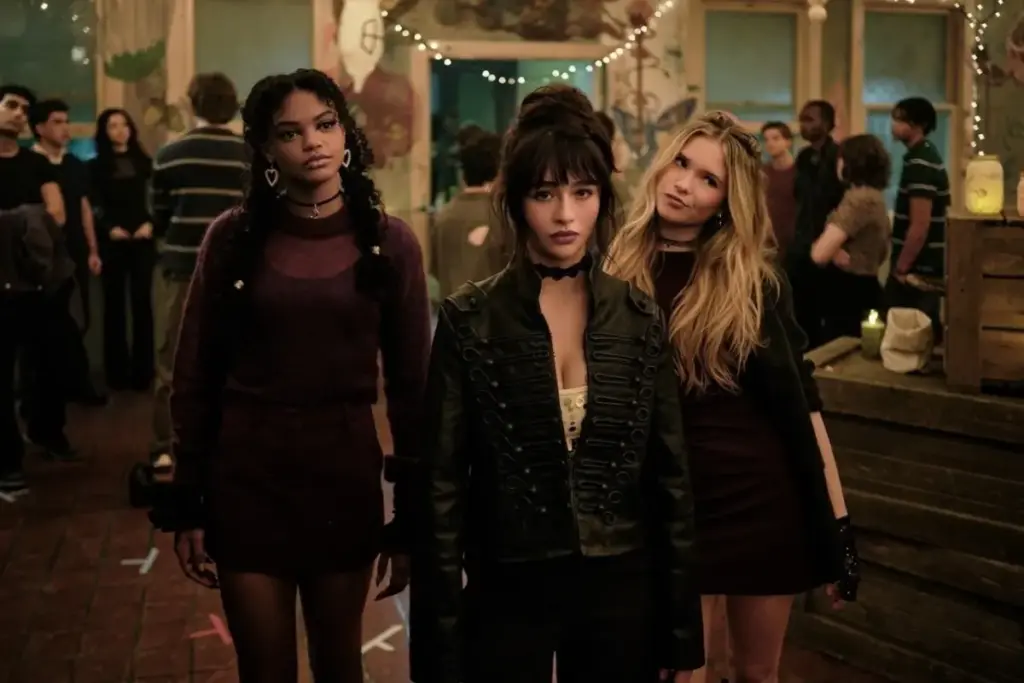
The ultimate success of Coven Academy hinges on the interpersonal dynamics of its young core trio: Malina Weissman, Ora Duplass, and Jordan Leftwich. Despite the narrative rushing headlong from one crisis to the next, these three actors forge an authentic, compelling camaraderie that anchors the series.
- Malina Weissman (Briar): Weissman carries the emotional weight of the series with a hardened exterior that successfully masks deep vulnerability. Her portrayal of a teenager grappling with both supernatural powers and unresolved maternal grief avoids cliché, grounding her magical outbursts in genuine emotional pain.
- Ora Duplass (Tegan): Duplass brings a grounded, observational calm to the coven. Her character’s ability to manipulate time is reflected in a measured, deliberate performance style that acts as an anchor when Weissman and Leftwich’s characters clash.
- Jordan Leftwich (Sasha): Leftwich infuses Sasha with sharp intuition and youthful exuberance. Her empathic abilities serve as a narrative tool for the audience, cutting through teenage posturing to reveal hidden motives. The chemistry between Weissman, Duplass, and Leftwich feels earned, evolving organically from mutual suspicion to fierce loyalty.
The Adult Dilemma: Tiffani Thiessen’s Search for Tone
One of the most heavily discussed elements of the series’ premiere block involves veteran actress Tiffani Thiessen. With a television career spanning nearly four decades—from Saved by the Bell and Beverly Hills, 90210 to White Collar—Thiessen is an undeniable screen presence. However, her integration into Coven Academy as Headmistress Ms. Graves presents a notable hurdle in the early episodes.
Critics have noted that Thiessen visibly struggles to lock down the exact tone required for Graves during the opening chapters. The character is ostensibly written as a stern, authoritative taskmaster presiding over a dangerous magical academy. Yet, Thiessen’s natural warmth—a hallmark of her enduring screen persona—fights against the rigidity of the role. While this warmth eventually begins to surface as the series progresses and layers of institutional secrecy are peeled back, the initial disconnect creates a jarring friction between the adult authority figures and the high-stakes student body.
The Antagonist Architecture: Tamora and Ollie
The supernatural threat is embodied not just by feral street vampires, but by a more organized, insidious faction led by Tamora (Keegan Connor Tracy), a hybrid vampire-witch who blurs the traditional supernatural boundaries of the universe. Tamora employs Ollie (Louis Thresher) as her chief operative—an enforcer tasked with drawing Briar into their orbit.
What elevates Ollie beyond a standard villainous minion is Thresher’s portrayal of internal conflict; Ollie exhibits a distinct aversion to consuming human blood, complicating his loyalty to Tamora and adding a layer of romantic and moral ambiguity to his interactions with Briar.
Future Outlook: Streaming Strategy & Season Potential
As Coven Academy establishes its footprint on Freeform and Disney+, its trajectory holds significant implications for the future of mid-budget genre television.
+-----------------------------------------------------------------+
              FUTURE TRAJECTORY & STRATEGIC OUTLOOK
+-----------------------+-----------------------------------------+
| Strategic Pillar      | Projected Impact / Industry Implication |
+-----------------------+-----------------------------------------+
| Format Viability      | Proves whether 12-18 min episodes can   |
|                       | sustain long-form serialized fantasy.   |
| IP Expansion          | Potential for multi-season expansion if |
|                       | completion rates remain high on Disney+. |
| Talent Pipeline       | Serves as a testing ground for pairing  |
|                       | veteran talent with emerging Gen-Z stars.|
+-----------------------+-----------------------------------------+
Will Coven Academy Secure a Renewal?
The ultimate verdict on Coven Academy—as framed by early critical consensus—is a definitive STREAM IT. While the show suffers from occasional stiffness, unpolished visual effects in its opening hours, and an initial tonal miscalibration from its adult cast, these flaws are heavily outweighed by its structural virtues.
The breakneck pacing, the inventive use of New Orleans’ gothic mythology, and, above all, the undeniable chemistry among Weissman, Duplass, and Leftwich make for highly bingeable viewing. For audiences fatigued by the slow, sprawling storytelling of traditional 10-hour streaming seasons, Coven Academy offers a refreshing, high-velocity alternative.
If Disney+ and Freeform are willing to refine the budgetary edges and give the writers room to deepen the mythology in a potential second season, Coven Academy could easily transition from an experimental microdrama test case into a staple supernatural franchise for the next generation of fantasy fans.