Executive Overview
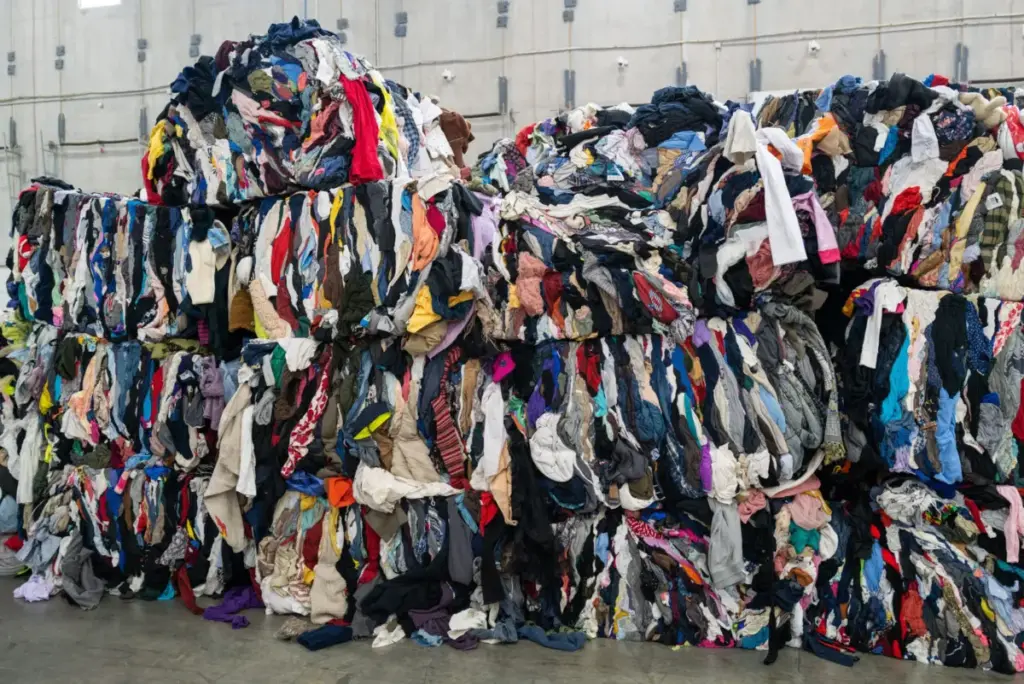
As fashion capitals across New York, London, Milan, and Paris captivate the global imagination with dazzling seasonal cycles, cutting-edge street style, and the industry’s next generation of supermodels, a starkly different reality unfolds behind the scenes. The multi-trillion-dollar global fashion economy operates on a relentless, linear model of rapid consumption and disposal. While millions celebrate the ephemeral glamour of Fashion Month, the industry’s dark underbelly continues to expand unchecked: rampant mass production, an over-reliance on fossil-fuel-derived synthetic materials like polyester, widespread labor violations, and a catastrophic accumulation of textile waste.
For decades, the United States has lacked a cohesive, nationwide regulatory framework to address the lifecycle of clothing. That systemic void is now facing a formal challenge. Spearheaded by Representative Chellie Pingree (D-ME), the Textile Waste Reduction Act was officially filed in Congress.
While previous legislative efforts—most notably the FABRIC Act introduced in 2022—have focused primarily on domestic labor protections and manufacturing standards, Pingree’s bill targets the back-end crisis: the staggering accumulation of discarded garments. By directing the Environmental Protection Agency (EPA) to establish baseline data, improve tracking, and develop a comprehensive National Textile Circularity Strategy, the bill aims to lay the groundwork for sweeping systemic reforms akin to those recently adopted in France and the European Union.
Coming at a tumultuous political crossroads marked by shifting federal environmental policies and upcoming midterm elections, the Textile Waste Reduction Act represents a vital, if preliminary, reckoning for an industry long overdue for accountability.
Detailed Chronology: From Concept to Congressional Filing
The journey toward the introduction of the Textile Waste Reduction Act reflects the broader, often agonizingly slow trajectory of environmental legislation within the United States Congress. Understanding how this bill reached the House floor requires examining the timeline of mounting pressure from grassroots organizers, environmental watchdogs, and progressive policymakers.
The Genesis of the Slow Fashion Caucus
Long before the bill’s text was finalized, the institutional groundwork was laid by the Slow Fashion Caucus, founded by Rep. Pingree. Recognizing that mainstream federal policy completely ignored the environmental externalities of the textile industry, the caucus served as an educational hub and advocacy network on Capitol Hill. For years, lawmakers operated in a vacuum regarding fashion waste, often viewing the industry purely as an economic engine of retail rather than a major global polluter.
Development and Refinement (2024–2025)
Drafting the legislation required extensive consultations with environmental scientists, waste-management experts, and international trade stakeholders. During this period, European nations—led by France—began passing aggressive anti-fast-fashion laws designed to penalize ultra-fast-fashion business models and curb textile dumping.
American advocates watched closely as international frameworks proved that government intervention could successfully alter corporate behavior. By late 2024, the core tenets of Pingree’s bill began to solidify: rather than immediately imposing complex financial penalties or Extended Producer Responsibility (EPR) schemes—which often face fierce pushback from corporate lobbies—the initial strategy would focus on data collection and infrastructural planning.
The Official Filing: September 16
On September 16, coinciding squarely with the height of the global fashion month calendar, the bill was officially filed. The juxtaposition was intentional. By introducing the legislation while the industry celebrated its most visible, high-consumption moment, proponents sought to draw a sharp contrast between the curated perfection of the runway and the unmanaged reality of the global waste stream.
Supporting Context & Metrics: The Anatomy of Fashion’s Crisis
To understand why the Textile Waste Reduction Act is a necessary intervention, one must examine the staggering scale of modern textile production and its environmental footprint.
The Rise of Synthetic and Fossil-Fuel Materials
Over the past several decades, the composition of our wardrobes has fundamentally shifted. Natural fibers like cotton, wool, and silk have been largely supplanted by synthetic alternatives—primarily polyester, nylon, and acrylic derived directly from fossil fuels.
- According to recent environmental assessments, over 60% of all clothing globally is now made from synthetic materials.
- These materials do not break down organically; instead, they persist in landfills for centuries, slowly fragmenting into microplastics.
- Every time synthetic garments are washed, millions of microscopic plastic fibers are released into wastewater systems, eventually making their way into rivers, oceans, and the global food chain.
The Fast-Fashion Acceleration
The democratization of trends through ultra-fast-fashion giants has compressed the traditional four-season fashion calendar into a hyper-accelerated cycle of micro-trends. Brands churn out thousands of new styles weekly, encouraging a disposable mindset among consumers.
- The average consumer buys significantly more clothing than they did twenty years ago, yet keeps each garment for half as long.
- A staggering percentage of this output ends up incinerated or relegated to sprawling open-air landfills in the Global South, transforming local ecosystems into dumping grounds for wealthy nations.
The Intersection of Public Health and Toxicity
Public awareness regarding environmental toxins has grown exponentially in recent years, driven by anxieties over contaminated food, polluted water supplies, and rising cancer rates, particularly among younger demographics. Yet, as Rep. Pingree notes, consumers rarely scrutinize the chemical composition of the garments resting directly against their skin. Modern textiles are frequently treated with toxic dyes, formaldehyde-based wrinkle resistors, per- and polyfluoroalkyl substances (PFAS) for water resistance, and heavy metals. These chemicals pose risks not only to the garment workers manufacturing them under hazardous conditions but also to consumers and the environment as the garments degrade.
Official Statements & Legislative Framework
In an exclusive interview with Teen Vogue, Rep. Chellie Pingree detailed the urgent motivations behind the bill and addressed the political realities of championing environmental reform in a deeply polarized Washington.
"You’re in fashion week, and you can see the incredible amount of clothing that’s being produced and the rapid change that happens in this industry, but there’s so little awareness of what happens when all these things are produced, what level of toxicity is in your clothing," Pingree explained during a video interview.
She contextualized the textile crisis within the broader public health anxieties of modern consumers:
"You couple this at the same time where we’ve got heightened awareness and people really worried about toxins in the environment, toxins in their food, increasing rates of cancer, and more cancer in young people. The one thing they don’t always turn to is their clothing: how much clothing turns into waste, how it ends up in the waste stream; it could be in your water, and it becomes plastic in the ocean."
What the Bill Mandates
The Textile Waste Reduction Act establishes a pragmatic, phased approach to a massive systemic problem. Specifically, the legislation:
- Directs the EPA to Establish Baseline Data: For meaningful policy to be enacted, the federal government must first understand the exact volume, composition, and fate of textile waste generated within U.S. borders. The bill mandates systematic data collection to map out the current waste stream.
- Creates a National Textile Circularity Strategy: The EPA will be required to develop a comprehensive national roadmap, conducting a rigorous needs assessment to identify necessary infrastructural actions, financial investments, and policy priorities.
- Lays the Groundwork for Future Legislation: By building an official federal database and strategy, the bill creates the foundational infrastructure required for more aggressive future policies—such as Extended Producer Responsibility (EPR) mandates, eco-design standards, and import restrictions on toxic or unrecyclable garments.
Pingree candidly acknowledged the bill’s limitations, describing it as an incremental, yet vital, opening salvo:
"This is very much a first step, because it doesn’t include any extended producer responsibility. But it’s a good first step because we haven’t really even had a bill."
Future Outlook: Navigating Politics, Gridlock, and Grassroots Power
The path forward for the Textile Waste Reduction Act is fraught with political hurdles. The timing of the bill’s introduction coincides with a volatile period in American governance. Under the current administration, the EPA—led by figures who have actively rolled back major pollution standards, including carbon emission caps on power plants—has demonstrated an aversion to stringent environmental regulation. Furthermore, with midterm elections looming, the composition of Congress remains a shifting variable that could alter legislative priorities overnight.
Despite these headwinds, Pingree remains surprisingly optimistic about building bipartisan support.
Finding Common Ground Across the Aisle
Environmental legislation is frequently dismissed as a partisan flashpoint, but Pingree believes the textile waste crisis can transcend traditional political divides. She draws parallels to her legislative success with food-related amendments in the House, where she successfully collaborated with Republican colleagues and members aligned with health-centric movements like the Make America Healthy Movement (MAHA).
"I think there’s some real opportunities here, and I think we can present this in a way that engages them on something that’s very important to Republican and Democratic constituents," Pingree stated. "I know because we’ve had some success on amendments that have come to the floor of the House on food-related things and more Republicans joining on that issue. I think we can really build some momentum for it."
The Indispensable Role of Grassroots Activism
For federal legislation to survive the grinding machinery of congressional committees and corporate lobbying, lawmakers need proof that voters care deeply about the issue. Public disillusionment with the federal government’s ability to enact meaningful change is at an all-time high, a sentiment Pingree views with pragmatic empathy.
"I don’t blame them," Pingree said of citizens who feel cynical about political efficacy. "But I also will just say it’s a really necessary force, and sometimes we really just need citizens to get engaged."
She pointed to a historical precedent that offers a blueprint for modern textile advocacy: the recycling movement of the late 20th century.
"I would say for the majority of my colleagues, they’d be like, ‘What’s fast fashion? What’s this problem?’ So one of the things that’s really helpful is if [people] just start calling up and complaining and saying, ‘I’m outraged.’ A bill gives people an opportunity to call their representatives, asking them to take specific action."
Drawing on generational momentum, Pingree recalled how children and students revolutionized household behavior decades ago:
"Students and young people especially, I feel like they sort of drove the recycling movement because they were the ones who learned in fourth grade that you shouldn’t throw away cans and bottles and went home and told their parents, ‘Don’t do this anymore,’ and the pressure became big enough that it became an accepted thing."
Conclusion: A Watershed Moment for American Fashion
The introduction of the Textile Waste Reduction Act will not, on its own, solve the global fashion industry’s profound ecological and ethical crises. It does not penalize polluting corporations immediately, nor does it halt the daily importation of millions of tons of cheap, petroleum-based garments.
However, by forcing the federal government to officially acknowledge, quantify, and strategize around textile waste for the first time in history, the bill shatters a long-standing political silence. As the glamor of fashion week fades and the reality of mounting landfills reasserts itself, the legislative push serves as a critical rallying cry. It proves that while the runway may dictate what we wear today, an engaged citizenry and forward-thinking policymakers will ultimately determine whether the fashion industry has a sustainable tomorrow.