Executive Overview
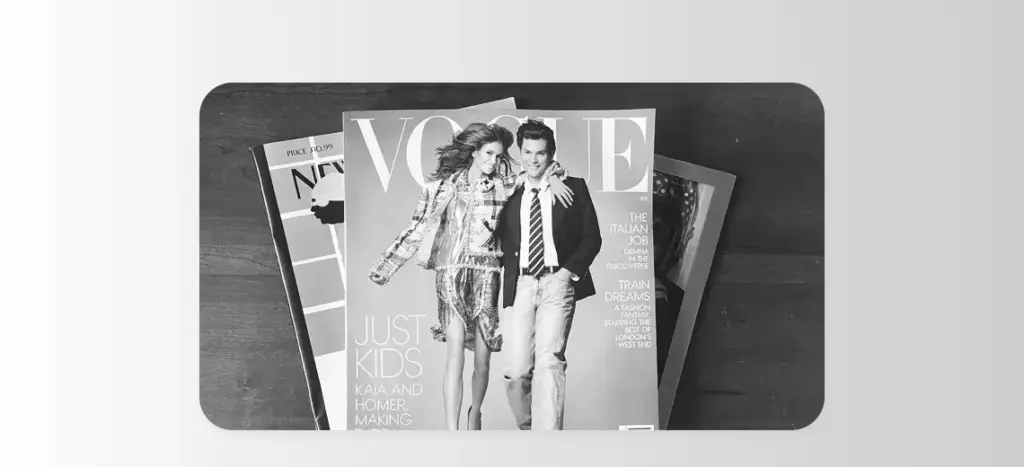
The September issue of Vogue has long been heralded as the undisputed heavyweight champion of the global fashion publishing calendar. Historically, it was the moment when the industry’s most revered publication set the cultural and aesthetic agenda for the upcoming year, serving as a prophetic roadmap for retailers, designers, and consumers alike. However, the arrival of the latest September edition marks a profound historical watershed: it is the first such issue published under the stewardship of Chloe Malle, head of editorial content, who assumed the mantle from legendary editor Anna Wintour last September.
This leadership transition coincides with an existential crossroads for the entire fashion media ecosystem. On a recent episode of the Glossy Fashion Podcast, senior fashion reporter Danny Parisi and editor-in-chief Jill Manoff sat down to dissect Malle’s inaugural September masterpiece. Their conversation went far beyond surface-level critiques of glossy pages and celebrity profiles, unearthing deep-seated structural contradictions within modern fashion journalism.
At the heart of these contradictions is a digital revolution that has fundamentally altered how style information is consumed. Today, print magazines can no longer compete with the blistering, real-time speed of online publishing and social media algorithms when it comes to breaking trends. Consequently, the traditional function of the September issue—delivering timely fashion intelligence—has migrated to the web. This migration has forced print publications into a strange, hybridized identity: they are weighed down by advertising for ephemeral, fast-moving consumer brands, yet their editorial content increasingly leans toward the timeless, the esoteric, or the lifestyle-oriented.
As Vogue navigates this post-Wintour, digital-first landscape under Malle—herself a child of Hollywood and fashion royalty—the magazine offers a fascinating case study in adaptation. From the rise of single-brand styling to the pervasive "nepo baby" discourse embedded in its cover features, the publication is grappling with what it means to be a luxury print artifact in an era where paper has largely been relegated to the status of a coffee table collectible.
Detailed Chronology: The Evolution of the September Issue and the Malle Succession
To fully understand the gravity of the current moment, one must trace the historical trajectory of the September issue and the monumental shoes Chloe Malle was asked to fill. For decades, Anna Wintour ruled Vogue as an absolute arbiter of taste, famously documented in the 2009 film The September Issue. During Wintour’s reign, the September edition grew into a massive, multi-pound monolith of advertising revenue and cultural authority. It was the commercial engine that powered Condé Nast, signaling to the world which designers would rise and which trends would vanish.
The chronology of this transition accelerated in the late 2010s and early 2020s, as digital platforms—Instagram, TikTok, and specialized style Substacks—began systematically dismantling the gatekeeping model of legacy print. By the time Anna Wintour restructured her leadership team and positioned Chloe Malle as head of editorial content, the landscape had shifted irrevocably. Malle’s appointment last September was widely interpreted as an acknowledgment that Vogue needed a leader fluent in the digital lexicon, someone who understood how younger audiences interact with media across fragmented ecosystems.
However, translating a digital sensibility into a traditional print format has proven to be a delicate, and at times jarring, balancing act. On the Glossy Fashion Podcast, Jill Manoff recounted her experience reading Malle’s inaugural September issue, noting a distinct departure from the buzzy, cutting-edge style reportage of the past.
"I was a Vogue subscriber for years, and I used to read things that were buzzy and new," Manoff noted. "This issue had stories about improving your mood with Botox or one about the dangers of clenching your jaw. I was just like, ‘What am I reading here?’"
This editorial pivot highlights a fundamental chronological disconnect. While online outlets capture the lightning-fast pulse of street style, micro-trends, and runway critiques within seconds of a show ending, print is forced to operate on a glacial production timeline. The resulting editorial mix often feels like a temporal mismatch: pages saturated with hyper-current luxury advertisements juxtaposed against wellness essays and long-lead features that seem detached from the immediate rhythms of the commercial fashion calendar.
Supporting Context & Metrics: The Death of Timely Print and the Rise of the Coffee Table Object
To contextualize the choices made in Malle’s first September issue, industry analysts must examine the broader economic and cultural metrics governing print media today. The primary catalyst for change is consumer behavior. Print magazines are no longer bought for utility; they are purchased as aesthetic objects, cultural markers, and collector’s items.
As Danny Parisi observed on the podcast:
"A lot of it doesn’t feel very timely. Part of that is that people are more likely to buy print magazines today as a collector’s item, as a coffee table book. That’s why you see so many of those commemorative issues of random magazines in the grocery store aisle. They’re not meant to give you timely information, which has all moved online."
This shift in consumer intent has profound economic implications for legacy publishers. When a magazine functions as a coffee table book rather than a newsstand guide, its internal logic changes. Timely trend forecasting—once the crown jewel of Vogue’s September issue—now feels redundant when a consumer has already scrolled past hundreds of real-time runway reactions on TikTok weeks before the physical magazine arrives in their mailbox.
Consequently, publishers face an uphill battle in justifying the editorial content of print. If the news has already broken online, what is the purpose of the glossy page? For Vogue, the answer has oscillated between high-concept artistic portfolios, deep-dive cultural essays, and lifestyle integration (such as wellness, beauty, and interior design). Yet, this diversification risks alienating traditional fashion purists who look to the magazine for sartorial inspiration rather than medical anecdotes about jaw clenching.
Furthermore, the advertising landscape has transformed in tandem with reader habits. Luxury fashion houses still covet the prestige of the September issue print pages—viewing a full-color spread in Vogue as a necessary brand-building exercise—even as their performance marketing budgets have shifted heavily toward digital and influencer partnerships. This creates a fascinating tension: the brands paying for placement are intensely focused on current, seasonal hotness, while the medium itself is increasingly consumed as a timeless, archival object.
Official Statements and Critical Industry Discourse: Nepo Babies, Creative Directors, and Single-Brand Looks
The discourse surrounding the September issue naturally extended to its high-profile cover and inner pages, offering a window into how the publication views its own cultural standing. The cover story featured Kaia Gerber and Homer Gere—both prominent examples of the cultural phenomenon colloquially known as "nepo babies" (children of famous parents).
This casting choice carries a meta-narrative weight, particularly when viewed through the lens of editorial leadership. Chloe Malle herself is the daughter of celebrated actress Candice Bergen and acclaimed filmmaker Louis Malle, placing her squarely within the same socio-cultural ecosystem as her cover subjects. The issue cleverly weaves this theme of familial legacy throughout its pages, drawing a parallel between the proliferation of famous offspring in modeling and acting and the recent musical-chairs movement of creative directors taking over legacy fashion houses over the past year.
However, it was not just the casting choices that sparked industry-wide debate, but the very styling of the clothes within the editorial spreads. The podcast hosts zeroed in on a persistent, yet increasingly controversial, trend in modern fashion publishing: the dominance of single-brand head-to-toe looks.
Jill Manoff sharply criticized this editorial direction, contrasting it with the more eclectic, imaginative styling of past decades:
"We’ve definitely moved away from the stylist-driven looks, which haven’t been the norm for a while. I like when you see ‘stylist-owned ball cap’ or ‘vintage jeans’ in the credits. It’s unfortunate that that’s gone, because that is very inspiring to me. When you see a head-to-toe look that’s all one brand, you’re not getting ideas on how to style it. Nobody dresses that way."
This critique strikes at the very soul of fashion editorial integrity. Historically, the magic of a great magazine spread lay in its alchemy—combining a high-end designer coat with vintage denim, thrifted accessories, and unexpected footwear to create a distinct, wearable fantasy. By contrast, printing a look pulled straight from a brand’s commercial lookbook often functions more as an advertorial concession than an act of creative styling. It signals a tightening corporate grip on editorial pages, where risk-taking is subdued in favor of satisfying major luxury conglomerates that purchase millions of dollars in advertising space.
Future Outlook: Where Does Vogue Go From Here?
As the dust settles on Chloe Malle’s inaugural September issue, the broader fashion publishing industry is left to ponder the future trajectory of the medium. The challenges facing Vogue are emblematic of a wider crisis across luxury print media: how to maintain an aura of exclusive authority in an egalitarian, digital-first world.
Several key trajectories are likely to shape the coming years:
- The Deepening Divide Between Print and Digital: Rather than attempting to chase the breaking-news cycle—a battle print is mathematically destined to lose—Vogue and similar titles will likely lean further into archival, book-quality production. Expect higher paper weights, more expansive photographic portfolios, and longer, more contemplative cultural essays that reward slow, deliberate reading.
- The Evolution of Luxury Advertising Partnerships: As brands demand measurable returns on their marketing investments, print magazines will need to innovate how their physical pages connect to digital commerce. QR codes, augmented reality integrations, and seamless "page-to-cart" technologies will likely become more prevalent, bridging the gap between the timeless coffee table book and the instantaneous digital storefront.
- Navigating Cultural Relevance: Under Malle’s leadership, the magazine will continue to negotiate its dual identity as a high-society chronicle and a mass-cultural touchstone. The critique of lifestyle content—such as wellness pieces on Botox and jaw clenching—suggests that Vogue is casting a wider net to capture wellness-obsessed modern consumers. However, striking the right balance between high fashion and lifestyle journalism will require careful curation to avoid alienating core fashion enthusiasts.
- The Redefinition of Editorial Independence: The debate over single-brand styling highlights the ongoing friction between commercial pressures and creative vision. If fashion magazines hope to retain their cultural cachet as arbiters of style rather than mere corporate brochures for luxury conglomerates, a return to imaginative, risk-taking, mixed-brand styling may be essential.
Ultimately, the post-Wintour era at Vogue has only just begun. While the September issue remains an indomitable institution, its pages reflect a transitional industry caught between the ghost of print’s glorious past and the chaotic, hyper-connected reality of the digital future. How Chloe Malle and her team navigate these turbulent waters will set the standard for the next generation of fashion journalism.