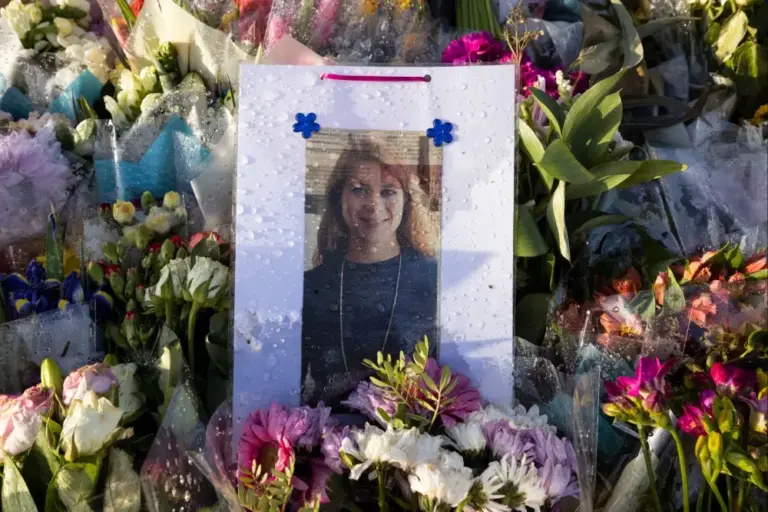
In a rare and legally complex murder trial at London’s Old Bailey, a 34-year-old man has gone on trial accused of the killing of a childhood acquaintance—more than 15 years after an initial, brutal street attack. Jordan Burton denies both murder and manslaughter following the March 2022 death of Daniel Allright, who succumbed to a fatal epileptic seizure in his bath.
Prosecutors argue that the severe traumatic brain injury (TBI) Mr Allright suffered during a targeted robbery in September 2006—when both he and the defendant were teenagers—directly triggered the post-traumatic epilepsy that ultimately claimed his life at the age of 31. The case tests the outer boundaries of legal causation in English criminal law, forcing a jury to evaluate whether a violent act committed by a 14-year-old can constitute murder over a decade and a half later, when the victim’s underlying medical condition finally proves fatal.
Detailed Chronology: From a South London Park to the Old Bailey
The 2006 Assault: September 13, 2006
The genesis of the tragedy dates back to an autumn afternoon in southeast London. On September 13, 2006, 16-year-old Daniel Allright left his home on Oscar Street, Lewisham, to ride bikes with two friends. As they passed through Friendly Gardens (also known as Friendly Street Park) in Deptford, the trio was confronted by a group of youths attempting a street robbery.
According to a witness statement provided by Mr Allright to police shortly after the assault, a young Black male—later identified by the victim as Jordan Burton—approached him and demanded to know if he wanted to fight. Burton was then handed a piece of wood, which he used to strike Mr Allright repeatedly over the head.
The attack escalated rapidly. Two white males from the assailant group joined in, wielding an advertising board and a bicycle chain as weapons. Mr Allright raised his arms in a desperate attempt to shield his head, sustaining massive blunt-force trauma before the assault was abruptly halted. A bystander emerged from a nearby local shop, shouting at the gang to leave the teenager alone, prompting the attackers to flee into the surrounding streets.
Immediate Aftermath and Medical Interventions
Emergency services rushed the critically injured teenager to the hospital. Medical assessments revealed significant, life-threatening internal injuries. Mr Allright had suffered severe intracranial bleeding around his brain and a dangerous spike in pressure inside his skull, necessitating emergency neurosurgery in the form of a craniotomy.
While he survived the immediate trauma, the physical toll was profound. In March 2007—just six months after the assault—Mr Allright suffered his first post-traumatic seizure. Neurologists diagnosed him with post-traumatic epilepsy, placing him on long-term pharmaceutical regimens to suppress the recurring neurological misfirings caused by the permanent scarring on his cerebral cortex.
Initial Legal Fallout (2007–2008)
Scotland Yard’s investigation quickly yielded identifications and arrests. Jordan Burton, who was only 14 years old at the time of the offense, was arrested and initially interviewed by police in September 2006. In those early interviews, Burton acknowledged witnessing the disturbance but flatly denied any personal involvement or familiarity with the perpetrators.
However, as the broader investigation unfolded, legal accountability crystallized for multiple members of the gang. In 2007, one of the co-accused pleaded guilty to violent disorder. Another admitted to using threatening words or behavior. By 2008, facing mounting evidence, Burton altered his legal position, entering guilty pleas to charges of violent disorder and inflicting grievous bodily harm (GBH) with unlawful wounding. Crucially, none of these historic convictions explicitly established an intent to cause truly catastrophic, life-threatening harm—a distinction that forms the core battleground of the current murder trial.
The Fatal Seizure: March 2022
For nearly sixteen years, Mr Allright attempted to navigate life under the shadow of his injuries. The severity of his epileptic episodes, however, escalated sharply in the months leading up to his death.
On March 25, 2022, Mr Allright sent a text message to his mother, detailing that he had suffered a debilitating seizure and was enduring an excruciating headache. The following day, March 26, his mother went to check on him when he failed to maintain contact. She made the harrowing discovery of finding her 31-year-old son submerged in his home bathtub.
A thorough post-mortem examination dismantled any alternative theories of death. Pathologists found no water in his lungs, ruling out accidental drowning, nor was there any sign of natural underlying disease. Instead, the medical examiner concluded that death was the direct result of a sudden, catastrophic epileptic fit—post-traumatic epilepsy—sparked by the structural damage inflicted to his brain back in 2006.
Legal Arguments and Prosecution Case
Opening the Crown’s case at the Old Bailey, prosecutor Duncan Atkinson KC laid out a meticulous medical and legal roadmap for the jury, seeking to bridge the vast 16-year gap between the punch of a teenager and a man’s death.
+-----------------------------------------------------------------+
                    CHAIN OF LEGAL CAUSATION
+-----------------------------------------------------------------+
| 1. 2006 Attack: Gang violently strikes Daniel Allright's head   |
|    with weapons (wood, advertising board, bike chain).          |
+-----------------------------------------------------------------+
                                 |
                                 v
+-----------------------------------------------------------------+
| 2. Brain Trauma: Results in severe intracranial bleeding,       |
|    skull pressure, and emergency craniotomy surgery.            |
+-----------------------------------------------------------------+
                                 |
                                 v
+-----------------------------------------------------------------+
| 3. Onset of Epilepsy: First seizure occurs March 2007; condition  |
|    worsens progressively over the next 15 years.                |
+-----------------------------------------------------------------+
                                 |
                                 v
+-----------------------------------------------------------------+
| 4. Fatal Incident: March 26, 2022 — Unchecked seizure in bath   |
|    leads to sudden death at age 31.                             |
+-----------------------------------------------------------------+
Establishing Medical Causation
Mr Atkinson acknowledged that questions might be raised regarding Mr Allright’s adherence to his complex medical regimen in the final stages of his life. Addressing potential lines of defense questioning the victim’s personal management of his medication, the prosecutor countered proactively:
"There may be questions about how careful he was about taking his medication, but of course, you will want to bear in mind, he would not have needed to take such medication at all had he not developed epilepsy as a result of the attack."
The prosecution’s medical experts maintain that the post-traumatic epilepsy was a direct, unbroken consequence of the head injuries sustained during the 2006 robbery. Without the physical trauma inflicted by Burton and his associates, the fatal seizure would never have occurred.
Joint Enterprise and Intent
Under English criminal law, establishing murder requires proving either an intent to kill or an intent to cause grievous bodily harm resulting in death. Mr Atkinson argued that Burton was an active, willing participant in a joint criminal enterprise designed to inflict catastrophic damage.
"The prosecution case here is that the defendant was a party to the joint attack in which a number of people, including him, struck Daniel Allright to the head with weapons capable of causing really serious harm," Mr Atkinson told the jury. "He thus either caused that harm himself with an intent to do so, or he intentionally assisted and encouraged others to do just that."
Even if the jury harbors doubts regarding whether Burton possessed the specific intent required for a murder conviction, the Crown has introduced an alternative charge of manslaughter. Under this fallback position, simply engaging in a vicious joint assault using lethal weapons satisfies the baseline requirement for unlawful and dangerous act manslaughter.
Investigation, Arrest, and Courtroom Posture
The path to bringing Burton to trial for murder involved renewed investigative efforts by the Metropolitan Police following Mr Allright’s death in 2022.
Following standard protocols in homicide inquiries tied to historic assaults, police invited Burton to attend a voluntary interview regarding the circumstances of Mr Allright’s death. When the defendant failed to attend, officers secured an official warrant. In 2024, law enforcement had to physically force entry into Burton’s Lewisham residence after he repeatedly refused to answer the door. Upon being detained, Burton exercised his right to silence and declined to answer all police questions.
By October 2025, Crown Prosecutors formally charged Burton with murder via postal requisition. Making his first appearance at Croydon Magistrates’ Court in November 2025, he formally entered an indication of a not-guilty plea, setting the stage for the current high-profile proceedings at the Old Bailey.
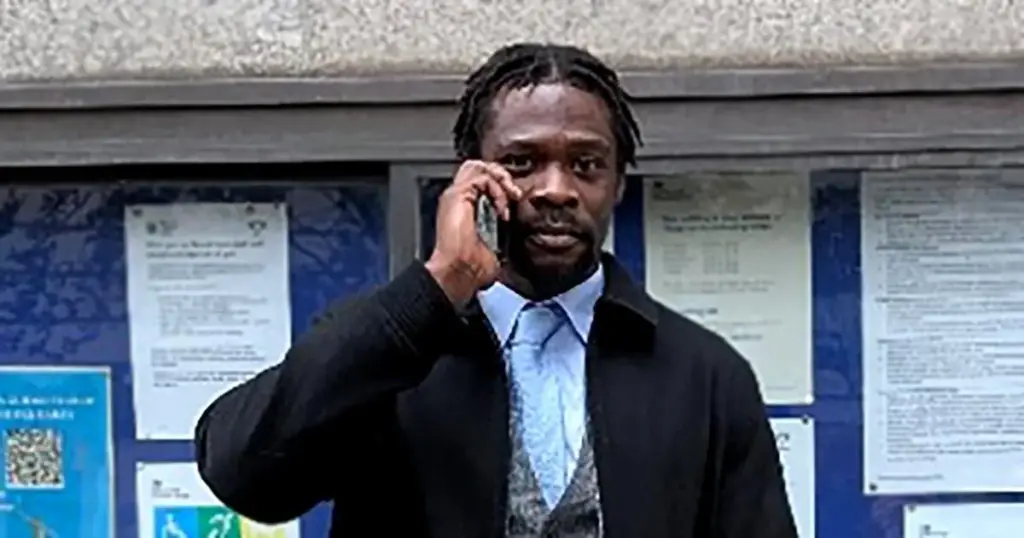
Outside the courtroom, media cameras captured Burton—now 34 years old—attending hearings, maintaining a posture of categorical denial against the gravest charges the legal system can level.
Broader Context and Societal Impact
This case highlights several critical dimensions of modern British criminal jurisprudence:
The Evolution of Homicide Causation: Historically, common law systems operated under the "ปี and a day rule," which barred murder charges if a victim died more than a year and a day after the initial injury. Abolished in England and Wales by the Law Reform (Year and a Day Rule) Act 1996, modern law permits prosecutions decades later if medical science can definitively trace the chain of causation.
The Long-Term Toll of Youth Violence: The trial serves as a stark reminder of the generational ripples generated by street violence. While the initial offenses in 2006 were processed through the youth justice system with relatively modest interventions and guilty pleas to lesser charges, the deferred realization of mortality underscores that the consequences of brain trauma do not expire with a juvenile sentence.
Vulnerabilities of TBI Survivors: Advocacy groups for brain injury and epilepsy survivors have closely monitored the case, noting the elevated risks of sudden unexpected death in epilepsy (SUDEP) and accidental trauma faced by individuals living with neurological damage induced by violence.
Future Outlook
The trial before the jury at the Old Bailey is expected to span multiple weeks, featuring detailed testimonies from forensic pathologists, neurologists, and childhood witnesses who were present in Friendly Gardens in September 2006.
Jurors face the delicate task of balancing historical culpability with modern medical certainty. They must decide whether a teenager’s violent actions nearly two decades ago make him criminally responsible for a fatal seizure in a 2022 bathtub, or if the passage of time and intervening factors break the chain of legal causation. As legal arguments proceed, the verdict will establish an important precedent regarding accountability for the delayed, fatal medical consequences of historic knife and blunt-force assaults.