Executive Overview
The 83rd Venice Film Festival has once again sparked intense global debate over the modern cinematic phenomenon of the marathon standing ovation. Headlining this year’s discourse is Bunker, a psychological drama starring real-life power couple Penélope Cruz and Javier Bardem, which captured a staggering 16-minute standing ovation—the longest of the festival to date.
Directed and written by Academy Award-winner Florian Zeller (The Father), the film explores the fracturing marriage of an architect drawn into a high-stakes commission for a tech billionaire, set against a backdrop of escalating domestic and global anxieties. Yet, despite the rapturous, palm-blistering reaction inside the auditorium, critical consensus outside the festival bubble reveals a stark disconnect.
While Bunker boasts stellar performances from its A-list leads and flashes moments of sophisticated, ironical humor, critics argue it suffers from a meandering narrative, underdeveloped thematic threads, and a jarring, dissatisfying final act. This divergence between public festival theater and critical appraisal throws a harsh spotlight on an increasingly cynical side of modern cinema: the weaponization of standing ovations as a calculated, high-value public relations tool designed to manufacture pre-release momentum in a competitive global market.
Detailed Chronology: From the Lido Premiere to the Climax
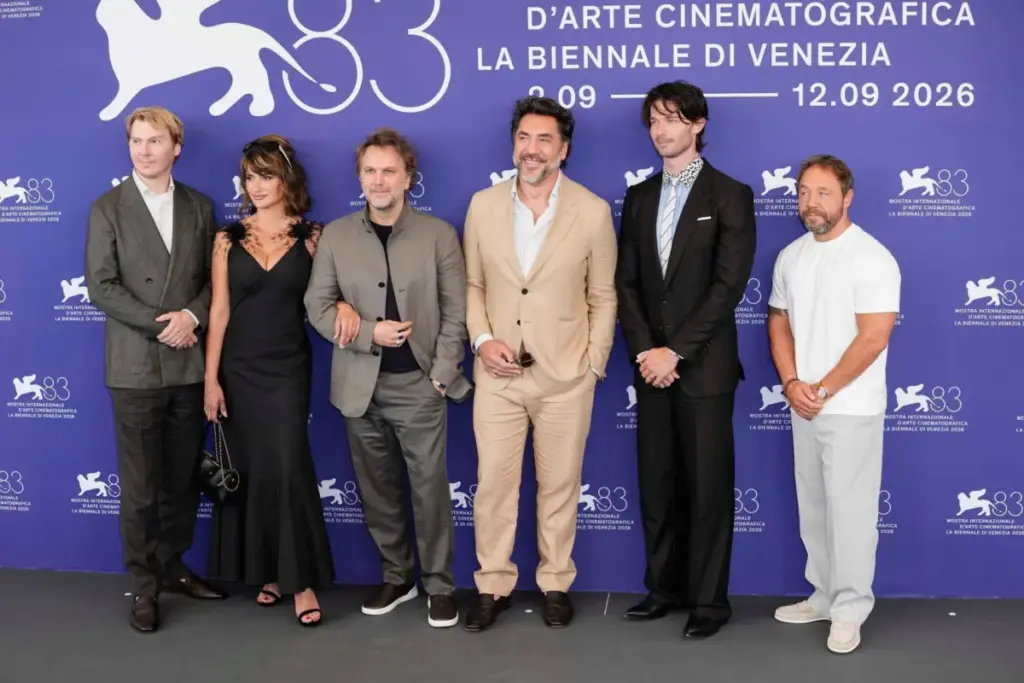
The journey of Bunker to the Venetian silver screen culminated on Tuesday, September 8, 2026, when the film made its world premiere at the Palazzo del Cinema on the Lido. Anticipation had been white-hot for months, driven largely by the casting of Cruz and Bardem—a duo whose undeniable on-screen chemistry and individual box-office clout remain major draws in international cinema.

The Plot Unfolds
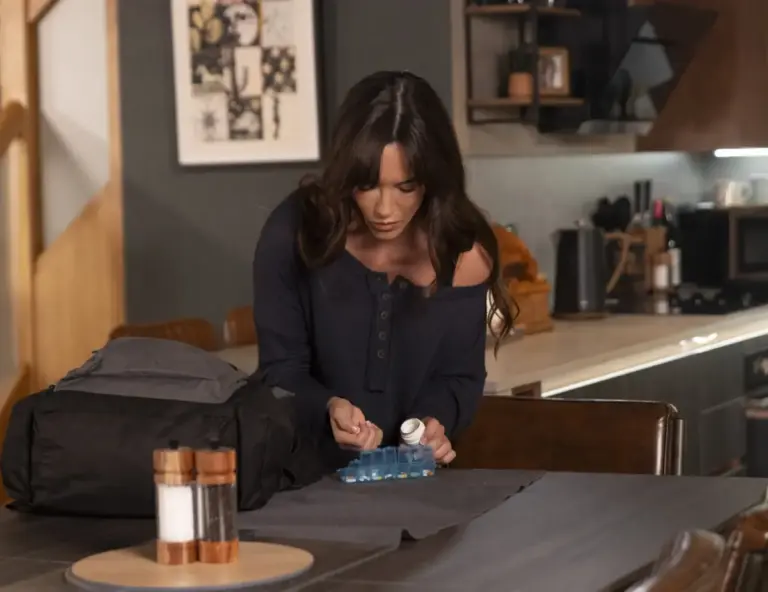
Zeller structures Bunker around a slow-burn psychological examination of domestic strain. The narrative centers on Miguel, an elite architect played with brooding intensity by Javier Bardem, and his wife Sofia, a book editor brought to life with trademark gravitas by Penélope Cruz.
The couple’s lives in their modernized London Victorian terrace—shared with their two daughters—are disrupted on multiple fronts. Professionally, Miguel is courted by a visionary yet elusive tech billionaire (played by an underutilized Paul Dano) who offers an exorbitant fee to design a survivalist bunker in Hawaii, intended to shield him from the systemic fallout of his own technological creations. Domestically, the tension escalates immediately when a surly, antagonistic neighbor, played with gritty menace by Stephen Graham, knocks a massive hole through their adjoining garden wall without planning permission to install an unauthorized window.
Right from the offset, Zeller establishes the fault lines in Miguel and Sofia’s marriage. During an early scene where the couple recounts their courtship, it is revealed that Sofia’s initial attraction to Miguel was founded on a minor deception, a detail Miguel treats with casual, off-hand amusement.
The Shift and the Stumble
As the runtime progresses toward its two-hour-and-six-minute mark, the film introduces an eclectic roster of supporting characters. Patrick Schwarzenegger appears as Jeremy, a hotshot young author working alongside Sofia; Mark Gatiss steps in as Miguel’s pragmatic agent; and British acting royalty Dame Eileen Atkins makes a memorable, fleeting cameo.

However, as the narrative builds toward what audiences anticipate will be a searing, high-stakes collision between Miguel’s moral compromise and Sofia’s ethical resistance, the film takes an abrupt, jarring gear-change. Rather than excavating the psychological depths of its central marriage or delivering on the promise of the titular bunker—which ultimately functions as little more than a narrative MacGuffin—the final act veers down an unexpected and ultimately unsatisfying path.
When the house lights finally came up on September 8, the applause began immediately, swelling into a 16-minute roar that echoed across the Palazzo del Cinema.
Supporting Context & Metrics: The Inflation of Festival Ovations
The 16-minute duration awarded to Bunker sits comfortably within a broader trend of escalating applause metrics at international film festivals—a phenomenon that industry insiders admit has grown wildly out of hand.
A History of Marathon Applauses
Festival standing ovations have transformed from spontaneous expressions of artistic appreciation into competitive endurance tests:

- The Voice of Hind Rajab (Venice, 2025): Sits at the top of the modern records with a harrowing 23-minute ovation, an anomaly justified by critics due to the crushing emotional weight of its subject matter.
- The Room Next Door (Venice, 2024): Director Pedro Almodóvar’s feature secured an 18-minute ovation, heavily fueled by a level of adoration for the auteur rarely witnessed on the festival circuit.
- Testament of Ann Lee (2025): Earned a solid, critically validated 15-minute ovation, though it was subsequently sidelined during awards season.
- Wild Horse Nine (Venice, 2026): Scored a 14-minute ovation earlier in the same festival cycle, widely praised by critics as a far more disciplined character study than Bunker.
The Marketing Machine
Industry analysts point out that length is often directly proportional to networking interests, stakeholder presence, and marketing strategy. For films like Bunker—which premiered without a confirmed commercial release date—securing an extended, headline-grabbing ovation provides free global publicity that money simply cannot buy.
Audience members closely tied to the production are frequently incentivized to sustain the applause, knowing that headlines reading "16-Minute Standing Ovation" act as instant currency for international distributors looking to snap up distribution rights. Furthermore, political timing, timely social messaging, and sheer reverence for marquee stars like Cruz and Bardem heavily distort the metrics, masking structural flaws beneath a wall of communal celebration.
Official Statements and Production Details
While Florian Zeller has built a formidable reputation as an auteur capable of extracting career-best performances from his casts—most notably guiding Sir Anthony Hopkins to a Best Actor Oscar for The Father (2020)—Bunker reveals the limitations of high-concept psychological staging when married to a meandering script.
Key Production Metrics
- Director: Florian Zeller
- Writer: Florian Zeller
- Cast: Penélope Cruz, Javier Bardem, Stephen Graham, Paul Dano, Patrick Schwarzenegger, Chloe Conh, Leah Conh, Mark Gatiss, Dame Eileen Atkins
- Runtime: 2 hours 6 minutes
- Premiere Date: September 8, 2026 (83rd Venice Film Festival)
- Age Rating: TBC
- Distribution Status: Pending international release dates.
Despite the critical reservations surrounding the narrative trajectory, the film’s creative team has championed the project as a deeply personal exploration of modern anxiety and ethical compromise. Zeller specifically tailored the central roles for Cruz and Bardem, whose real-life partnership adds an undeniable layer of meta-textual tension to their marital discord on screen.

Future Outlook: Critical Reception vs. Commercial Prospects
As the dust settles on the Lido, the long-term trajectory of Bunker remains a fascinating case study in festival mechanics.
For Penélope Cruz, the film represents just one piece of an exceptionally busy and critically lauded run, which includes standout turns in La Bola Negra and The Invite. Her star power, alongside Bardem’s magnetic screen presence, ensures that Bunker will inevitably secure major distribution deals across North America and Europe in the coming weeks.
However, the film’s ultimate test will arrive when it transitions from the insular, euphoric atmosphere of elite film festivals to general audiences and awards-season voters. While the 16-minute ovation successfully captured the media’s attention, the true test for Zeller’s psychological thriller will be whether audiences can reconcile the film’s gripping, star-studded setup with its perplexing and divisive conclusion.