Executive Overview
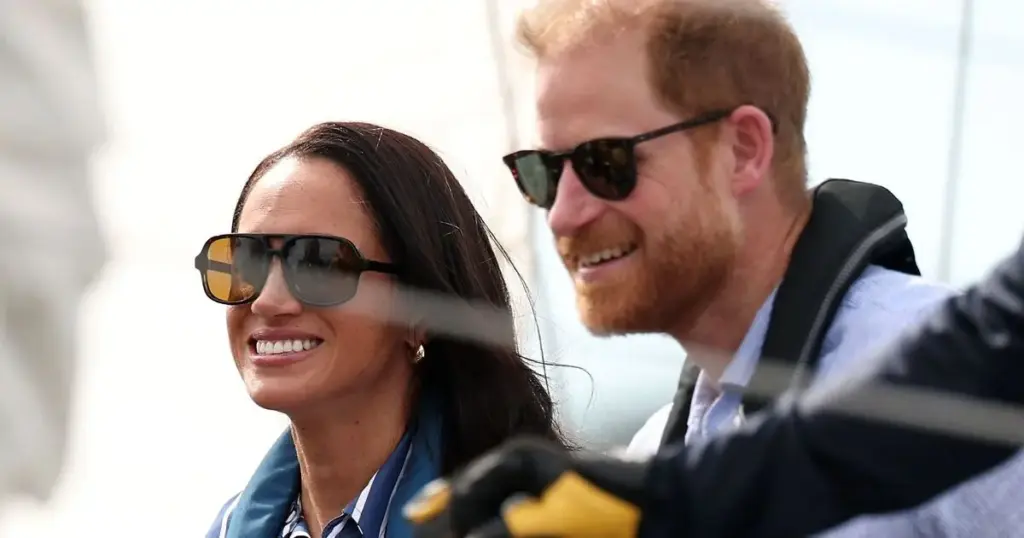
The return of Prince Harry, Duke of Sussex, and Meghan, Duchess of Sussex, to the United Kingdom has once again ignited intense media scrutiny and constitutional debate. Settling temporarily in Oxfordshire alongside their children—Archie, seven, and Lilibet, five—the couple’s homecoming has coincided with a definitive and formally communicated clarification from King Charles III regarding their official status and the utilization of royal titles.
In a directive issued to senior government and military officials, the monarch explicitly categorized the couple as "private citizens," reaffirming that they will continue to refrain from using formal styles such as His Royal Highness (HRH) and Her Royal Highness (HRH). Furthermore, any philanthropic or charitable endeavors undertaken by the Duke and Duchess must be executed strictly in a "private capacity."
The release of this letter, which caught the Sussex camp largely unawares, has sparked a fresh dialogue concerning the boundaries of modern monarchy, the nuances of public versus private representation, and the ongoing complexities of the relationship between the sovereign and the estranged members of the royal family. While Prince Harry and Meghan reportedly harbor a preference for the designation of "public figures"—arguing that it appropriately bridges their ongoing familial ties to the House of Windsor with their financially independent status—Buckingham Palace’s firm demarcation underscores the enduring permanence of the agreements struck during the 2020 "Megxit" transition.
Detailed Chronology of Events
The unfolding narrative of the Sussexes’ return and the subsequent royal communications followed a rapid, high-stakes trajectory over the late summer months:
- Late August: Prince Harry and Meghan Markle make a high-profile return to the United Kingdom, establishing a base in Oxfordshire. Reports indicate that their children, Archie and Lilibet, are being integrated into local educational institutions for the term.
- Early September (Coinciding with the anniversary of Queen Elizabeth II’s passing): Buckingham Palace finalizes an administrative and governmental communication clarifying the exact parameters of the Duke and Duchess of Sussex’s public standing.
- Monday, September 7: King Charles III’s directive is dispatched to senior government figures and military officials. The letter formally reiterates that Harry and Meghan do not use HRH styles and operate exclusively as private citizens.
- The Hour Preceding Publication: Representatives for the Duke and Duchess are given a brief one-hour window to review the contents of the letter. Prince Harry, currently engaged in a high-level meeting in central London, reportedly receives merely two minutes of advance notice before the document is made public.
- Subsequent Days: Reports emerge detailing the Sussexes’ surprise regarding the lack of direct advance consultation. Leaks from briefing notes indicate the couple’s preference for the term "public figures," while Meghan is spotted maintaining a low profile in Oxfordshire, reportedly visiting the exclusive Soho Farmhouse.
Supporting Context & Metrics: The Anatomy of the Split
To fully comprehend the gravity of King Charles’s recent directives, it is essential to examine the framework established in January 2020, when the Duke and Duchess of Sussex first announced their intention to step back as senior working members of the royal family.
The 2020 Sandringham Summit Agreements
The terms agreed upon during the historic summit at Sandringham laid down strict operational guidelines:
- Cessation of HRH Usage: While Harry and Meghan retain their formal titles (Duke and Duchess of Sussex), they agreed not to actively use the HRH styles, as they are no longer working royals representing the Crown.
- Financial Independence: The couple transitioned away from the Sovereign Grant, aiming to become financially self-sufficient through media ventures, production deals, and literary projects.
- Patronages and Military Appointments: Honorary military affiliations and royal patronages held by the Duke and Duchess were returned to the Sovereign, to be redistributed among working members of the family.
The Dynamics of Modern Public Perception
The debate over whether the Sussexes should be styled as "private citizens," "working royals," or "public figures" taps into a broader sociological question about the nature of celebrity and duty in the 21st century.

According to internal briefing materials leaked to the British press, the Sussex camp argues that the term "public figures" accurately reflects their unique dichotomy:
- They receive zero public funding from British taxpayers.
- They maintain global high-profile commercial and philanthropic platforms (such as the Archewell Foundation).
- They remain biologically and genealogically integral members of the royal family, sitting within the line of succession to the British throne.
Conversely, the traditionalist perspective maintained by Buckingham Palace holds that the "working royal" model is binary. One either represents the monarch in an official, state-sanctioned capacity with the accompanying privileges and restrictions, or one operates entirely independently. Blurring these lines, the Crown fears, could lead to confusion regarding official endorsements, diplomatic missions, and state representation.
Official Statements and Insider Perspectives
The release of the King’s letter has elicited sharp commentary from both royal insiders and representatives close to the Sussex household.
The Sussex Response: Surprise and Frustration
A spokesperson for the Duke and Duchess expressed clear dismay regarding the handling of the communication. The timing—occurring near the solemn anniversary of Queen Elizabeth II’s passing—added an extra layer of sensitivity to the situation.
"The Duke and Duchess were a little surprised not to have been informed of the precise wording and release of the letter in advance," noted an insider close to the couple.
Furthermore, the logistical constraints surrounding notification have become a major talking point. Reports indicate that Prince Harry’s security and administrative team were given a severely restricted window of roughly 60 minutes to analyze the political and public relations ramifications of the document. Due to being locked in a confidential meeting in central London, Prince Harry himself had an effective window of only two minutes to digest the King’s definitive ruling before it broke across global news agencies.
The Palace Stance: Institutional Clarity
Buckingham Palace has maintained a policy of measured restraint, declining to comment directly on the leaked briefing notes. However, constitutional experts note that the letter was not intended as a personal reprimand, but rather as an administrative necessity.

As the monarch, King Charles III is responsible for maintaining absolute clarity across government departments, the armed forces, and diplomatic corps regarding who possesses official standing to act on behalf of the Crown. By officially designating the Sussexes as private citizens in communication with state apparatuses, the Palace aims to prevent any diplomatic ambiguity during the family’s extended stay in the UK.
Future Outlook: Navigating the New Normal
As Prince Harry, Meghan, and their children settle into their temporary Oxfordshire residence—with Archie and Lilibet attending local schools and Meghan reportedly enjoying the discreet amenities of private members’ clubs like Soho Farmhouse—the broader implications of this episode remain to be seen.
The Path Forward for Archewell and Philanthropy
The insistence that all charitable work be conducted in a "private capacity" aligns precisely with the parameters established in 2020. However, it serves as a stark reminder to the couple’s global supporters and corporate partners that their initiatives—spanning mental health advocacy, veterans’ support through the Invictus Games, and digital equity—carry no official royal warrant or endorsement from the Court of St. James’s.
Family Dynamics and Institutional Relations
The manner in which this communication was executed highlights the persistent communication barriers between the California-based branch of the family and the core institution in London. While physical proximity has increased with their return to British soil, the administrative and emotional distance codified by titles, letters, and protocol remains vast.
Ultimately, this latest chapter illustrates that the transition from working royalty to independent public life is an ongoing, frequently turbulent process. Whether the conceptual middle ground of "public figures" can ever be formally reconciled with the traditional definitions upheld by the British monarchy is a question that will continue to define the modern House of Windsor for years to come.