Executive Overview
Japan’s eastern coastline was jolted awake in the early hours of Thursday, August 27, 2026, as a strong offshore earthquake struck the Sanriku region. The undersea tremor, originating at a shallow depth of 10 kilometers (6.2 miles), rattled coastal communities and triggered immediate monitoring protocols across the Japanese archipelago.
According to official data provided by the Japan Meteorological Agency (JMA), the earthquake registered a formidable magnitude of 6.1. Meanwhile, the United States Geological Survey (USGS)—which calculates seismic intensity using different international algorithms—logged the event at a magnitude of 5.6, placing the epicenter approximately 212 kilometers east of Onagawa. Despite the stark strength of the quake and its shallow hypocenter, authorities swiftly confirmed that no immediate tsunami threat was generated, and initial assessments pointed to a fortunate absence of casualties or widespread structural damage.
This latest seismic event arrives barely seventy-two hours after a separate 5.9-magnitude tremor struck southern Ibaraki prefecture and shook the densely populated Tokyo metropolitan area. That weekend shockwave injured at least 37 people across five prefectures, heightening public anxiety and placing emergency services on high alert.
As Japan—one of the most seismically active nations on Earth—contends with this back-to-back cluster of tectonic activity, seismologists and government officials are closely evaluating fault-line dynamics in the Pacific basin. While the Sanriku event concluded without loss of life or property devastation, it serves as a stark, rumbling reminder of the volatile geological forces constantly at play beneath the island nation.
Detailed Chronology: The Events of August 26–27, 2026
The unfolding of Wednesday evening’s seismic episode followed a precise sequence of detection, verification, and automated safety response across regional monitoring networks.
Pre-Dawn Awakening Off the Sanriku Coast
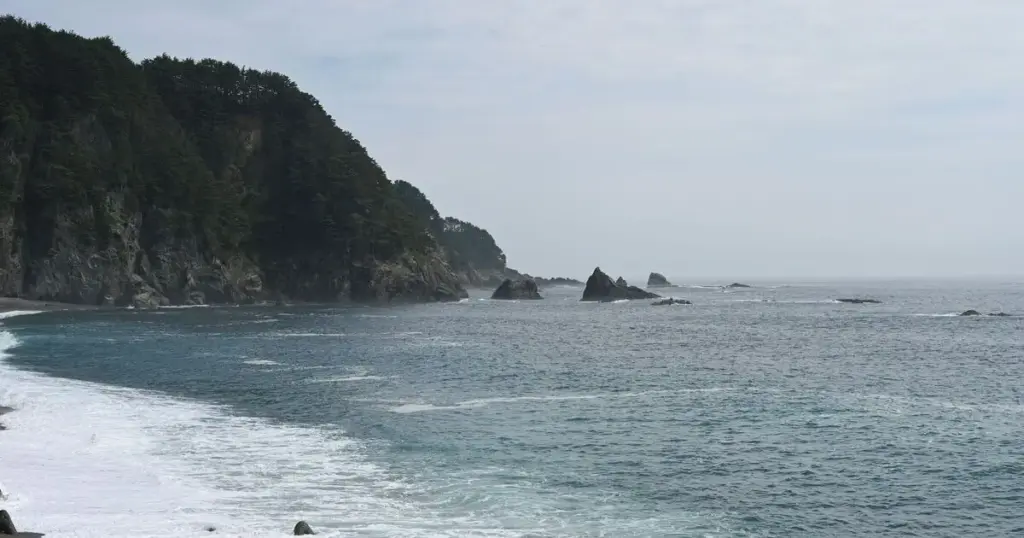
At precisely 4:21 AM local time on Thursday, August 27 (corresponding to late Wednesday evening, August 26, in British Summer Time), sensors registered sudden tectonic shifts off the eastern coast of Japan’s Honshu island. The earthquake’s epicenter was isolated to the oceanic trench area off the Sanriku region—a historically active seismic zone notorious for generating powerful subduction-zone earthquakes.
Because the tremor struck at a very shallow depth of just 10 kilometers beneath the ocean floor, the kinetic energy of the rupture translated efficiently upward through the water column and surrounding rock strata. Residents in coastal areas close to the epicenter reported sudden, sharp jolting movements, though the relatively remote offshore location mitigated the most catastrophic surface-shaking intensities on land.
Immediate Agency Assessments and Tsunami Verification
Within minutes of the initial rupture, automated systems at the Japan Meteorological Agency began processing seismic wave data. By calculating the P-waves and S-waves picked up by regional seismographs, the JMA issued its primary bulletin pegging the magnitude at 6.1. Concurrently, international partners including the USGS analyzed the event, publishing a preliminary magnitude of 5.6 and pinpointing the location roughly 212 kilometers east of Onagawa.

As standard protocol for offshore earthquakes exceeding magnitude 5.0 in shallow strata, regional tsunami watch centers immediately evaluated sea-level data. Within twenty minutes of the impact, officials confirmed that no abnormal wave displacement or tsunami threat existed. This brought an immense sigh of relief to coastal towns still recovering from historical trauma associated with Pacific tsunamis.
Winding Down the Emergency Response
By Wednesday night BST, emergency response hubs across Iwate, Miyagi, and Fukushima prefectures had completed preliminary aerial and ground patrols. Fire departments and local police divisions reported no emergency calls concerning collapsed buildings, ruptured gas mains, or injured citizens.
With the situation stabilized and no secondary hazards identified, meteorological authorities concluded their urgent operational updates, allowing public anxiety to subside as the sun rose over the Sanriku coastline.
Supporting Context & Metrics: Geological Data and Seismic History
To understand the significance of this week’s seismic activity, one must examine the complex tectonic framework that dictates life in the Japanese archipelago.
Tectonic Architecture of the Sanriku Coast
Japan sits atop the Pacific Ring of Fire, a horseshoe-shaped basin characterized by continuous seismic activity and volcanic eruptions. The country is shaped by the complex convergence of at least four major tectonic plates: the Pacific, Philippine Sea, Eurasian, and North American plates.
[Pacific Plate] ----> (Subducting beneath) ----> [Okhotsk / North American Plate]
                              |
                     (Deep Trench Zone)
                              |
                   [Sanriku Offshore Region]
The Sanriku region, located along the northeastern coast of Honshu, is particularly vulnerable because it lies directly adjacent to the Japan Trench. Here, the dense oceanic Pacific Plate relentlessly grinds westward, subducting beneath the continental Okhotsk (or North American) plate. As these massive slabs of Earth’s crust lock together over decades and centuries, immense mechanical stress accumulates. When the frictional resistance is abruptly overcome, the plates slip, releasing titanic amounts of energy in the form of earthquakes.
Comparative Metrics of Recent Tremors
| Parameter | Sanriku Offshore Quake (Aug 27, 2026) | Ibaraki Prefecture Quake (Aug 23, 2026) |
|---|---|---|
| JMA Magnitude | 6.1 | 5.9 |
| USGS Magnitude | 5.6 | 5.8 |
| Hypocenter Depth | 10 kilometers (Shallow) | 70 kilometers (Intermediate) |
| Epicenter Location | Off the Sanriku Coast, ~212km East of Onagawa | Southern Ibaraki Prefecture |
| Impacted Regions | Iwate, Miyagi, coastal Tohoku | Tokyo, Saitama, Kanagawa, Chiba, Ibaraki |
| Casualties / Injuries | 0 reported | 37 injured across 5 prefectures |
| Tsunami Threat | None | None |
The Shadow of Sunday’s Tremor
The Sanriku earthquake did not occur in a vacuum; it followed hot on the heels of a troubling seismic event that rattled eastern Japan early Sunday morning. That earlier quake, registering a preliminary magnitude of 5.9 according to the JMA (5.8 USGS), struck much deeper—at approximately 70 kilometers—with an epicenter situated inland in the southern Ibaraki prefecture.
While Sunday’s tremor originated deeper underground, its geographical proximity to the densely populated Tokyo metropolitan area amplified its societal impact. The prolonged rolling motion sent shockwaves through high-rise buildings and transit networks across the Kanto plain.

According to final reports compiled by prefectural governments and the Fire and Disaster Management Agency, at least 37 individuals sustained injuries across five prefectures:
- Tokyo: 15 injuries (primarily from falls and falling household items)
- Saitama Prefecture: 9 injuries
- Kanagawa Prefecture: 8 injuries
- Chiba Prefecture: 4 injuries
- Ibaraki Prefecture: 1 injury
The fact that a shallower, more powerful earthquake off Sanriku resulted in zero injuries, while a deeper, slightly weaker quake near Tokyo caused dozens of casualties, underscores a fundamental rule of seismology: population density, building vulnerability, and hypocenter proximity dictate disaster outcomes far more than magnitude numbers alone.
Official Statements and Public Safety Responses
In the wake of Wednesday night’s event, Japanese government ministries and municipal disaster management bureaus issued statements emphasizing both vigilance and preparedness.
Japan Meteorological Agency Briefings
During scheduled press briefings at JMA headquarters in Tokyo, senior seismologists highlighted the mechanical differences between the Sanriku offshore event and Sunday’s Ibaraki shaking.
"The earthquake off the Sanriku coast was characteristic of normal faulting or interplate adjustments along the outer rise of the Japan Trench," explained a senior JMA duty seismologist. "Because of its offshore location and the absence of vertical seafloor displacement capable of water column disruption, no tsunami was generated. However, the recurring seismic releases across different nodes of our fault systems indicate an active regional adjustment phase."
The agency reiterated its standing warnings that Japan must remain perpetually prepared for major tectonic shifts. Seismologists noted that while predicting the exact day or hour of an earthquake remains scientifically impossible, clusters of moderate-to-strong tremors can occasionally precede larger seismic events—or simply represent the gradual dissipation of tectonic stress.
Local Government and Civil Defense Actions
Prefectural authorities in Iwate and Miyagi activated local disaster countermeasures headquarters immediately following the JMA alert. Coast guard vessels patrolled coastal harbors to verify that mooring lines remained secure and that small craft operators were safe.
Municipal water boards and railway operators—including East Japan Railway Company (JR East)—temporarily suspended high-speed Shinkansen bullet train services in designated northern sectors to perform automated track inspections. Engineers checked rail alignments, bridge supports, and signaling equipment for micro-fractures. Satisfied that no infrastructure compromise had occurred, transport authorities successfully resumed normal timetables within hours, minimizing commuter disruption.

Public service announcements broadcast across national networks reminded citizens to check emergency supply kits, ensure heavy furniture is anchored securely, and review evacuation routes designated by local ward offices.
Future Outlook: Living With Continuous Seismic Risk
As August 2026 draws to a close, Japan’s civil society and scientific community are engaging in a routine yet vital reassessment of national readiness. The occurrence of two notable earthquakes within a single week serves as a stark reminder of the geological reality defining the Japanese islands.
Technological Advancements in Early Warning Systems
Japan continues to operate the world’s most advanced Earthquake Early Warning (EEW) system. By intercepting primary seismic waves—which travel faster than destructive secondary and surface waves—automated networks can broadcast warnings to smartphones, televisions, and transit controllers seconds to tens of seconds before heavy shaking arrives.
Following this week’s events, software engineers and academic researchers are analyzing telemetry data from both the Ibaraki and Sanriku tremors to fine-tune algorithm response times. Improving the accuracy of magnitude estimations during the critical first three seconds of a rupture remains a primary engineering goal.
Infrastructure Resilience and Urban Planning
Decades of stringent building codes, retrofitting initiatives, and earthquake engineering innovations have transformed Japanese cities into some of the most resilient urban landscapes on Earth. Buildings constructed under the modern Shinto-ho seismic design standards are engineered to absorb lateral shockwaves through flexible steel frames, base-isolation rubber bearings, and shock-absorbing dampers.
Urban planners emphasize that while infrastructure held up admirably during Sunday’s widespread shaking and Thursday’s offshore jolt, continuous drills and community education remain the ultimate line of defense. Schools, offices, and neighborhood associations conduct regular disaster simulation exercises, ensuring that when the earth moves—whether at a depth of 10 kilometers off Sanriku or 70 kilometers beneath Ibaraki—the population responds with practiced calm rather than panic.
Conclusion
The 6.1-magnitude earthquake off the Sanriku coast closes another chapter in Japan’s ongoing coexistence with nature’s most volatile forces. With no casualties, no structural damage, and no tsunamis recorded, the event stands primarily as an authoritative geological wake-up call. As researchers monitor ongoing crustal adjustments along the Pacific trench, Japan remains steadfast, pairing cutting-edge scientific vigilance with deeply ingrained cultural resilience.