Executive Overview
John Altman, the legendary British actor forever etched into television history as EastEnders’ ultimate villain "Nasty" Nick Cotton, has opened up about his iconic tenure on the BBC soap, his deeply personal final farewell to his on-screen mother June Brown, and his enduring legacy in the entertainment industry. Spanning a career of over three decades on Albert Square, Altman defined a generation of television villainy, crafting a character whose wickedness became a cultural touchstone for British audiences.
In a wide-ranging, reflective interview, the actor discusses the modern landscape of British soap operas, addressing mounting fan anxieties regarding BBC budget cuts and the structural longevity of serialized television. Beyond his reflections on television history, Altman opens up with raw emotion about the twilight days of his late, beloved co-star June Brown—affectionately known to millions as Dot Cotton—revealing intimate details of their final private moments together before her passing in April 2022 at the age of 95.
Furthermore, the interview pivots to Altman’s vibrant post-EastEnders creative endeavors. Far from resting on his laurels as a soap icon, Altman continues to channel his artistic energy into music and literature. He discusses the release of his latest musical venture, the single "Sat Nav Girl," co-written with Mark Christopher Lee of The Pocket Gods, alongside fascinating anecdotes from his youth, including encounters with rock royalty like Jimi Hendrix. This comprehensive feature explores the man behind the menace, examining the heavy psychological toll of playing television’s most infamous criminal, the shifting paradigms of the British television industry, and an artistic career that transcends the boundaries of the fictional East End.
Detailed Chronology: The Rise, Reign, and Legacy of ‘Nasty’ Nick Cotton
To understand John Altman’s cultural footprint, one must examine the monumental impact of Nicholas "Nick" Cotton on BBC One’s flagship soap opera, EastEnders. Introduced at the very inception of the series in February 1985, Nick Cotton was engineered from day one to be the antithesis of community spirit, decency, and familial loyalty in Walford.
The Birth of a Television Villain (1985–1991)
When EastEnders burst onto British television screens in 1985, creators Tony Holland and Julia Smith sought to reflect the gritty reality of working-class London life. Amidst the market stalls, the Queen Victoria pub, and tight-knit community networks, Nick Cotton emerged as a toxic tumor on the Square. From his leather jacket to his sneering contempt for authority, Altman imbued the character with a predatory charisma.
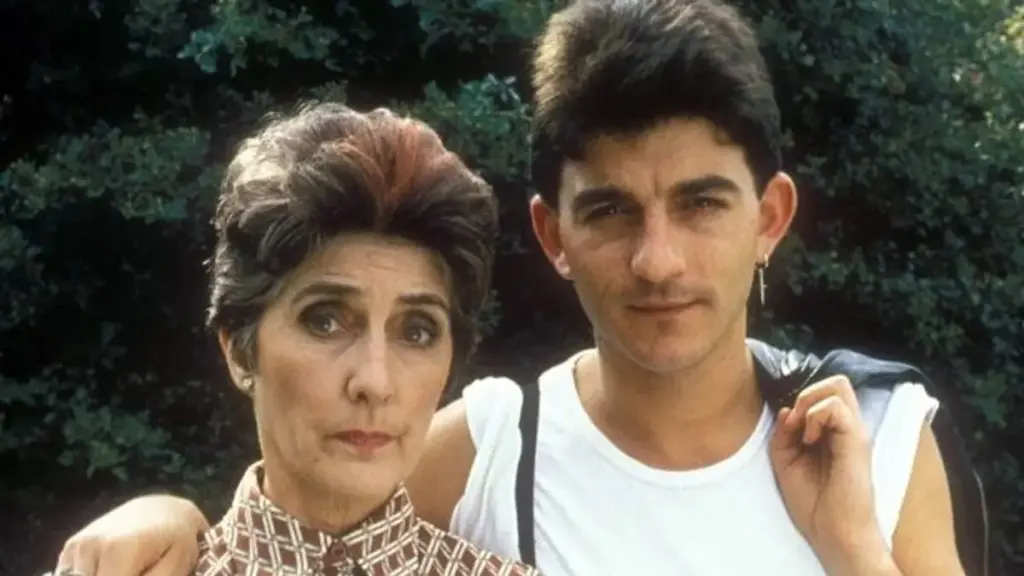
Nick’s early storylines set a dark precedent for the soap. His criminal enterprises ranged from extortion and drug dealing to psychological torment. However, his most heinous early act occurred in 1985 when he murdered Reg Cox—an off-screen setup that anchored the show’s initial mystery—and later attempted to poison his deeply religious, fiercely loyal mother, Dot Cotton. This complex, deeply abusive mother-son dynamic became the emotional spine of Nick’s narrative arc across three decades.
Departures, Returns, and Resurrection (1991–2015)
Unlike characters who remain steady fixtures of a soap for decades, Nick Cotton operated on a principle of cyclical menace. He would disappear under a cloud of criminal investigations, prison sentences, or fake deaths, only to reappear on Dot’s doorstep when he needed money, shelter, or a place to hide from the law.
- 1991 Departure: Following a series of drug-related scams and violent altercations, Nick fled the Square.
- The 2000 "Death": In a storyline that gripped the nation, news reached Walford that Nick had died of a heroin overdose off-screen. Dot mourned her son, only for Nick to make a shocking, spine-chilling return later that year, wearing a disguise and hiding out in an abandoned house, ready to manipulate his grief-stricken mother once more.
- The Final Exit (2015): After intermittent stints—including a dramatic return in 2001 and another brief comeback in 2008—Altman reprised his role for the soap’s 30th-anniversary live week in 2015. True to form, Nick met his demise during the anniversary block, finally succumbing to a heroin overdose supplied by his own son, Charlie Cotton, while a distraught Dot looked on, ultimately refusing to save him.
By the time Nick was permanently written out, the character had accumulated an astonishing fictional rap sheet: four canonical murders and twelve attempted murders, cementing his status as British television’s quintessential bad boy.
Supporting Context & Metrics: The State of British Soaps and Altman’s Critique
While Altman’s career is indelibly linked to the past glory days of EastEnders, his perspective on the modern television landscape offers a sobering look at the economic and creative pressures facing contemporary soap operas.
The BBC Budget Crisis and Soap Sustainability
In recent years, legacy British serial dramas have faced unprecedented challenges. With shifting audience habits favoring on-demand streaming services over scheduled linear television, networks have been forced to implement sweeping budget cuts. EastEnders, alongside competitors like ITV’s Coronation Street and Emmerdale, has had to navigate reduced financial envelopes while maintaining high production values and daily output schedules.
Reflecting on these industry-wide pressures, Altman offers a pragmatic, albeit cautious, assessment of the genre’s future:
"Corrie has lasted 70 years so maybe EastEnders will last, but there’s only so many you can repeat. Only so many burglaries and murders and fires."
Altman’s critique highlights a core structural hurdle for long-running serials: the law of diminishing narrative returns. Over decades on the air, writers are pressured to continually escalate the stakes, leading to an over-reliance on sensationalist crime plots—home invasions, serial killers, and exploding gas mains—to capture dwindling linear television audiences.
Cast Size and Production Realities
Another critical point raised by the veteran actor is the bloating of ensemble casts. In the early years of EastEnders, the narrative focus was tight, allowing viewers to intimately connect with a smaller group of core residents. Modern casting models, driven by the need for diverse representation and multiple simultaneous storylines, have expanded casts significantly.
- Altman’s View on Cast Inflation: "I preferred it when they had a smaller cast. Then you get to know the characters better. I hope it will be around in another 40 years for the sake of the actors. They’ve just rebuilt the set so I guess they’ve got no choice right now."
The reference to the rebuilding of the iconic Elstree Studios set—a multi-million-pound investment completed in recent years to ensure the soap’s production viability—underscores the massive institutional commitment underpinning the show. Despite the artistic hurdles, the BBC’s physical infrastructure for Walford is built for the long haul.
Official Statements & Personal Recollections: Remembering June Brown
Beneath the leather jacket, sneer, and fictional villainy of Nick Cotton lay a deep, genuine friendship between John Altman and the late June Brown. The creative chemistry between Dot and Nick was the beating heart of their respective tenures, driven by an authentic mutual respect and affection off-screen.

Saying Goodbye to ‘Ma’
June Brown passed away in April 2022 at the age of 95, leaving an irreplaceable void in the hearts of her colleagues and the British public. For Altman, her passing was not just the loss of a co-worker, but the fading of a profound maternal figure in his professional life.
Speaking candidly and visibly moved during the interview, Altman recalled his final visits to Brown as her health declined:
"Towards the end of her life, I felt really honoured that she allowed me to be one of the few people who could go and see her as she was fading away. I held her hand and had a chat with her. She was still having a puff on a cigarette! She was an absolutely incredible person to be around and she would wear herself out trying to be so kind to everyone. Thinking about her makes me quite emotional actually."
This poignant anecdote captures the inimitable spirit of June Brown—a fiercely independent, generous soul who remained true to herself until her final moments. The deep bond shared by Altman and Brown transformed what could have been a standard television dynamic into a masterclass of tragic familial theater.
The Psychological Cost of Playing ‘Nasty Nick’
Portraying a character as intensely wicked as Nick Cotton exacts a heavy psychological toll on an actor. Unlike sitcoms or light drama, the relentless shooting schedules of British soap operas require actors to sustain high-emotion performances across back-to-back blocks of scenes.
Altman reveals the grueling nature of soap production:
"Filming soaps were hard, as you would be filming back-to-back scenes. It was especially hard when playing someone like Nick, as [I] had to go to a really dark place to get into character."
To manifest Nick’s casual sadism, manipulative genius, and underlying rage, Altman had to tap into emotional reservoirs that were draining to inhabit and difficult to switch off when the director yelled cut. This commitment to the craft is precisely why ‘Nasty Nick’ remains a peerless creation in soap history.
Future Outlook: Music, Literature, and Rock ‘n’ Roll Beginnings
While television audiences will always know him as the man who terrorized Albert Square, John Altman’s creative portfolio extends far beyond the realm of acting. In the wake of his definitive departure from EastEnders, Altman has fully embraced his lifelong passion for music and writing.
The Musical Journey: "Sat Nav Girl"
Altman’s musical pursuits are well-established; he is an accomplished multi-instrumentalist and singer-songwriter. His latest creative offering is the single "Sat Nav Girl," co-written with Mark Christopher Lee of the indie outfit The Pocket Gods. The track blends contemporary lyrical observation with Altman’s signature stylistic flair, available now across major streaming and digital download platforms.
Tales of Rock Royalty: Meeting Jimi Hendrix
Before he was a household name on television, Altman’s artistic sensibilities were shaped by the vibrant counterculture of 1960s London. As a schoolboy, Altman managed to wind up backstage in the dressing room of none other than guitar god Jimi Hendrix.
Recalling those formative encounters, Altman paints a vivid picture of the legendary musician:
"Jimi had a warmth about him and was quite a character. He filmed everything, which was just as colourful as his music, and had a dry sense of humor. It was a tragedy he died so young. It was a mistake, it was just awful. His legacy will never be forgotten."
These early encounters, combined with his own extensive career in entertainment, have provided Altman with a treasure trove of cultural history, much of which he has documented in his autobiographical and creative writings.
Conclusion: An Enduring Legacy
John Altman’s journey from a starstruck London teenager meeting rock legends to Britain’s most infamous television villain, and onward to his current life as a musician and author, is a testament to artistic resilience. While the future of serialized television faces structural hurdles, and the ghosts of Albert Square’s past continue to loom large, Altman’s contributions to British pop culture remain permanent. Whether through the smoky cadence of "Sat Nav Girl," his heartfelt tributes to the unforgettable June Brown, or the eternal, cackling menace of ‘Nasty’ Nick Cotton, John Altman’s place in the pantheon of British entertainment is firmly secured.