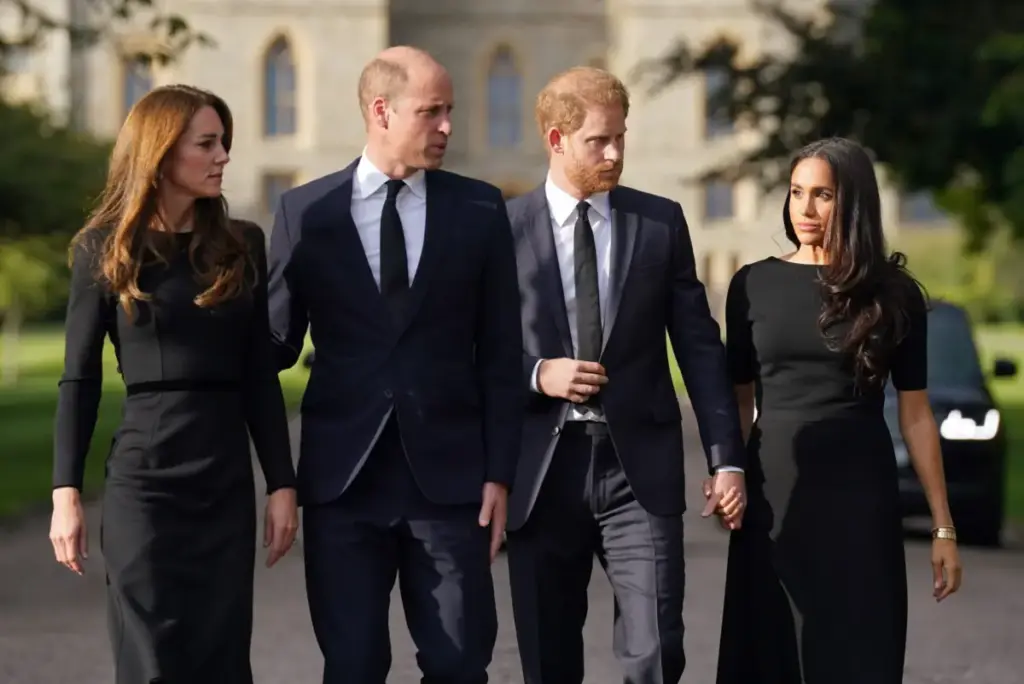
Executive Overview
The enduring rift within the British royal family has entered a delicate new phase following reports that Prince Harry and Meghan Markle are preparing for an extended return to the United Kingdom. While global media outlets and royal watchers have scrutinized the announcement for signs of an impending reconciliation, Prince William and Catherine, the Prince and Princess of Wales, are maintaining a posture of calculated distance.
According to sources close to the inner circle, the Waleses are actively resisting any "knee-jerk reactions" to the Sussexes’ shifting geographic footprint. Despite a history of deep-seated tension—fueled by explosive memoirs, televised interviews, and years of public friction—William and Kate have chosen a strategy of quiet observation rather than public engagement.
This measured response is not merely a tactical maneuver in royal politics; it is deeply rooted in the extraordinary personal challenges the Prince and Princess of Wales have navigated over the past few years. With Kate Middleton having successfully completed cancer treatment and announced her remission in early 2025, the couple’s primary focus remains unequivocally fixed on their immediate family, their three children, and their core royal duties.
For now, the possibility of a familial bridge-building exercise remains a distant prospect. Insiders emphasize that any eventual reconciliation would require a "slow build," hampered as it is by a lingering sense of betrayal. As the Sussexes chart their next chapter on British soil, William and Kate are content to watch from the sidelines, prioritizing stability and healing over public drama.
Detailed Chronology: From Working Royality to Permanent Estrangement
To understand the weight of the current stalemate, it is essential to examine the trajectory of the relationship between the two couples—often once dubbed the "Fab Four"—and the cascade of events that fractured the House of Windsor.
The Fracturing Foundation (2018–2020)
Cracks in the royal foundation began to surface publicly shortly after the marriage of Prince Harry and Meghan Markle in May 2018. Early reports of friction between the royal households were largely dismissed as tabloid fabrication, but subsequent revelations in biographies and interviews confirmed profound cultural and operational clashes within the institution.
By January 2020, the tension culminated in "Megxit"—the sudden announcement by Harry and Meghan that they would step back as senior working members of the royal family and seek financial independence. While initial discussions pointed toward a transitional period, the subsequent summit at Sandringham solidified a permanent departure from official royal duties, relocating the Duke and Duchess of Sussex first to Canada and ultimately to Montecito, California.
Escalation and Public Revelations (2021–2023)
The physical distance did little to cool the animosity; instead, the rift widened through a series of high-profile media appearances. The March 2021 Oprah Winfrey interview introduced global audiences to specific grievances regarding institutional indifference and alleged racially insensitive remarks within the royal household.
The divide deepened further with the publication of Prince Harry’s candid memoir, Spare, in January 2023. The book laid bare deeply private family dynamics, physical altercations, and sharp criticisms directed squarely at Prince William and Queen Camilla. For the Prince of Wales, who has dedicated his life to safeguarding the institution and protecting his immediate family, the public airing of private grievances crossed a definitive line, cementing an era of strict "no contact."
Health Crises and Personal Resilience (2024–2025)
While the Sussexes built a separate life in North America—focusing on philanthropic ventures, media production, and commercial partnerships—the British royal family faced unprecedented internal crises. The year 2024 brought dual health shocks with King Charles III and the Princess of Wales both receiving cancer diagnoses.
For Kate Middleton, the journey involved rigorous chemotherapy, a temporary retreat from public life, and a profound reassessment of life’s priorities. Her triumphant return to public engagements, culminating in her official announcement of remission in January 2025, marked a watershed moment. Having weathered severe medical trials away from the public eye, William and Kate emerged with a sharpened focus on domestic stability, rendering external family drama secondary to their foundational responsibilities.
Supporting Context & Metrics: The Anatomy of a Royal Standoff
The dynamics governing the relationship between the Waleses and the Sussexes are underpinned by a combination of institutional duty, public perception, and psychological fatigue.
The Burden of Privacy and Public Scrutiny
In the wake of recent health battles, the Prince and Princess of Wales have cultivated a protective perimeter around their family life. Palace insiders note that the emotional and physical toll of the past few years has fundamentally altered their perspective on public controversies.
- The Health Toll: Navigating cancer treatments while maintaining public morale required immense institutional and personal resilience.
- The Domestic Focus: Prince George, Princess Charlotte, and Prince Prince Louis remain the absolute epicenter of the Waleses’ daily scheduling.
- Institutional Continuity: As direct heirs to the throne, William and Kate’s primary mandate is the preservation and modernization of the monarchy, leaving little bandwidth for interpersonal remediation with non-working family members.
The Psychology of "No Contact"
Communication between Prince William and Prince Harry has remained at a complete standstill. Psychological and royal analysts point out that William’s reluctance to re-engage stems from a protective instinct toward both his wife and the monarchy. Unlike public figures who might leverage drama for narrative capital, the senior royals operate under a strict code of institutional discretion—a philosophy summarized by the historic mantra, "Never complain, never explain."
This philosophy explains why the couple has opted for a deliberate "wait-and-see" approach regarding Harry and Meghan’s extended U.K. return. By refusing to issue reactionary statements or participate in public posturing, William and Kate retain narrative control and deny oxygen to speculative headlines.
Official Statements and Insider Perspectives
While official communications from Kensington Palace remain strictly confined to royal engagements, patronages, and health updates, a clearer picture emerges from trusted palace sources and close confidants speaking on condition of anonymity.
The "Slow Build" of Potential Reconciliation
Speaking to major journalistic outlets, insiders have underscored that any future thawing of relations is improbable in the near term.
"If the two couples reconcile, it will be a slow build," a well-placed source revealed. "There is a deep sense of betrayal that cannot simply be erased by a change in geography."
The decision by Harry and Meghan to spend extended periods in the U.K. introduces logistical overlap, but it does not automatically bridge the emotional chasm. The insider noted that while inevitable social or familial intersections may occur over time, the current atmosphere remains cautious:
"They are watching this space. It’s private—they don’t feel the need to say anything or demonstrate anything outwardly."
Resisting the Impulse for Retaliation
The temptation for public figures to respond to perceived slights with counter-narratives is often high, yet the Waleses have steadfastly avoided this trap.
"They have suffered a lot," noted a palace insider, highlighting the cumulative stress of the past half-decade. "Their priorities are their royal duties, their three children, and Kate’s ongoing recovery. They have been dutiful, doing what they do well and keeping the family together. Anything else, from their point of view, isn’t critical."
This sentiment reflects a profound institutional maturity. Rather than engaging in a war of words, William and Kate have chosen to anchor their identities in service, consistency, and quiet perseverance.
Future Outlook: Navigating an Overlapping Future
As Prince Harry and Meghan Markle lay the groundwork for a more permanent or extended U.K. presence, the landscape of British royal politics faces a complex transitional phase.
The Inevitability of Intersection
Geographic proximity ensures that the paths of the former "Fab Four" will eventually cross. Whether through major national events, family milestones, or institutional gatherings, ceremonial obligations have a way of forcing divergent branches of the royal family into the same room.
When those moments arrive, the global media will inevitably scrutinize every glance, gesture, and micro-expression. However, insiders maintain that William and Kate are preparing for these eventualities with characteristic poise, refusing to let potential encounters disrupt their core mission.
A Transformed Monarchy
The broader context of this family feud plays out against the backdrop of a transitioning monarchy under King Charles III. As the institution modernizes to meet the demands of the 21st century, the streamlined nature of the core royal family has become a permanent feature rather than a temporary fix.
For Prince William and Princess Kate, the path forward is clear: steady leadership, unwavering dedication to public service, and a firm boundary drawn around their personal peace. Whether Prince Harry and Meghan Markle find a lasting foothold in British society remains to be seen, but for the Prince and Princess of Wales, the chapter on reactive drama has been firmly closed.