The intersection of college athletics, high-fashion culture, and multi-billion-dollar video game franchises has reached an unprecedented zenith. As EA Sports prepares to launch its highly anticipated College Football 27 video game, the cultural weight of the brand is being anchored by a new class of gridiron prodigies whose individual identities extend far beyond the white lines of the football field.
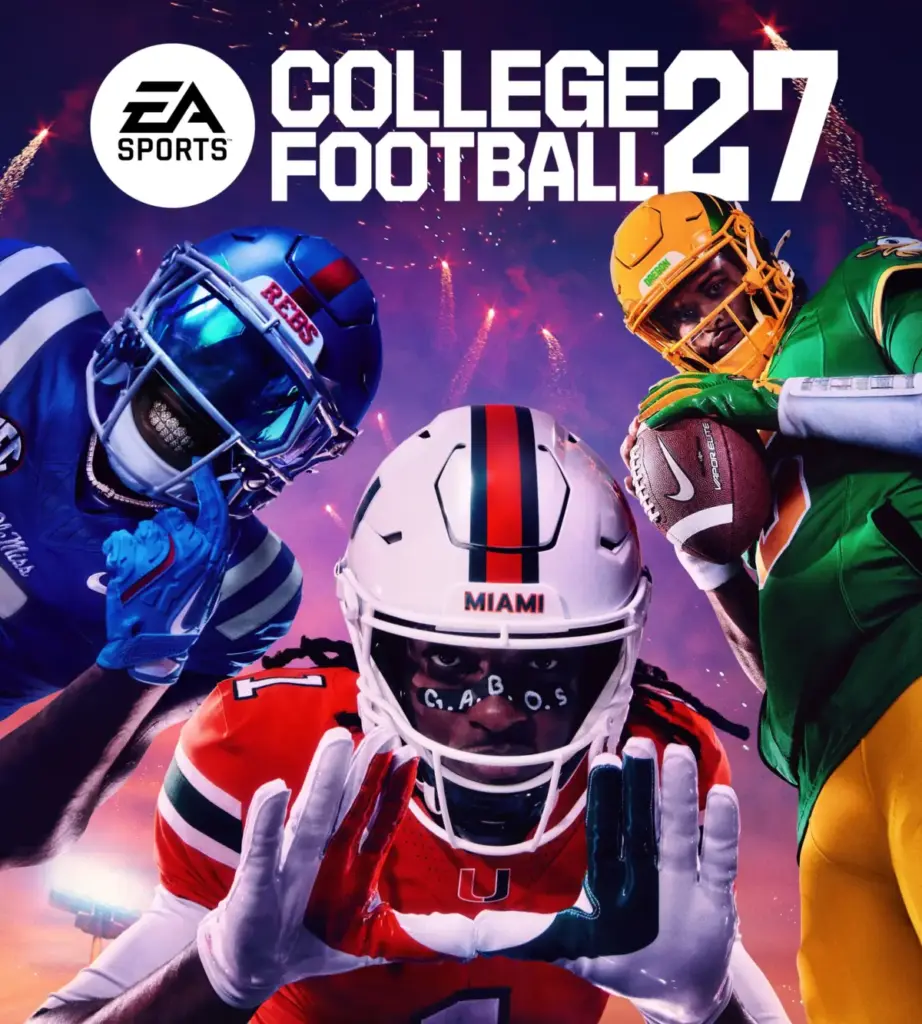
Gracing the prestigious cover of College Football 27 are three standout athletes who define the modern collegiate landscape: Miami Hurricanes wide receiver Malachi Toney, Oregon Ducks quarterback Dante Moore, and Ole Miss Rebels running back Kewan Lacy. Rather than adhering to the traditional, corporate-approved mold of the quiet, hyper-focused collegiate athlete, these young men are stepping into the spotlight with distinct sartorial statements, deeply personal mantras, and an unapologetic sense of self.
From Toney’s signature nose strip emblazoned with the acronym G.A.B.O.S. (Game Ain’t Based on Sympathy) to Lacy’s diamond-studded grillz and Moore’s laid-back, Pacific Northwest-inspired comfort, the cover stars represent a cultural shift. Today’s football players are not merely athletes; they are cultural tastemakers, style icons, and entrepreneurs-in-training. This comprehensive report examines how this new generation is redefining the intersection of sport and personal style, the growing commercial stakes of athlete branding, and how the pipeline from college locker rooms to professional fashion runways has fundamentally changed the sports entertainment complex.
Detailed Chronology: The Evolution of Athletic Style and the EA Sports Reveal
To understand the cultural significance of the College Football 27 cover, one must examine the rapid evolution of how athletes express themselves through fashion, culminating in the official reveal event in Chicago.
The Rise of the Tunnel Walk
Over the past decade, the cultural landscape of professional and collegiate sports has undergone a profound transformation. Historically, pre-game arrivals were characterized by standardized team tracksuits or corporate-mandated business-casual attire. However, the advent of social media and the cultural dominance of platforms like Instagram and TikTok turned stadium "tunnel walks" into high-fashion runways.
Basketball stars and Formula 1 drivers paved the way, turning pre-race and pre-game corridors into spaces of haute couture. Soon, the NFL caught up. Elite players such as Travis Kelce, Jalen Hurts, and Tyrod Taylor transformed pre-game arrivals into highly anticipated style moments. This shift opened the floodgates for football players to infiltrate the upper echelons of the global fashion industry. High-profile athletes began occupying front-row seats at New York Fashion Week, walking the runways for heritage luxury houses like Hermès, and attending the Met Gala.
Breaking the Mold: Beyond Traditional Gender Norms
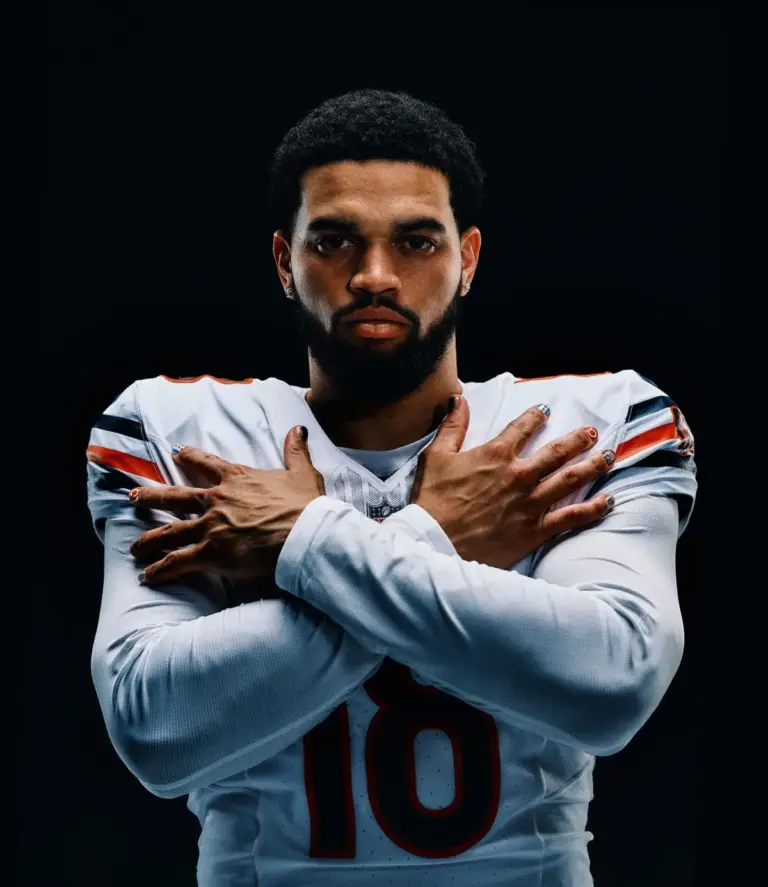
Fashion in football is no longer restricted to traditional menswear paradigms. Trailblazing athletes like Chicago Bears quarterback Caleb Williams have actively dismantled longstanding gender norms within the sport by famously painting their nails prior to every game—a signature look that prominently featured on the cover of Madden NFL 27. This fearless approach to self-expression laid the groundwork for the incoming generation of collegiate stars, proving that authenticity trumps institutional conformity.
The Chicago Cover Reveal
At the official College Football 27 cover reveal event in Chicago, the trio of cover athletes showcased their individual aesthetic philosophies in real-time, offering a window into how distinct regional cultures influence personal style:
Dante Moore (21, Oregon Ducks): Standing tall in a monochromatic beige loungewear set with his hair styled in a natural ’fro, Moore projected the relaxed, understated cool emblematic of Eugene, Oregon.
Malachi Toney (18, Miami Hurricanes): Positioned at the literal and figurative center of the game’s cover art, Toney arrived wearing a crisp white tee anchored by a gleaming gold “75” chain—a permanent homage to his viral, game-defining 75-yard touchdown against North Carolina State University in 2022.
Kewan Lacy (19, Ole Miss Rebels): Radiating southern swagger, Lacy donned a white Supreme zip-up jacket paired with crisp khakis, flashing his signature diamond-studded grillz for the cameras.
Supporting Context & Metrics: The Economics of Athlete Branding
The elevation of college football players into mainstream fashion and pop culture icons is not an accidental byproduct of modern media; it is heavily accelerated by structural changes in collegiate sports, specifically the arrival of Name, Image, and Likeness (NIL) legislation.
The NIL Revolution and Personal Branding
Prior to the NIL era, collegiate athletes were legally barred from capitalizing on their personal brands, limiting their public identities to whatever could fit inside a stadium broadcast package. Today, athletes retain control over their likenesses, enabling them to partner directly with luxury fashion houses, streetwear labels, and gaming giants like EA Sports.
According to sports marketing analysts, the valuation of collegiate athlete brands has skyrocketed by over 300% since the inception of NIL rules. Brands are no longer just looking for players who can run fast or throw deep; they are actively scouting athletes with high cultural capital, distinctive personal styles, and engaged digital followings.
The Regional Divide in Collegiate Fashion
The personal styles of Moore, Toney, and Lacy also highlight a fascinating geographical dichotomy in modern youth culture:
While professional athletes are often supported by armies of professional stylists and glam squads—including industry pioneers like the NFL’s first-ever fashion editor, Kyle Smith—collegiate athletes are largely self-directed. They curate their looks organically, balancing rigorous training schedules with the demands of building a public persona.
Official Statements and Perspectives
To truly capture the mindset of these young athletes, one must listen to how they articulate their relationship with fashion, pressure, and personal identity. Far from being consumed by the superficial aspects of fame, all three cover stars maintain a grounded, highly intentional approach to their newfound status.
Malachi Toney on Authenticity and "Gatekeeping"
Malachi Toney’s approach to fashion is defined by radical individuality and a playful protectiveness over his favorite designers. His personal mantra, G.A.B.O.S. (Game Ain’t Based on Sympathy), serves as both the text on his game-day nose strip and the foundational philosophy of his daily life.
"It’s a lifestyle—Game Ain’t Based on Sympathy," Toney explains. "I feel like I have my own style. I wouldn’t look at anybody else—like ‘Oh, he’s putting on [this brand], so I gotta put this on, too,’ or that I have to meet the same standard they’re at. I just want to be myself, for real."
When pressed on the specific labels that populate his wardrobe, Toney leans into his status as a fashion insider, playfully refusing to disclose his entire roster:
"I don’t want to say the brands. I like gatekeeping because people are going to start wearing them," Toney laughs, before conceding, "Alright: I’m a fan of Paly, ERD [Enfants Riches Déprimés], Chrome Hearts, and Better With Age. All the expensive stuff."
Dante Moore on Comfort and Embracing Pressure
For Dante Moore, personal style is an extension of his mental state on the gridiron. Operating out of the Pacific Northwest, his wardrobe reflects the serene, unpretentious environment of Eugene, Oregon.
"I like to be comfortable when it comes to my style and just being who I am," Moore shares. "That’s the same approach I take to the field and staying loose. My personal style lets me express the way I feel."
Discussing the casual dress culture of his campus environment, Moore adds:
"In my everyday life, I’m wearing pajamas or something along those lines. You’ll most likely find people wearing Nike or Dr. Martens. Nothing too crazy. We don’t really dress up as much [in Oregon]."
Despite the immense expectations that come with gracing a national video game cover and leading a powerhouse program, Moore views the spotlight through a lens of gratitude:
"Pressure is a privilege. So you’ve got to enjoy and embrace it."
Kewan Lacy on Effortless Individualism and Family Motivation
Kewan Lacy approaches fashion with a similar nonchalance, prioritizing personal comfort and organic curation over trend-chasing.
"Usually, I wear whatever unless there’s an event. That’s when I have to dress up," Lacy notes. "I feel like there’s no pressure to dress up. I’m not trying to impress anybody. I wear whatever catches my eye. I try to get pieces I like, and over time, they just come together for me."
When considering the future and the weight of public expectation, Lacy’s motivations remain deeply grounded in family and personal integrity:
"I just take everything day by day. I don’t feel like there are any expectations from anybody. I try to make [my mom] proud the best I can. I try to be as successful as possible by not making the wrong decisions."
Future Outlook: The Next Era of Football Culture
As Malachi Toney, Dante Moore, and Kewan Lacy prepare for the next chapters of their athletic careers—with their eyes firmly set on the professional ranks—the cultural footprint they are leaving behind signifies a permanent evolution in sports entertainment.
The launch of College Football 27—with gameplay access rolling out on July 2, 2026, for MVP+ Membership subscribers—serves as a cultural milestone. It documents a transitional moment in sports history where video games are no longer just simulations of athletic performance, but active curators of youth culture, fashion, and personal identity.
The archaic dichotomy separating the "jock" from the "fashionista" has been decisively dismantled. Today’s incoming rookies enter the national consciousness fully formed as cultural agents. Whether they are gatekeeping underground luxury streetwear brands in Miami, embracing relaxed campus loungewear in Oregon, or flashing diamond-studded grillz in Mississippi, these athletes prove that modern greatness requires more than physical skill—it requires an authentic voice.
As the boundaries between sport, gaming, and haute couture continue to dissolve, one reality remains unmistakably clear: the game is no longer just played on the field. It is lived, breathed, and styled on our own terms.