
Executive Overview
In the fast-paced, algorithm-driven theater of modern social media beauty culture, a new paradox has taken center stage: the "anti-blush." For years, the global cosmetics industry has ridden a tidal wave of hyper-pigmented, statement-making flush. Brands like Rhode, Rare Beauty, and a host of prestige competitors have turned rosy, highly saturated cheeks into a non-negotiable staple of the contemporary makeup routine. According to retail tracking data from Circana, U.S. prestige beauty sales for blushes and bronzers posted robust, double-digit gains during the first half of 2026, significantly outpacing the broader prestige makeup segment’s modest 3% overall growth.
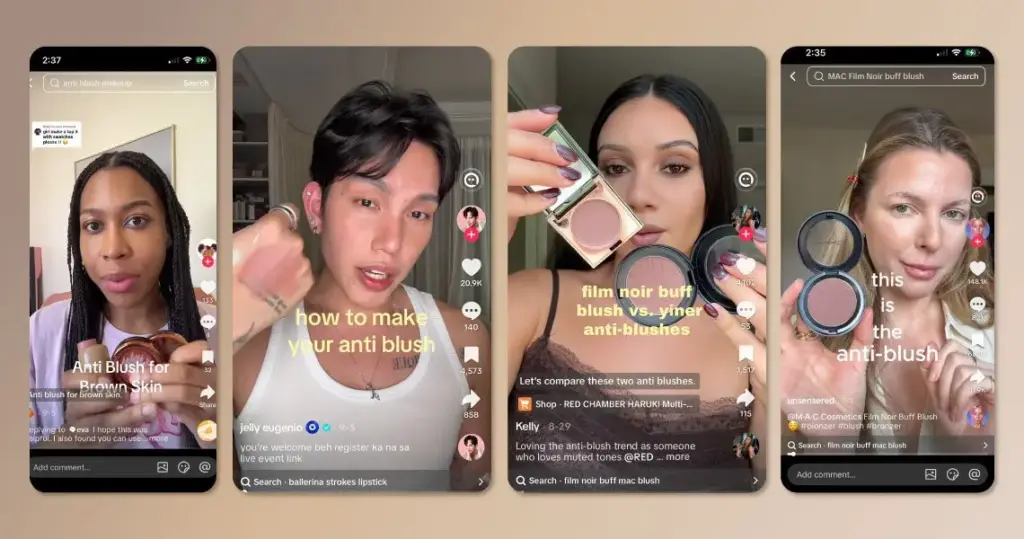
Yet, as the pendulum of aesthetic trends invariably swings, a counter-movement has emerged from the digital ether. Enter the "anti-blush"—a descriptor for muted, neutral, beige, and rosy-brown tones that eschew traditional vibrancy in favor of a grunge-inspired, ’90s-esque, subtly sculpted dimensionality.
The term itself did not originate in a corporate boardroom or a trend-forecasting agency’s multi-thousand-dollar white paper. Instead, it was born out of an impromptu linguistic choice made by Kim Senser, a Los Angeles-based actor and content creator with roughly 30,000 followers. While filming a routine review of MAC’s Film Noir Buff blush in July, Senser searched for a way to articulate why the unusual shade captivated her. Discarding conventional praise, she labeled it the "anti-blush."
The video struck a nerve, racking up millions of views and triggering a massive supply chain disruption that saw MAC’s Film Noir Buff completely sell out at major retailers like Ulta and Sephora.
However, the viral success of the anti-blush has transcended a mere product review. It has ignited a fierce, widespread industry debate regarding the commodification of creator culture, the ethics of corporate acknowledgment, and the perpetual cycle of trend appropriation on platforms like TikTok and Instagram. As major beauty houses adopt grassroots vernacular without official attribution, the anti-blush phenomenon has become a fascinating case study in how intellectual property—and credit—are navigated in the wild west of social media commerce.
Detailed Chronology of a Viral Phenomenon
To understand how a single phrase migrated from a modest creator’s vanity table to international fashion publications and major corporate boardrooms, one must trace the rapid timeline of its ascent.
July 2026: The Genesis
The phenomenon began quietly in the middle of summer. Kim Senser sat down to film content featuring MAC’s Film Noir Buff blush, a rosy-brown cosmetic product that sits far outside the bright pinks and corals dominating the contemporary market. Struggling to define its unique appeal, Senser rejected her initial thought—“This is the most interesting blush I’ve ever used”—as insufficiently punchy for short-form video algorithms. On the spot, she coined the moniker: "This is the anti-blush."
Upon publication, the video acted as a digital catalyst. Within weeks, the post crossed two million views on TikTok and pulled in an additional million impressions on Instagram. The phrasing resonated deeply with consumers who were growing fatigued by what beauty insiders have termed "blush blindness"—the tendency to over-apply heavily saturated pigments until the face loses its natural balance.
August 2026: Mainstream Crossover and Corporate Adoption
By August, the term had broken containment, expanding far beyond Senser’s core audience. Mega-influencers with millions of dedicated followers, including beauty heavyweights like Aditya Madiraju and Melissa Murdick, began weighing in on the trend, testing neutral shades and offering tailored recommendations for diverse demographics, including deeper skin tones and olive undertones. International style bibles, ranging from Vogue Adria to Harper’s Bazaar Singapore, quickly picked up the craze, publishing guides on how to recreate the neutral, muted look at home.
Crucially, the corporate machinery took notice. In August, cosmetics giant MAC leveraged the term directly on its official Instagram account to promote its blush lines, using the momentum of the movement to drive product discovery.
September 2026: The Backlash and the Conversation on Credit
As the phrase cemented itself in the lexicon of autumn beauty trends, cracks began to show in the relationship between grassroots creators and institutional brands. Comment sections on MAC’s official social channels quickly filled with users calling out the company for omitting credits to Senser, while others critiqued the brand’s failure to adequately showcase the neutral blush range across diverse, deeper skin tones.
Senser, meanwhile, found herself navigating uncharted territory. Despite having initiated the viral wave that drove a 4x overperformance against launch plans for Film Noir Buff, she reported receiving no direct communication or recognition from MAC. In response, she posted a lighthearted follow-up video in September. In it, she referenced how supplement brand Lemme famously treated content creator Christina Kirkman to an all-expenses-paid trip to Coachella after her video promoting sleep gummies went viral, gently highlighting the discrepancy in how brands reward foundational digital word-of-mouth.
Supporting Context & Metrics: The Numbers Behind the Neutral Shift
The rapid adoption of the anti-blush trend is not an isolated behavioral quirk; it is underpinned by profound shifts in consumer psychology and hard retail metrics.
The Shifting Appetite of the Beauty Consumer
For the past half-decade, the beauty industry has been defined by dopamine-driven maximalism. Fueled by post-pandemic optimism and the gamification of makeup on TikTok, consumers embraced vibrant, high-impact looks. Brands like Rhode and Rare Beauty capitalized on this by introducing ultra-pigmented liquid and cream blushes designed to make cheeks pop from across a room.
However, saturation inevitably breeds fatigue. According to September data compiled by trend-forecasting firm Spate, consumer interest in beige and neutral blushes—measured across Google search queries and social media engagement—skyrocketed by an astonishing 274.9% compared to the previous year.
Katie Jane Hughes, a renowned makeup artist and founder of KJH Brand, contextualizes the aesthetic roots of this shift:
"I think the anti-blush thing is coming from a place of, like, the Gabbriettes and these girls with this super, kind of, ’90s, slightly beautifully tired, little bit grungy, less kind of coverage under their eyes. I think that it is just a trend with a new nickname. I think that’s what most of the trends are, right?"
While professional makeup artists have utilized neutral tones, taupes, and muted browns for decades to sculpt the face without imparting a traditional "flushed" look, packaging this technique under a fresh, catchy moniker like "anti-blush" gave digital consumers a clear framework to discuss and replicate the aesthetic.
The Economics of "Flirting" with Brands
The dynamic between independent creators and multi-billion-dollar beauty conglomerates highlights a systemic friction within modern marketing. For emerging influencers who lack the representation of major talent agencies or managers, posting organic product reviews is often speculative labor. At industry events like Glossy’s POP NYC conference in September, aspiring creators openly referred to this practice as "flirting" with brands—tagging companies in viral videos in the hopes of securing a repost, gifted PR packages, or, ideally, a paid partnership.
Occasionally, this digital hustle pays off. For instance, in March, Vaseline flew veteran beauty creators Jen Chae and Lauren Luke to Thailand to promote its new Vaseline Originals collection, cutting them into a portion of the sales generated from beauty hacks they had originally posted back in 2008.
Yet, for every success story, there are countless instances where creators provide free, highly effective marketing campaigns without receiving financial compensation or professional attribution. Senser herself remains remarkably philosophical about the situation, noting:
"It’s definitely a learning experience. Once again, [MAC] doesn’t owe me anything. It’s not like I trademarked anything. People in the comments were like, ‘I would sue.’ I’m like, ‘I never thought about any of that.’"
Official Statements and Industry Perspectives
The friction surrounding trend ownership and corporate co-optation has become a recurring theme in the beauty sector. Earlier in the year, Patrick Ta Beauty faced intense consumer scrutiny during the launch of its "Transition Blush," with makeup enthusiasts criticizing the brand for seemingly taking credit for a sophisticated technique pioneered by independent makeup artist Ngozi Esther Edeme, widely known as Painted By Esther.
When approached for comment regarding the anti-blush phenomenon and the buzz surrounding Senser’s contribution, a representative for MAC provided insight into the brand’s philosophy and the extraordinary commercial success of the product at the center of the storm:
"This is exactly how beauty should move: creatively, collectively and without rules. Consumers come to MAC when they want permission to play — to try on a trend, make it their own and find products that flex with their mood, style and self-expression," the MAC spokesperson shared via email.
Highlighting the overwhelming market response, the brand confirmed that the Skinfinish Colourstruck Blush in Film Noir Buff vastly exceeded initial corporate projections:
"…overperformed launch plans by 4x. With a blush portfolio that spans bright, bold shades alongside softer, neutral-toned options, MAC continues to be a destination for artistry and experimentation — and we’ve seen that in action from the blush trio that surged around our Painted By Esther x Olandria MACzine cover to Kim Senser’s anti-blush movement."
While MAC explicitly acknowledged Senser’s contribution in its public statement, the lag between the initial viral explosion and corporate acknowledgment underscores the communication gap that often exists between massive beauty houses and the digital creators driving grassroots culture.
Future Outlook: Trend Fatigue and the Search for Authentic Dupes
As the anti-blush movement transitions from an organic viral sensation into a standardized retail category, early signs of consumer fatigue are already bubbling to the surface on community forums like Reddit. Users scrolling through heavily saturated feeds are increasingly questioning whether every single makeup technique requires a catchy, commodified label to be considered valid.
Furthermore, industry veterans emphasize that the anti-blush look is fundamentally an exercise in technique rather than an exclusive product acquisition. As Katie Jane Hughes points out, consumers trapped in the cycle of trend-buying do not necessarily need to chase sold-out inventory:
"You could literally take a bronzer, and you could add a tiny, tiny bit of lipstick. You could take a lipstick that’s a nude and then use it as a cheek color."
For Kim Senser, the personal legacy of the anti-blush is bittersweet. While her digital footprint has expanded significantly, looking at the very product that launched a million views evokes complicated emotions:
"I think I feel a little some type of way whenever I see the color in my bag. I look at it like a lover that treated me bad," she says with a laugh. "Currently, my mission is to find a good dupe and just continue getting back into my normal posting."
The Broader Takeaway for the Beauty Industry
The anti-blush saga serves as a bellwether for the future of beauty marketing. As algorithmic distribution platforms ensure that even creators with micro-audiences can spark global product shortages overnight, traditional beauty brands can no longer rely solely on top-down advertising campaigns. Agility, responsiveness, and—crucially—fair, timely recognition of grassroots creators will define which brands maintain authentic relationships with modern consumers.
Until then, the cycle of micro-trends will continue to spin, proving that in the digital age, a simple turn of phrase can be just as powerful as a multi-million-dollar advertising budget.