Executive Overview
In the contemporary cultural zeitgeist, few artists occupy a space as fiercely protective, deeply revered, and analytically fascinating as Megan Thee Stallion. What began as explosive hip-hop lyricism has evolved into an internet-wide theological phenomenon known colloquially as “Megalations.” Functioning as modern scriptures pulled straight from the metaphorical “Baddie Bible,” these lyrical affirmations have transformed from catchy streaming hits into emergency literature for a generation of women navigating heartbreak, misogynoir, and the exhausting demands of modern dating dynamics.
The movement hit a fever pitch following high-profile relationship fractures—such as the widespread internet fallout surrounding her now-ex-boyfriend Klay Thompson’s infidelity—where fans weaponized her bars not just as songs, but as spiritual armor. Across TikTok, Instagram, and X (formerly Twitter), millions are enacting a communal deprogramming from male validation. With eyes closed and hands folded in mock-reverence, fans recite passages like Megalations 4:16 or invoke timeless declarations such as, "Dick don’t run me, I run dick."
This deep-seated devotion is no fleeting trend. It is the culmination of Megan Thee Stallion’s multi-year ascent as a cultural architect. From her explosive breakout during the COVID-19 pandemic with viral anthems like "Savage" to her academic milestones (earning a degree in health administration from Texas Southern University), Megan has systematically dismantled the rigid binaries forced upon Black women in media. By wedding uncompromising sexuality with high intellect, boundary-setting, and profound public resilience through unimaginable personal trauma, she has forged a new lexicon of self-possession.
This article investigates the anatomy of the Megalations phenomenon, tracing its historical roots in Black feminist hip-hop, analyzing its socio-cultural impact across digital ecosystems, and exploring why Megan Thee Stallion’s “Hot Girl” ethos has endured as a permanent fixture of modern feminist resistance.
Detailed Chronology: From Underground Hustle to Digital Canonization
To understand how Megan’s lyrics achieved scripture status, one must map the trajectory of her career—a masterclass in resilience, sharp business acumen, and unflinching authenticity.
- Early 2018: Megan Thee Stallion signs with 1501 Certified Entertainment, cementing her status as the label’s premier female rap signee.
- June 2018: The release of her breakthrough EP, Tina Snow, introduces the world to her brazen, no-holds-barred alter ego. The standout track, "Big Ole Freak," cracks the Billboard Hot 100 at number 65 by May 2019, laying the groundwork for her commercial dominance.
- August 2019: Megan uploads "Hot Girl Summer" featuring Nicki Minaj and Ty Dolla $ign to YouTube, generating over one million views and 129,000 likes in a single day. The phrase #hotgirlsummer instantly dominates global discourse, officially defining a cultural movement.
- March 2019 – July 2020: Amid her meteoric rise, Megan experiences profound personal tragedy with the loss of her mother and manager, Holly Thomas, to brain cancer, followed closely by the death of her grandmother. This grief is compounded by a high-profile, highly scrutinized shooting incident in July 2020 involving rapper Tory Lanez, exposing her to relentless public vitriol.
- April – November 2020: The release of the "Savage (Remix)" with Beyoncé scores Megan her very first number-one single on the Billboard Hot 100. By November, her debut studio album, Good News, debuts at number 2 on the Billboard 200.
- December 2021: Demonstrating intellectual fortitude off the mic, Megan graduates from Texas Southern University with a Bachelor of Science in Health Administration. By 2022, she successfully trademarks the phrase "Hot Girl Summer."
- Late 2023 – 2024: Releasing her raw, introspective lead single "Cobra," Megan addresses depression and the psychological toll of grieving in the public eye. Her third, self-titled studio album, Megan, reinforces her narrative control.
- April 2026: A viral Instagram story detailing Klay Thompson’s infidelity sparks a global digital crusade. Women across the internet mobilize, invoking Etsy witches, dismantling Thompson’s career highlights, and passing around Megan’s lyrics like emergency literature. The term "Megalations" is permanently etched into digital folklore.
- June 2026: Megan teases an unreleased track on Instagram with the bar, "All that wifey shit is dead / Put that shit to bed," setting the stage for a fiercely independent summer.
Supporting Context & Metrics: The Anatomy of Megalations
The conversion of pop-rap lyrics into a digital pseudo-religion highlights a profound shift in fan engagement. Megalations operate through scripture-like formatting (e.g., Megalations 3:12), utilized to counsel friends or ground oneself after a toxic encounter.
Quantitative Reach and Viral Impact
- The Anthem of Reclamation: Mona Swain’s May TikTok video utilizing the lyrics to "Plan B" (*"Ladies, love yourself cause this shit could get ugly / That’s why it’s fuck n** get money…") amassed over 83,100 likes and 6,000 saves**, sparking thousands of testimonials in the comments section.
- Community Forums: Subreddits like r/megantheestallion feature dedicated threads—such as “How Megan Thee Stallion genuinely saved my life”—where users conduct literary analyses of her bars to unpack themes of grief, boundaries, and self-worth.
- The Lexicon of Liberation: Urban Dictionary definitions dating back to 2021 cement the phrase’s practical utility in everyday modern dating: "When he hit you up after the link, remember to look back at Megalations 3:12."
Academic Framing: Disrupting the Respectability Binary
Scholars have taken note of this unprecedented cultural resonance. In The Megan Movement: Defining and Exploring Hot Girl Rhetoric, Ebony L. Perro, Professor of Practice at Tulane University, articulates the depth of Megan’s impact:
"She problematizes one-dimensional readings of Black womanhood and generates a language for her fanbase to challenge oppressive ideologies. While many artists contest (and ignite) discourses about Black women, Megan Thee Stallion’s hot girl rhetoric generates cultural phenomena that disrupt the respectable/ratchet binary for Black women."
By deliberately subverting the Madonna-whore complex inherent in patriarchal hip-hop critiques, Megan’s lines—such as "I’m a Savage / Classy, bougie, ratchet / Sassy, moody, nasty"—insist on the multiplicity of female identity. A woman can be intelligent, academic, and deeply sexual without forfeiting her right to safety, respect, or autonomy.
Official Statements and Cultural Commentary
The discourse surrounding Megan’s cultural footprint extends far beyond stan Twitter and TikTok trends, bridging the gap between pop culture critique and feminist theory.
Reflecting on the psychological resonance of Megan’s music, New York-based actress and musician Mona Swain shared her perspective in an interview:
"Songs like ‘Plan B’ feel empowering because they challenge the idea that women should shrink themselves, tolerate disrespect, or stay loyal to situations that are hurting them. For me, those lyrics read less as revenge and more as reclamation, protecting your peace, and remembering your worth even when emotions are involved. I think a lot of women connect to Megan because she makes confidence and self-respect feel unapologetic."
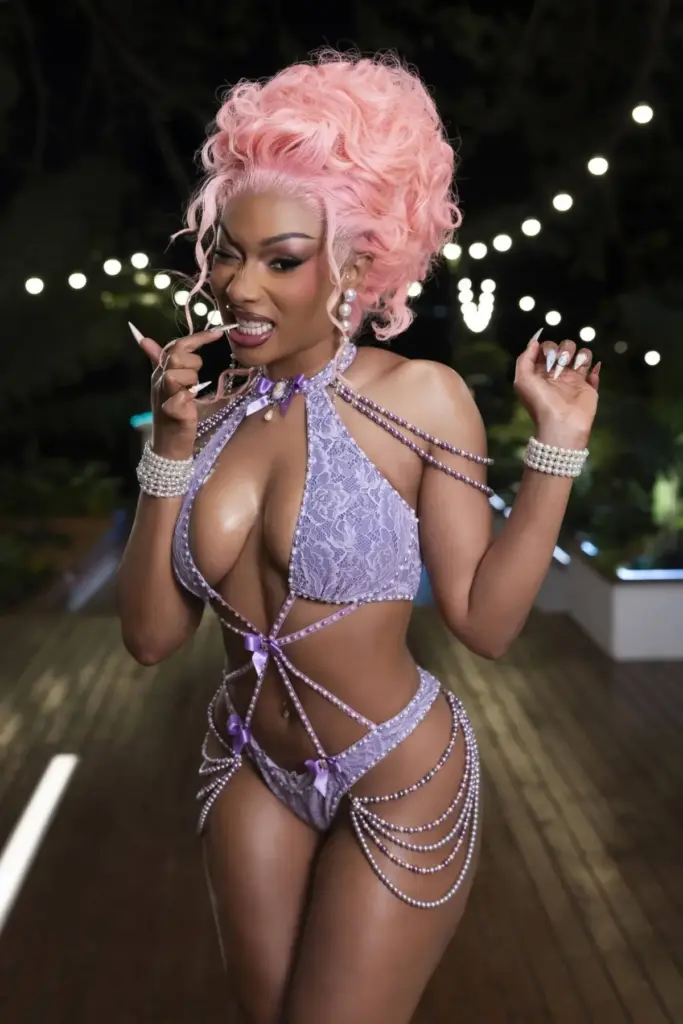
This sentiment was vividly demonstrated during Megan’s memorable appearance on the reality television phenomenon Love Island. Serving as a glamorous master-of-ceremonies during a "Hot Girl Bakery" challenge dressed as a modern Marie Antoinette, Megan used the platform to directly address the insidious "red-pill" ideologies creeping into modern dating culture.
With quiet authority, she surveyed the villa and delivered a definitive mandate:
- To the women: "Keep turning it up, keep putting on, and keep being hot girls doing hot girl things."
- To the men: [A pointed silence] followed by, "Y’all can step up the gentleman a little bit more."
It was a masterclass in cultural boundary-setting—reminding male consumers that access to women’s bodies and attention is a privilege contingent upon mutual respect, not an entitlement guaranteed by patriarchal default.
Future Outlook: The Legacy of the "Baddie Bible"
As Megan Thee Stallion continues to tease new music geared toward uncompromised single summers and unapologetic self-ownership, the longevity of the "Megalations" movement points to a broader evolution in fan culture.
We are witnessing a shift from passive consumption to active ideological alignment. In an internet landscape frequently plagued by the manosphere, targeted harassment, and the systemic silencing of marginalized voices, Megalations offer an antidote. They provide a shared vocabulary that transforms private pain into collective power, and individual heartbreak into communal joy.
The lineage of Black women in hip-hop—from Roxanne Shanté and Queen Latifah to Salt-N-Pepa, Missy Elliott, and Lil’ Kim—has always relied on self-definition as a tool of survival. Megan Thee Stallion has inherited this mantle and supercharged it for the digital age, codifying resistance into a living, breathing gospel.
Whether deployed to survive a toxic workplace, pivot away from a disappointing partner, or simply remember one’s inherent worth on a difficult morning, the Book of Meg remains open. As long as women continue to reclaim their peace in the face of modern adversity, the world will keep turning to its favorite prophet, uttering a collective, grateful: In Meg we trust.