Executive Overview
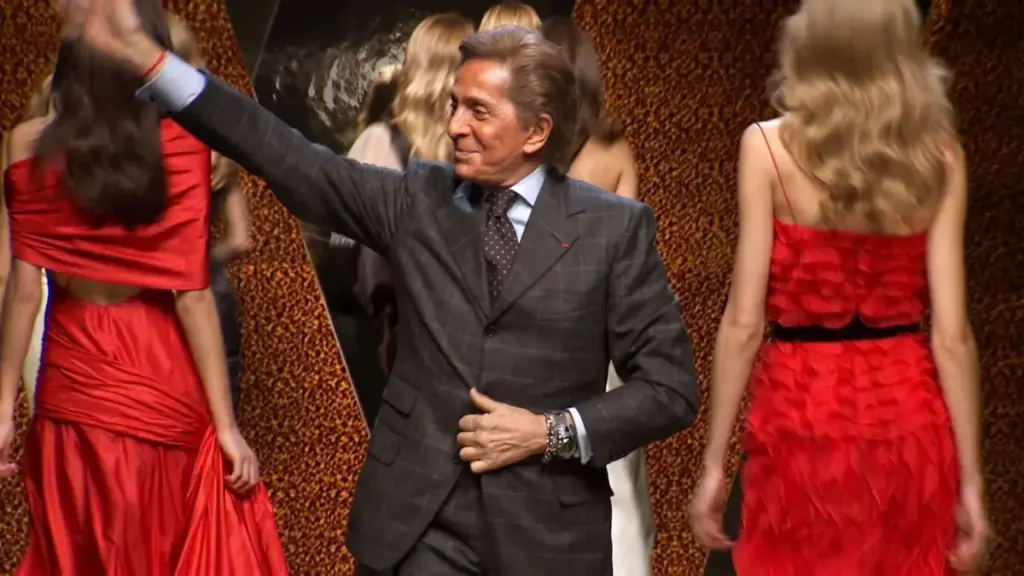
September has quietly emerged as a golden month for archival fashion cinema. As cinephiles and style historians celebrate the theatrical revival of Unzipped—Douglas Keeve’s frantic 1995 documentary capturing Isaac Mizrahi at the dawn of his career—another monumental project is staging an equally triumphant comeback. Matt Tyrnauer’s acclaimed 2008 masterwork, Valentino: The Last Emperor, is officially returning to digital streaming platforms, closing a frustrating gap in availability that has persisted for years.
The timing could not be more poignant. Following the passing of legendary couturier Valentino Garavani in January, global interest in his life, work, and legacy reached a fever pitch. Yet, generations of new fashion enthusiasts attempting to stream the definitive documentary found themselves locked out; the film had inexplicably vanished from major digital platforms. Propelled by fan petitions, shifts within the House of Valentino—including the high-profile transition from Pierpaolo Piccioli to Alessandro Michele—and an enduring cultural appetite for authentic fashion history, Tyrnauer and his producers have taken matters into their own hands. Utilizing a self-distribution model that echoes their scrappy, record-shattering theatrical run over a decade ago, the documentary will once again be accessible to audiences worldwide across Apple, Amazon, and Fandango starting September 29.
When paired with Sofia Coppola’s recent visual explorations of Marc Jacobs, Tyrnauer’s film completes a cinematic holy trinity of fashion documentation. Together, these works span the entire life cycle of high-end design: the restless ambition of a young creator’s beginnings, the majestic twilight of a career defined by absolute luxury, and the raw, unvarnished human reality behind the global empires.
Detailed Chronology: From Vanity Fair Pages to Cinematic Verité
The genesis of Valentino: The Last Emperor reads like an improbable literary and cinematic collision. In the mid-2000s, Matt Tyrnauer was working as a high-profile investigative reporter and feature writer for Vanity Fair. Assigned to profile Valentino Garavani, Tyrnauer approached the commission not as a seasoned fashion insider, but as a curious outsider.
“I was not then, and still I’m not a fashion reporter,” Tyrnauer reflects, noting the strategic advantage of his perspective. “Being a fish out of water is a wonderful thing for a journalist generally—and, it turns out, for a filmmaker.”
What began as a print assignment quickly ballooned into an obsession. Stepping into the historic Roman atelier just off the Piazza di Spagna, Tyrnauer was transfixed by the operatic scale of the operation. He encountered nearly 100 white-coated artisans painstakingly stitching multi-hundred-thousand-dollar couture gowns by hand in stark, cinematic laboratories. This tangible, painstaking labor existed in stark, fascinating contrast to the flamboyant, full-color world of Meissen swans, gilded boiserie, and aristocratic pageantry inhabited by Valentino and his lifelong business partner, Giancarlo Giammetti.

Before his magazine feature was even completed, Tyrnauer turned to Giammetti with a realization that would alter the course of modern fashion documentary: “I think this is a movie.”
[2006: Vanity Fair Assignment] ──> [2007: Two Years of Cinema Verité] ──> [Aug 2008: Venice Premiere]
                                                                               │
[Sept 29: Digital Streaming Return] <── [2008-2009: Grassroots Success] <──────┘
Operating in the uncompromising tradition of cinema verité masters like Albert and David Maysles, Frederick Wiseman, and D.A. Pennebaker, Tyrnauer balanced his demanding day job at Vanity Fair with clandestine filmmaking. Between editorial cycles, he would write magazine features; then, precisely two weeks before a major collection dropped, he would descend upon Rome with a camera crew in tow. Over a grueling two-year period, Tyrnauer captured the inner sanctum of the fashion house, ultimately chronicling Valentino’s majestic 45th-anniversary celebration and his emotional, highly publicized retirement.
The experience pulled the journalist deep into the psychological orbit of the brand. “Their world—it’s a court, like all the greats of that period, like Yves Saint Laurent and Pierre Bergé, like Lagerfeld,” Tyrnauer explains. “So you become not quite a courtier, because you’re the resident alien. But in that Italian way, you get swept up in the dramas of all the relationships. I became a kind of willing—well, I think unwitting, but a volunteer—pawn in the complex relationship between Valentino and Giammetti.”
Supporting Context & Metrics: Unmasking the Myth
For decades, the public-facing image of Valentino Garavani had been carefully curated, polished, and protected by a world-class communications machine. To Tyrnauer, however, the official narrative felt incomplete.
“Valentino’s press had been a million miles wide and one centimeter deep,” Tyrnauer observes. “There was nothing in all of the almost half century of journalism that talked about the real story, which was the story of the marriage between Valentino and Giammetti. And the baby was the company.”
This psychological core—the delicate, symbiotic, and occasionally volcanic codependency between the creative genius and the business mastermind—became the beating heart of the documentary. Yet, capturing this raw reality did not come without friction. When Tyrnauer first screened the rough cut for his subjects, the reaction was swift and distinctly unenthusiastic.

“They didn’t like the film,” Tyrnauer admits, pointing directly to the documentary’s unflinching portrayal of human vulnerability.
Giancarlo Giammetti corroborates this initial discomfort with candid retrospection: “At the first screening, I hated it. I hated seeing myself so exposed. For someone like me, who had always been much more comfortable remaining in the background, seeing myself revealed with so little protection was a completely new and rather unsettling sensation.”
Over time, however, that initial panic morphed into appreciation. The film’s greatest strength lay precisely in its invisibility. Giammetti notes that the production crew achieved a level of access so profound that the camera simply vanished from their daily consciousness.
“Making the film was actually much easier than it might seem, especially when you consider how many different moments of our lives it captures,” Giammetti recalls. “Matt had an extraordinary ability to find his way into very private moments without ever making us feel that he was intruding. After a while, you simply forgot that the camera—and the microphone—were there. I remember once finding myself in the bathroom and suddenly realizing that I was still wearing a live microphone. That probably tells you how completely we had become accustomed to his presence.”
The documentary is punctuated by moments of startling intimacy. In one unforgettable sequence, Valentino physically swats at the camera lens to push it away—a visceral reaction to confronting his own mortality as he reviews a museum retrospective of his life’s work. It is a moment of pure, unfiltered existential panic, safely preserved on celluloid.
Official Statements & The Grassroots Distribution Battle
The path from raw footage to international acclaim was as dramatic as any runway show. Following its initial premiere at the Venice Film Festival in August 2008—which was met with such thunderous applause that the production organized a historic secondary screening at Venice’s famed La Fenice opera house—the film encountered the unforgiving realities of the independent distribution market.

A promising distribution deal with HBO fell through at the Toronto International Film Festival, leaving Tyrnauer and his team without a traditional corporate backer. Choosing defiance over defeat, the producers elected to self-distribute the project theatrically—a risky gamble that ultimately paid off beyond their wildest projections.
The turning point arrived when media titan Oprah Winfrey caught wind of the project and dedicated a full hour of her daily talk show to the documentary.
[Theatrical Self-Distribution Model]
       │
       ├──> Backed by Oprah Winfrey's National Endorsement
       ├──> Record-Breaking Per-Screen Box Office Averages
       └──> Direct-to-Consumer Digital Launch (Apple, Amazon, Fandango)
“In the wake of the Oprah endorsement, it took off at the box office,” Tyrnauer remembers with a laugh. “My assistant was FedEx-ing film prints around the country; I was approving ad buys in the Dallas Morning News.”
The grassroots campaign shattered independent documentary records, securing the highest per-screen average in the United States during its opening weekend and proving that audiences hungered for unvarnished cinematic truth over sanitized PR puffs.
Now, faced with a modern digital landscape where the film was completely inaccessible following Valentino’s passing, the producers are deploying the exact same independent, consumer-first philosophy. Rather than waiting for a legacy studio to license the rights, they are steering the streaming rollout directly.
Reflecting on the film’s enduring legacy as it prepares for its digital resurrection, Giammetti offers a deeply moving reflection on what the documentary ultimately achieved:

“For years, I saw it as a document of our work, of a chapter that was closing. Today, it is something much more personal: 96 minutes in which Valentino is there—magnificent, impatient, funny, demanding—exactly as he was. There is great emotion, of course, but also great happiness. The film preserved not only what we did, but who we were.”
Future Outlook: The Enduring Legacy of Couture Cinema
As Valentino: The Last Emperor lands on Apple, Amazon, and Fandango on September 29, its re-release signals a broader evolution in how cultural institutions and digital consumers value fashion history. No longer treated as ephemeral advertising or superficial lifestyle programming, the inner workings of haute couture are increasingly recognized as legitimate sites of sociological study, dramatic tension, and artistic triumph.
The contemporary appetite for high-fashion documentaries demonstrates that modern audiences are no longer satisfied with passive visual consumption. They demand narrative depth, psychological realism, and historical preservation. By opening the vault and returning Tyrnauer’s landmark film to the digital ether, the creators ensure that the red empire built by Valentino Garavani and Giancarlo Giammetti remains vividly, brilliantly alive for the next generation of designers, dreamers, and historians.