
Executive Overview
The modern digital romance landscape has spent well over a decade optimizing for speed, visual first impressions, and volume. For millions of single adults navigating the dating app ecosystem, platforms like Tinder, Bumble, and Hinge have become synonymous with the mechanical routine of rapid-fire swiping. Users frequently report application fatigue, superficial match dynamics, and the psychological toll of treating human beings as disposable commodities on a screen.
Enter Hily—an acronym for "Hey I Like You"—a rising contender in the crowded online dating market that aims to pivot away from purely photo-driven interactions. Designed to foster connections rooted in compatibility and shared values rather than mere physical chemistry, Hily has quietly amassed a loyal user base and a solid 4.4 out of 5.0 rating on the App Store.
To evaluate whether Hily genuinely offers a breath of fresh air or is simply another iteration of the same swipe-first mechanics, a comprehensive two-week testing period was conducted by a seasoned dating app reviewer in the high-density, hyper-competitive market of New York City. This review explores the app’s foundational mechanics, user interface (UI), unique compatibility tools, pricing structures, and how it measures up against established industry heavyweights.
The findings reveal an app that delivers remarkably well on its promise of intentionality, featuring robust conversation starters, a unique vertical swiping interface, and a helpful daily Discover page. However, like any platform, it comes with specific caveats regarding user base scale, regional adjustments, and paywalls tied to its deeper psychological profiling tools.

Detailed Chronology of the Two-Week Testing Period
Days 1–3: Onboarding, Profile Optimization, and the First Impressions
The journey on Hily began with the account setup and profile creation phase. Unlike apps that rush users into the matching pool with minimal friction, Hily places heavy emphasis on upfront context. The registration process requires standard biographical details alongside a series of interest badges and explicit dating goal indicators. These markers visually communicate whether a user is looking for a serious long-term relationship, casual dating, or friendship, displaying these intentions right on the profile interface.
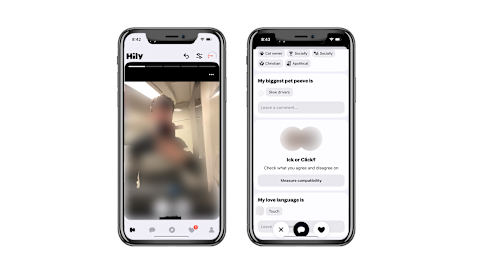
The reviewer quickly noticed a subtle yet profound design choice: Hily utilizes an up-and-down swipe motion rather than the traditional left-and-right flick. Swiping up indicates a "like," while swiping down serves as a pass. This vertical motion introduces just enough friction into the scrolling rhythm to force users to pause, look up, and read a bio or evaluate interest badges before making a decision.
Verification is another pillar of Hily’s early-stage onboarding. Requiring a live selfie to match uploaded profile images helps mitigate the pervasive issue of catfishing and fake accounts, establishing an immediate baseline of trust that is often missing from legacy apps.
Days 4–7: Navigating the Discover and Likes Ecosystem
By the middle of the first week, the testing expanded into Hily’s more structured navigational features, specifically the Discover page and the Likes page.

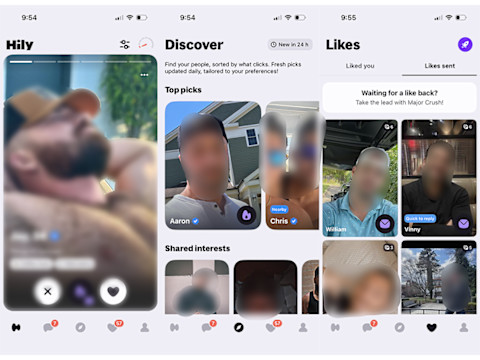
In a bustling metropolis like New York City, dating apps often induce a sense of choice paralysis by throwing hundreds of endless profiles at the user. Hily combats this fatigue through its Discover page, which refreshes every 24 hours and is meticulously divided into three distinct categories:
- Top Picks: Algorithmic selections based on overall profile strength and activity.
- Shared Interests: Profiles grouped by common hobbies, values, and lifestyle markers.
- Similar Dating Goals: Users whose stated intentions align precisely with your own.
Rather than an infinite scroll, the Discover page creates natural psychological stopping points. Browsing 15 curated profiles feels fundamentally different from sorting through an endless abyss of 500 strangers.
Concurrently, the Likes page addresses another major pain point in online dating: the guessing game. Hily separates incoming likes and outgoing likes into an organized tracker. Users can immediately see who has expressed interest, removing the agonizing uncertainty of whether a match has silently passed on them. For those moments when a user wants to stand out, Hily offers "Mega Crushes"—an elevated super-like feature designed to signal heightened interest. However, viewing all incoming likes at once requires unlocking them via "Unblur" credits, which can be earned through daily app engagement (such as a built-in Roulette spin) or acquired via paid subscription tiers.
Days 8–11: Diving Into the Compatibility Quiz and Conversation Dynamics
The second week focused heavily on Hily’s psychological matching tools, most notably its comprehensive 50-question compatibility quiz.

When viewing a profile, users can run a compatibility check to see how closely their values, lifestyle choices, and preferences align. If the percentage is exceptionally high, the app allows users to share this score directly in the chat as a fun, organic conversation starter.
However, an important investigative lesson emerged during this phase: always complete the entire 50-question survey before drawing conclusions. The reviewer initially tested the compatibility feature after answering only 15 questions, resulting in a stellar 100% match with a profile. Yet, upon completing the remaining 35 questions, that compatibility score dropped realistically to 69%. The takeaway is clear: Hily’s algorithm is deeply responsive, and granular data yields more accurate compatibility metrics.
Once a match is secured, Hily alleviates the classic "openers anxiety" by surfacing shared interests directly inside the chat interface. Rather than forcing users to invent a witty opening line from scratch, the app offers pre-generated icebreakers, curated questions, compliments, and pick-up lines. This lowers the barrier to entry and encourages higher-quality conversational engagement.
Days 12–14: Subscription Tiers, Regional Realities, and Final Assessments
The final days of the test involved evaluating Hily’s monetization model and assessing the practical realities of using the app in a major urban center.

The free tier is surprisingly robust, offering full access to standard scrolling, the Discover page, the Likes tracker, and basic messaging. Winning a three-day trial of Hily Premium via the app’s daily Roulette wheel provided a transparent look at the paid experience. The standout perk of Premium is the ability to fully unblur incoming likes and access advanced filters.
Geographically, however, certain limitations became apparent. While Hily is among the fastest-growing dating apps globally, its raw user density in the United States remains smaller than giants like Tinder or Bumble. In New York City, the reviewer had to expand their search radius to 20 miles to populate a steady stream of active matches. Furthermore, the local user base skewed either noticeably younger (early 20s) or slightly older (40s), reflecting broader demographic trends in modern dating rather than a flaw in Hily’s infrastructure.
Supporting Context & Metrics: Hily vs. the Competition
To fully contextualize Hily’s market position, it is helpful to examine its core architecture alongside primary industry competitors.
| Feature / Metric | Hily | Bumble | Tinder | Hinge |
|---|---|---|---|---|
| Primary Swiping Motion | Vertical (Up/Down) | Horizontal (Left/Right) | Horizontal (Left/Right) | Vertical / Profile-Based |
| Core Philosophy | Compatibility & Shared Values | Women Make First Move (Historically) | Speed, Volume & Chemistry | Storytelling via Prompts |
| Compatibility Tools | 50-Question Quiz & Interest Badges | Limited Verification & Bio Prompts | Minimal (Photo-Centric) | Prompt Likes & Values Filters |
| User Base Scale (U.S.) | Growing, Moderate | Massive | Massive | Large |
| App Store Rating | 4.4 / 5.0 | ~4.0 / 5.0 | ~3.5 / 5.0 | ~4.5 / 5.0 |
Hily vs. Bumble
While Bumble famously pioneered the dynamic where women must send the first message in heterosexual matches, Hily imposes no such restriction, creating a more flexible conversational environment. Bumble boasts a much larger U.S. user base, guaranteeing higher raw volume in most cities. However, Hily wins on structural depth, offering comprehensive compatibility quizzes and curated discovery feeds that feel less transactional.
Hily vs. Tinder
Tinder is the undisputed king of fast, photo-driven, high-volume swiping. Hily represents the exact philosophical opposite: it is slower, more deliberate, and engineered to surface psychological compatibility before physical chemistry. For singles experiencing severe Tinder fatigue, Hily serves as an ideal, refreshing alternative.
Hily vs. Hinge
Hinge relies heavily on profile prompts and individual photo-liking mechanics. Hily shares Hinge’s commitment to intentional dating but supplements it with structured algorithmic tools like the 50-question compatibility breakdown, interest badges, and multi-faceted chat openers.
Official Pricing Structure & Monetization
Transparency regarding app monetization is crucial for modern consumers. Hily operates on a "freemium" model, allowing users to experience the core product without financial commitment while gating premium conveniences behind various subscription tiers.
The Free Tier
- Full access to standard profile browsing and matching.
- Daily refreshed Discover page (Top Picks, Shared Interests, Similar Goals).
- Access to the Likes page tracker (with limits on unblurring total incoming likes).
- Basic messaging and AI-assisted conversation icebreakers.
- Access to earn perks (such as trial memberships and unblur tokens) via daily in-app engagement like the Roulette wheel.
Hily Premium & Plus Tiers
- Weekly/Monthly Subscriptions: Pricing scales depending on the subscription length chosen, with weekly options acting as a low-risk testing mechanism for curious users.
- Key Paid Benefits: Complete unblurring of all incoming likes, unlimited rewinds, advanced search filters (dating goals, lifestyle preferences, verified status), and increased visibility via priority matching.
Note on Cancellation: Subscriptions must be cancelled manually through the user’s iOS App Store or Google Play Store account settings. Simply deleting the application from a mobile device does not terminate an active recurring billing cycle.
Future Outlook: Is Hily Right For You?
As the online dating industry continues to evolve, consumer demand is clearly shifting away from gamified, endless swiping toward platforms that prioritize mental health, emotional alignment, and genuine compatibility. Hily has positioned itself at the forefront of this shift by combining clean user interface design with deep psychological profiling tools.
Final Verdict & Recommendations
- Who it’s for: Singles aged 18 to 40 who are tired of superficial, photo-only apps; daters looking for intentional relationships or casual connections defined by explicit communication goals; and users who appreciate structured conversation prompts and compatibility metrics.
- Who it might not be for: Daters living in rural or suburban areas with lower user density, or individuals who prefer the instantaneous, high-volume matching velocity of Tinder.
Actionable Advice: Download the free version of Hily, commit the time to complete the full 50-question compatibility survey, and spend at least one week engaging with the curated Discover page. By looking past the surface and leveraging the app’s structural tools, daters may find that Hily successfully breathes new, intentional life into their modern romance journey.