Executive Overview
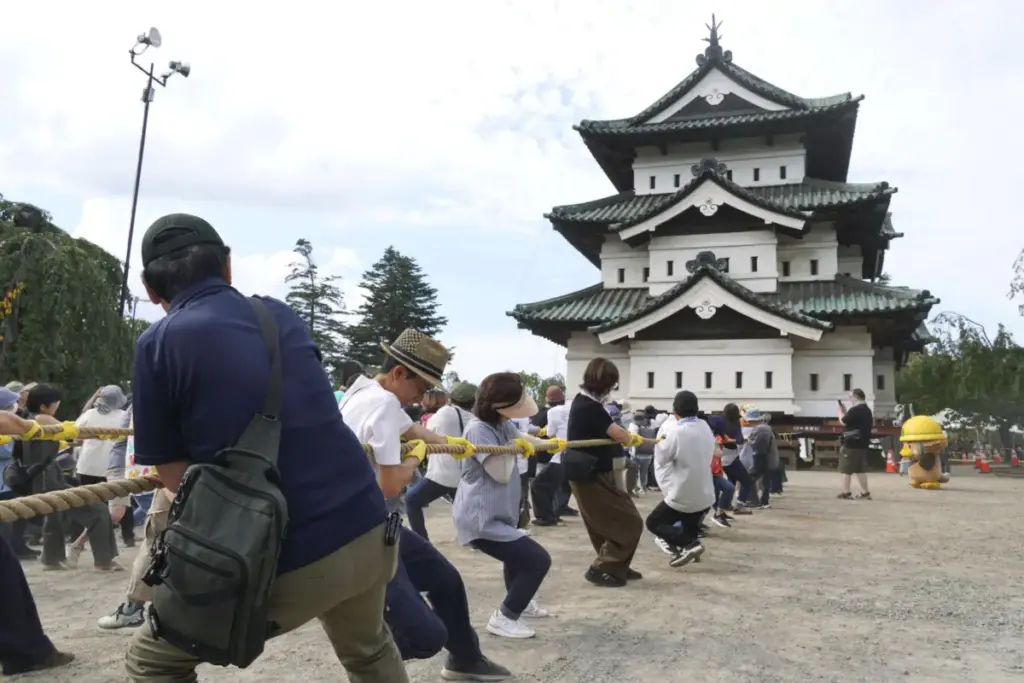
In an extraordinary convergence of ancient Japanese heritage and community-driven determination, nearly 2,000 strong-armed volunteers united in northern Japan to achieve the seemingly impossible: moving a 360-tonne historic castle keep by hand. Propped up on temporary rollers and secured with thick, 98-foot ropes, the monumental tower of Hirosaki Castle was dragged a distance of slightly over six feet as part of an intricate, multi-year structural restoration project.
This awe-inspiring feat of human strength and architectural preservation took place in the Aomori prefecture, drawing global fascination. Rather than relying entirely on heavy machinery or opting for the total dismantling of the priceless cultural asset, city planners turned to hikiya—a time-honored architectural relocation technique deeply rooted in Japanese history. With demand completely outstripping capacity, roughly 8,000 eager applicants vied for just 1,800 coveted spots to participate in the citizen-powered tug-of-war.
The successful relocation highlights not only the enduring ingenuity of traditional engineering practices but also the profound emotional connection local citizens and heritage enthusiasts maintain with Japan’s architectural antiquities. As the structure inches back toward its original stone base ahead of a projected 2033 grand reopening, this remarkable event serves as a testament to what collective effort and cultural pride can accomplish.
Detailed Chronology: Step-by-Step Execution of the Move
The meticulous planning required to relocate a 360-tonne medieval fortification cannot be overstated. The physical moving phase unfolded over an intensive weekend in late August, captivating spectators who lined the viewing platforms and broadcasted the event across international media channels.
Phase 1: Mobilization and Selection
Weeks prior to the physical move, the Hirosaki City Council issued a public call for volunteers to participate in the historic hikiya operation. The response was overwhelming. Out of approximately 8,000 applications submitted for the limited spaces, 1,800 participants were ultimately selected. Volunteers were carefully vetted, organized into disciplined teams of 80 individuals, and equipped with safety gear, heavy-duty work gloves, and uniform pacing instructions.
Phase 2: Day One – The Initial Pull
On Saturday morning, the first cohort of volunteers assembled around the mammoth 98-foot ropes secured to the timber platform carrying the castle keep. As traditional rhythmic chants of "so-re, so-re" (roughly translated to "go on" or "pull together") echoed through the crisp Aomori air, the unified teams heaved in unison.
The sheer friction of a 360-tonne structure meant the initial inertia was the hardest to overcome. However, utilizing the greased rollers and wooden scaffolding inherent to the hikiya method, the crowd successfully budged the colossal tower forward by the first three feet and seven inches.
Phase 3: Day Two – Continuing the Momentum
Building on the psychological and physical triumph of the first day, Sunday’s shift of volunteers arrived bright and early to continue the operation. With the rhythm established and the technical nuances of the rollers fully understood, the secondary groups marched in synchronization with the cadence calls. An additional 42 inches were covered, bringing the cumulative weekend displacement to over six feet.

The atmosphere along the perimeter was electric. Spectators waved flags, cameras captured every angle of the slow-moving architectural giant, and veteran participants expressed profound emotion at being part of such a rare, once-in-a-lifetime heritage preservation ritual.
Supporting Context & Metrics: The Mechanics of Hikiya and Hirosaki’s History
To fully appreciate the magnitude of this event, one must examine the precise engineering, historical background, and quantitative metrics governing the Hirosaki Castle relocation.
Architectural Metrics and Specifications
- Structure Weight: Approximately 360 metric tonnes.
- Total Volunteer Force: 1,800 participants actively pulling over the weekend (drawn from a pool of 8,000 applicants).
- Team Configuration: Organized into distinct squads of 80 individuals per rope shift.
- Rope Length: Heavy-duty tow ropes measuring 98 feet.
- Distance Moved (Initial Weekend): Just over six feet (split into 3-foot 7-inch and 42-inch increments).
- Total Project Scope: A multi-phase slide totaling roughly 16 feet to reposition the keep precisely onto its original, restored stone foundation.
The Art of Hikiya
The technique employed in this modern marvel is known as hikiya—a sophisticated Japanese architectural practice dating back at least 400 years. Traditionally utilized during urban planning expansions, road-widening initiatives, and post-disaster rebuilding phases, hikiya involves lifting an entire building off its foundation using hydraulic jacks or wooden leverage, placing it onto a grid of timber rails and cylindrical rollers, and manually or mechanically hauling it to a new location.
While modern construction frequently defaults to heavy cranes or total demolition and reconstruction, hikiya preserves the authentic structural integrity, original old-growth timber, and historical craftsmanship of the building. The Hirosaki Castle project marks a significant milestone: it is the first time in an entire century that a citizen-powered, manual hikiya technique has been executed on this scale in Japan.
The Origin and Trials of Hirosaki Castle
Hirosaki Castle is not merely an old building; it is a profound symbol of the region’s feudal history.
- 1611: The original complex was constructed by the influential Tsugaru samurai clan.
- 1627: Tragedy struck when a devastating lightning strike ignited a gunpowder storehouse, burning down large portions of the original compound.
- 1810: The current surviving castle keep was erected, serving as a rare example of an authentic, unaltered Edo-period tower in northern Japan.
- 2015: A powerful regional earthquake compromised the structural integrity of the stone base walls, necessitating an urgent engineering intervention to prevent catastrophic collapse.
Situated at the picturesque foot of Mount Iwaki, the castle grounds are globally celebrated as one of Japan’s premier destinations for sakura (cherry blossom) viewing, drawing hundreds of thousands of tourists annually during the spring bloom.
Official Statements and Participant Perspectives
The fusion of modern civic participation and ancient tradition generated profound reflections from municipal leaders and returning volunteers alike.
Kensuke Hayasaka, head of the parks and green spaces division within the Hirosaki City government, spoke candidly to international press outlets about the overwhelming public response.

"We had about 8,000 applications for the 1,800 slots over the last two days, roughly four times oversubscribed, so not everyone could participate," Hayasaka noted, emphasizing the extraordinary civic pride surrounding the landmark restoration.
For many participants, the event carried deep personal significance that spanned over a decade. Motoharu Nakata, a 61-year-old heritage enthusiast who traveled significant distances to join the effort, shared his emotional connection to the landmark.
"I pulled it 11 years ago too. It’s very moving to be able to participate again," Nakata told the Sankei Shimbun. "There’s absolutely no other opportunity to pull a castle; it was fantastic."
Cultural preservationists have similarly lauded the project, noting that engaging local citizens directly in the physical safeguarding of national treasures fosters a generational stewardship that passive tourism can never replicate.
Future Outlook: The Long Road to 2033
While the dramatic weekend tug-of-war captured the world’s imagination, the movement of the castle keep is merely one chapter in a much longer narrative of restoration and urban preservation.
Upcoming Milestones
- The 16-Foot Journey: Over the subsequent weeks following the initial media-heavy weekend, a cumulative total of approximately 4,100 volunteers will gradually guide the 360-tonne structure through its final alignments, completing the total 16-foot shift necessary to settle the keep back onto its reinforced stone base.
- Stone Wall Restoration: Concurrently, engineers and masonry experts are meticulously repairing and retrofitting the earthquake-damaged stone foundations using traditional fitting techniques alongside modern seismic dampening technologies to ensure the fortification can withstand future natural disasters.
- Internal Refurbishment: Once the keep is securely locked into its permanent resting place, interior restoration will commence, focusing on stabilizing historical flooring, wall panels, and artifact preservation spaces.
The Grand Reopening Timeline
City officials have maintained a cautious and rigorous timeline for the comprehensive project. Although the physical relocation of the tower is reaching its final stages, the intricate craftsmanship required to restore the interior and surrounding defense works means that Hirosaki Castle will remain closed to the general public.
Current projections indicate that the historic site will not officially reopen its doors to international tourists and local visitors alike until 2033. Until then, the memory of nearly 2,000 ordinary citizens locking arms, grabbing 98-foot ropes, and moving a 360-tonne medieval castle with the power of their own hands will stand as a defining monument to human cooperation and the timeless endurance of Japanese heritage.