Executive Overview
In the sprawling, meticulously charted landscape of modern pop music, few pivot points are as distinct or as culturally seismic as the transition of Taylor Swift from country darling to global pop titan. At the very center of this sonic evolution sits "I Knew You Were Trouble," a defining track from her landmark 2012 studio album, Red.
For over a decade, fans and music critics alike have dissected the track’s dramatic drops, frantic electronic textures, and the visceral emotional turbulence it captures. However, new details emerging directly from the artist herself reveal that the anthem we know today nearly took an entirely different path.
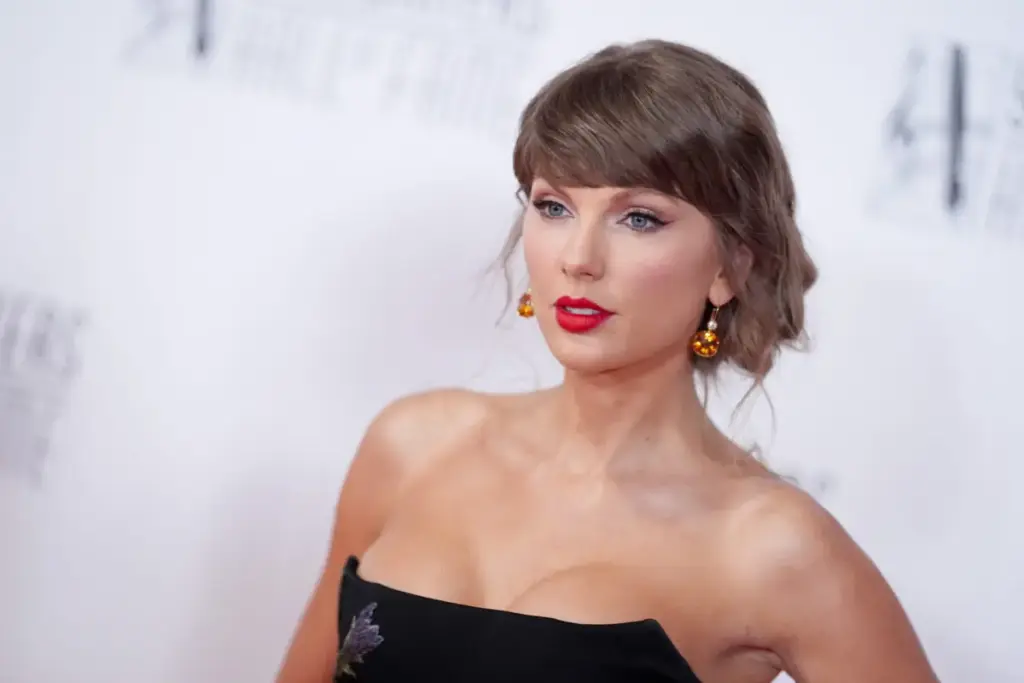
During an intimate, reflective Q&A session at the Grammy Museum in Los Angeles—moderated by Recording Academy CEO Harvey Mason Jr. as part of the museum’s prestigious Icon Sessions—Taylor Swift pulled back the curtain on the creative mechanics of her catalog. Among the most startling revelations was the song’s humble, subdued origin: "I Knew You Were Trouble" was initially conceived not as a high-octane pop-electronica crossover, but as a mournful, acoustic-leaning "really sad piano ballad."
This comprehensive report explores the anatomy of that creative turning point, examining the serendipitous studio chemistry between Swift and legendary producers Max Martin and Shellback. We look closely at how the willingness to embrace radical experimentation birthed a Billboard smash, analyze the cultural and industrial impact of Red, and evaluate how a single piece of advice—“What if it’s dubstep?”—permanently altered the trajectory of one of the 21st century’s most enduring songwriting careers.
Detailed Chronology: From Melancholy Piano to Electronic Lightning
To understand the magnitude of the transformation that "I Knew You Were Trouble" underwent, one must first look back at the artistic climate of 2012. Taylor Swift had conquered the global country and adult contemporary charts with multi-platinum albums like Fearless and Speak Now. Yet, creative restlessness was setting in. Eager to avoid lateral artistic moves—a deliberate strategy to continuously challenge her audience and her own compositional limits—Swift sought out the architects of contemporary radio dominance: Max Martin and Shellback.
The Initial Conception
According to Swift’s recent disclosures at the Grammy Museum, she entered the studio clutching a deeply personal, slow-burning composition. At its inception, "I Knew You Were Trouble" featured a skeletal arrangement centered primarily around a piano.
"I was really excited to bring it in and I played them this really, really sad ballad and I was like, I think just no drums," Swift recalled to the rapt audience, recounting the moment she first presented the demo to Martin and Shellback.
In her mind, the heartbreak embedded in the lyrics demanded an equally somber, stripped-back sonic landscape. The emotional weight of the song’s narrative—the harrowing realization that a relationship was doomed from the start—felt intrinsically linked to minor-key chords and gentle, echoing keys. Had Swift’s initial vision held absolute sway, the track might have joined the ranks of her acoustic tear-jerkers like "All Too Well" or "Safe & Sound."
The Paradigm Shift: "What If It’s Dubstep?"
Instead of accepting the track as a straightforward ballad, Martin and Shellback intercepted the trajectory of the song with a proposition that initially caught Swift entirely off guard. Recognizing the underlying dramatic tension of the lyrics, the production duo suggested a bold counter-intuitive approach: juxtaposing sorrowful lyrics with aggressive, high-energy electronic production.
"They’re like, ‘What if it’s dubstep?’" Swift remembered. Her immediate internal reaction was one of skepticism and cautious hesitation: "I was like, I don’t know, guys. Let’s give it a run. I don’t know."
This friction between the songwriter’s initial instincts and the producers’ boundary-pushing imagination proved to be the catalyst for magic. Rather than shutting down the jarring suggestion, Swift leaned into the collaborative spirit. The resulting experimentation married the raw vulnerability of her storytelling with the synthetic, pulse-pounding drops characteristic of the early-2010s electronic dance music (EDM) explosion.
In the Studio: The Power of "Yes, And?"
Reflecting on the collaborative environment that birthed the hit, Swift emphasized the vital importance of psychological safety and enthusiasm in creative spaces. She credited Martin and Shellback as masters of emotional and sonic subversion—teaching her that a song’s production can either mirror its emotional state precisely or flip it entirely to create a more compelling tension.
"I think as a collaborator, my favorite people to be in the room with are ‘Yes, and?’ people," Swift explained. "So why not try it? If they heard it and they thought dubstep, and I came to them specifically because I didn’t want to be making lateral moves creatively, why wouldn’t we go down that path? Why wouldn’t we? I really think that enthusiasm in the studio, it can really make or break what you end up creating."
Supporting Context & Metrics: The Cultural and Commercial Triumph of Red
The gamble on dubstep-infused pop paid off exponentially, both critically and commercially. "I Knew You Were Trouble" quickly emerged as a focal point of Swift’s fourth studio album, Red, released in October 2012 via Big Machine Records.
Chart Performance and Commercial Reach
The track proved that Swift’s crossover appeal was not merely a fleeting experiment, but a dominant force in modern music.
- Billboard Hot 100: "I Knew You Were Trouble" debuted at No. 3 upon its release as a promotional single and later climbed to a peak position of No. 2, firmly establishing itself as one of the defining radio anthems of the era.
- Global Impact: The song achieved multi-platinum certification in numerous territories worldwide, dominating international airwaves and expanding Swift’s demographic footprint well beyond the borders of country music.
- Streaming Longevity: Long before the era of algorithmic playlisting dominance, the track’s explosive chorus and iconic drop captured the imagination of digital consumers, accumulating billions of streams across platforms like Spotify and YouTube over the ensuing decade.
Artistic Validation
Beyond the numbers, the song served as a crucial bridge for the music industry at large. In 2012, electronic dance music was permeating the mainstream consciousness, heavily influencing Top 40 radio. By integrating elements of dubstep into a narrative-driven pop song without sacrificing lyrical integrity, Swift proved she could fluidly converse with contemporary production trends while maintaining her signature confessional songwriting style.
This hybrid approach laid the foundational blueprint for her fully realized pop transformation on 2014’s 1989, an album that would go on to win the Grammy Award for Album of the Year and redefine the pop landscape for a generation.
Official Statements and Archival Insights
The revelation at the Grammy Museum adds a fascinating historical footnote to the lore surrounding Red, an album that has already undergone massive cultural reappraisal following the 2021 release of Swift’s re-recorded version, Red (Taylor’s Version).
During the Icon Sessions discussion, Harvey Mason Jr. pressed Swift on her philosophy of building production around storytelling, seeking to understand how she manages to evoke precise moods. Swift’s detailed breakdown of the creative process behind "I Knew You Were Trouble" highlighted a broader artistic philosophy: the rejection of creative complacency.
"It can either be compelling to make a song sound exactly how it feels or to flip it, which the people that really taught me the most about that are Max Martin and Shellback," Swift noted during the panel.
By embracing the unexpected—allowing a mournful piano ballad to be fractured and rebuilt by synthetic bass drops and frantic percussion—Swift unlocked a new dimension of her artistry. The anecdote serves as a masterclass in modern music production, emphasizing that the most memorable pop moments often arise from the intersection of vulnerability and bold, unapologetic sonic experimentation.
Future Outlook: The Enduring Legacy of Creative Risk-Taking
As Taylor Swift continues to break records, re-record her catalog, and push artistic boundaries with massive undertakings like The Eras Tour and subsequent studio releases like The Tortured Poets Department, the lessons learned in the studio alongside Max Martin and Shellback remain vividly relevant.
The story of "I Knew You Were Trouble" stands as a testament to the power of open-minded collaboration. It demonstrates that great art rarely emerges from rigid adherence to a single vision; rather, it thrives when creators surround themselves with trusted peers who dare to ask, "What if?"
For aspiring songwriters and producers, Swift’s Grammy Museum revelations offer an invaluable roadmap. They highlight that creative fearlessness—the refusal to make lateral moves and the willingness to let a sad piano ballad morph into a high-octane dubstep-infused pop explosion—is often the singular difference between a forgotten demo and a defining cultural milestone. As music history continues to evolve, the explosive drop of "I Knew You Were Trouble" will forever echo as the exact moment a country-pop prodigy took a leap of faith into the future of global music.