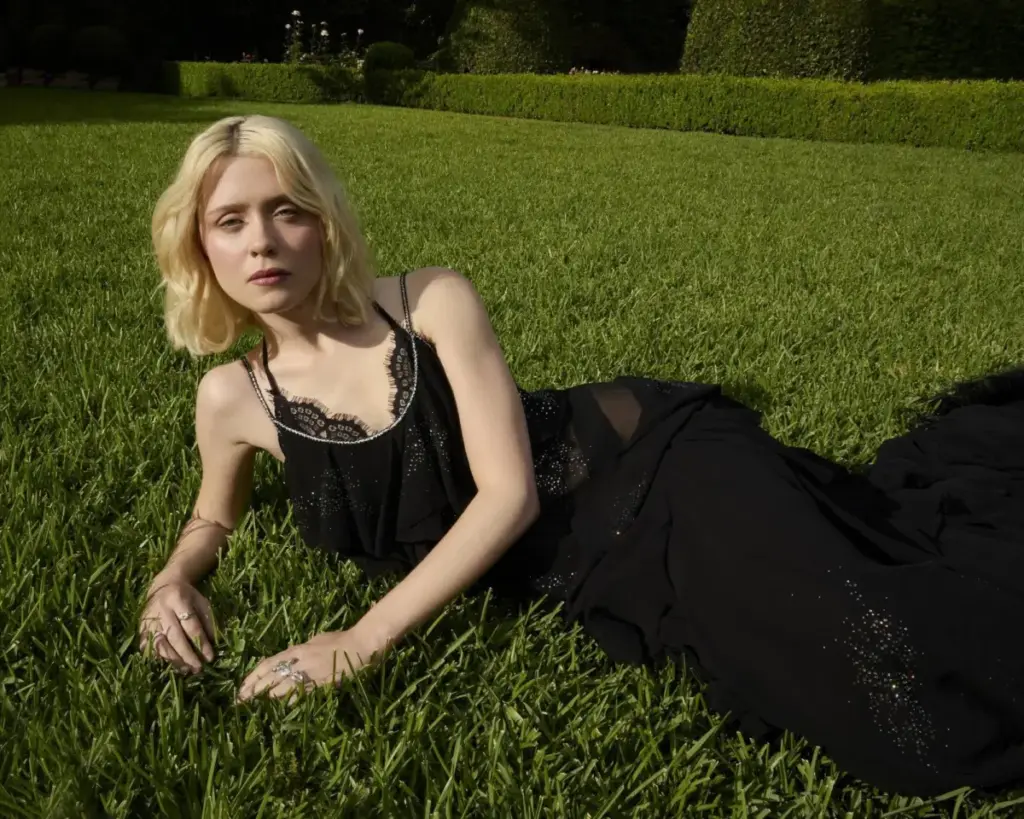
Executive Overview
In the fast-paced, algorithm-driven landscape of modern pop music, where artists are frequently pressured to churn out bite-sized singles to feed endless digital content cycles, British singer-songwriter Maisie Peters has chosen a radically different path. With the release of her eagerly anticipated and critically acclaimed new album, Florescence, Peters enters a definitive chapter of her career characterized by patience, artistic autonomy, and an unwavering commitment to intuition.
Written over the course of a demanding yet grounded year and a half, Florescence represents a significant evolution from Peters’ previous body of work. Moving away from rushed production schedules, the artist retreated to the quiet expanses of Nashville, Tennessee, spending extensive periods in the studio with co-collaborators Ian Fitchuk and Konrad Schneider. The result is a more cohesive, peaceful, and sonically mature record that strips away the noise of external expectations.
Out of roughly 60 songs penned during the creative cycle, Peters meticulously culled and curated the tracklist down to a precise, intentional selection. This editorial restraint serves as the emotional backbone of the album, signaling to her dedicated fanbase that artistic growth requires not just hard work, but the courage to trust one’s gut. In the wake of Florescence dominating charts worldwide, Peters sat down to discuss the meticulous mechanics of her songwriting, the duality of living as both a person and an analyst of human emotion, and the profound realization that, for an artist, the album remains the ultimate sacred text.
Detailed Chronology: The Making of Florescence
The genesis of Florescence did not happen overnight in a high-pressure studio environment. Instead, it unfolded organically over an 18-month timeline defined by quiet gaps in everyday life and prolonged stints in Nashville. For Peters, this deliberate pacing was both a creative necessity and a psychological shift.
The Nashville Sessions and Sonic Grounding
Unlike her previous projects, which often relied on rapid-fire writing and immediate turnaround times, the production of Florescence allowed for breathing room. Peters spent weeks at a time away from the hustle of touring, anchoring herself in Nashville. This geographical shift deeply influenced the sonic architecture of the record.
Working closely with producer and multi-instrumentalist Ian Fitchuk and engineer Konrad Schneider for a concentrated month of recording, Peters sought to craft a sonic environment that felt grounded and peaceful. By drafting a massive pool of approximately 60 songs, she gave herself the luxury of choice. Rather than forcing mediocre ideas to fit a tracklist, she allowed the best material to rise naturally to the top, ensuring every song on Florescence served a distinct purpose in the album’s overarching narrative.
From Spark to Studio: The Mechanics of Songwriting
When asked about her lyrical workflow, Peters describes a process that balances unbridled spontaneity with disciplined execution. Inspiration, she notes, rarely arrives when sitting idly at a desk. Instead, it strikes during the mundane, rhythmic movements of daily life: a compelling title jotted down while driving, a lingering first line conceived in the shower, or a evocative phrase discovered on the back cover of a book or within a stray poem.
Once the initial spark catches fire, however, Peters transitions into a highly structured mode of creation. She enters the studio with a singular mission: to walk out at the end of the day with a fully completed song. This combination of chaotic, instinctual inspiration and orderly studio discipline ensures that her songs maintain emotional urgency while boasting structural precision.
Determining when a song is truly finished is, for Peters, entirely a matter of intuition. "I tend to write a song in a day, unless it’s an idea I’m chipping away at privately, in which case it might take a few solo sessions across a few months," she explains. The production phase undergoes a similar gut-check. Recognizing the exact moment a track feels "perfect right here, right now" is a skill she attributes directly to accumulated experience and time in the industry.
Supporting Context & Metrics: The Art of Culling and Craft
The mathematics behind Florescence tell a compelling story of artistic filter and refinement. Writing 60 songs for a single project requires immense creative stamina, but discarding the vast majority of them demonstrates a rare level of executive maturity for a young pop artist.
The Dual Identity of the Songwriter
A central theme of Peters’ artistic reflection during this album cycle is the fascinating psychological dichotomy between Maisie the person and Maisie the songwriter. While Maisie the person navigates romance, heartbreak, and everyday existence by simply living through them—feeling and expressing emotions organically—Maisie the songwriter operates from a vantage point hovering just above reality.
This analytical alter-ego is constantly documenting, analyzing, and hunting for the most potent "kernel" of an emotional experience to translate into verse. Writing about real people and real relationships, however, creates a complex feedback loop. Peters admits that while music deepens her understanding of her own feelings, it can also act as a misleading compass. Her goal is never to capture the absolute, objective truth of a person or a situation, but rather to immortalize her own subjective truth on the exact day she put pen to paper.
Navigating Success, Confidence, and Self-Awareness
As her global platform continues to expand, Peters confronts the double-edged sword of growing visibility and success. Far from painting a picture of unclouded confidence, she speaks candidly about the ongoing friction between self-awareness and self-doubt.
Some days are marked by a profound sense of self-assurance—an innate clarity regarding her personal taste and identity. On other days, she experiences a nostalgic longing for the unburdened, fearless days of her youth, when she wrote songs free from the heavy armor of self-knowledge and artistic comparison. Rather than viewing these conflicting states as a contradiction, Peters views them as a natural push-and-pull, striving to channel the best elements of both phases into her ongoing work.
Official Statements & Fan Connection
At the heart of Peters’ career is her symbiotic, deeply affectionate relationship with her fanbase. The release of Florescence has introduced an entirely new sonic palette for her live shows, transforming how she connects with audiences in real-time.
Bringing the Record to the Stage
Translating the intimate tracks of Florescence into live performances has injected a fresh wave of energy into her touring life. Peters highlights specific tracks that anchor this new era:
- "Audrey": Described as a moment of profound peace and sweetness, offering a quiet respite during the set.
- "My Regards": Embraced by the artist and fans alike as a joyful, high-energy, sexy dance party.
- "Girls Just Flying": Highlighted as a future live staple that she cannot wait to unleash on larger crowds.
A Message to the Community
When asked what she would say to the listeners who have made her music the soundtrack to their lives, Peters’ response is filled with profound gratitude:
"Just thank you so much, I’m so honored you include me in your life, and I really do it all for people like you. It’s a crazy thing to know you soundtrack people’s lives and I am so lucky to do it, and to do it for such thoughtful, interesting, intelligent people."
This mutual respect underscores her core philosophy: writing music is not a solitary endeavor, but an invitation for listeners to inhabit a temporary, shared universe.
Future Outlook: The Enduring Power of the Album
As Florescence cements its place at the top of the charts and among critics’ year-end lists, Maisie Peters reflects on the fundamental lessons learned along the way. Above all, the journey has reinforced her belief in trusting her gut, trusting the creative process, and remembering the unmatched joy that comes from releasing a cohesive body of work.
Citing a sentiment shared by producer Jack Antonoff—that "the album is God"—Peters expresses complete alignment with the idea of the long-form record as a sacred space. In an era dominated by single-track streaming habits, she views an album as a self-contained planet that she and her fans can collectively orbit for a period of time.
Looking ahead, the fire that sparked her passion at age 12 remains entirely unquenched. No matter how many years she spends in the industry, writing a song that she unequivocally loves delivers the exact same electric rush she felt as a child. While she acknowledges that the bar gets higher with age—likening the search for a perfect song to "chasing a unicorn"—the unparalleled joy of actually catching it ensures that Maisie Peters is only just beginning to bloom.