Executive Overview
The traditional boundaries separating legacy media from the creator-driven digital landscape are rapidly dissolving. For decades, the annual MIPCOM trade gathering in Cannes was understood as a strictly B2B marketplace: a high-stakes, prestige-heavy convention where Hollywood studio executives, global broadcasters, and traditional financiers congregated at the Palais des Festivals to buy and sell scripted television series and feature-film packages.
Today, that paradigm is undergoing a massive transformation. As audiences seamlessly fluidly migrate across screens—from living room televisions to mobile-first vertical feeds—the entertainment business is forced to adapt. Leading this charge is Lucy Smith, Director of MIPCOM, who describes the integration of digital creators into the core of the conference as "the biggest generational shift MIPCOM has ever seen."
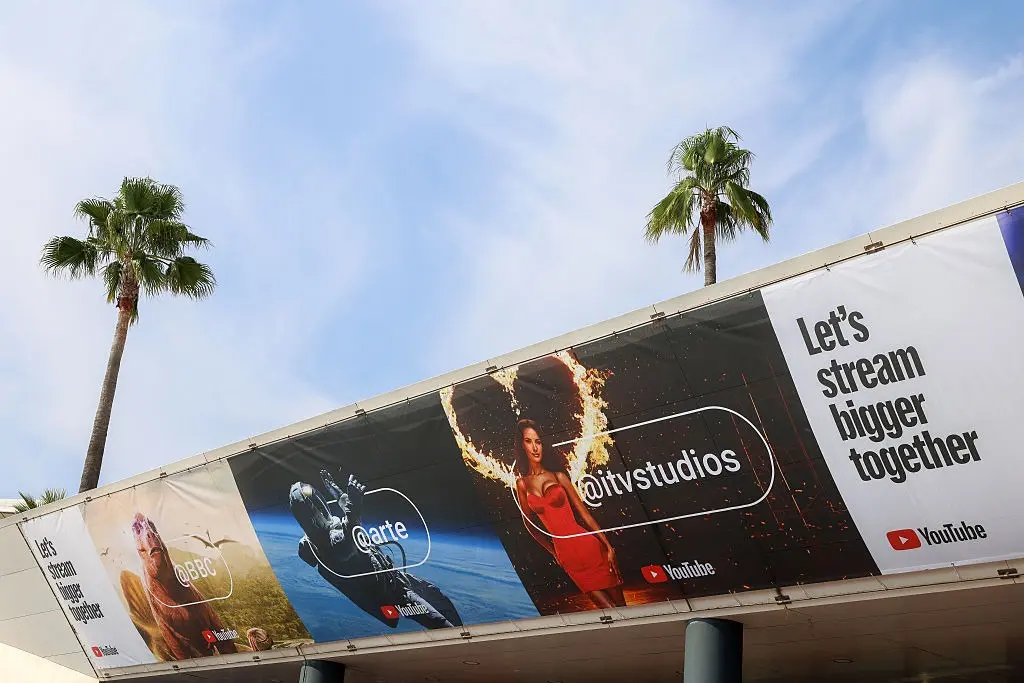
Following a successful blueprint laid down in 2025—which welcomed nearly 10,600 attendees, integrated digital icons like Inoxtag and Kevin Tran, and forged an official partnership with YouTube—the MIPCOM team is accelerating its vision for the upcoming flagship event, scheduled for October 12–15 at the historic Palais des Festivals in Cannes.
The 2026 edition is not merely acknowledging the creator economy; it is institutionalizing it. By introducing targeted initiatives like MIP BrandWorks, the MIP AI Entertainment Forum, and comprehensive programming dedicated to vertical microdramas, MIPCOM is positioning itself as the central nexus where legacy conglomerates, independent creators, global brands, and emerging technology companies converge to build the future of global entertainment.
Detailed Chronology: The Evolution of MIPCOM’s Digital Integration
2025: The Watershed Pivot
For years, digital video creators existed on the periphery of major international media markets. While they commanded audiences rivaling or exceeding those of cable networks and streaming services, they were rarely seen in the halls of traditional trade shows. That changed fundamentally during MIPCOM 2025.
Recognizing that the traditional gatekeeper model of media distribution was being permanently rewritten by user-generated content platforms, MIPCOM leadership executed a strategic pivot. They courted digital creators directly, offering them a seat at the table alongside legacy studio heads. YouTube stepped in as an official partner, anchoring a three-day program tailored to bridge the gap between television executives and digital-first storytellers.
The inclusion of prominent creators such as Inoxtag and Kevin Tran signaled a cultural shift within the Palais des Festivals. Attendees realized that the conversation was no longer about traditional television versus online video, but rather about how intellectual property (IP), monetization strategies, and audience engagement could cross-pollinate between the two worlds.
2026: Institutionalizing the New Media Economy
Building on the momentum of the 2025 pivot, MIPCOM 2026 represents a complete structural evolution. Rather than treating creator-led programming as a novelty track, the 2026 conference embeds digital media across every pillar of the event.
The upcoming October gathering will feature an expanded creator economy program, prioritizing face-to-face networking, deal-making, and structural collaboration between individual digital entrepreneurs and corporate media giants. Furthermore, the 2026 event introduces two major operational pillars designed to capture the current state of industry disruption:
- MIP BrandWorks: A dedicated initiative engineered to bring global brands and advertising agencies directly into the content development and financing pipeline.
- The MIP AI Entertainment Forum: A specialized platform addressing the rapid transition of generative artificial intelligence from experimental technology to everyday studio execution.
Additionally, 2026 marks the year vertical storytelling and microdramas move from experimental novelty to recognized, institutionalized asset classes, backed by comprehensive tracks featuring insights from industry leaders and platform giants like TikTok and YouTube.
Supporting Context & Metrics: A Broader Entertainment Economy
To understand why MIPCOM is rearchitecting its entire trade show experience, one must examine the macro-level shifts occurring across the global media landscape.
Content consumption habits have fundamentally decoupled from hardware. Audiences no longer define "good entertainment" by the screen it is displayed on, the budget it required, or the traditional distribution studio that greenlit it. Instead, viewers navigate fluidly between multi-million-dollar cinematic series on subscription video-on-demand (SVOD) platforms, Twitch streams, YouTube video essays, and vertical microdramas consumed on smartphones during a subway commute.
The New Industry Heavyweights
The attendee roster at MIPCOM reflects this economic reality. While legacy stalwarts such as The Walt Disney Company, FOX, Sony Pictures Television, Warner Bros. Discovery, Paramount, BBC Studios, Banijay, and Fremantle continue to conduct high-volume business on the Riviera, they are now sharing floor space with a new class of entertainment architects.
Companies like YouTube, Webedia, Samsung TV Plus, Dentsu, and Utopai represent a broader, diversified corporate ecosystem. This convergence has fundamentally altered the definition of the content market. As Lucy Smith points out, premium scripted content remains a cornerstone of the industry, but its dominance is now balanced by unscripted formats, live entertainment, creator-led verticals, and entirely new forms of hybrid IP.
Vertical Content and Microdramas Take Center Stage
One of the most explosive growth sectors driving the 2026 programming is vertical content. What began as a nascent experiment popularized primarily in Asian markets via quick micropayment models has now evolved into a global economic force.
Major studios and platforms—including Crazy Maple, ReelShorts, RoseBerry Media, Banijay, and Fremantle—are rushing to capitalize on the vertical format. The central question for creators and executives in 2026 is no longer "What is a microdrama and how does it work?" but rather "How do we build sustainable, long-term businesses around vertical storytelling?" By dedicating extensive panels and workshops to this format, MIPCOM is positioning itself as the primary incubator for vertical business models.
Official Statements: Perspectives from Leadership
The strategic philosophy driving MIPCOM’s transformation is rooted in the belief that segregation between legacy media and digital creators is no longer commercially viable.
Reflecting on the integration of digital content creators into the mainstream market, Lucy Smith, Director of MIPCOM, emphasizes that the two worlds have officially merged:
"MIPCOM is the global gateway to the media and content business. What makes it unique is the scale and breadth of the industry that comes together in Cannes: the major studios, broadcasters, streamers, producers, distributors, and platforms, alongside a rapidly growing community of creators, brands, and technology companies."
Smith underscores that the convergence is driven by mutual necessity. Legacy studios are constantly searching for fresh talent, authentic community connections, and agile content formats to reach fragmented audiences. Simultaneously, digital creators are transforming from individual content makers into sophisticated media enterprises, building valuable IP and sustainable commercial businesses.
"We don’t see the creator economy and mainstream media as two separate worlds anymore. They are increasingly part of the same entertainment business. Creators are building audiences, businesses, and valuable IP. Studios and platforms are looking for new talent and new ways to reach audiences. Brands are becoming content partners and investors."
On the evolution of corporate marketing budgets, Smith highlights how brands are rewriting their financial involvement in media:
"Brands are becoming much more integral to the entertainment ecosystem. They’re moving beyond sponsorship and advertising into developing, financing, and owning content and IP. There are many places where brands can talk about advertising. MIPCOM is where they can come to talk about content, IP, and entertainment as a business."
Finally, addressing the technological shifts reshaping production workflows, Smith notes that generative AI has crossed the rubicon from theory to practice:
"AI is no longer a future conversation for entertainment. It’s rapidly becoming embedded across the global media and content business. The industry is moving very quickly from experimentation to execution."
Future Outlook: What Lies Ahead for MIPCOM 2026 and Beyond
As the countdown to MIPCOM 2026 (October 12–15 at the Palais des Festivals in Cannes) continues, the event stands as a microcosm of a shifting global economy. Several key trends will define the immediate future of the entertainment business as showcased at the market:
1. Brands as Co-Producers and IP Owners
Through the rollout of MIP BrandWorks, the traditional advertising agency model is being upended. Brands will no longer settle for mere product placement or 30-second spot buys. Instead, major consumer brands are allocating corporate budgets directly toward content development, equity stakes in original IP, and co-financing agreements with independent studios and digital creators. This evolution creates unprecedented capital streams for creators who understand how to partner strategically with corporate giants.
2. Operationalizing Generative AI
The launch of the MIP AI Entertainment Forum signals that the entertainment industry is moving past the initial fear and legal ambiguity surrounding generative AI. Studios, streamers, and creators are actively seeking scalable frameworks to integrate AI into pre-production, visual effects, localization, and audience analytics. MIPCOM’s role will be to serve as a trusted regulatory and technical crossroads where innovators can demonstrate ethical, commercially viable AI execution to risk-averse rights holders.
3. Deepening Corporate-Creator Partnerships
Platforms like YouTube are cementing their role as foundational pillars of the traditional media market. By doubling its creator development workshop sessions for 2026 and establishing a dedicated theater space for twice-daily specialized presentations, YouTube is actively mentoring the next generation of showrunners. These digital-first creators are learning the nuances of international distribution, format licensing, and secondary windowing—skills historically exclusive to television executives.
Conclusion
The narrative that traditional Hollywood and digital creators occupy mutually exclusive universes has been thoroughly dismantled. As MIPCOM 2026 approaches, the trade show is no longer merely reflecting the entertainment industry—it is actively engineering its future. By tearing down the walls between legacy broadcasters, algorithmic creators, brand marketers, and AI pioneers, MIPCOM has cemented its status as the ultimate global epicenter for the entire commercial entertainment ecosystem.