Executive Overview
The year 1986 stands as an absolute watershed moment in the annals of daytime television history. Decades before the advent of prestige streaming dramas and algorithm-driven content, network soap operas commanded massive, deeply devoted audiences who treated fictional milestones like national holidays. Among all the narrative devices deployed by daytime writers to capture viewer imagination—amnesia plots, presumed deaths, corporate takeovers, and corporate warfare—none matched the cultural staying power, emotional resonance, and sheer theatrical spectacle of the daytime wedding.
Forty years later, a retrospective look at the landscape of 1986 reveals a banner year for matrimonial drama across the "Big Three" broadcast networks, spanning titans such as General Hospital, The Young and the Restless, Days of Our Lives, One Life to Live, and All My Children. These ceremonies were not mere plot points; they were monumental cultural events that dominated watercooler conversations, drove record-breaking magazine sales, and solidified the concept of the modern "supercouple."
From double-wedding ceremonies in sleepy Midwestern parishes to chic Manhattan receptions at Christmastime, and from heartwarming family gatherings marred by fugitive brothers to high-stakes vow renewals masking a massive psychological deception, 1986 showcased the incredible versatility and emotional depth of the daytime genre. This retrospective investigates the six standout nuptials of that legendary year, examining the narrative buildup, the stylistic choices, and the enduring legacy these weddings left on the television landscape.
Detailed Chronology: The Six Defining Weddings of 1986
1. The Double-Duty Delight: Pete Jannings and Melissa Horton, and Maggie and Mickey Horton (Days of Our Lives)
Early February 1986 brought a unique romantic collision to Salem on Days of Our Lives. Young lovebirds Melissa Horton (portrayed by Lisa Trusel) and Pete Jannings (Michael Leon) were deep into preparations for a quintessential Valentine’s Day wedding. However, daytime dramatic irony struck when Melissa’s divorced adoptive parents, the beloved Maggie Horton (Suzanne Rogers) and legal stalwart Mickey Horton (John Clarke), experienced a miraculous reconciliation. Realizing their enduring bond, Maggie and Mickey decided to walk down the aisle for the third time.
Rather than competing for church time or splitting the town’s attention, the two couples made the heartwarming decision to combine forces. St. Luke’s Church played host to a picturesque, simultaneous double ceremony where both pairs exchanged tender, emotional "I do’s."

The celebration spilled over into the iconic local hotspot Blondie’s for a reception that became the stuff of Salem legend. Chris Kositchek (Josh Taylor) cemented his status as the life of the party by catching both wedding garters. Meanwhile, the coveted bridal bouquets were triumphantly caught by his overlapping love interests, Marlena Evans (Deidre Hall) and Savannah Wilder (Shannon Tweed), setting the stage for months of ensuing romantic friction.
2. Quiet Elegance Amid Chaos: Traci Abbott and Brad Carlton (Y&R)
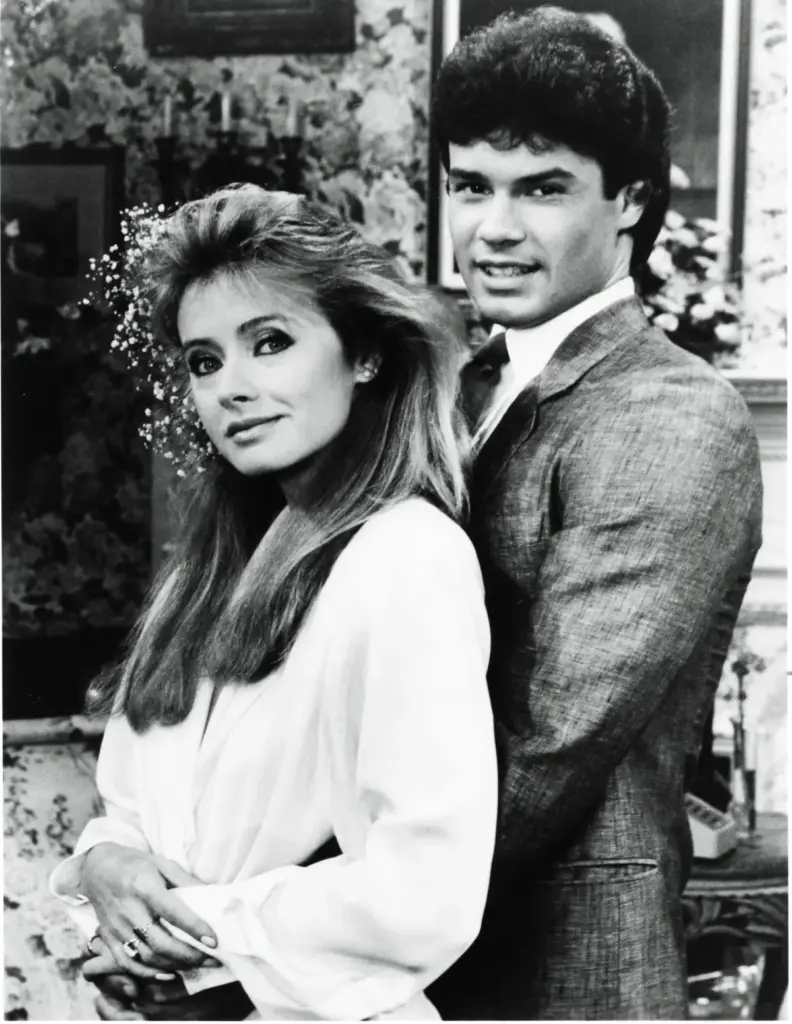
In stark contrast to the grand theatrical productions often associated with daytime nuptials, the spring of 1986 brought a masterclass in intimate, character-driven romance to The Young and the Restless. Former wallflower Traci Abbott (Beth Maitland) captured the heart of dashing hunk Brad Carlton (Don Diamont). The couple opted to marry inside the warm, candlelit confines of the Abbott family mansion, surrounded by lush floral arrangements and close family members.
Yet, true to Genoa City form, absolute peace was impossible. Jack Abbott (then played by Terry Lester), who was concurrently wanted on severe murder charges, executed a clandestine, high-stakes sneak-in just to wish his sister well on her special day. Outside the sprawling estate, a ravenous pack of reporters and camera crews gathered, hoping to catch a glimpse of the fugitive brother. Demonstrating his unwavering devotion, Brad stepped up to shield his new bride from the media circus before whisking her away to a sun-drenched Hawaiian honeymoon.
The industry took notice of the storyline’s grounded approach. Soap Opera Digest formally crowned Brad and Traci’s wedding as the "Best Wedding of 1986" in their annual Best & Worst issue. The publication praised the choice: "By not attempting outlandish theatrics, the intimate family ceremony achieved warmth."
3. Pop-Culture Phenomenon: Felicia Cummings and Frisco Jones (General Hospital)
By June 1986, Port Charles was gripped by a cultural phenomenon: the wedding of supercouple Felicia Cummings (Kristina Wagner) and Frisco Jones (Jack Wagner). The sheer magnitude of "Frisco and Felicia" cannot be overstated; they were the quintessential 1980s soap supercouple, possessing a level of real-world crossover fame that pushed daytime actors into mainstream pop culture.

The ceremony took place in the living room of Bobbie Spencer’s (Jacklyn Zeman) classic brownstone, which an army of friends and family had miraculously transformed into an ethereal, garden-like sanctuary. The bride wore an exquisite ecru lace gown that subtly honored her character’s Aztec heritage, while the groom looked every bit the dashing hero in his crisp police officer dress uniform. Following the pronouncement, the newlyweds made their triumphant exit by strolling through a storybook archway of raised policeman batons.
An ecstatic Frisco bellowed, "We did it! We’re married!" before treating his glowing bride to a live acoustic serenade of their signature anthem, "Lady of My Heart." Subtle foreshadowing filled the air as Duke Lavery (Ian Buchanan) and Anna Devane (Finola Hughes) caught the garter and bouquet, respectively—a romantic prelude to their own marriage the following year.
4. Raw and Unconventional: Tina Lord and Cord Roberts (One Life to Live)
In August 1986, One Life to Live introduced viewers to an entirely different style of television wedding. Tina Lord (Andrea Evans) and Cord Roberts (John Loprieno) represented one of Llanview’s most electrifying "opposites-attract" pairings. While their tumultuous romance would eventually feature more traditional pageantry, their initial legal trip to the altar was a wonderfully modest affair presided over by a pragmatic justice of the peace.
Far from the diamond-encrusted expectations of high society, Cord presented Tina with a humble, unassuming band. Rather than being disappointed, Tina beamed at her groom, delivering a line that resonated deeply with viewers: "You might not believe this, but I don’t care about the diamond. I just love you!"
The intimacy of the moment heightened as they gazed into each other’s eyes, reciting traditional vows with palpable sincerity. Breaking the solemnity with a touch of levity, the officiant winked at Cord upon completion of the paperwork, prompting the immortal instruction: "That’s all the official stuff, Son. Kiss her!" Cord eagerly replied, "Yes, Sir," sweeping his bride into a breathless, passionate embrace.
5. The Ultimate Illusion: Marlena Evans and Roman Brady (Days of Our Lives)
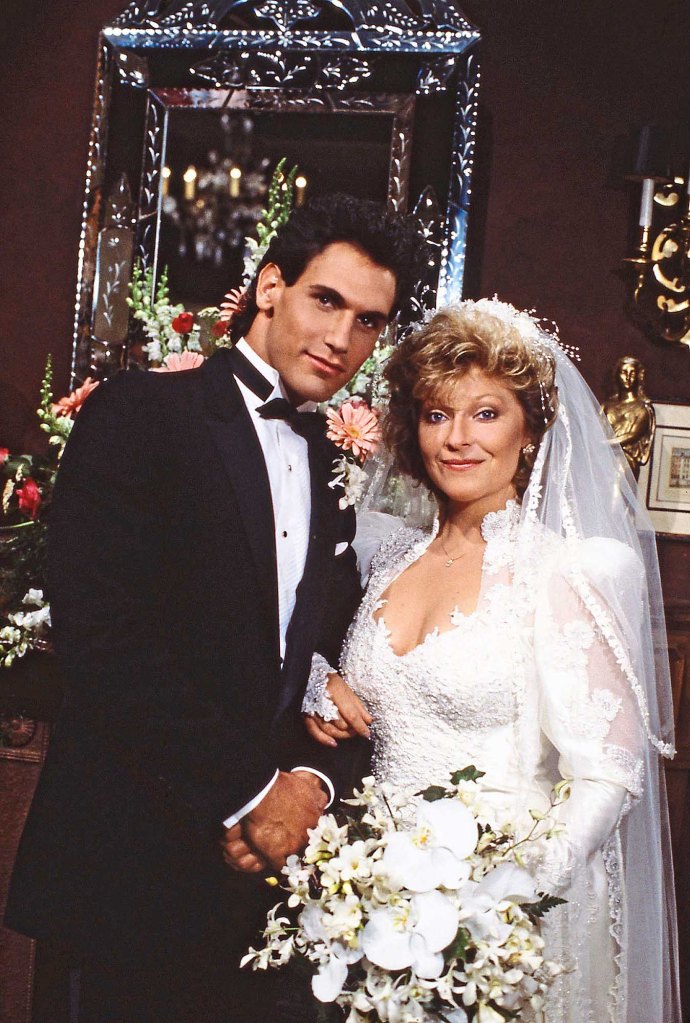
August 1986 also delivered one of the most psychologically complex and tragic-romantic milestones in Days of Our Lives history. Marlena Evans (Deidre Hall) had spent a agonizing period mourning the presumed death of her true love, Roman Brady (then played by Wayne Northrop). When she crossed paths with a mysterious, amnesiac drifter named John Black (Drake Hogestyn)—who bore Roman’s face and soul—she believed her prayers had been answered.
Convinced that John was indeed a miraculously returned Roman, the reunited couple planned a lavish vow renewal. The wedding party was a who’s who of Salem royalty: Roman’s young daughter, Carrie Brady (Christic Clark), served as flower girl; Abe Carver (James Reynolds) acted as best man; Maggie Horton took on the role of matron of honor; and Kayla Brady (Mary Beth Evans) stood proudly as bridesmaid.
The emotional high-water mark arrived when songstress Tamara Price (Marilyn McCoo) delivered a breathtaking rendition of "Up Where We Belong." As the music swelled, Roman wrapped his arms securely around Marlena’s waist while sweeping archival flashbacks of their romance flashed across screens nationwide. Beaming through tears, Marlena delivered vows that would echo down through the decades: "We’re more than lucky. We’re more than blessed. We’re twice blessed." Of course, the delicious irony of the plot twist—that "Roman" was actually John Black under deep psychological conditioning—elevates this wedding into legendary status.
6. Manhattan Winter Wonderland: Nina Cortlandt and Cliff Warner (All My Children)
Rounding out this iconic cohort, All My Children delivered a holiday masterpiece in late 1986 when Cliff Warner (Peter Bergman) and Nina Cortlandt (Taylor Miller) took their third trip down the aisle. Rejecting traditional church settings, the couple chose New York City’s historic Tavern on the Green in Central Park during the height of the Christmas season.
The aesthetic was pure sophistication, featuring a striking black-and-white color palette that contrasted sharply against the winter snow. The bride and groom made a cinematic entrance, arriving at the venue via a horse-drawn carriage. Demonstrating the weight of their complicated history, Nina asked a final, nervous question: "Are you sure you want to do this?" Cliff offered an unshakeable reassurance: "I have never been more sure of anything in my life."

Officiated by Reverend Finney, the ceremony transitioned seamlessly into a magical first dance as guests encircled the couple on the snowy grounds. Best man Tom Cudahy (Richard Shoberg) offered a tear-jerking toast celebrating the couple finally attaining "the happy ending they deserve," as loved ones showered them in cascading rose petals.
Supporting Context & Metrics: The Cultural Footprint of 1986
To truly understand the weight of these 1986 nuptials, one must examine the broader media ecosystem of the era. During the mid-1980s, daytime serials were pulling in aggregate daily viewership numbers exceeding 30 million Americans. Networks operated production budgets that allowed for location shoots, live musical performances, and elaborate set designs that rivaled primetime television.
| Show | Couple | Setting / Location | Notable Cultural Element |
|---|---|---|---|
| Days of Our Lives | Melissa & Pete / Maggie & Mickey | St. Luke’s Church / Blondie’s | Simultaneous double-wedding ceremony |
| The Young and the Restless | Traci Abbott & Brad Carlton | Abbott Family Mansion | Soap Opera Digest "Best Wedding of 1986" |
| General Hospital | Felicia Cummings & Frisco Jones | Bobbie Spencer’s Brownstone | Police baton archway & live musical serenade |
| One Life to Live | Tina Lord & Cord Roberts | Justice of the Peace Office | Unconventional, diamond-free simplicity |
| Days of Our Lives | Marlena Evans & "Roman" Brady | Salem Estate / Church | Iconic musical guest (Marilyn McCoo) & massive identity twist |
| All My Children | Nina Cortlandt & Cliff Warner | Tavern on the Green, NYC | Horse-drawn carriage & holiday winter aesthetic |
Fan engagement in 1986 relied heavily on print media—specifically magazines like Soap Opera Digest, fan clubs, and dedicated television guide features. Fan mail arrived at studio gates by the literal truckload. When Jack Wagner serenaded Kristina Wagner on General Hospital, ABC received tens of thousands of letters praising the musical sequence within days. These metrics underscore how deeply integrated these fictional unions were into the fabric of everyday American domestic life.
Official Statements and Industry Reflections
Reflecting on the production climate of the mid-1980s, veteran industry insiders have frequently pointed to 1986 as a golden era of creative freedom for daytime showrunners.
Former network executives and long-running cast members have often noted that the weddings of this period were treated as major television events rather than routine narrative glue. In retrospective interviews regarding her time on General Hospital, Kristina Wagner reflected on the communal atmosphere on set: "When we shot the brownstone wedding, it genuinely felt like a neighborhood gathering. The crew, the cast, everyone knew we were capturing something lightning-in-a-bottle for the fans."
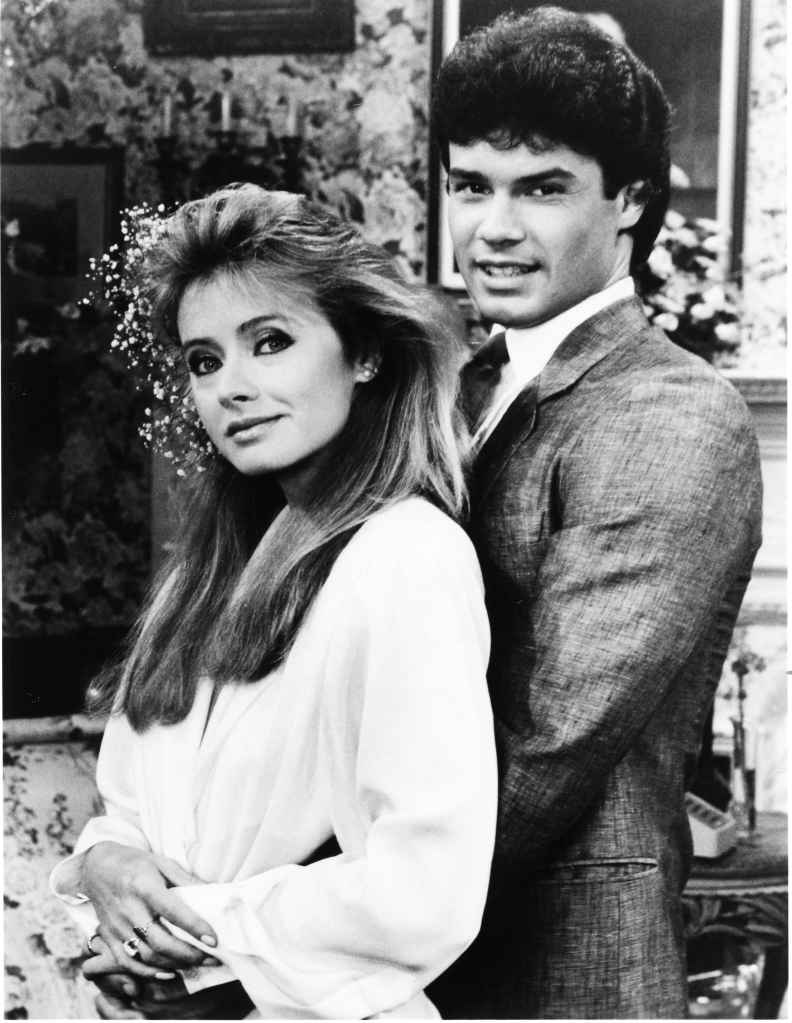
Similarly, reflection on The Young and the Restless highlights how important character grounding was during the era. Beth Maitland noted that the stripped-down, intimate nature of Traci and Brad’s union allowed the emotional truth of the characters to shine through the media frenzy surrounding the show. These reflections emphasize an industry standard where intimacy and high melodrama achieved a rare, sustainable balance.
Future Outlook: The Enduring Legacy of Daytime Romance
As the television landscape continues its relentless evolution toward on-demand streaming, fragmented viewing habits, and limited-run event series, the classic daytime soap opera wedding occupies a uniquely nostalgic space in entertainment history. While daily network soap operas face an increasingly challenging economic environment, the blueprint established in 1986 remains the gold standard for romantic storytelling.
The weddings of Frisco and Felicia, Traci and Brad, Marlena and her "Roman," Tina and Cord, Nina and Cliff, and the double-wedding in Salem proved that viewers do not merely watch romance on television—they invest their own emotional histories into it. Forty years later, these ceremonies continue to serve as masterclasses in character development, visual world-building, and emotional payoff.
Ultimately, the 1986 soap wedding season reminds us why daytime television captured the hearts of millions: at its core, it offered an unashamed celebration of hope, resilience, and the eternal human desire for a happy ending, no matter how many runaway brothers, amnesiac impostors, or media mobs stood in the way.