Executive Overview
In the kaleidoscope of contemporary fashion cycles, where trends flash like neon bulbs and fade just as quickly into algorithmic obscurity, the summer of 2026 has definitively crowned a reigning monarch: a striking, hyper-vibrant spectrum ranging from electric blue to acid-washed aquamarine. Amid a sea of aggressive neons, blistering hot pinks, and screaming yellows, this aquatic hue has floated effortlessly to the top of the style hierarchy, dominating global music festivals, underground afterparties, and high-fashion runways alike.
The cultural propagation of this color has been spearheaded by modern pop royalty. From Lorde’s prophetic lyrical nod to "acid green, aquamarine" to Charli xcx trading her digital dystopia for mud-soaked festival grounds while draped in head-to-toe electric chrome, aqua blue has transcended being merely a seasonal choice. It has become a foundational aesthetic statement. Far from a fleeting novelty, the shade is functioning simultaneously as a high-octane statement piece and a surprisingly versatile neutral when juxtaposed against stark blacks, muted neutrals, or paired daringly alongside competing neons.
This report provides an in-depth investigation into the resurgence of electric aqua across the 2026 global fashion landscape. Through a detailed analysis of festival stage aesthetics, celebrity endorsements, couture shifts, and styling mechanics, we examine how the color took over the cultural zeitgeist and what its dominance signals for the future of apparel design.
Detailed Chronology: The Ascendance of Electric Blue in 2026
The trajectory of aqua blue’s dominance throughout 2026 did not happen in a vacuum; it was carefully choreographed across international style capitals, marquee music festivals, and high-profile multimedia rollouts.
Q1 2026: The Latex Blueprint and Early Latin American Festivals
The earliest indications that blues would usurp standard pastels arrived during the early-year international music festival circuit. Pop culture icon Addison Rae set the tone during her South American festival runs, stepping out in a high-gloss, form-fitting latex dress crafted by avant-garde label Atsuko Kudo. The look, characterized by its blindingly reflective aqua sheen, immediately set social media alight. It signaled a shift away from the quiet luxury and minimalist earth tones that had dominated previous years, leaning instead into tactile, futuristic, high-impact materials.
Spring 2026: The Charli xcx Renaissance and "Wink Wink"
As spring transitioned into early summer, the cultural monolith known as the "Brat" era evolved into a darker, more textured era for Charli xcx. While her visual campaign for her latest musical chapter leaned heavily into a rockstar aesthetic—typified by black-and-white album covers, heavy graphite-smudged eyes, tattered white T-shirts, and severe black pencil skirts—Charli strategically deployed a singular, recurring splash of color: electric blue.
This chromatic signature reached a fever pitch with the rollout of her "Wink Wink" music video, in which she wore a custom matching leather jacket and pant set by Chrome Hearts rendered in a blinding, hyper-saturated neon blue. The choice bridged the gap between raw, gritty punk subculture and ultra-luxurious streetwear, proving that electric blue could anchor even the grittiest of wardrobes.
Summer 2026: European Festival Dominance and Paris Afterparties
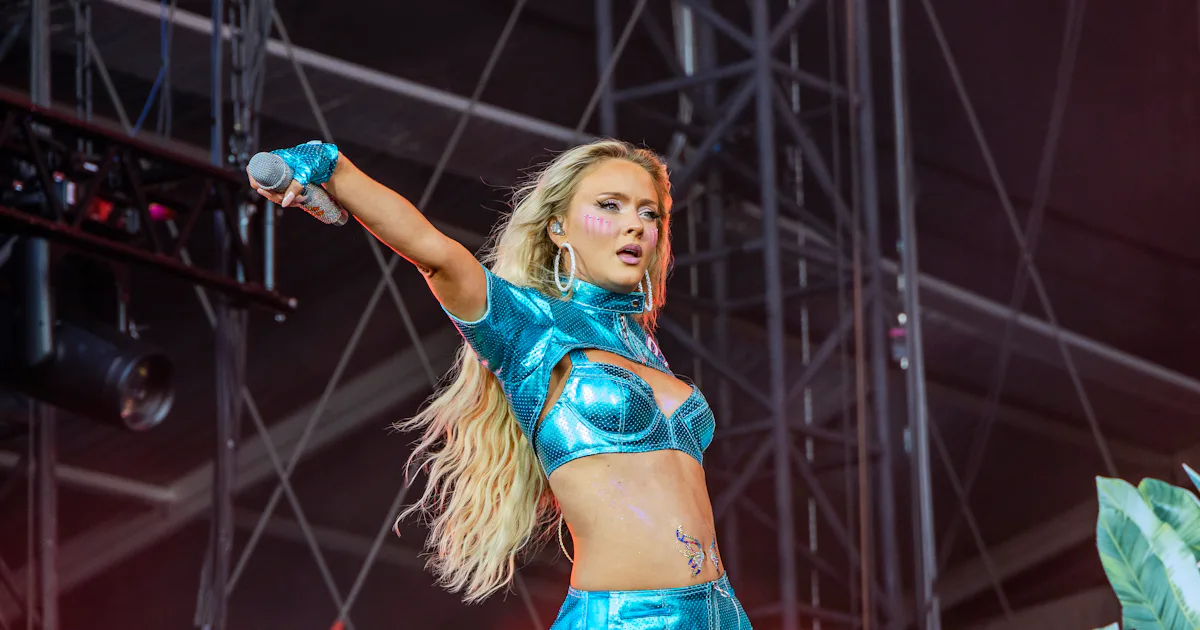
By mid-summer, the trend had officially metastasized across European cultural hubs. At Lollapalooza Berlin in July 2026, Swedish pop powerhouse Zara Larsson cemented the shade’s festival supremacy. Larsson took to the stage wearing a custom-made, coordinated aqua bolero, bra, miniskirt, and matching gloves set designed collaboratively by Alexander Cole and James Nguyen. The architectural, highly coordinated look stood as a masterclass in modern stage styling.
Simultaneously, in the fashion capital of Paris, pop music royalty collided when Madonna linked up with Charli xcx for an exclusive late-night afterparty. For the occasion, the Material Girl bypassed traditional evening wear in favor of a highlighter-aqua Coperni minidress that effortlessly bridged decades of pop iconography.
The weekend of August 10, 2026, brought the trend full circle. At the Outside Lands festival in San Francisco, Charli xcx doubled down on her signature hue, sporting yet another neon blue Chrome Hearts ensemble for her post-festival DJ set.
Supporting Context & Metrics: Why Aqua Is Winning the Color Wars
To understand the sudden omnipresence of aqua blue, one must examine the broader macroeconomic and psychological shifts influencing consumer behavior in 2026. Following years of economic uncertainty and a corresponding surge in safe, wearable neutrals (such as beige, oatmeal, and minimalist black), consumers are experiencing what trend forecasters call "chromatic fatigue."
The Psychological Need for High-Stimulus Color
Post-pandemic dopamine dressing has evolved from mere experimentation into an intentional demand for high-stimulus visual environments. While pinks and yellows have long served as the default choices for dopamine-driven fashion, they carry baggage: pink risks leaning into hyper-femme satire (exacerbated by past media saturation), while yellows can often wash out various skin tones under harsh summer lighting.
Aqua blue and its neon derivatives, however, offer a unique psychological profile:
- The Cool-Tone Balance: While blazing pinks and screaming yellows radiate terrestrial heat, blues and aquamarine evoke water, ice, and clean air. This provides a cooling psychological effect during record-breaking summer heatwaves.
- Photographic Omnipresence: In an era dictated by high-definition smartphone cameras and algorithmic platforms like TikTok and Instagram, aqua blue possesses a high luminosity index. It naturally pops against both natural outdoor landscapes (mud, grass, sand) and urban concrete backdrops without requiring heavy digital saturation adjustments.
The Rise of High-Tech Textures
The triumph of the shade is intrinsically linked to fabric innovation. Traditional cottons and wools struggle to capture the electric vibrancy of true neon blue. Consequently, the trend has driven significant commercial growth in specialized fabrication sectors:
- Latex and High-Gloss Polymers: Brands utilizing Atsuko Kudo-style latex have reported increased demand for primary-adjacent aquatic tones.
- Chrome-Treated Leathers: Custom leatherwork by houses like Chrome Hearts proves that heavy-duty outerwear can be successfully tinted in electric hues without losing its edge.
- Performance Synthetics: Festival wear designers have increasingly relied on moisture-wicking, iridescent technical fabrics that shift from deep aquamarine to blinding cyan under stage lighting.
Official Statements and Industry Perspectives
Designers, stylists, and cultural critics have increasingly weighed in on the chromatic shift, noting that the color’s longevity lies in its surprising adaptability.
Stylist commentary from the recent European festival circuits highlights a collective movement away from monolithic styling toward high-contrast color-blocking. "We aren’t just seeing aqua used as an accent anymore; it is acting as the central architectural pillar of an entire outfit," notes Los Angeles-based costume designer Marcus Vance. "When you pair a hyper-bright turquoise or electric blue with raw textures like distressed leather, mud, or unbleached cotton, you create an intentional tension that standard pastels simply cannot achieve."
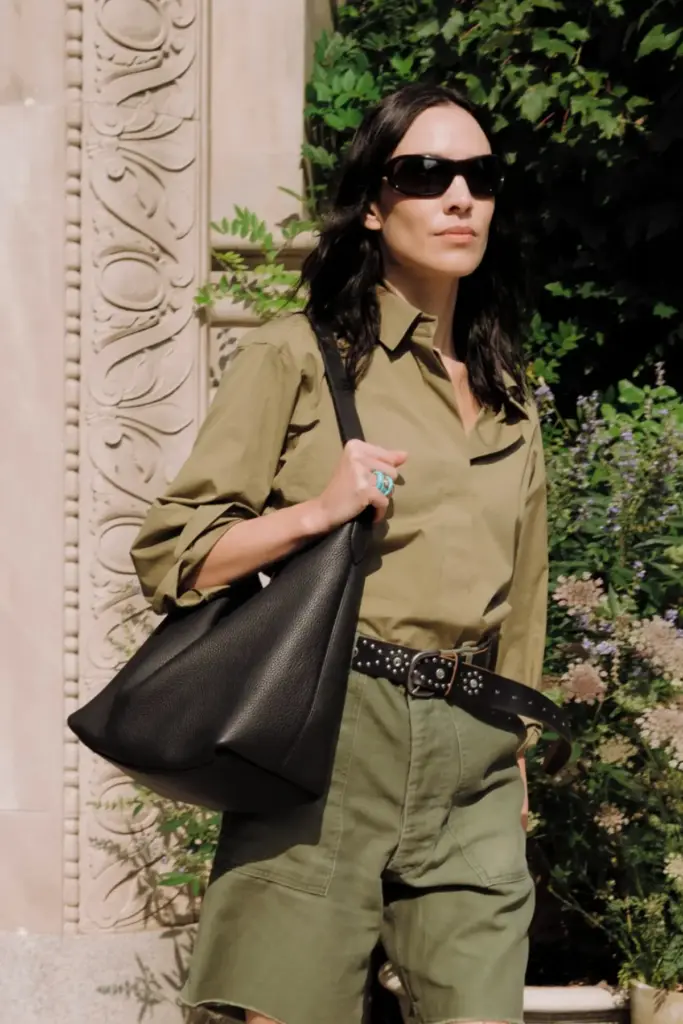
Furthermore, style icon Alexa Chung demonstrated the everyday viability of the trend during a sweltering New York City heatwave. Opting out of head-to-toe neon, Chung anchored a safari-chic, neutral daytime ensemble with a single, oversized turquoise statement ring. High-fashion commentary subsequently praised the look for proving that consumers do not need to commit to a full latex bodysuit to participate in the movement. A single, well-placed pop of turquoise can elevate an otherwise muted outfit into high-fashion territory.
As luxury houses prepare their upcoming Spring 2027 collections—notably observed in preview lookbooks from houses like Chloé—industry insiders predict that the shade will successfully cross over from summer festival wear into transitional autumn tailoring and winter outerwear.
Future Outlook: Where the Trend Goes Next
As the summer of 2026 draws to a close, the million-dollar question facing apparel manufacturers, fast-fashion giants, and luxury design houses alike is simple: Is electric blue a passing seasonal fad, or is it cementing itself as a permanent fixture in the modern wardrobe?
1. Seasonal Migration to Autumn/Winter 2026-2027
Historically, bright blues and aquas are quarantined to summer resort wear and festival capsules. However, industry forecasts indicate that the color is mutating rather than disappearing. Expect to see heavy wool coats, cashmere knits, and structured winter tailoring rendered in deep electric sapphire and muted turquoise as the weather cools. By shifting from sheer neon to richer, heavier jewel tones of the same family, brands can extend the life cycle of the trend straight through to early 2027.
2. The Evolution of the "New Neutral"
Perhaps the most enduring legacy of the 2026 aqua wave is its reclassification in the styling playbook. Much like animal print or metallic silver before it, electric blue is increasingly being treated by street-style tastemakers as a neutral. When paired with charcoal grays, raw denims, and stark blacks, a flash of turquoise or aqua functions not as a distraction, but as a grounding anchor.
3. Sustainability and Dye Innovation
The rise of hyper-vibrant neon blues has also placed renewed pressure on textile manufacturers to innovate sustainable dyeing methods. Traditional neon and electric dyes have historically faced criticism for their environmental impact. The push by leading contemporary labels to maintain these intense hues while adopting eco-friendly, closed-loop water systems and plant-based pigments will likely shape the textile manufacturing landscape well into the late 2020s.
Conclusion
Whether you choose to follow the lead of festival headliners and dive into the trend with a head-to-toe latex or leather statement set, or prefer to take a page out of Alexa Chung’s understated playbook with a single turquoise accessory, one reality remains undisputed. The electric tide has risen, and the most stylish crowd in the world is more than happy to swim in its waters.