Executive Overview
In an era dictated by rapid micro-trends, algorithmic feeds, and the relentless pressure to curate an aesthetically pristine adulthood, a quiet yet powerful counter-movement is taking hold in closets around the globe. Adults are turning away from the rigid expectations of professional minimalism and sleek corporate polish, reaching instead into the attic of their personal histories. They are pulling out the pastel hues, whimsical textures, and unapologetically kitschy garments of their youth.
This phenomenon transcends mere millennial or Gen Z irony. It is a profound psychological reclamation. As explored through the lens of wardrobe ethnography and trauma recovery, dressing the "inner child" has emerged as a somatic tool for healing, emotional grounding, and identity reconstruction. When life shatters—whether through personal tragedy, existential burnout, or the quiet alienation of modern urban existence—clothing can serve as a wearable time machine.
This deep dive investigates the intersection of fashion psychology, neuro-aesthetics, and personal grief. By examining how garments encoded with childhood memories can bypass intellectual defense mechanisms to soothe the nervous system, we uncover why putting on a pink, off-the-shoulder sweater or a butterfly-print tank top might just be the most mature stylistic choice an adult can make.
Detailed Chronology: From Personal Loss to Stylistic Awakening
The Catalyst of Grief
The journey back to childhood wardrobe aesthetics rarely begins in a place of lighthearted amusement; more often, it is forged in the crucible of profound personal loss. Consider the experience of navigating grief in a sterile, adult environment—the kind of paralyzing low point that occurs when a sibling passes away, pulling the rug out from under your entire worldview.
In the immediate aftermath of such devastation, traditional coping mechanisms often fail. The corporate blazers, neutral-toned knitwear, and sensible trousers that defined the wardrobe of a 28-year-old living in a bustling metropolis suddenly feel hollow. They represent a forced maturation, an armor worn to impress a world that no longer makes sense.
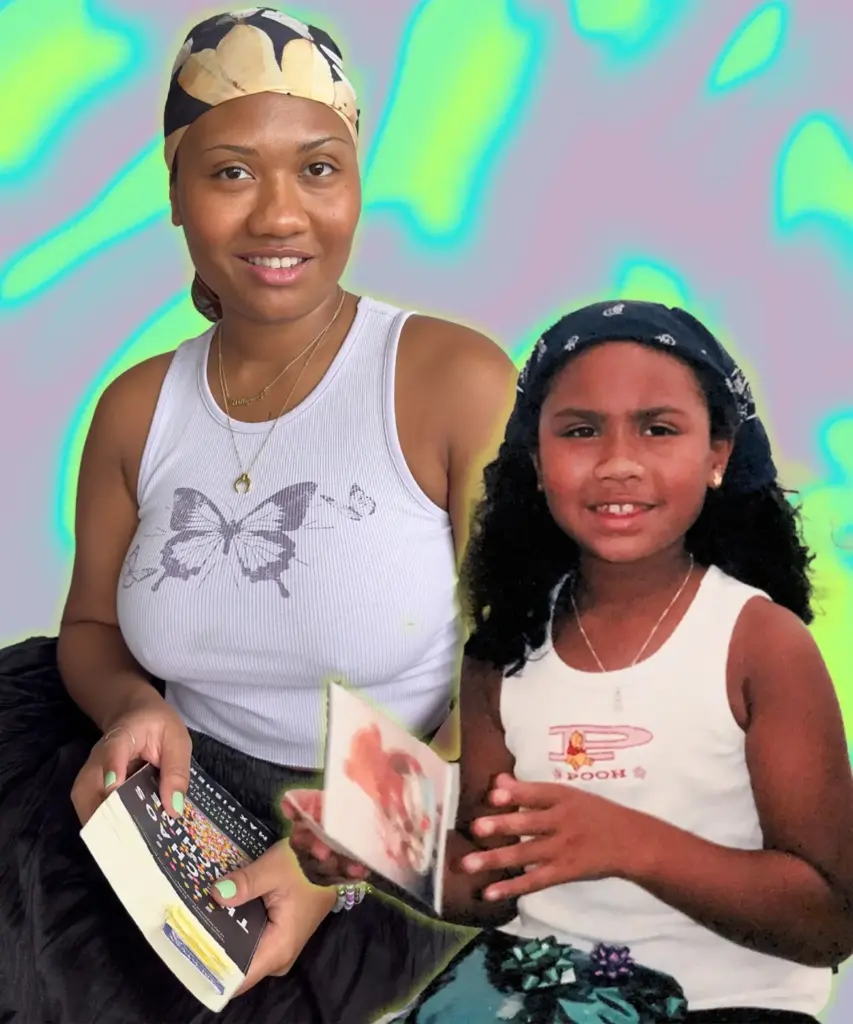
It was during such a period of acute mourning that the impulse to browse online vintage shops for emotional resuscitation began. Scrolling endlessly through digital marketplaces not to buy, but simply to feel, the eye inevitably catches something entirely out of step with contemporary trends: a short, purple tank top adorned with a whimsical butterfly print. To a cynical adult eye, it might border on overly "girly" or juvenile. Yet, to someone standing at the edge of an emotional abyss, that exact silhouette—a defining relic of early-2000s adolescence—acts as a beacon of unadulterated warmth.
The Sensory Time Machine: Unboxing the Past
The true turning point arrives in the mail days later. The package is small, unassuming. But the moment the plastic wrap is torn away and the fabric is pulled into the light, a visceral physiological shift occurs.
For one writer, the object of desire was a pink, off-the-shoulder sweater meticulously mirroring a garment adored in Canadian suburbia circa childhood. The tactile sensation of the synthetic, fluffy yarn dissolves physical geography and chronology simultaneously. The 28-year-old Londoner evaporates; in her place stands an 11-year-old girl stepping into her favorite sweater for a school portrait.
The sensory cascade is instantaneous and overwhelming:
- Olfactory memory: The phantom scent of coconut-infused shampoo lingering in long, youthful hair.
- Somatic recall: The memory of a subtle, prepubescent upper lip shadow, oversized eyes full of unblemished curiosity, and the gentle drone of a digital clock radio playing Top 40 hits in the background.
- The absence of weight: A profound, sudden remembrance of what it felt like to exist entirely divorced from push notifications, tax brackets, and the crushing weight of adult obligations.
In that single mirrored reflection, nostalgia ceases to be a passive longing for a bygone era. It transforms into an active bridge across time, proving to the adult self that the frightened, joyful, imaginative child of the past has not vanished—she is simply waiting to be reinvited into the room.
Supporting Context & Metrics: The Science of Wardrobe Ethnography
To dismiss nostalgic dressing as childish regression is to fundamentally misunderstand the complex mechanics of fashion psychology. Clothes have never been merely functional skins designed to protect us from the elements; they are active agents in our cognitive processing and emotional regulation.
Understanding Wardrobe Ethnography
To unpack this dynamic, we must look to modern fashion psychology and a concept known as wardrobe ethnography.
"In the fashion psychology space, there is a concept called ‘wardrobe ethnography,’" explains leading fashion psychologist Shakaila Forbes-Bell. "It describes your wardrobe as a mirror of all the decisions you’ve made up to this point in your life. These choices tell a story about who you were at a specific juncture—what influenced you, what you saw in yourself, what lifestyle you led back then. I believe it can be deeply liberating to wear clothes that remind you of your childhood."
Wardrobe ethnography posits that our closets are physical archives of our psychological evolution. Every garment retained or discarded represents an iteration of the self. When adults intentionally re-introduce garments from their formative years into their daily rotations, they are engaging in a deliberate act of historical revisionism—not to escape reality, but to rescue forgotten parts of their identity that were abandoned in the rush to assimilate into adulthood.
The Intergenerational Nostalgia Loop
Fashion has always operated on a cyclical timeline, fueled by a collective cultural yearning for safer, simpler times. However, contemporary fashion trends have democratized this yearning. We now witness generations eagerly adopting trends from decades they never physically inhabited—Gen Z obsessing over Y2K aesthetics, and millennials romanticizing the 1990s grunge or 1980s power-dressing movements.
When these macro-trends intersect with personal memory, the psychological impact intensifies exponentially. While TikTok-driven vintage micro-trends often prioritize aesthetic compliance and algorithmic approval, personal inner-child dressing cuts through the noise. It is entirely internal. It asks not, "Will this look good on my feed?" but rather, "Does this make my nervous system feel safe?"
Official Statements: Expert Insights on Fashion as Therapy
The therapeutic utility of clothing is increasingly recognized by mental health professionals who utilize expressive arts and somatic therapies to treat trauma, grief, and chronic anxiety.
The Inner Child Framework
In psychological terms, "inner child work" is a well-established therapeutic modality designed to help individuals confront and integrate unresolved developmental wounds. Whether dealing with complex trauma, early life rejections, or the slow erosion of playfulness under the weight of societal expectations, adults frequently find themselves disconnected from their spontaneous, joyful core.
While wearing a vintage cardigan with a faux-fur collar or a bright butterfly clip cannot single-handedly resolve deep-seated psychological trauma, experts emphasize that it serves as a powerful, tactile somatic anchor. It operates much like a transitional object in developmental psychology—a physical anchor that provides psychological comfort during moments of high stress or transition.
[Trauma / Existential Stress]
       │
       ▼
[Sensory Trigger: Childhood Garment (Texture, Color, Silhouette)]
       │
       ▼
[Nervous System Regulation & Somatic Grounding]
       │
       ▼
[Reintegration of the Playful Self / Inner Child Validation]
The Communicative Power of Dress
As Shakaila Forbes-Bell notes, clothing is an active dialogue rather than a passive uniform.
"It’s not just a rudimentary act to get dressed every day. It’s a choice—and every choice has a reaction," Forbes-Bell asserts. "Understanding the language of clothing, knowing what it means and how it makes you feel, gives you the power to send out the right message that truly aligns with who you are."
For decades, women especially are socialized to prune their external presentations as they age—subduing bright colors, minimizing whimsy, and adopting a uniform of sober neutrality designed to project "competence" and "maturity." Reclaiming childhood aesthetics is an active rebellion against this compulsory maturation. It is a declaration that professionalism and playfulness are not mutually exclusive, and that a mature adult is fully capable of honoring the whimsical desires of her 11-year-old self without sacrificing her agency in the present.
Future Outlook: The Cultural Shift Toward Emotional Autonomy in Style
As we look toward the future of personal style, the boundaries separating "adult" and "childlike" aesthetics are dissolving. Pop culture has long flirted with this dichotomy—consider iconic cinematic moments like Jenna Rink (played by Jennifer Garner) in the beloved millennial classic 30 Going on 13, marching out of her apartment to Whitney Houston’s I Wanna Dance With Somebody, rejecting the sterile corporate wardrobe of a hollow adult life in favor of a vibrant, colorful dress, oversized accessories, and childlike glee.
What was once captured as a fantastical Hollywood trope is now becoming a lived reality for thousands of adults navigating the complexities of the modern world.
What This Means for the Future of Fashion:
- The Rise of Somatic Styling: Consumers will increasingly evaluate clothing purchases not just on fit, sustainability, or trend-alignment, but on emotional ROI—how a garment impacts their mood and nervous system regulation.
- De-stigmatizing Play in Adulthood: The cultural mandate requiring adults to dress in somber, uninspired tones will continue to fracture, replaced by a hyper-personalized patchwork of eras, textures, and nostalgic touchstones.
- Fashion as a Complement to Therapy: Mental health practitioners may increasingly incorporate wardrobe audits and personal style history into holistic treatment plans for grief, anxiety, and identity loss.
Final Reflections
Ultimately, the decision to step out into a sophisticated urban restaurant wearing a vintage faux-fur collared cardigan, a sheer top, and a black miniskirt—while secretly high-fiving the younger self who was once told she had to grow up—is an act of profound self-love.
Whether an individual chooses to present to the world in a meticulously tailored power suit that commands authority or a vibrant, pink, childhood-inspired sweater that whispers safety to an anxious soul, the underlying mandate remains the same: the clothes must be worn for the self. In mastering the language of our wardrobes, we stop letting garments dictate who we are expected to be, and finally use them to express who we truly have been all along.