When the fashion world converges on a historical epicentre, expectations are inevitably high. Yet, the recent staging of Vogue World: Milano 2026 managed to transcend even the loftiest industry projections. While the overarching narrative of the evening celebrated Italy’s monumental footprint on global design—weaving through the artistic grandeur of Renaissance beauty and the evocative moods of autumn florals—an entirely unforeseen sartorial subtext captured the imagination of the global audience, particularly those navigating the intricate world of nuptial planning.
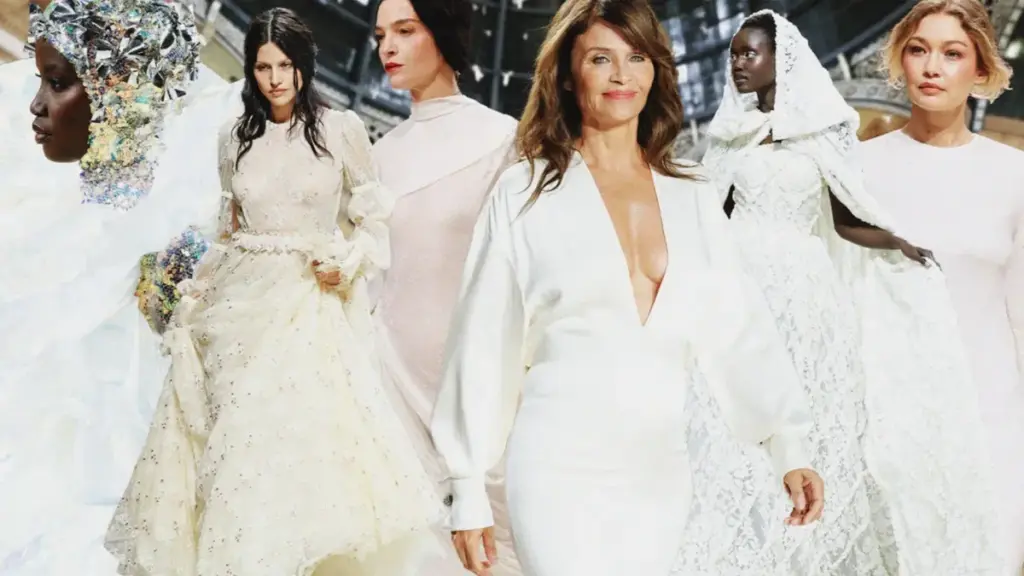
Amidst the structured tailoring, avant-garde streetwear, and haute couture showstoppers, the grand finale of the Milanese spectacle served up an unexpected masterclass in bridal aesthetics. Staged against the magnificent architectural backdrop of Milan’s historic Galleria, the event’s closing sequence transformed into a breathtaking showcase of white and cream tulle, intricate lace, and liquid silk gowns. Far from traditional, cookie-cutter wedding attire, this curated bridal movement rejected convention in favour of theatricality, historical reverence, and unbridled modern whimsy.
For the contemporary bride—a demographic increasingly fatigued by homogenized Pinterest boards and sterile minimalism—Vogue World: Milano 2026 offered a vital course correction. The runway presented a dazzling dichotomy: hair and makeup styling ranged from cascades of long, romantic waves reminiscent of Pre-Raphaelite paintings to sharp, rebellious 1960s mod pixie cuts. Beauty looks dared to experiment with icy silver shimmer shadow and uncompromising, statement-making red lips, while accessories pushed past the veil barrier to introduce mirrored headpieces and architectural hooded lace veils that instantly entered the upper echelons of modern bridal lore.
This comprehensive investigative report delves into the mechanics of this unforeseen bridal renaissance. By examining the detailed chronology of the event, contextualizing the broader macroeconomic shifts within the global bridal market, analyzing official commentary from leading industry voices, and forecasting the long-term impact on bridal fashion and beauty for Fall 2026 and beyond, we decode how a single runway finale successfully rewrote the modern bride’s rulebook.
Detailed Chronology of the Event
The unfolding of Vogue World: Milano 2026 was a meticulously orchestrated triumph of experiential fashion, designed to honor Italy’s rich artistic lineage while charting a bold course for the future. Understanding how the bridal narrative emerged requires a chronological examination of the evening’s progression, culminating in the historic finale within the Galleria.
Phase One: The Prequel of Italian Craftsmanship
As twilight settled over Milan, international editors, celebrities, buyers, and tastemakers gathered near the city’s iconic landmarks. The early acts of the production paid direct homage to Italy’s artisanal heritage, spotlighting the master milliners, leather artisans, and textile mills of Florence, Milan, and Rome. Designers collaborated closely with Italian heritage houses to showcase how classical techniques—such as hand-embroidery, Florentine leather-working, and Renaissance-era textile weaving—continue to inform contemporary luxury.
During this initial phase, the beauty direction was deliberately anchored in historical motifs. "Renaissance beauty" dominated the early runway walks: flushed cheeks, dewy skin that appeared lit from within, and softly defined brows that evoked the subjects of Botticelli and Da Vinci. Little did the audience know, this historical grounding was merely the foundational layer for a much grander stylistic evolution.
Phase Two: The Seasonal Transition and Botanical Interlude
As the production progressed into mid-evening, the thematic focus pivoted toward transitional styling, explicitly highlighting fall florals. Moving away from the muted, melancholic tones typically associated with autumn transitions, the runway exploded with vibrant, oversized botanical prints, rich jacquards, and three-dimensional floral appliques sewn directly onto structured wools and gossamer silks.
This floral interlude acted as a vital bridge between ready-to-wear and the evening’s grand climax. By embedding floral textures into structured garments, the creative directors subtly conditioned the audience’s palate to appreciate tactile, sensory-rich designs. It prepared the eye for the intricate lacework and layered tulle that would define the final act.
Phase Three: The Grand Finale and the Bridal Takeover
The apex of Vogue World: Milano 2026 arrived with its final act, staged under the vaulted iron-and-glass roof of Milan’s Galleria Vittorio Emanuele II. As the orchestration swelled, models emerged not in standard evening wear, but in an awe-inspiring procession of bridal and bridal-adjacent creations that immediately set social media alight.
The bridal segment discarded the solemnity traditionally associated with wedding aisles. Instead, the atmosphere was infused with a vibrant, high-energy theatricality. The garments themselves were masterclasses in contrast: structural, corset-boned bodices paired with billowing, cloud-like skirts of cream tulle; minimalist bias-cut silk slip dresses contrasted against heavily embellished, baroque-inspired lace gowns.
Crucially, the beauty and styling choices during this finale elevated the presentation from a standard bridal showcase to a definitive cultural moment. Models sporting razor-sharp 1960s mod pixie cuts strode alongside those crowned in cascading, ultra-romantic waves. Beauty looks shattered bridal norms: rather than the standard "no-makeup makeup" palette of pale pinks and neutrals, makeup artists introduced daring silver shimmer shadows that caught the Galleria’s ambient light, paired with defiant, pillar-box red lips.
The accessories proved to be the ultimate showstoppers. Departing from the traditional tiara or basic veil, designers introduced mirrored headpieces that reflected the historic architecture overhead, alongside dramatic, floor-sweeping hooded lace veils. This final sequence did not merely nod to marriage ceremonies; it completely reimagined them, proving that bridal wear can—and should—be as daring and expressive as any piece of avant-garde haute couture.
Supporting Context & Metrics: The Shifting Landscape of Modern Bridal
To fully appreciate the cultural resonance of Vogue World: Milano 2026’s bridal intervention, one must examine the broader macroeconomic and cultural shifts currently transforming the global bridal market. The modern wedding is no longer bound by rigid institutional traditions; rather, it has evolved into a hyper-personalized, multi-day fashion event where sartorial self-expression reigns supreme.
The Rise of the Multi-Look Bride
According to data compiled by major luxury bridal conglomerates and market research firms, the traditional single-gown wedding model is rapidly declining among metropolitan couples. Today’s consumer frequently invests in multiple distinct looks for a single celebration—typically divided into a ceremony gown, a dinner/reception dress, and a late-night party outfit.
The bridal styles showcased in Milan directly cater to this multi-look phenomenon. The structured tulle and hooded lace veils serve as monumental ceremony statements, while the bias-cut silk slips and sharp, mod-inspired styling provide the effortless, high-fashion transition required for late-night celebrations. By presenting these diverse aesthetic vectors on a single runway, Vogue effectively provided a masterclass in how modern brides can curate a cohesive yet dynamic wardrobe across their wedding weekend.
The Psychology of "Defiant Romance"
Consumer behavior analysts note a distinct post-pandemic psychological shift toward what is termed "defiant romance." After years of scaled-down micro-weddings and muted celebrations, couples are leaning heavily into maximalist expression, high drama, and deeply personal storytelling.
The runway looks in Milan—specifically the juxtaposition of ethereal, romantic tulle with rebellious elements like silver shimmer shadow and mirrored headpieces—capture this exact psychological zeitgeist. Modern brides do not want to look like passive princesses in historical costumes; they want to project agency, individuality, and contemporary cool. The embrace of 1960s mod hairstyles within a bridal context signals a rejection of timelessness in favor of relevance, proving that wedding style can simultaneously honor romance and push aesthetic boundaries.
Economic Impact on the Italian Luxury Sector
Italy remains the undisputed global capital for luxury textile production, lace-making, and artisanal tailoring. The strategic placement of a bridal-focused finale within an Italian-centric Vogue World event carries significant economic implications. By spotlighting Italian lace mills, silk weavers, and independent ateliers, the event redirected global purchasing intent back toward European craftsmanship. Industry insiders project a substantial surge in bespoke bridal commissions across Milanese and Florentine ateliers for the upcoming Fall 2026 and Spring 2027 seasons, directly attributable to the visibility generated by the event.
Official Statements and Industry Commentary
The aftermath of Vogue World: Milano 2026 generated an immediate wave of commentary from leading designers, creative directors, and beauty visionaries who helped bring the monumental showcase to life. Their insights shed light on the intentionality behind the unexpected bridal takeover.
Speaking backstage immediately following the Galleria presentation, the evening’s lead creative director emphasized the blurring lines between ready-to-wear and ceremonial dressing:
"We did not set out to stage a traditional bridal show, which is precisely why it worked so powerfully. The modern bride does not live in a vacuum; she is deeply influenced by art history, contemporary streetwear, and cinematic beauty trends. By bringing these elements together under the roof of the Galleria, we wanted to strip away the archaic rules of what a wedding dress ‘should’ be. Romance can be rebellious. Tradition can be modern. That is the true spirit of Milanese design today."
Renowned makeup artists responsible for the striking beauty looks—featuring the unexpected pairing of silver shimmer and bold red lips—noted a distinct shift in consumer demand during post-show press rounds:
"For decades, bridal beauty has been dictated by a pursuit of invisibility—the goal was always to look like an enhanced, hyper-subtle version of yourself. What we proved on the runway in Milan is that brides are craving drama. They want to be remembered. Introducing a graphic silver shadow or a saturated red lip alongside a lace veil doesn’t detract from the romance; it amplifies it with a layer of undeniable confidence and high-fashion edge."
Meanwhile, leading voices in the luxury bridal retail sector have reported an immediate influx of inquiries from prospective brides eager to replicate the Milan aesthetic. One prominent bridal boutique owner in New York and Milan observed:
"Clients walked out of Vogue World or watched the streams online and immediately threw out their previous inspiration folders. The demand for architectural elements—like the mirrored headpieces and hooded veils we saw in Italy—has skyrocketed overnight. Brides are no longer asking for ‘classic elegance’; they are asking for the ‘Milan look.’ It represents a massive turning point for the industry."
Future Outlook: Bridal Fashion and Beauty Beyond Fall 2026
As the dust settles on the architectural splendor of Milan’s Galleria, the long-term ramifications of Vogue World: Milano 2026 are already reshaping the global bridal landscape for Fall 2026 and looking well ahead into future seasons. The event has effectively established a new benchmark for how wedding fashion will be conceptualized, marketed, and executed.
1. The Mainstreaming of Avant-Garde Accessories
Expect to see a rapid decline in the popularity of standard tulle veils pinned simply into soft updos. In their place, the coming seasons will witness a massive surge in architectural headwear—mirrored crowns, sculptural headpieces, and, most notably, dramatic hooded veils that offer a seamless blend of modesty and high-fashion theater. These pieces transform the veil from a traditional accessory into the focal point of the entire bridal ensemble.
2. A Bold Revolution in Bridal Beauty
The rigid boundaries separating editorial runway beauty from bridal beauty have officially dissolved. As demonstrated in Milan, future brides will increasingly lean into graphic elements: metallic eyeshadows, unconventional liners, and high-impact lip colors that command attention. Simultaneously, the coexistence of 1960s mod pixies and ultra-long romantic waves proves that hair styling will no longer adhere to a single bridal archetype. Brides will choose textures that reflect their authentic identities rather than societal expectations.
3. Renaissance Revival and Botanical Textures
Drawing a direct line from the early acts of Vogue World to its bridal climax, textile design for upcoming wedding collections will lean heavily into historical opulence and sensory-rich fabrics. Heavy brocades, three-dimensional floral appliques, and Renaissance-inspired draping will dominate bridal runways, replacing the sleek, minimalist slip dresses that have saturated the market over the past half-decade. Brides are searching for tactile depth and historical resonance in their garments.
4. The Redefinition of "The Wedding Uniform"
Ultimately, the most enduring legacy of Vogue World: Milano 2026 is the liberation of the bridal consumer. By proving that white and cream gowns can coexist with rebellious beauty looks, theatrical headwear, and historical pastiche, the event has signaled the death of the monolithic wedding dress. Future brides are empowered to mix eras, break established style rules, and curate celebrations that function as true reflections of their personal aesthetic philosophies.
As designers head back to their drawing boards to finalize collections for the upcoming buying seasons, one reality remains undisputed: the bridal world will never look quite the same after Milan. For future brides and hopeless romantics alike, the message from Vogue World is clear—your wedding day is your ultimate runway, and the only rule left to follow is that there are no rules at all.