Executive Overview
When fitness enthusiasts step into the gym, their minds are typically occupied with vanity or performance metrics: chasing a heavier deadlift PR, sculpting the upper pectorals, or shaving seconds off a 5K time. Seldom do gym-goers pause to consider the intricate biomechanical symphony required simply to keep their knees tracking correctly under a load. Yet, knee stability is the invisible foundation upon which all lower-body movement—from running a marathon to casually picking up a toddler—depends.
In recent years, physical therapists and orthopedic specialists have increasingly emphasized that proactive joint protection starts long before pain or injury strikes. Far from being a niche concern reserved for post-surgical rehabilitation, knee stability is a critical component of functional fitness for every population, ranging from elite endurance athletes to aging adults striving to maintain their independence.
By understanding the physiological components of the knee joint—specifically the delicate interplay between passive stabilizers like ligaments and active stabilizers like the quadriceps, hamstrings, and hips—exercisers can fundamentally transform their training regimens. This comprehensive guide explores the definition of knee stability, why it matters for long-term musculoskeletal health, and how to seamlessly integrate three foundational exercises—the step-up, the forward lunge, and the lateral lunge—into a sustainable, progressive routine.
Detailed Chronology & Biomechanical Breakdown: Understanding the Joint
To appreciate the necessity of knee stability exercises, one must first deconstruct the mechanics of the knee joint itself. Historically, fitness culture has treated the knee as a simple hinge joint, much like a door hinge operating strictly in a single plane of motion. Modern kinesiology, however, reveals that the knee is a complex, weight-bearing marvel that experiences forces from multiple directions simultaneously.
The Anatomy of Stability: Passive vs. Active Structures
According to Carrie Whitelam, PT, DPT, OCS, ATC, a physical therapist at the prestigious Hospital for Special Surgery in New York City, knee stability can be formally defined as "the ability to maintain alignment and positioning of your knee during movement and activity."
This stability is achieved through a collaborative network of two primary categories of bodily structures:

- Passive Structures: These are the non-contractile tissues that inherently restrict excessive or unnatural joint motion. They include critical ligaments such as the Anterior Cruciate Ligament (ACL), the Medial Collateral Ligament (MCL), the Posterior Cruciate Ligament (PCL), and the Lateral Collateral Ligament (LCL), as well as the joint capsule and menisci. While vital for preventing catastrophic joint failure, passive structures have limited blood supply and rely heavily on surrounding musculature to shield them from excessive wear and tear.
- Active Structures: These comprise the dynamic muscular systems that cross the knee joint and actively control its trajectory. They include the quadriceps on the anterior thigh, the hamstrings on the posterior thigh, and the intricate constellation of hip musculature (gluteus medius, minimus, and maximus, along with the deep external rotators).
The Muscular Triad: Quads, Hamstrings, and Hips
Each muscle group plays a distinct yet interdependent role in maintaining functional knee alignment, notes Braidy Solie, DPT, SCS, CSCS, a Minnesota-based physical therapist and strength and conditioning specialist with Training HAUS.
- The Quadriceps: Acting as the primary accelerators and decelerators of knee extension, the quads work tirelessly to straighten the leg, absorbing tremendous impact forces during running, jumping, and descending stairs.
- The Hamstrings: Working in opposition to the quads, the hamstrings bend the knee and provide crucial posterior-anterior stabilization, ensuring the tibia does not slide too far forward relative to the femur.
- The Hips: Serving as what Solie calls the "steering wheel" of the lower extremity, the hip complex controls the internal and external rotation, as well as the abduction and adduction, of the entire leg. If the hips lack strength or neuromuscular control, the knees inevitably collapse inward—a phenomenon known clinically as dynamic knee valgus, which places immense, dangerous stress on the ACL and surrounding cartilage.
When executing complex multi-joint movements like a deep squat or a directional change on a soccer pitch, all three components must fire with precise timing. If even one link in this muscular chain fails to coordinate, the structural integrity of the knee is compromised, paving the way for chronic overuse injuries or acute trauma.
Supporting Context & Metrics: The Cost of Neglect
The consequences of ignoring knee stability extend far beyond an occasional twinge of joint soreness. Statistically, knee injuries represent one of the most common and disruptive categories of musculoskeletal trauma across both athletic and sedentary populations.
The Epidemiological Burden of Joint Instability
- ACL Tears and Ligament Strain: In the United States alone, hundreds of thousands of anterior cruciate ligament (ACL) injuries occur annually, particularly among individuals participating in cutting and pivoting sports like basketball, soccer, and skiing. While many of these injuries are acute, biomechanical research consistently demonstrates that individuals with poor hip and quad coordination are exponentially more susceptible to non-contact ACL tears.
- Patellofemoral Pain Syndrome (PFPS): Often colloquially referred to as "runner’s knee," PFPS is characterized by aching pain around or behind the kneecap. It is frequently caused by abnormal tracking of the patella within the femoral groove—a direct result of imbalances between the lateral and medial quadriceps or weak hip abductors failing to steer the femur correctly.
- Long-Term Joint Degeneration: When the stabilizing muscles surrounding the knee are weak, the passive structures—bones, cartilage, and ligaments—are forced to absorb the mechanical brunt of daily life. Over decades, this excessive microtrauma accelerates the wearing down of articular cartilage, laying the groundwork for early-onset osteoarthritis and diminishing an individual’s long-term mobility and independence.
Conversely, robust knee stability acts as a biological shield. By ensuring that the quadriceps, hamstrings, and hips are strong, responsive, and well-synchronized, the overall load distributed across the joint is harmoniously managed. This allows active adults to maintain their independence, continue high-impact or endurance training, and enjoy a vibrant, active lifestyle well into their later years.
Official Statements and Clinical Insights
Integrating stability work into a traditional resistance training routine does not require an overhaul of one’s entire fitness philosophy. However, it does require a deliberate shift in mindset—moving away from simply lifting heavy weights and toward prioritizing movement quality and control.
Expert Perspectives on Functional Integration
Carrie Whitelam emphasizes that virtually every individual can reap substantial rewards from targeted stability work, regardless of their current fitness level. "Everybody could probably benefit from some sort of strengthening to improve stability of the knee," she notes. Because functional tasks—such as carrying heavy groceries up a flight of stairs, rising from a deep armchair, or lifting a growing child—require the knee to maintain alignment under load, gym-goers should intentionally train for these real-world scenarios.

Braidy Solie points out that the most effective "starter exercises" for knee stability are those that bridge the gap between open-chain muscle isolation and closed-chain functional movement. Exercises that require the quads and hamstrings to co-contract while the hip actively steers and maintains alignment lay the groundwork for superior joint resilience.
Critical Safety Precautions: When to Pause
Before diving headfirst into a new lower-body circuit, physical therapists issue a critical cautionary note regarding underlying pathology. If an individual experiences specific red-flag symptoms—such as:
- Repeated buckling or giving out of the knee joint,
- A sensation of the kneecap popping in and out of place, or
- Unexplained, persistent weakness around the joint complex—
they must consult a qualified physical therapist or orthopedic physician before attempting loaded stability exercises.
As Whitelam warns, "Sometimes there could be underlying damage that you’re unaware of that you could just be making worse with movement." Seeking professional diagnostic evaluation ensures that minor mechanical issues are addressed before they escalate into surgical interventions.
Future Outlook: Practical Application & Training Protocols
For those cleared for exercise, incorporating knee stability work into a weekly routine is surprisingly straightforward. Below are the three foundational exercises recommended by Braidy Solie, complete with advanced programming strategies to ensure continuous muscular adaptation.
1. The Step-Up
The step-up is an exceptional gateway exercise because it teaches the body to proactively establish joint stability before the movement even begins.

- The Mechanics: Stand facing a sturdy box or bench. Place your working foot squarely on top of the box. Solie highlights this initial placement as a key benefit: "You’re pre-positioning your limb in the position that you want to maintain throughout the movement."
- Execution: Drive through the heel of the elevated foot to lift your body weight onto the box, bringing the trailing foot up to meet it. Slowly and under control, lower yourself back down to the starting position.
- Form Cues: Ensure that your working knee stays perfectly tracked in line with your second and third toes the entire time. Do not allow the knee to cave inward (valgus collapse).
2. The Forward Lunge
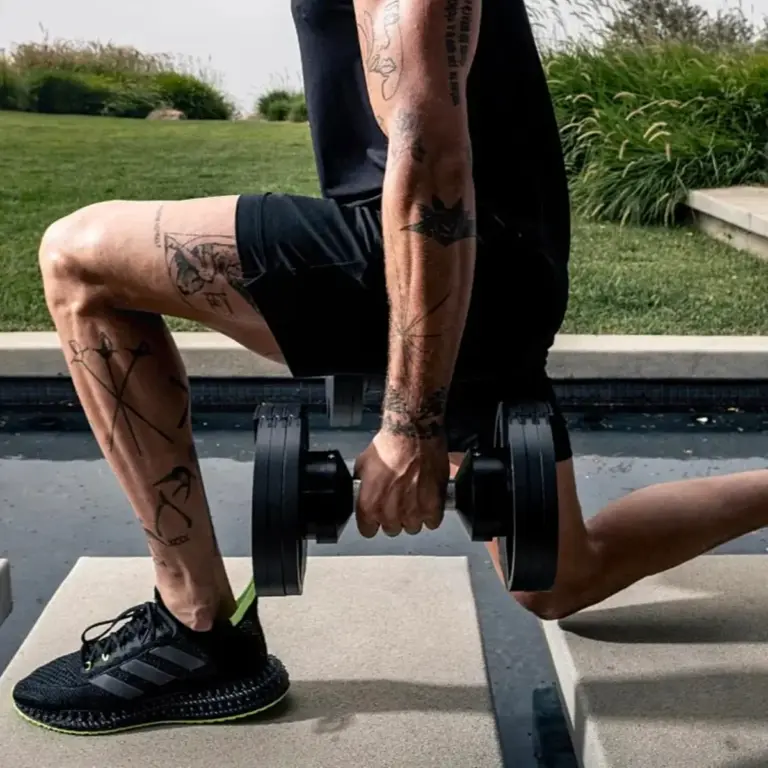
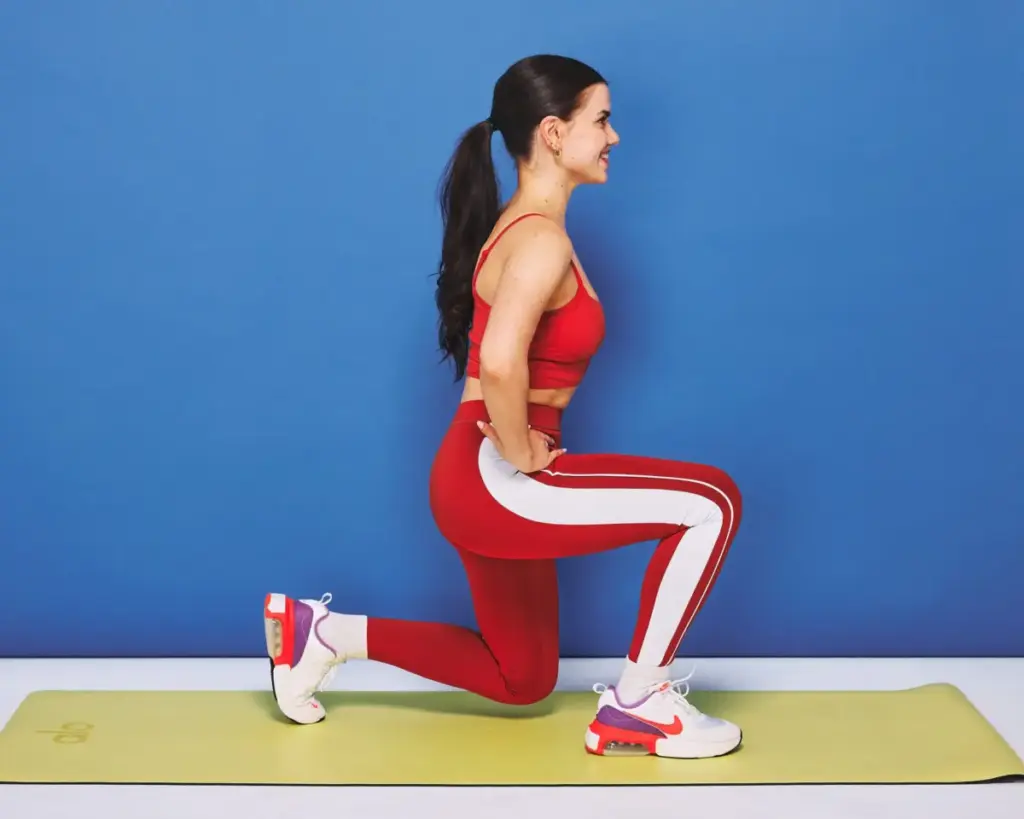
Taking the concepts of the step-up a step further, the forward lunge introduces momentum deceleration, making it slightly more complex.
- The Mechanics: Stand tall, take a deliberate step forward with one leg, and drop your hips toward the floor until both knees form roughly 90-degree angles. You must actively control the forward momentum of your body as your lead leg decelerates.
- Regression and Progression: If you find your knee wobbling uncontrollably from side to side during this movement, regress temporarily to a standard bodyweight squat until your foundational strength improves.
- Variations for Balance: Once comfortable, Solie suggests two distinct variations: keep your torso strictly vertical to emphasize quad activation, or hinge slightly forward at the hips to shift a greater load onto the glutes. These can be alternated across different training sessions.
3. The Lateral Lunge
Undoubtedly the most technically demanding of the trio, the lateral lunge challenges the knee across a different anatomical plane.
- The Mechanics: Step out laterally to the side, shifting your center of mass sideways while your knee flexes and extends. This requires "a lot more coordination," according to Solie, as the knee transitions through shifting force vectors.
- Execution and Cues: Maintain a proud chest and neutral spine. Ensure your working knee does not cave inward, your trunk does not sway excessively, and your hip does not pop awkwardly out to the side at the bottom of the movement.
- Regression: If dynamic side-to-side stepping proves too challenging initially, start with static lateral lunges—keeping your feet planted in a wide stance and shifting your weight from side to side without lifting your feet off the floor.
Programming for Progressive Overload
To turn these movements into a robust resilience-building protocol, Solie outlines a clear progression pathway:
- Phase 1: Bodyweight Circuit (The Starter Routine)
Perform the three exercises in a mini-circuit format. Execute each move continuously for 30 seconds, followed by 30 seconds of rest. Complete a total of 3 to 4 full rounds. This builds local muscular endurance and neuromuscular coordination without undue stress. - Phase 2: Introducing External Load
Once good form has been solidly mastered and bodyweight reps feel manageable, introduce external resistance in the form of dumbbells or kettlebells. Switch the programming to 3 sets of 15 to 20 repetitions per exercise. - Phase 3: Long-Term Adaptation
Over subsequent weeks and months, gradually increase the weight used while concurrently decreasing the repetition range. This progressive overload ensures that the quads, hamstrings, and hip stabilizers are continually challenged, fostering lifelong joint durability, athletic performance, and unwavering confidence in every step you take.