For decades, the luxury fashion ecosystem has danced around a paradox: the industry champions exclusivity, high craftsmanship, and avant-garde vision, yet relies heavily on a linear, resource-depleting model of production. Minimalism as an aesthetic philosophy has long been a staple of chic wardrobes—epitomized by clean lines, muted tones, and effortless silhouettes. However, true functional innovation within sustainable minimalism has historically struggled to marry ecological integrity with high-fashion allure.
Enter The Park, a rising star in the circular fashion landscape founded by Sarah Bonello in 2024. The brand is rewriting the rules of luxury apparel by turning industrial waste—ranging from discarded garments to the wood pulp of eucalyptus, spruce, and pine trees—into sleek, high-end staples. Stocked at premier luxury destinations like Moda Operandi and Net-a-Porter, and embraced by style authorities and A-list celebrities like Angelina Jolie, The Park proves that sustainability does not require a compromise on sophistication.
This comprehensive report examines how The Park is leveraging cutting-edge textile innovation, shifting regulatory landscapes, and a profound understanding of the modern woman’s bodily realities to pioneer a new era of conscious luxury.
Detailed Chronology: The Genesis and Rise of The Park
2024: The Launch of a Circular Vision
When Sarah Bonello established The Park in 2024, the luxury market was already saturated with brands claiming various degrees of environmental consciousness. Yet, consumers and editors alike were quickly fatigued by superficial "greenwashing." Bonello’s vision bypassed mere marketing talking points, focusing instead on deep, systemic circularity.
Rather than sourcing conventional virgin materials, The Park launched with a tightly curated edit of pieces produced to minimize or completely eliminate waste. From its inception, the brand positioned itself not as a niche eco-label, but as a serious contender in contemporary luxury ready-to-wear. By securing early placement in high-end global stockists like Net-a-Porter and Moda Operandi, The Park signaled to the fashion community that circular design is ready for prime time.
The Celebrity Seal of Approval
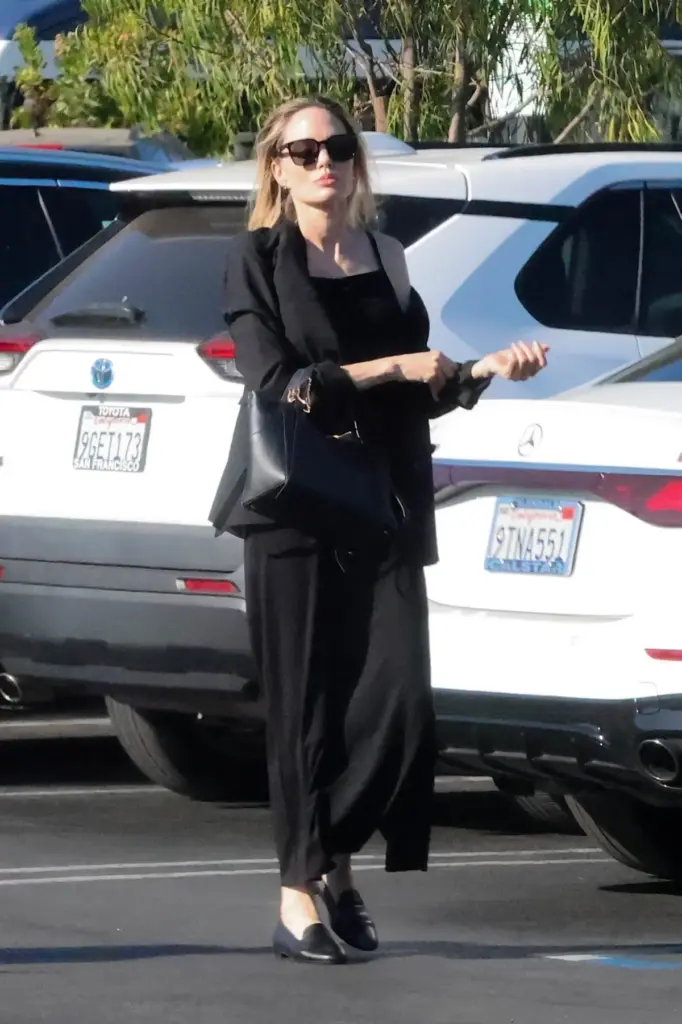
The true test of any contemporary ready-to-wear brand is its ability to transition from editorial spreads to real-world, high-profile wear. The Park cleared this hurdle early when superstar actress and humanitarian Angelina Jolie was spotted stepping out in Los Angeles wearing the brand’s signature pieces, such as the Alexandra dress. Jolie’s well-documented preference for timeless, understated black wardrobes aligns seamlessly with The Park’s design ethos. This organic celebrity adoption propelled the brand out of the conceptual shadows and onto the front pages of international fashion chronicles, cementing its status as a uniform for the modern, busy woman.
Supporting Context & Metrics: The Science of Next-Gen Fabrics
The secret behind The Park’s success lies in its radical material science. Traditional fashion relies heavily on resource-intensive virgin cotton, petroleum-based polyester, and toxic chemical treatments. In contrast, Bonello’s label partners with innovative textile laboratories—most notably the Madrid-based pioneer Pyratex—to deploy engineered fabrics derived from unconventional sources.
Core Fabric Breakdown
Power 3: A fully biodegradable fabric infused with natural wood pulp (including eucalyptus, spruce, and pine trees). It is remarkably cool to the touch and serves as the primary material for standout items like the Alexandra dress. Thanks to its moisture-absorbing Tencel-like properties, it pulls sweat away from the body while keeping skin dry and comfortable through fluctuating climates.
Rewear: This innovative textile taps directly into cotton-based waste streams, transforming discarded threads into a soft, luxurious, jersey-like structure that forms the backbone of the brand’s versatile separates.
Act 169: Serving as a circular alternative to virgin polyester, this material is forged from recycled plastic bottles and blended with high-grade elastane.
Engineered for the Evolving Body
One of the most revolutionary aspects of The Park’s design philosophy is its acknowledgment of the physical reality of women’s bodies. As Bonello candidly notes, a woman’s weight, hormonal fluctuations, and daily comfort needs shift dynamically.
"From one day to the next, my body changes," Bonello explains. "That 26-inch jean that fit yesterday might not fit tomorrow… That medium might need to be large after I [eat]. I don’t want my girl to have to think about that, because I don’t want to think about that."
By engineering stretch, flexibility, and intelligent recovery directly into high-end structural pieces like the Tessa long pants and Sheryl pencil skirt, The Park liberates wearers from the restrictive sizing paradigms of traditional luxury.
Pricing and Architectural Range
The brand’s pricing strategy reflects its high-touch manufacturing processes and commitment to durability. Entry-level pieces, such as minimalist tanks and lightweight camis, start around $135, while mid-tier separates range into the $300 to $500 bracket (e.g., the Alexandra Dress at $465, the Sheryl Skirt at $375, and Tessa Long Pants at $415). Heavy-duty foundational investments—such as tailored outerwear, structured knitwear, and evening gowns like the Edith Gown—peak around $895 to $995.
Official Statements and Industry Insights
The True Cost of Fashion
While many established luxury houses cite high transition costs as a primary barrier to sustainable production, industry leaders argue that this financial friction is an illusion born of hidden externalities.
Regina Polanco, CEO and founder of Pyratex—the textile innovator behind luxury collaborations with Dior, Loewe, and The Park—sheds light on this systemic flaw:
"A lot of synthetic and conventional materials look competitively priced today, but that price doesn’t reflect the real cost of how they’re made, nor the broader impact they can have on people and the environment," Polanco asserts.
Pyratex made waves across the industry by helping luxury icon Loewe debut a T-shirt engineered from recycled orange peels and citrus pulp. According to Polanco, the regulatory landscape is shifting at a pace the fashion industry can no longer ignore.
The Regulatory Horizon
The days of unchecked textile waste are numbered. According to Polanco, incoming regulatory frameworks within the European Union regarding supply chain traceability, chemical restriction, and extended producer responsibility (EPR) will render large swaths of current high-street and luxury inventories legally unsellable within the decade.
In this light, brands that were built from the ground up on circular frameworks possess a definitive competitive edge.
"The Park is actually a great example of the kind of brand that will endure," Polanco notes. "One that understands innovation isn’t a risk; it’s part of who they are."
The Power of Timeless Palettes
Despite her formal training in color theory at the prestigious Fashion Institute of Technology (FIT), Bonello anchors The Park’s seasonal collections in a restrained, foundational palette: deep blacks, crisp creams, rich navy blues, and warm chocolates, punctuated occasionally by a sophisticated seasonal bordeaux.
"The foundation of the brand is really supposed to be based upon timelessness," Bonello emphasizes. "The black dress that you’re gonna have for the next 20 years—it’s never going to go out of style if it’s the right silhouette in the right color."
Future Outlook: The Enduring Legacy of Circular Luxury
As consumer awareness deepens and regulatory bodies close loopholes on industrial pollution, the intersection of high fashion and sustainability will no longer be considered an alternative market segment—it will become the baseline standard for survival in the luxury sector.
The Park has successfully navigated the delicate tightrope between ethical production and uncompromising aesthetic desire. By eliminating the friction between comfort and couture, and by treating industrial waste as a precious resource rather than an afterthought, Sarah Bonello and her collaborators have mapped out a blueprint for the future.
Whether worn by Hollywood icons running Sunday errands or editorial directors navigating packed fashion weeks, garments crafted from wood pulp, recycled bottles, and post-consumer waste are no longer a futuristic novelty. They are the new standard of modern elegance. As Bonello’s daily uniform of Joy skirted leggings proves, when sustainability looks this effortless and feels this liberating, consumers will never look back.