Executive Overview
The modern cosmetics industry thrives on a delicate equilibrium: while makeup remains one of the most powerful tools for personal self-expression and creative exploration, it is fundamentally a multi-billion-dollar commercial enterprise. Behind the glossy, highly curated aesthetics of social media feeds lies a calculated mechanics of profit generation. For decades, beauty brands have successfully capitalized on human insecurities, manufacturing a constant stream of new "must-have" items designed to solve problems we didn’t know we had.
As the beauty landscape rapidly evolves—driven by the democratization of content creation on TikTok, Instagram, and YouTube—consumers are constantly bombarded with innovative, viral product launches. Yet, this relentless pace of product development has introduced an influx of questionable, highly specialized items onto the market. From color-changing sunscreens and peel-off lip tints to obscure specialty primers and single-use applicators, the modern consumer is facing unprecedented decision fatigue.
To separate genuine cosmetic innovation from fleeting internet fads, we consulted a panel of leading professional makeup artists and beauty industry insiders. Our investigation dives deep into the science, utility, and cost-effectiveness of today’s most hyped beauty products. The verdict? Many viral mainstays are nothing more than clever marketing ploys designed to drain your wallet. Below, we break down what is actually worth investing in, what you should skip, and the expert-approved alternatives that will save you both time and money.
Detailed Chronology: The Rise of Algorithmic Beauty and the Product Lifecycle
To understand why our cosmetic bags are overflowing with redundant products, one must examine how the digital beauty economy operates.
Phase One: The Pre-Digital Era of Utility
Historically, the makeup industry operated on a linear model of expansion. Products were formulated to serve fundamental, broad-spectrum purposes: foundation to even skin tone, mascara to darken and lengthen lashes, and lipstick to add color. Innovation occurred slowly in research and development laboratories, heavily influenced by runway trends and seasonal shifts. Consumers bought staple items that lasted for months, and beauty education was largely passed down through magazines, counters, and word-of-mouth.
Phase Two: The Social Media and Micro-Trend Explosion
The advent of short-form video platforms fundamentally disrupted this traditional model. Algorithms favor novelty, visual shock value, and immediate transformation. Consequently, product development shifted away from utility and toward performative cosmetics. Items were no longer created simply to perform a job well; they were engineered to look mesmerizing on camera for a 15-second clip.
This shift birthed a wave of hyper-niche, highly visual products: color-changing liquids that morph upon friction, neon green correctors that look startling on camera, and peel-off treatments that provide ASMR-style satisfaction. However, as our panel of makeup artists reveals, the performance that captivates an algorithm rarely translates to the harsh, unforgiving reality of everyday life.
Supporting Context & Metrics: Unmasking the Culprits
We asked leading industry professionals—including Saffron Hughes, Scarlett Burton, Rose Gallagher, and Mira Parmar—to evaluate the most prominent viral beauty trends. Here is what they had to say about products that promise the world but underdeliver in practice.
1. Color-Changing Sunscreens and Moisturizers
- The Hype: Widely circulating on TikTok and endorsed by select skinfluencers, "universal" color-adapting sunscreens and moisturizers claim to utilize smart pigments that dynamically match your exact skin tone while offering broad-spectrum UV protection and light coverage.
- The Reality: While the chemical reaction looks impressive under ring lights, professional makeup artist Saffron Hughes warns against the real-world application. "Color-changing sun and moisturizing creams frequently result in an ash-grey cast or an entirely inaccurate undertone," Hughes notes, highlighting how disproportionately this affects consumers with deeper skin tones. Furthermore, dermatological consensus dictates that relying on tinted sunscreens for UV protection is inherently flawed. Most consumers fail to apply the requisite amount of product (the standard "two-finger rule") needed to achieve the labeled SPF rating.
- The Expert Alternative: Apply a dedicated, high-SPF broad-spectrum sunscreen as your base layer, followed by a lightweight, reliable skin tint when you require coverage.
- Top Picks: MAC Strobe Dewy Skin Tint (approx. €39.00) or Fenty Beauty Eaze Drop Blurring Skin Foundation (approx. €38.45).
2. Green Color-Correcting CC Creams
- The Hype: Viral color-correcting (CC) creams utilize green pigments to neutralize redness across the entire face, promising an effortless, porcelain complexion.
- The Reality: Makeup artist Scarlett Burton challenges the indiscriminate use of these products. While color theory dictates that green cancels out red, applying a green-tinted cream across the entire face—rather than pinpointing localized blemishes—results in a flat, dull, and profoundly grey complexion.
- The Expert Alternative: Reserve color-correcting pigments exclusively for active blemishes or localized flare-ups, rather than treating your entire face as a canvas for chromatic correction.
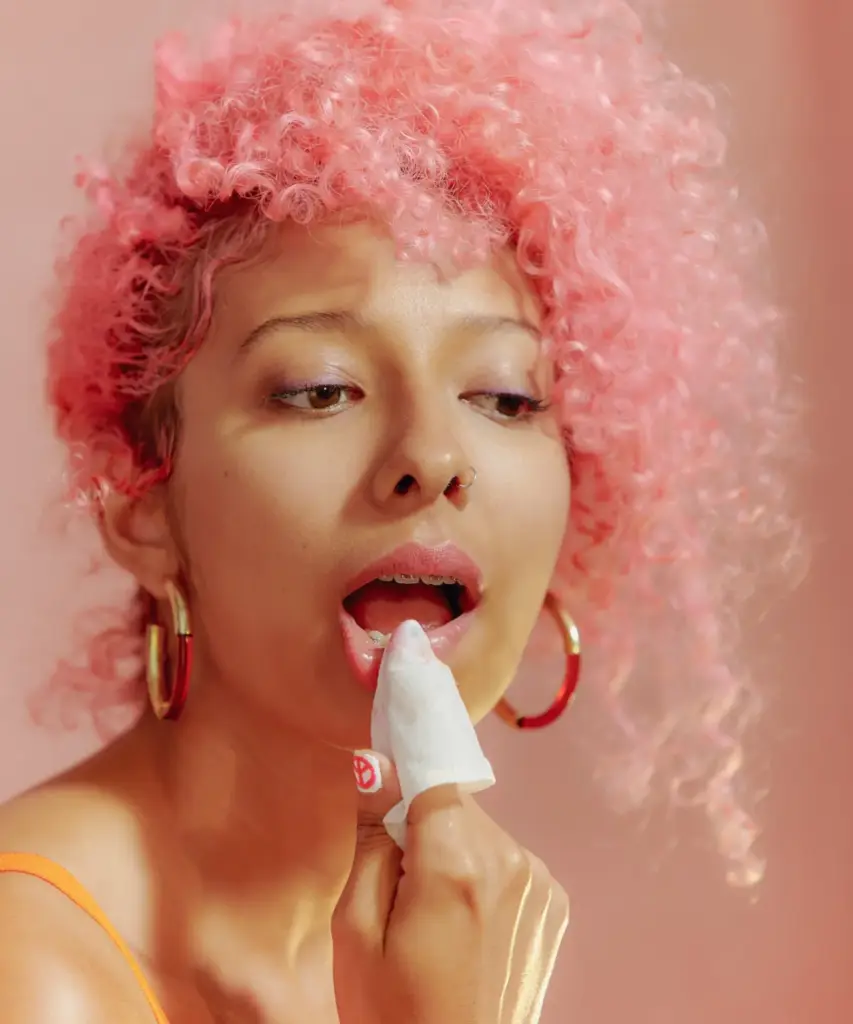
3. Peel-Off Lip Tints
- The Hype: Gaining massive traction via satisfying ASMR application videos, peel-off lip taints require users to paint a thick, often bizarrely colored gel onto the lips, let it dry, and physically peel it off to reveal a stained tint underneath.
- The Reality: Beauty journalist and makeup artist Rose Gallagher dismisses these as purely performative content-creation tools. "Nobody rushing through their morning routine benefits from a peeling lip tint—especially when there are lightweight, beautiful alternatives that deliver identical results without the mess or the risk of micro-tearing sensitive lip skin," Gallagher states.
- The Expert Alternative: Opt for reactive or tinted lip balms that naturally enhance your lip color based on your skin’s unique pH levels.
- Top Pick: Givenchy Rose Perfecto Pink Irresistible (approx. €27.95).
4. Dedicated Freckle Pens
- The Hype: Fake freckles became a massive pop-culture staple, leading to a saturated market of specialized felt-tip freckle pens promising effortless sun-kissed aesthetics.
- The Reality: According to Scarlett Burton, dedicated freckle pens are notoriously unreliable. The formulas frequently bleed into the surrounding skin, losing their structural definition and drying down into an unnatural, orange-toned finish that screams artificial.
- The Expert Alternative: Skip the expensive, single-use novelty pens and raid your existing brow kit. A fine-tipped, cool-toned eyebrow pencil offers far superior control and longevity.
- Top Pick: e.l.f. Ultra Precise Brow Pencil (approx. €7.00).
5. Eye and Lip Primers
- The Hype: Brands market specialized primers specifically designed for the eyelids and lips, arguing that facial primers cannot safely or effectively be applied to these delicate zones.
- The Reality: Saffron Hughes debunks the myth surrounding eye primers, noting that the vast majority of standard, high-quality face primers are rigorously tested and completely safe for use around the eye area. They smooth texture, blur imperfections, and extend makeup wear just as effectively. Similarly, makeup artist Mira Parmar challenges lip primers, noting that their purported ability to dramatically increase lipstick longevity lacks empirical backing.
- The Expert Alternative: Extend your regular face primer upward onto your eyelids. For the lips, a light dab of leftover concealer or foundation paired with a reliable lip liner provides an equally tenacious base for lipstick.
6. Makeup Sponges for Liquid Skincare/Hybrids
- The Hype: Using damp beauty sponges to blend every conceivable liquid product, from full-coverage foundations to ultra-thin skincare-infused skin tints.
- The Reality: Rose Gallagher points out an expensive flaw in this habit: sponges act like microscopic financial black holes. When used with watery, skincare-hybrid formulas, beauty sponges absorb massive amounts of product, forcing you to repurchase your favorite items twice as fast.
- The Expert Alternative: For lightweight, serum-like complexion products, revert to using your clean fingertips. Your skin absorbs zero product, ensuring your investment lasts significantly longer.
7. White Mascara Primers
- The Hype: Thick, chalky white primers applied before mascara to theoretically supercharge length and volume.
- The Reality: Saffron Hughes explains that these formulas frequently clump lashes together, creating an unnatural, spidery texture. Because the stark white base is notoriously difficult to fully coat with black mascara, users are forced to pile on excess layers of product. Modern mascara formulations are engineered to provide exceptional length, separation, and volume independently, rendering primers largely redundant.
- The Expert Alternative: Invest in high-performance mascaras that require no preparatory scaffolding.
- Top Picks: Lancôme Lash Idôle Mascara (approx. €21.95), benefit They’re Real! Lengthening Mascara (approx. €19.39), or Maybelline Lash Sensational Sky High Mascara (approx. €12.99).
8. Alcohol-Heavy, Expensive Setting Sprays
- The Hype: Luxury setting sprays marketed as the ultimate lock-and-seal mechanism for all-day wear.
- The Reality: Hughes advises consumers to read ingredient labels critically. Many popular setting sprays—particularly those promising an ultra-matte finish—are heavy on denatured alcohol, which aggressively strips moisture from the skin, leading to dehydration, irritation, and flaking. Paradoxically, the primary ingredient in most sprays is simply water, which can cause makeup to migrate if touched before fully evaporating.
- The Expert Alternative: Skip pricey water-and-alcohol mists and invest in finely milled setting powders that lock makeup in place without compromising skin hydration.
- Top Picks: Laura Mercier Translucent Loose Setting Powder (approx. €52.49), Charlotte Tilbury Airbrush Flawless Finish Powder (approx. €25.95), or the budget-friendly e.l.f. Halo Glow Setting Powder (approx. €9.00).
Official Statements & Industry Insights
As consumers grow increasingly financially conscious amid global economic pressures, the beauty industry is experiencing a quiet philosophical shift toward "skinimalism" and fiscal pragmatism.
Industry analysts note that viral fatigue is real. Consumers are tired of being sold 10-step routines where half the products perform overlapping functions. Professional makeup artists are increasingly positioning themselves as consumer advocates, stripping away the marketing hyperbole to focus on multi-functional, high-integrity products.
"The most sophisticated makeup kits are rarely the ones overflowing with single-use gimmicks," notes Saffron Hughes during our panel discussions. "True artistry relies on understanding product versatility—knowing how to make a brow pencil double as a freckle pen, or how a standard face primer can seamlessly protect and prep the delicate eyelid area. Brands want you to believe you need a different chemical compound for every millimeter of your face. You simply don’t."
Future Outlook: The Shift Toward Conscious Consumption
Looking ahead, the trajectory of the beauty industry points toward radical transparency and intentional purchasing. As augmented reality and AI-driven beauty consultation tools mature, consumers are becoming better equipped to evaluate whether a product serves a genuine biochemical or aesthetic need before making a purchase.
We anticipate several key developments in the near future:
- Multi-Functional Formulations: Brands will face increasing consumer demand for streamlined products that combine skincare, sun protection, and adaptive coverage without requiring supplementary primers or setting agents.
- De-escalation of Trend Cycles: The sheer velocity of TikTok-driven micro-trends is beginning to experience diminishing returns. Consumers are expressing fatigue over hyper-disposable products that end up in landfills after a single viral moment.
- The Rise of the "Skin-First" Pragmatist: Future beauty marketing will likely pivot away from artificial problem-creation (e.g., convincing consumers they need specialized lip primers or peel-off tints) and lean into skin health, longevity, and economic efficiency.
Ultimately, the most empowering beauty hack of all is critical thinking. By understanding the mechanics behind the marketing, consumers can curate a streamlined, highly effective collection that respects both their skin and their bank accounts.