Executive Overview
If you scroll through your timeline today, you are likely to encounter content that aggressively asserts itself as a "film," despite possessing zero theatrical distribution footprints, no box-office tracking, and no intention of ever premiering at an independent cinema house. Yet, these productions command millions of views, dominate cultural discourse, and pull in awards previously reserved for traditional television and cinema.
A couture gown here, a $300 artisanal bottle of perfume there, and at the absolute vanguard, a world-renowned celebrity or internet-breaking pop star hawking it all. Technically speaking, they are commercials. But the visionary directors, screenwriters, and stylists who bring them to life would never deign to use such a pedestrian term. Instead, they operate under a far more glamorous, evocative banner: fashion films.
While traditional 30-second spots and glossy magazine spreads will likely remain permanent fixtures in the portfolios of legacy luxury fashion houses, the sheer novelty and kinetic energy of the modern fashion film feel as expansive—and as breathtakingly expensive—as the global conglomerates behind them. A brisk, punchy 30-second spot is no longer sufficient to articulate the sprawling creative vision of a modern house like Valentino under Alessandro Michele. Today, telling a luxury brand’s story requires full-blown cinematic productions, complete with auteur directors, narrative arcs, and prestige Hollywood casting.
As streaming culture converges with social media algorithms and the relentless hunger for video content, fashion has effectively pivoted from selling clothes to selling cinematic universes. This is not merely an advertising trend; it is a fundamental restructuring of how luxury and mass-market brands communicate their values, build digital real estate, and convert passive scrollers into passionate brand loyalists.
Detailed Chronology: How Cinematic Advertising Captured the Runway
The evolution of the fashion film from an experimental arthouse marketing play into the dominant medium of luxury communication has accelerated at a dizzying pace. Over the past year, major fashion houses have systematically dismantled the traditional commercial playbook, replacing it with episodic storytelling, star-studded short films, and cross-platform narrative campaigns.
Spring and Summer: Narrative-Driven Debuts
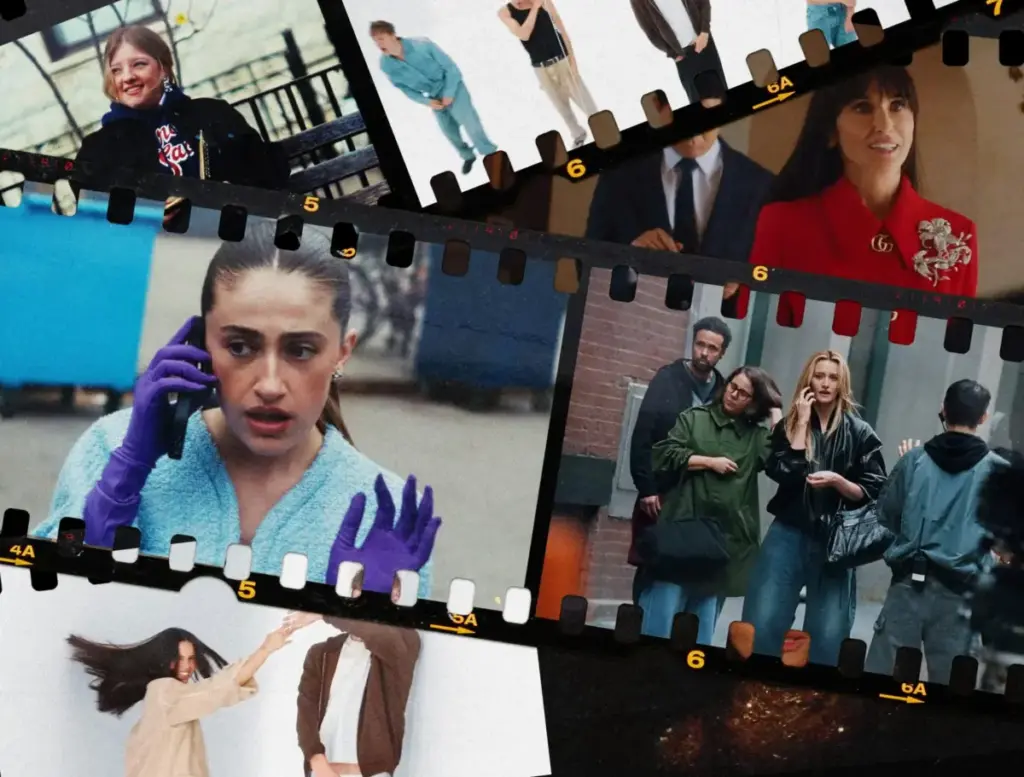
The trend’s current golden era truly found its footing back in May, when actress Sarah Pidgeon announced her high-profile entry into the Balenciaga universe with "A New York Minute." Conceived as a series of narrative-driven vignettes, the project doubles simultaneously as an unabashed love letter to New York City and a masterclass in product placement for the house’s iconic handbag lines. Written and directed by acclaimed filmmaker Celine Song, the shorts clock in at just over a minute, yet they manage to establish a distinct cinematic grammar that standard commercials simply cannot replicate.
Simultaneously, Marc Jacobs leaned heavily into meta-narrative storytelling, casting actors like Rachel Sennott to star in campaigns centered around high-stakes, hyper-specific existential dilemmas—such as a desperate, comical search for a coveted invite to the Met Gala. The blurring of fiction and reality reached its apex when Sennott ultimately wore Marc Jacobs to the actual gala, cementing the campaign’s universe in the real-world cultural zeitgeist.
Marc Jacobs continued this episodic momentum with "The Swap," a comedic, high-fashion chronicle tracking the cascading social fallout of Jemima Kirke and Rowan Blanchard experiencing a chaotic designer-bag mix-up.
Mid-Year Drops: Music, Mystery, and Metaphor
As the calendar turned toward summer, the crossover between prestige music and luxury houses yielded some of the most-watched fashion films to date. Chanel deepened its ongoing partnership with singer-songwriter Gracie Abrams, rolling out a sprawling two-minute-and-26-second fragrance campaign for Coco Mademoiselle Crush Absolu. In the film, Abrams successfully evades the prying Parisian press only to spend a clandestine night unwinding with locals at a gritty neighborhood hole-in-the-wall.
Meanwhile, Demna’s tenure at Gucci has been defined by a wholesale rejection of the conventional runway format. Instead of standard model walks, Demna marked his creative debut by premiering The Tiger, a 30-minute short film directed by Spike Jonze and Halina Reijn. This bold gambit was followed late last month by Gucci Primavera, a hypnotic four-and-a-half-minute short film starring supermodel Kate Moss reimagined as the world-weary lounge singer of a subterranean basement bar.
Even mass-market giants quickly caught on to the lucrative pull of the format. Gap captured the global cultural zeitgeist with its "Better in Denim" campaign starring global pop phenomenon Katseye. The ad became such a viral sensation that it secured a prestigious Webby Award and currently boasts over 81 million views on YouTube. Gap maintained this momentum by dropping hyper-minimalist yet deeply atmospheric video shorts starring breakout talents like Sienna Spiro, Malcolm Todd, and Inde Navarrette. Proving that you do not need an exorbitant budget to execute a successful fashion film, these campaigns relied on a simple formula: a blank white room, an ultra-zeitgeisty celebrity, an infectious track, and pure stylistic magnetism.
Supporting Context & Metrics: The Mechanics of Modern Engagement
To understand why fashion houses are reallocating millions of dollars from traditional media buys into narrative-driven short films, one must look at the psychological mechanics of modern digital consumption. We live in an era of hyper-saturation. Traditional advertising—such as static billboards in Times Square, rotating ads on municipal buses, or banner ads embedded in digital articles—suffers from chronic consumer blindness. Users have mastered the art of scrolling past or mentally tuning out passive marketing imagery.
Fashion films circumvent this psychological defense mechanism by weaponizing narrative.
The Psychology of "Unskippable" World-Building
A structured narrative film is exponentially harder to scroll past than a standard product advertisement. By structuring a campaign around character arcs, dramatic tension, and cinematic world-building, brands achieve something remarkable: they invite the everyday consumer into the hallowed halls of high luxury without ever having to compromise their ultra-exclusive pricing models.
Consider the economic barrier to entry: a consumer might not have the disposable income to purchase a $2,000 pair of designer sunglasses or a $4,000 leather tote bag. However, a free, gorgeously produced two-minute narrative film hosted on YouTube or Instagram Reels is universally accessible. It provides the psychological rush of luxury consumption and emotional alignment with the brand identity, entirely free of charge.
The Viral Ripple Effect
Furthermore, the distribution ecosystem of the modern internet heavily favors this medium. Even if a consumer misses the initial brand drop on their personal feed, they are virtually guaranteed to encounter clips, breakdowns, or reaction videos generated by the aggressive army of pop-culture aggregation accounts fighting to be the first to break the news.
When you combine this with the casting strategy of dropping two, three, or four buzzy, cross-industry celebrities into a single campaign—often filmed separately and edited together through the magic of post-production—brands create a veritable marketing feast. It generates endless fodder for fan theories, TikTok analysis videos, and digital column inches.
Official Statements and Industry Insights
Behind the shimmering surface of these cinematic campaigns lies a deeply calculated shift in global marketing expenditures. Industry insiders, brand executives, and cultural critics agree that the transition from flat-lay advertising to narrative filmmaking represents a permanent maturity phase in digital luxury branding.
Speaking on the shifting paradigms of digital luxury communication, prominent fashion marketing analyst Dr. Aris Thorne notes:
"We have crossed a threshold where consumers no longer buy products based on utility or even simple aesthetic desire; they buy into mythologies. When a brand produces a four-minute short film with an auteur director, they aren’t just selling a handbag. They are selling an entire lifestyle, an attitude, and an alternate reality that the consumer desperately wants to inhabit. In a video-first society, narrative is the ultimate currency."
Creative directors leading these legacy houses echo this sentiment, emphasizing that the traditional runway show—while still a vital cultural ritual—is too fleeting for the digital age. A physical show lasts twelve minutes and is seen live by a few hundred elites. A fashion film lives forever in the digital ether, capable of being analyzed, paused, rewatched, and shared across continents by millions of viewers simultaneously.
Tommy Hilfiger’s recent marketing rollout for their Fall ’26 Only in New York cinematic campaign proved this thesis in real-time. The brand generated an astonishing volume of global earned media value and social media engagement—not necessarily because of the tailoring of the coats, but because the film featured a fleeting, three-second scene involving tight-knit cultural figures, instantly setting fan forums and fashion blogs ablaze. In a video-first society, that brief spark of narrative collision is all it takes to ignite the global conversation.
Future Outlook: Where Goes the Fashion Film?
As we look toward the horizon of digital marketing and luxury retail, the trajectory of the fashion film is clear: it is evolving from an occasional high-concept marketing stunt into the foundational backbone of brand identity.
Several key developments will likely define the next phase of this medium:
- Interactive and Branching Narratives: As streaming technology and social platform capabilities become more sophisticated, expect to see luxury houses experiment with choose-your-own-adventure style fashion films, where viewers can click on a character’s outfit mid-scene to alter the narrative path or instantly purchase items directly within the video player.
- The Rise of Auteur-Led Brand Studios: Major fashion conglomerates are beginning to establish internal cinematic production arms, hiring seasoned Hollywood screenwriters, cinematographers, and festival-circuit directors on retainer to ensure their brand storytelling matches the technical prestige of contemporary cinema.
- Immersive and Spatial Integration: With the maturation of spatial computing and augmented reality platforms, fashion films will inevitably transition from flat screens into immersive 3D environments, allowing consumers to step directly onto the virtual set alongside their favorite celebrity muses.
Ultimately, the fashion film has permanently altered the relationship between consumer and creator. It proves that in the modern attention economy, people do not just want to look at beautiful things—they want to be told a compelling story. And as long as style continues to demand narrative, 2026 will be remembered not just as a year in fashion, but as the year fashion officially became cinema.