Executive Overview
For nearly eight decades, the name Miss Dior has been synonymous with romance, luxury, and the quintessential French art de vivre. Promoted globally through generations of cinematic campaigns—most notably fronted by actress Natalie Portman—the fragrance is famously understood to evoke that intoxicating, singular sensation of "falling in love in the park." Yet, beneath the sparkling top notes of Provençal jasmine and rose lies a narrative far more profound than standard luxury marketing dictates.
The true origin of Miss Dior is rooted not merely in commercial enterprise, but in profound familial devotion, harrowing wartime resistance, and the unbreakable bond between haute couture’s most legendary visionary, Christian Dior, and his younger sister, Catherine. This comprehensive retrospective explores how a black rotary phone in a Paris atelier connected a designer to a decorated war hero, how a concentration camp survivor inspired the birth of a global icon, and how the legacy of "Caro" continues to breathe life into one of the world’s most enduring luxury empires.
Detailed Chronology: From the Cliffs of Normandy to the Paris Ateliers
The Shaping of a Horticultural Passion
Long before the House of Dior revolutionized post-war fashion with the "New Look," the Dior siblings—Christian and his sister Catherine, who was twelve years his junior—were shaped by an early life steeped in the natural world. Their mother, Madeleine, cultivated an exquisite, windswept rose garden perched atop the dramatic, salty cliffs of Normandy. This coastal sanctuary instilled in both Christian and Catherine an enduring, visceral passion for botany and floral cultivation.
While Christian’s path would wind through art galleries before finding its ultimate expression in fashion, Catherine’s life took a dramatically different trajectory as global conflict engulfed Europe.
Coup de Foudre and the French Resistance
The year 1941 marked a permanent fracture in the tranquility of European life, yet it also brought an unexpected encounter for Catherine Dior. According to historian Justine Picardie, author of Miss Dior: A Wartime Story of Courage and Couture, Catherine experienced a coup de foudre—love at first sight—with Hervé des Charbonneries. The two met while Catherine was attempting to procure a battery-operated radio to listen to clandestine, banned news broadcasts.
Charbonneries was an active participant in F2, a high-stakes French Resistance network operating with close intelligence ties to both British and Polish authorities. Recognizing her daring resolve, he recruited Catherine into the underground collective. Operating under the code name "Caro," she became an invaluable intelligence operative. Her dangerous work involved gathering critical tactical information that would ultimately aid the Allied invasion of France.
Catherine’s clandestine service, however, came at an immense personal cost. She was eventually captured, brutally interrogated, and imprisoned in the Ravensbrück concentration camp. Her survival of the camp stands as a testament to her extraordinary resilience, earning her multiple medals of honor from grateful European governments in the post-war era.
The Reunion and the Birth of a Fragrance
Following the liberation of Europe and the closure of the camps, Christian and Catherine reunited in Paris. The designer, who had endured excruciating anxiety over his sister’s fate, was profoundly affected by her return. In his memoirs, Christian Dior confessed that upon her homecoming, "an unhappy chapter of my life has ended."

Biographers and fashion historians have long theorized that Catherine’s survival and safe return provided Christian with the emotional ballast and psychological permission he desperately needed to launch his independent fashion career. Step one of this grand vision was the formulation of his very first perfume.
Conceived in collaboration with perfumer Paul Vaucher, the formulation was built upon a foundation of Provençal jasmine and rose—the beloved flowers of their youth—alongside lily of the valley, a bloom Christian famously favored and would routinely sew into the hemlines of his couture wedding gowns.
Initially carrying the working title Corolle (French for flower petals), the destiny of the fragrance changed forever in an instant. As Picardie notes, Catherine walked into Christian’s Paris salon while a close friend of the designer was visiting. Upon seeing her, the friend exclaimed, "Tiens! Voilà, Miss Dior!" The iconic name was born on the spot.
Supporting Context & Metrics: The Anatomy of an Icon
The Debut and Botanical Legacy
On the historic day of Dior’s debut collection in 1947—the dawn of the revolutionary New Look—both "Miss Diors" were in attendance. The grand salon was deliberately saturated with the fresh scent of lily of the valley and the yet-unreleased perfume, casting an intoxicating olfactory spell over the fashion press and elite clientele.
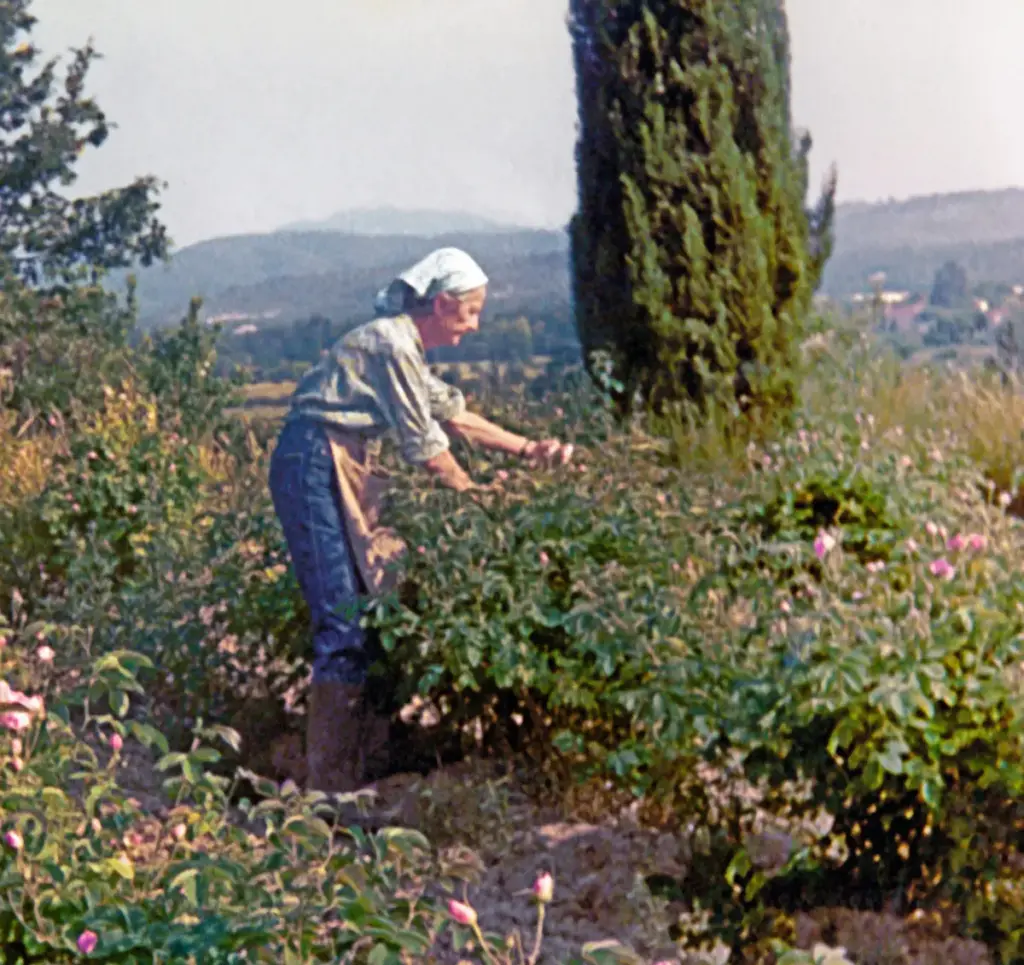
Following Christian’s untimely death in 1957, Catherine forged a peaceful, enduring chapter at Les Naïssès, a restored family estate situated near Grasse, the historical capital of French perfumery. In the sun-drenched fields of Grasse, Catherine spent decades cultivating the very same hot-pink roses she had known in her youth.
+-------------------------------------------------------------------------+
|                       THE MISS DIOR ECOSYSTEM                           |
+---------------------------+---------------------------------------------+
| Core Floral Notes         | Provençal Rose, Jasmine, Lily of the Valley |
+---------------------------+---------------------------------------------+
| Original Working Title    | Corolle (Flower Petals)                     |
+---------------------------+---------------------------------------------+
| Historical Muse           | Catherine Dior ("Caro", Resistance Fighter) |
+---------------------------+---------------------------------------------+
| Key Production Locale     | Grasse, France (Les Naïssès estate)         |
+---------------------------+---------------------------------------------+
| Modern Retail Baseline    | $115 USD (Standard Eau de Parfum tier)      |
+---------------------------+---------------------------------------------+
Today, those exact fields continue to yield harvests handpicked for distillation into contemporary iterations of Miss Dior. Modern consumers experience this heritage not only through the classic juice but through meticulously crafted seasonal updates, such as editions featuring the signature houndstooth bow produced by specialized artisans like Ateliers Faure. Laurent des Charbonneries, the grandson of Catherine’s wartime partner Hervé, has frequently recounted that Catherine wore Miss Dior daily until the end of her life, keeping a bottle perpetually stationed on her vanity table.
Official Statements and Archival Perspectives
The cultural weight of the Miss Dior lineage is continuously safeguarded by historians and brand custodians who recognize the human narrative encoded within the luxury flacon.
Frédéric Bourdelier, Heritage Director at Christian Dior Parfums, offers profound insight into the ethos of the brand’s inception:

"Christian had just two numbers on speed dial on his black rotary phone: One was for his Paris atelier, and the other for his sister, Catherine. When he asked Paul Vaucher to ‘make me a perfume that smells like love,’ he was channeling that deep familial bond."
Reflecting on Catherine’s place in history, Bourdelier emphasizes her embodiment of post-war rebirth:
"She was an archetype of this new generation. Miss Dior was the perfume of the young people, and especially this new woman post-war, who wanted to rebuild for a better world. To me, this is the best gift a brother can give to his sister. They dreamed together."
These sentiments are echoed by modern cultural ambassadors of the brand. Natalie Portman, who has represented the fragrance for over a decade, frequently describes the juice’s sensory mandate as the physical embodiment of "that ready-to-fall-in-love-in-the-park feeling." Yet, Portman and contemporary historians alike acknowledge that the lightness of the marketing campaign rests upon a bedrock of extraordinary wartime courage.
Future Outlook: Preserving Heritage in Modern Luxury
As the House of Dior navigates an increasingly digital and trend-accelerated global market, the institutional commitment to its founding mythos remains absolute. The deliberate integration of historical preservation—from the protection of the Grasse rose harvest fields to archival retrospectives detailing Catherine Dior’s service in the F2 resistance network—serves as a masterclass in modern luxury storytelling.
Consumers purchasing a bottle of Miss Dior today are not merely acquiring a prestige formulation retailing upwards of $115; they are participating in a living memorial. It is a tribute to a decorated war heroine who survived the darkest hours of the twentieth century, and to a visionary couturier who immortalized her spirit in jasmine and rose.
As long as the fields of Grasse bloom every May and the iconic houndstooth bow graces the shoulders of the glass flacon, the legacy forged by Christian and Catherine Dior will endure. Long live Miss Dior.