Executive Overview
The pursuit of a brighter, whiter smile is as ancient as civilization itself, yet modern consumerism has transformed it into a multi-billion-dollar global industry. From charcoal-infused toothpastes lining pharmacy aisles to high-intensity laser treatments performed in luxury dental clinics, the methods for achieving pearly whites are as diverse as they are numerous. However, beneath the surface of aggressive marketing claims, aesthetic trends, and celebrity endorsements lies a complex biological reality. Teeth whitening is not merely a cosmetic cosmetic touch-up; it is a chemical procedure that interacts directly with the delicate structural matrix of human teeth.
To demystify the science of whitening, top dental professionals, cosmetic chemists, and industry researchers have provided unprecedented insight into how stains form, how active ingredients dismantle discoloration, and where the boundaries of safety lie. At the heart of this discussion is tooth enamel—a crystalline structure that, under a high-powered microscope, resembles a microscopic wire mesh or chicken wire. Stains become trapped within the intricate matrix of this wire, and the process of whitening is, fundamentally, an act of chemical extraction.
While over-the-counter (OTC) kits and professional in-office treatments share the same foundational chemistry—primarily utilizing hydrogen peroxide or carbamide peroxide—the application, concentration, and potential risks vary dramatically. Furthermore, not all discoloration is created equal. Surface stains caused by dietary staples like coffee, tea, and red wine respond exceptionally well to standard interventions, whereas deeper, intrinsic issues stemming from trauma, aging, or antibiotic use require entirely different protocols. As consumers increasingly turn to at-home solutions for convenience, dental experts emphasize a foundational rule: effective and safe whitening can only occur within the context of a healthy mouth.
Detailed Chronology & Evolution of Teeth Whitening
Understanding how we arrived at today’s sophisticated whitening regimens requires looking back at how dental aesthetics have evolved over time, transitioning from crude, abrasive methods to precise, science-backed biochemical applications.
Early History: Abrasives and Harsh Concoctions
Long before the advent of peroxide gels and blue-light LED accelerators, humans sought whiter teeth using whatever materials were available. Ancient civilizations, including the Romans and Egyptians, relied on abrasive powders made from crushed bones, oyster shells, and pumice, often mixed with vinegar or honey. While these early concoctions did manage to scrub away surface debris, they came at a catastrophic cost: they systematically eroded the protective tooth enamel, leading to extreme sensitivity, accelerated decay, and permanent dental damage.
The Mid-20th Century: The Accidental Discovery of Peroxide
The modern era of teeth whitening began serendipitously in the mid-century dental space. Dentists noticed that patients who were prescribed antiseptic peroxide-based rinses to treat gum inflammation and periodontal disease were experiencing an unexpected side effect—their teeth were becoming noticeably whiter. This observation shifted the paradigm of dental care from purely mechanical abrasion to chemical oxidation. Instead of scraping away the stain, researchers realized they could use chemistry to lift the color molecules out of the tooth structure safely.
The Late 1980s to 1990s: The Birth of At-Home Custom Trays
By the late 1980s and 1990s, professional dentistry capitalized on this discovery by introducing custom-fitted tray bleaching. Dentists would take impressions of a patient’s mouth, fabricate a flexible plastic tray, and provide a mild carbamide peroxide gel for overnight or daytime use at home. This period marked the democratization of whitening, allowing consumers to achieve clinical-grade results in the comfort of their living rooms.
The 2000s to Present: The Over-the-Counter Boom and LED Trends
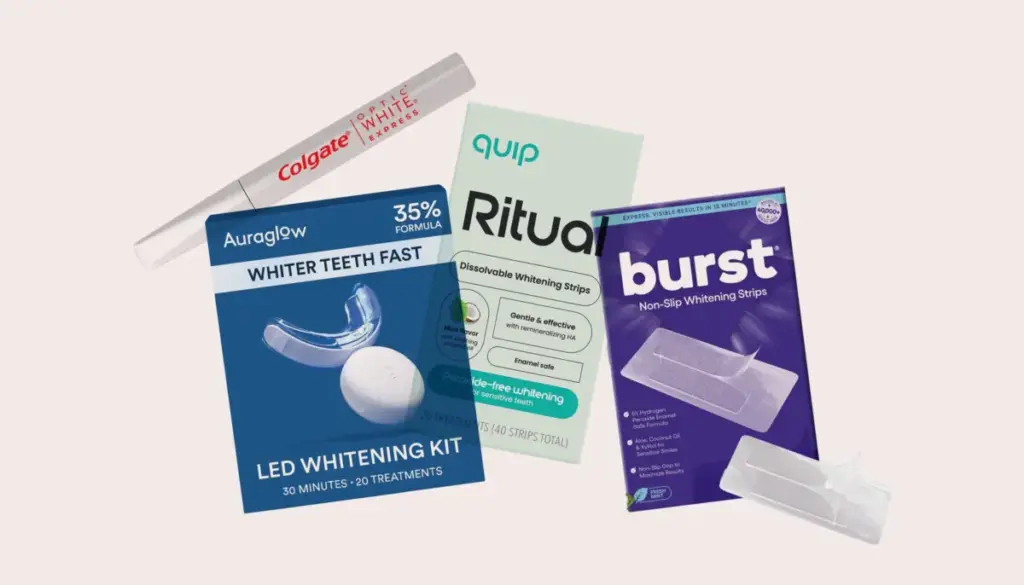
Entering the 21st century, the market exploded with over-the-counter alternatives designed to bypass the cost and time commitment of a dental visit. Whitening strips, paint-on pens, specialized toothpastes, and LED-accelerated kits flooded the retail space. Today, the conversation has shifted toward balancing rapid aesthetic gratification with long-term enamel preservation. As formulas become more stable and consumer awareness grows, the modern focus is heavily weighted on safety, efficacy, and pre-treatment dental diagnostics.
Supporting Context & Metrics: The Chemistry of Enamel and Peroxide
To truly comprehend how teeth whiten, one must examine the anatomy of a tooth and the chemical reactions triggered by whitening agents.
The Crystalline Matrix of Enamel
According to Dr. Matthew J. Messina, a board-certified, Ohio-based dentist and spokesperson for the American Dental Association (ADA), tooth enamel is fundamentally a crystal. "If you were to look at tooth enamel under a really powerful microscope, [the structure] kind of looks like chicken wire," Dr. Messina explains.
Enamel is the hardest substance in the human body, composed primarily of mineralized hydroxyapatite crystals arranged in tightly packed rods. Despite its density, it possesses microscopic spaces and pores. Over time, chromogens—pigmented molecules from food, beverages, and tobacco—seep into these microscopic channels, becoming trapped within the enamel matrix.
Removing these stains is remarkably similar to clearing dirt out of a wire mesh. "So what happens in whitening is we want to… open the matrix and bubble out that color, the stain, and then close it back up," says Dr. Messina. This is where peroxide enters the equation.
Hydrogen Peroxide vs. Carbamide Peroxide
The active agents responsible for this "color bubbling" are oxygen-releasing compounds: hydrogen peroxide or carbamide peroxide.
- Hydrogen Peroxide: This is a powerful oxidizing agent that breaks down into water and oxygen free radicals. These free radicals penetrate the enamel pores and oxidize the large, pigmented stain molecules, breaking them down into smaller, colorless particles.
- Carbamide Peroxide: Frequently used in at-home kits, carbamide peroxide is essentially a stable complex of hydrogen peroxide and urea. "Carbamide peroxide is used because it’s a comparatively stable compound," notes Dr. Hadaegh, a prominent cosmetic dentist. "This helps the manufacturer to ensure product quality and consistency at the consumer’s end." When applied, carbamide peroxide breaks down slowly, releasing about a third of its concentration as active hydrogen peroxide over an extended period.
In addition to these active ingredients, over-the-counter products typically incorporate various formulation agents designed to improve viscosity, shelf-life, and taste, ensuring a palatable user experience.
Official Industry Standards: In-Office vs. Over-the-Counter Treatments
While both professional dental treatments and retail kits utilize peroxide chemistry, a significant divergence exists regarding concentration levels, application precision, and safety protocols.
The Concentration Factor
The primary difference between an in-office clinical treatment and an over-the-counter whitening strip or gel is the concentration of the active peroxide agent.
Dr. Messina highlights the clinical rationale behind this disparity: "If we’re doing something where we can mask off the gum tissue… where the gum tissues are protected, we can use a stronger whitening agent… because it’s only touching the teeth."
In a controlled dental office environment, practitioners utilize specialized rubber dams, light-cured gingival barriers, or custom isolation gels to shield the soft tissues of the mouth. Because the gums are completely insulated from the caustic agent, dentists can deploy high-concentration hydrogen peroxide formulas (often ranging from 25% to 40%) that deliver dramatic, immediate results in a single visit.
Conversely, over-the-counter products must be formulated for unsupervised public use. "Something you’re using over the counter has the potential to touch the gum tissues or be swallowed," Dr. Messina notes. "So, we have to use a much lower strength of the active ingredient because… it might burn [the patient’s] gum tissues."
Performance and Maintenance Parity
Despite the massive variance in concentration, dental experts assert that consumers can achieve comparable long-term results using either method, provided they exercise patience and discipline.
"All over-the-counter, peroxide-based whiteners will deliver comparable results as long as you follow the manufacturer’s instructions for use," Dr. Messina advises. A standard protocol involves daily application for 7 to 10 days to jumpstart the whitening process, followed by a maintenance phase of once every week or two to combat new surface staining.
Expert Insights: Diagnostics, Candidacy, and Limitations
Navigating the vast array of whitening products requires more than just picking a box off a shelf. According to leading dental and cosmetic experts, proper patient selection and professional screening are critical to avoiding adverse outcomes.
The Prerequisite: A Healthy Mouth
Before initiating any whitening regimen, a professional dental examination is non-negotiable. Dr. Palani, a leading dental expert, stresses that whitening should be approached with caution. "Tooth whitening is something that should only be done in a healthy mouth situation," he notes.
If a patient has undiagnosed cavities, active periodontal disease, or exposed root surfaces, applying a peroxide-based bleaching agent can cause excruciating pain, chemical burns, and deep tissue damage. Furthermore, whitening should ideally follow a professional dental cleaning. As Dr. Messina points out, cleaning the teeth first ensures that the peroxide is interacting directly with the enamel rather than wasting energy oxidizing external tartar or calcified plaque buildup, yielding vastly superior results.
Categorizing Stains: Yellow vs. Gray and Banded Discoloration
Not all dental discoloration responds uniformly to chemical bleaching.
- Extrinsic Yellow Stains: These surface-level discolorations are typically caused by lifestyle factors—such as regular consumption of coffee, tea, red wine, and dark berries—or are simply a natural side effect of aging as the enamel thins and exposes the yellowish dentin underneath. According to Dr. Huang, these root causes "respond very well to whitening."
- Intrinsic Gray and Banded Stains: Dr. Kairouz notes that graying teeth or teeth exhibiting horizontal banded staining present an entirely different clinical challenge. These deep-seated flaws often stem from systemic antibiotic use (such as tetracycline in childhood) or physical trauma to the tooth structure. "These are much more difficult to address," Dr. Kairouz explains, noting that stubborn, deep discoloration is best evaluated and managed directly by a professional in a clinical setting.
The Downside: Sensitivity, Enamel Wear, and Existing Dental Work
While modern formulations are safer than ever, consumers must be aware of potential drawbacks. At-home whitening can temporarily elevate tooth sensitivity and irritate the gingiva. Overuse can exacerbate existing dental issues, such as exposed roots or gum recession, and can even thin the enamel if instructions are blatantly ignored.
"Overuse can add to that sensitizing effect by thinning the enamel on your teeth," warns Dr. Kairouz, adding that excessive bleaching can even "leave teeth looking grayer at the edges instead of brighter." Experts recommend taking a mandatory break of one to two weeks between complete courses of whitening products.
Crucially, consumers must remember that chemical whiteners have zero impact on restorative dental work. "Teeth whiteners won’t have any effect on veneers, bonding, crowns, or fillings," Dr. Huang emphasizes. "Whitening must be done with your current dental work in mind or be part of your new design."
Future Outlook & Shopping Considerations
As the beauty and dental industries continue to converge, the future of teeth whitening is leaning heavily toward smart home-care technology, customized formulations, and rigorous editorial vetting.
Shopping Smart: Shelf Life and Ease of Use
When navigating the crowded landscape of retail beauty and oral care, practical considerations matter just as much as chemical formulas. Dr. Palani advises that the single most important factor when shopping for an over-the-counter kit is ease of use. If a product is overly complicated or messy, compliance drops, leading to suboptimal results.
Additionally, consumers must pay close attention to product integrity. "You want to make sure that the product you buy has a good shelf life and store the product properly in the refrigerator to last longer," Dr. Palani adds, noting that peroxide compounds degrade over time when exposed to heat and light.
Rigorous Vetting and Editorial Standards
In an era where digital marketplaces are flooded with unverified white-label beauty trends, consumer advocacy groups and media publications play a vital role in separating legitimate science from marketing gimmicks.
When evaluating products for top-tier beauty and wellness roundups, editorial teams—such as those at Allure—approach testing from every conceivable angle. This investigative process involves:
- Scrutinizing ingredient lists and verifying brand claims against peer-reviewed scientific and medical literature.
- Consulting multidisciplinary experts, including board-certified dermatologists, cosmetic chemists, and practicing dentists, to vet formulas for safety and efficacy.
- Testing products across a diverse spectrum of primary categories: performance, packaging, ingredient quality, safety profiles, and tangible results.
- Ensuring that testing panels reflect a wide array of ages, skin tones, dental histories, and personal needs to guarantee that recommendations are universally safe and effective.
Conclusion
The journey to a brighter smile is a harmonious blend of art, biology, and chemistry. By understanding how peroxide interacts with the crystalline chicken-wire matrix of tooth enamel, recognizing the boundaries between surface stains and deep intrinsic discoloration, and prioritizing professional guidance over blind consumerism, individuals can achieve a dazzling, healthy smile without compromising their long-term oral health. As technology marches forward, the golden rule remains absolute: true aesthetic beauty in dentistry begins with a healthy, well-cared-for foundation.