Executive Overview
In an era defined by radical transparency—where social media algorithms reward influencers for livestreaming their skincare routines, home renovations, and deeply personal life milestones—a curious counter-trend is quietly taking root. It’s called "perfume gatekeeping."
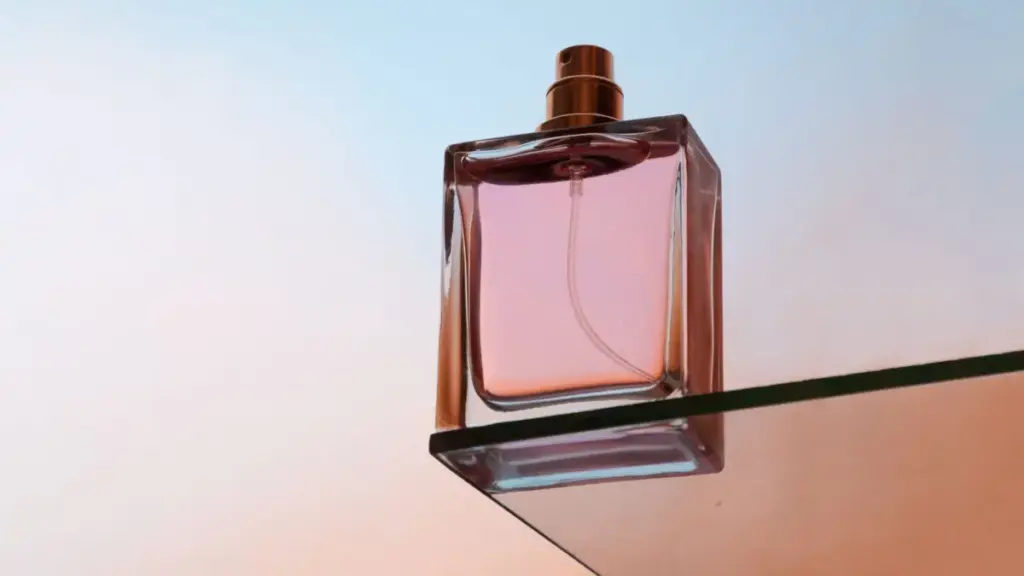
Picture this: You are watching a favorite beauty and lifestyle creator on TikTok or Instagram. They are in the middle of a polished "Get Ready With Me" (GRWM) video, applying their makeup, styling their hair, and finally reaching for a sleek glass bottle to mist their pulse points. Hundreds of thousands—sometimes millions—of viewers watch this ritual. Yet, the bottle is intentionally facing away from the camera, stripped of any visible label. Dive into the comment section, and you will find an army of frustrated followers typing variations of the same plea: "What perfume is that? Why won’t you just tell us?"
For many internet users, refusing to share the name of a signature scent crosses the line from playful mystery into deliberate, elitist gatekeeping. On TikTok alone, the hashtag #gatekeepingmyperfume has surpassed 33 million views, sparking intense debates across digital communities like Reddit and Fragrantica. Critics call these creators immature, overbearing, and selfish. Defenders, meanwhile, argue that in a digital ecosystem where every aspect of personal life is commodified and broadcasted to the masses, a signature scent remains one of the last bastions of true privacy.
This in-depth investigative feature explores the psychological, cultural, and commercial drivers behind perfume gatekeeping. We examine how individual identity, the fear of olfactory saturation (the "Santal 33 effect"), socioeconomic anxiety regarding luxury versus drugstore dupes, and the multi-billion-dollar fragrance industry collide in the modern digital age.
Detailed Chronology: From Real-World Exclusivity to Digital "Gatekeeping"
To understand why hiding the name of a fragrance has become such a lightning rod for controversy, we must first trace the evolution of the term itself and examine how perfume consumption has shifted over the past decade.
1. The Linguistic Evolution of "Gatekeeping"
Etymologically, "gatekeeping" has a long, established history outside of internet culture. According to the Cambridge Dictionary, gatekeeping originally referred to “the activity of trying to control who gets particular resources, power, or opportunities, and who does not.” Historically, this sociology and media studies term applied to institutional bottlenecks—such as who gets admitted to elite universities, published in academic journals, or represented in mainstream media—frequently resulting in the marginalization of vulnerable groups.
However, internet culture has a habit of co-opting and reshaping clinical terminology. According to the Urban Dictionary, modern digital gatekeeping describes “when someone withholds information, resources, or knowledge about a niche interest to prevent it from entering the mainstream.”
When applied to beauty and fragrance, gatekeeping transforms from a structural imbalance of power into a personal, interpersonal tug-of-war. Is withholding the name of an Eau de Parfum a harmless preservation of personal identity, or is it a petty display of online snobbery? Online sentiment is sharply divided. On dedicated fragrance forums like Fragrantica, threads titled "Your thoughts on people who keep their favorite perfume a secret?" routinely draw heated responses. While some users dismiss the practice as childish, others view it as an understandable defense mechanism against the relentless homogenization of trend culture.
2. The Rise of Viral Scents and the "Santal 33 Effect"
The urgency behind perfume gatekeeping is intrinsically linked to the democratization of taste via social media. When a fragrance goes viral on TikTok, its exclusivity vanishes overnight.
Consider the phenomenon of Phlur’s Missing Person Eau de Parfum. The scent achieved viral status on TikTok not merely because of its clean, skin-like aroma, but because of its emotional resonance. Marketed to evoke the comforting scent of a distant loved one, videos flooded the platform featuring creators tearing up upon first sniff. The emotional vulnerability attached to the product propelled it to unprecedented heights, resulting in a waiting list exceeding 100,000 eager buyers. Yet, once a niche fragrance accumulates a six-figure waiting list, it ceases to be an exclusive discovery.
A similar fate befell Maison Francis Kurkdjian’s Baccarat Rouge 540. Boasting a rich profile of bitter almond, jasmine, and saffron, the fragrance became a ubiquitous status symbol. For many early adopters, the magic of wearing such a striking scent evaporated the moment they smelled it in the subway, at the gym, and across crowded restaurant dining rooms.
As one beauty enthusiast bluntly put it during a recent interview:
"It’s like showing up to a party wearing the exact same outfit as someone else. It’s embarrassing. I’d give my friends my last dollar, my clothes, my shoes, my handbags—anything they want. But do not ask me for my perfume."
Supporting Context & Metrics: Psychology, Identity, and Economics
Why do humans guard their scents so fiercely? Experts in psychology, perfumery, and consumer behavior point to several underlying factors governing our relationship with aroma.
1. Olfactory Identity and the Self
Unlike clothing or accessories, which are visually explicit and easily categorized by brand logos, fragrance is invisible, visceral, and deeply psychological.
Pia Long, co-founder of independent perfume house Olfiction Limited, notes that the protective instinct surrounding perfume is entirely understandable in an age of hyper-exposure.
"As a perfumer, I suppose I should be shouting from the rooftops that everyone must broadcast what they’re wearing," Long explains. "But I completely respect that not everyone wants to share their personal fragrance choice—whether online or in person."
Long emphasizes the deeply personal nature of scent. A carefully chosen fragrance serves as an olfactory extension of identity, communicating specific facets of a wearer’s personality before a single word is spoken. In a globalized market dominated by algorithmic trends and fast beauty, a signature scent represents a rare island of individuality.
2. The Illusion of Exclusivity
While gatekeepers often act as though their chosen scent is a well-guarded secret known only to an enlightened few, industry experts argue that absolute exclusivity is largely a myth.
Marina Barcenilla, founder of AromAtom: The Smell of Space, points out the mathematical reality of modern manufacturing:
"Whether you buy a mass-market blockbuster or a hyper-niche artisanal blend, hundreds, thousands, or even hundreds of thousands of other people are wearing that exact same juice."
According to Barcenilla, the true uniqueness of a fragrance does not lie solely in the liquid inside the bottle, but in the wearer’s subjective interpretation and personal body chemistry. Because human skin carries a unique microbiome and natural pH balance, the exact same chemical formulation smells subtly different on every individual.
3. The Financial Taboo: High-End Luxuries vs. Budget Dupes
Another hidden driver behind perfume gatekeeping is socioeconomic anxiety. When someone refuses to name their fragrance, it is not always out of malice; sometimes, it is out of embarrassment regarding price points.
A small-scale survey conducted among urban beauty consumers revealed a surprising hesitation: many respondents admitted they felt uncomfortable disclosing the astronomical costs of their luxury perfume collections.
"I don’t want to be judged or shamed for spending a quarter of my monthly rent on a 50ml bottle of perfume," one respondent confessed.
Conversely, the market has seen an unprecedented explosion of budget-friendly "dupes"—affordable alternatives that mimic the olfactory profiles of high-end designer and niche fragrances. Retail giants and supermarket chains (such as Aldi’s Lacura line, known for mimicking Tom Ford, Yves Saint Laurent, and Mugler) have democratized access to luxury-adjacent scents, retailing for a fraction of the cost.
While dupes make luxury accessible to budget-conscious consumers during a cost-of-living crisis, they remain deeply controversial. Independent creators and luxury houses frequently criticize dupe manufacturers for capitalizing on the intellectual property and R&D of master perfumers—a practice Barcenilla equates to professional plagiarism. Consequently, whether a wearer is sporting a four-figure bespoke concoction or a budget supermarket dupe, the fear of judgment often leads them to keep the label hidden.
Official Statements & Industry Insights
To gain a holistic perspective on the intersection of social media culture and high perfumery, industry authorities weighed in on where the market is heading next.
- Eudora Nwasike, fragrance specialist at The Fragrance Foundation, highlights that the intense desire for personal distinction is directly fueling a massive boom in bespoke and customized perfumery for 2024. Houses such as Penhaligon’s (with their interactive fragrance profiling experiences), Ex Nihilo (featuring The Osmologue in-store custom blending stations), and the Experimental Perfume Club (empowering at-home alchemy) are capitalizing on consumers’ desperate need to wear something truly unique.
- Pia Long notes a positive shift toward relaxed, unpretentious fragrance appreciation: "Many people simply spray on whatever smells good to them today, without needing the scent to carry deep existential meaning. That is a wonderfully relaxed attitude to have."
However, for those who view fragrance as an intimate archive of memory and emotion, the stakes remain high. Nwasike reminds consumers that human body chemistry is the ultimate equalizer. If you are struggling to find a signature scent that cannot be easily replicated, she recommends fragrance layering—combining two or more distinct perfumes to construct an entirely bespoke, un-gatekeepable olfactory signature.
Future Outlook: The Balancing Act of Modern Fragrance Culture
As we look toward the future of the beauty and wellness industries, the tension between communal sharing and individual preservation is unlikely to fade.
Social media platforms will continue to incubate viral micro-trends, turning niche botanical extractions into global sensations overnight. Simultaneously, consumers will continue to push back against over-commercialization by fiercely guarding their personal discoveries.
Ultimately, whether you choose to proudly broadcast every single note in your fragrance wardrobe or firmly keep your favorite bottle wrapped in anonymity, the core truth of perfumery remains unchanged: scent is an invisible art form meant to evoke emotion, spark memory, and express identity. In the grand ecosystem of beauty, imitation may indeed be the sincerest form of flattery, but in the realm of modern fragrance, a little bit of mystery is priceless.
Disclaimer: This article contains independently curated affiliate links. If you purchase products through our embedded links, Refinery29 may earn a commission on sales, supporting our ongoing independent journalism.