Executive Overview
For anyone who has spent countless hours navigating the labyrinth of “SkinTok”—scrolling past endless videos of creators swearing that a newly discovered miracle ingredient completely transformed their complexion—the cycle of trial, purchase, and ultimate disappointment is a familiar one. You buy the viral serum, introduce it into your regimen, wait weeks for results, and realize that your skin looks precisely the same as it did before. The beauty industry has long thrived on this cycle of mass-market consumerism, relying on generalized formulations designed to cater to the widest possible demographic, regardless of individual physiological uniqueness.
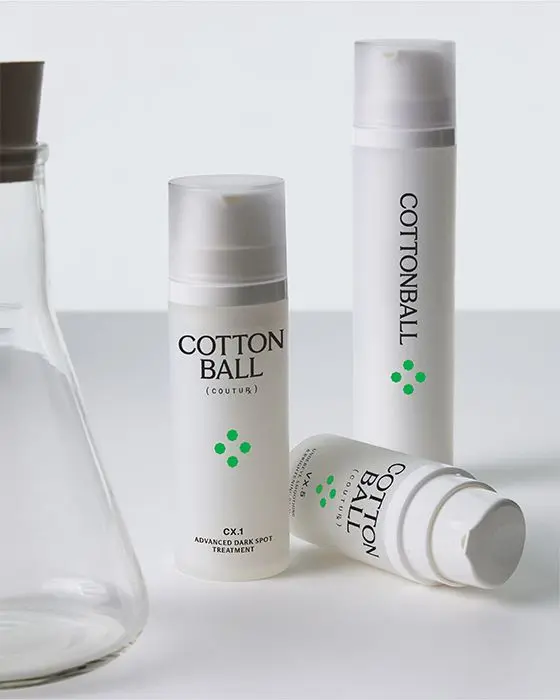
Enter Cottonball, a disruptive new entrant in the prescription-grade, personalized skincare space that is betting its entire business model on solving this exact frustration. Instead of forcing consumers to navigate the exhausting, costly trial-and-error process of mixing and matching over-the-counter products, Cottonball streamlines the bridge between clinical dermatology and daily beauty routines. The process relies on a digital triage system: users complete an extensive clinical intake quiz, a licensed dermatologist reviews the responses, and a licensed compounding pharmacy formulates a custom prescription-grade cream tailored precisely to the user’s biological needs.
As personalized medicine continues to revolutionize sectors from oncology to nutrition, dermatology is experiencing its own decentralized awakening. Brands offering custom topicals are no longer entirely novel, but Cottonball is positioning itself apart through the rigor of its intake process, the pedigree of its formulation chemists, and its emphasis on dynamic routine integration. To investigate whether the brand lives up to its clinical ambitions, I signed up for the platform, underwent the digital intake exam, analyzed the active ingredient architecture, and tracked the end-to-end user experience. This is an exhaustive report on what happens when prescription dermatology meets direct-to-consumer convenience.
Detailed Chronology: Step-by-Step Through the Cottonball Experience
Phase 1: The Clinical Intake Quiz
The journey begins not with a glossy product catalog, but with a questionnaire that feels remarkably similar to an intake form at a traditional, high-end dermatology practice. Eschewing the superficial, multiple-choice “skin type” categorizations typical of mass-market beauty brands (such as the rudimentary dry, oily, or combination checkboxes), Cottonball’s assessment digs deep into the root causes of dermatological friction.
The questionnaire is comprehensive, probing into specific skin concerns while actively measuring the psychological weight of those concerns—asking the user how severely each issue impacts their daily life. It systematically inventories:
- Environmental factors, including the precise climate and humidity levels of the user’s geographic region.
- Detailed histories of sensitivities, contact dermatitis, and historical allergic reactions.
- Past dermatological treatments and prior experiences with active pharmaceuticals.
Crucially, the quiz inventories your current skincare regimen. Users are prompted to select the specific products they currently use from a comprehensive, searchable drop-down menu. In testing the system, the algorithm successfully identified almost every product in my daily routine, with the exception of a single niche moisturizer. Because my routine is fluid—as I am constantly testing new formulations for journalistic evaluations—this minor gap posed no operational hurdle; I simply selected an alternative baseline product from the menu.
This inventory step is not merely a data-harvesting exercise; it serves a vital safety function. By mapping your existing routine, the reviewing dermatologist ensures that the newly prescribed compound will neither chemically clash with your current staples nor unnecessarily duplicate active ingredients (such as layering two high-strength retinoids, which can severely compromise the skin barrier).
Phase 2: AI-Powered Imaging and the Digital Exam
Following the questionnaire, the platform offers an optional step: uploading a makeup-free, high-definition selfie. Naturally, for the sake of a rigorous investigation, I opted in.
The platform’s analytical imaging tool scanned the image to evaluate cutaneous topography. It accurately detected fine lines and structural wrinkles around my eyes and mouth—a sobering, if entirely accurate, assessment that aligned precisely with my stated primary concerns. However, the diagnostic sweep also flagged under-eye dark circles and mild puffiness. While these were not features I could readily isolate in the uploaded photo—nor were they concerns I initially prioritized—I chose not to take the algorithmic critique personally. In dermatology, a proactive, hyper-thorough diagnostic exam often catches sub-clinical concerns before they manifest as major aesthetic grievances.
Phase 3: Dermatological Review and Formulation Architecture
Within hours of completing the digital intake, the data packet and images were reviewed and approved by a licensed board-certified dermatologist (in my specific case, Dr. Michael Krathen, a practicing dermatologist based in Natick, Massachusetts). Cottonball guarantees that all orders are evaluated within 24 hours, though practical turnaround times are often lightning-fast, frequently clearing within one to two hours.
The brand notes that if the algorithm or the reviewing physician flags red flags—such as conflicting medical histories, severe sensitivities, or complex presentation of symptoms—the doctor will directly intervene, requesting supplementary imagery, lab work, or a virtual consultation. In straightforward cases like mine, the workflow moves seamlessly toward compounding.
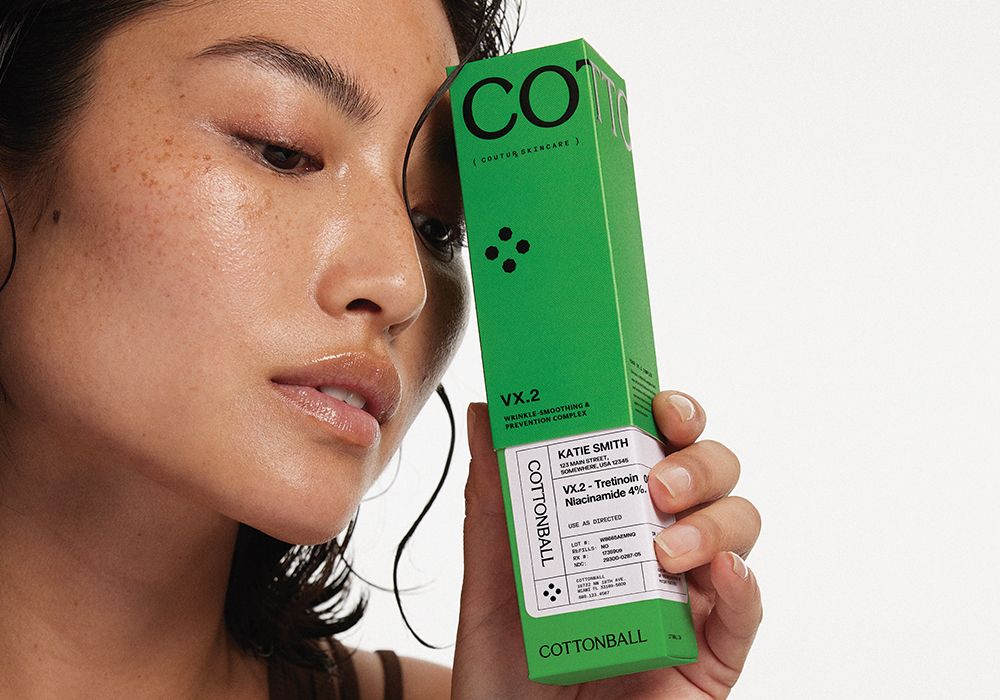
I was prescribed a custom-blended formula designated as VX.2. Based on my primary objectives—mitigating fine lines, subduing mild cutaneous redness, and refining the appearance of visible pores—the prescription incorporated a sophisticated matrix of heavy-hitting actives:
- Tretinoin: The gold standard retinoid for cellular turnover and collagen synthesis.
- Niacinamide: A multi-tasking form of Vitamin B3 known for barrier reinforcement and anti-inflammatory action.
- Matrixyl 3000: A well-researched peptide complex designed to stimulate extracellular matrix production.
- Hyaluronic Acid: A potent humectant for deep, multi-layer hydration.
- Provitamin B5 (Panthenol): A soothing agent to support healing and moisture retention.
Depending on individual patient needs, other prescription-strength ingredients deployed by Cottonball physicians include hydroquinone for hyperpigmentation and azelaic acid for rosacea and acne-prone skin—dosed at therapeutic quantities that are strictly unavailable over-the-counter.
Supporting Context & Metrics: Behind the Science and Supply Chain
To fully understand Cottonball’s market positioning, one must examine the infrastructure underpinning its formulations. Personalized skincare is frequently criticized by veteran chemists as a marketing gimmick—a single base cream pumped with arbitrary percentages of actives that may or may not remain stable when mixed together. Cottonball attempts to bypass this critique through structural formulation design.
The Small-Batch Compounding Model
Every custom prescription is mixed in small batches at a licensed compounding pharmacy. Rather than operating with an infinite number of custom bases, the brand utilizes a carefully engineered foundational base developed by legendary cosmetic chemist Ron Robinson.
Robinson, widely recognized as the mastermind behind Hailey Bieber’s viral skincare line, rhode, as well as his own clinically validated brand, BeautyStat, engineered the unifying base cream that anchors Cottonball’s entire lineup. This single, highly stable base is engineered to accommodate various combinations of active pharmaceuticals without destabilizing the emulsion or causing phase separation.
Rather than selling an ambiguous, catch-all "custom serum," Cottonball offers a small, highly disciplined lineup of foundational treatment profiles. Each profile is structured around a core dermatological objective—ranging from signs of biological aging and structural wrinkles to localized hyperpigmentation, stubborn dark spots, brightening, delicate under-eye care, and neck maintenance—before being individually tweaked to match the user’s specific quiz responses.
Financial Models and Tiered Pricing
Personalized, prescription-grade dermatology has historically carried an exclusive, luxury price tag. Cottonball attempts to democratize access through a straightforward direct-to-consumer pricing structure:
- Monthly Subscription: $70 per month for ongoing shipments of the custom formula.
- Multi-Month Commitments: A lucrative 30% discount is applied if consumers opt for a prepaid three-month supply. Shorter commitments, such as a two-month supply option, price out at approximately $90 per month.
- Logistical Perks: The brand absorbs shipping overhead, offering complimentary two-day expedited shipping on all active prescription deliveries.
Official Statements & The Patient Journey
Receiving the physical product is only half the battle in clinical skincare. The real test of a direct-to-consumer prescription brand lies in its post-purchase adherence support.
According to Cottonball’s executive leadership, the brand’s commitment to the patient does not terminate at the checkout screen. Once the custom formula arrives at your doorstep, patients gain 24/7 access to a dedicated support infrastructure. A core tenet of the brand’s philosophy is dynamic evolution: “As your skin changes, your formula changes with it.”
If a patient finds that their skin has adapted to a specific concentration of tretinoin, or if seasonal shifts cause increased dryness requiring a structural adjustment to the vehicle base, the medical and support teams facilitate rapid formula recalibration without requiring an entirely new intake protocol.
Furthermore, Cottonball integrates the new prescription directly into the user’s existing lifestyle architecture. During the onboarding process, the digital system notes the exact steps of your current routine. When the product ships, it arrives with a clear, personalized roadmap detailing precisely where the custom blend fits. For my specific regimen, the VX.2 formula was designated to be applied after lightweight hydrating serums and before a heavier occlusive night cream, ensuring optimal penetration without compounding irritation.
Future Outlook: The Evolution of Prescription Skincare
As we look toward the horizon of the beauty and wellness industries, the era of the one-size-fits-all moisturizer is rapidly drawing to a close. Consumers are increasingly educated, highly skeptical of marketing hype, and actively seeking clinical validation for the topical investments they make.
Brands like Cottonball represent a fundamental shift in how dermatological care is accessed. By leveraging telemedicine, algorithmic intake triage, and elite cosmetic chemistry, platforms of this nature successfully bridge the chasm between expensive, time-consuming in-office dermatology visits and ineffective, mass-market retail beauty counters.
For consumers who have long harbored curiosity about heavy-hitting, transformative prescription ingredients like tretinoin or hydroquinone—yet lack the calendar flexibility or financial appetite for traditional specialist appointments—this hybrid model offers a compelling, authoritative alternative.
While individual results will inevitably vary based on biological compliance, skin resilience, and adherence to sun protection, the underlying architecture of Cottonball’s system is built for success. For skeptics who remain hesitant, the brand underwrites its clinical confidence with a 90-day money-back guarantee, ensuring that if the personalized approach fails to deliver a healthy, luminous glow, the financial risk to the consumer is entirely mitigated. In an industry historically built on false promises, that level of accountability is perhaps the most refreshing ingredient of all.