Executive Overview
The modern skincare landscape is in the throes of a seismic shift. For decades, beauty routines have been dominated by potent, high-intensity actives designed to aggressively transform the skin. From cell-accelerating retinoids to brightening vitamin C serums and chemical exfoliating acids, achieving a youthful complexion often meant enduring a transitional period of flaking, redness, and compromised barrier function. Enter peptides: the sophisticated, deeply hydrating, and remarkably gentle biological messengers that are redefining anti-ageing science in 2026.
As consumers grow increasingly sophisticated—and increasingly cautious about over-exfoliating or irritating their skin barriers—the demand for high-performance ingredients that deliver dramatic results without the downtime has skyrocketed. Peptides have answered this call. Acting as microscopic biochemical communicators, these short chains of amino acids interface directly with skin cells, signaling them to behave like younger, healthier tissue.
Far from a fleeting marketing fad, the current peptide boom is anchored in robust dermatological science. As natural collagen production begins its inevitable decline around the age of 25—dropping by roughly 1% to 1.5% annually—topical peptides offer a targeted way to intercept the aging process. By supporting structural proteins like collagen and elastin, modern peptide formulations are helping millions achieve firmer, bouncier, and more resilient complexions. This comprehensive investigative report explores the biology behind the trend, expert insights from leading clinical specialists, and a curated breakdown of the definitive peptide products dominating the market this year.

Detailed Chronology: The Rise of Peptides in Modern Cosmeceuticals
To understand how peptides became the undisputed heavyweight champions of the 2026 skincare counter, it is essential to trace their evolution from a niche laboratory concept into a mass-market phenomenon.
The Early Decades: Discovery and Skepticism (1990s–2000s)
Peptides were not always a household beauty term. In the early days of advanced cosmeceuticals, formulators understood that proteins like collagen were too large to penetrate the skin’s outermost barrier, the stratum corneum. Consequently, early attempts to apply collagen directly to the skin yielded little more than superficial hydration.
The breakthrough came when scientists realized that while whole proteins couldn’t fit through the epidermal gate, breaking them down into smaller fragments—peptides—allowed them to slip between skin cells. During the late 1990s and early 2000s, the first generation of signal peptides, such as palmitoyl pentapeptide, entered the commercial market. However, formulation instability, high manufacturing costs, and a lack of consumer education kept peptides in the shadow of heavy-hitting retinoids.

The Formulation Renaissance (2010s)
As cosmetic chemistry matured throughout the 2010s, laboratories began synthesizing multi-peptide complexes that could remain stable in emulsions, serums, and creams. Brands specializing in science-first transparency began popularizing pure active ingredients. Consumers learned that not all peptides performed the same function; some signaled collagen synthesis, while others inhibited muscle contractions responsible for expression lines or accelerated wound healing.
The Barrier-Care Era and the 2026 Boom
By 2026, the cultural conversation around skincare underwent a profound pivot. Following years of widespread "skin barrier burnout" caused by the overuse of harsh chemical exfoliants and high-strength retinoids, consumers began prioritizing longevity, skin health, and barrier integrity.
Peptides emerged as the ultimate beneficiaries of this philosophy. Because they work harmoniously with the skin’s natural biological processes rather than forcing cellular turnover through irritation, they captured the imagination of both dermatologists and beauty enthusiasts. Today, peptides are no longer relegated to luxury anti-ageing creams; they are integrated into everything from budget-friendly serums to restorative eye treatments and daily moisturizers.

Supporting Context & Metrics: The Biology of Ageing and Amino Acids
To truly appreciate why peptide skincare is generating such monumental sales figures, one must examine the fundamental biology of human skin architecture.
The Collagen Deficit
Collagen is the structural scaffold of the human body. Making up a vast majority of the dermis, it provides the skin with its tensile strength, firmness, and bounce. Elastin, a complementary protein, allows the skin to snap back into place after stretching.
Unfortunately, human biology is programmed for gradual depletion. Beginning around the age of 25, the fibroblast cells responsible for manufacturing collagen slow down their output by approximately 1% to 1.5% every year. Environmental aggressors—such as ultraviolet (UV) radiation, atmospheric pollution, chronic stress, and glycation from dietary sugars—further degrade these vital protein networks. The clinical manifestation of this internal slowdown is familiar to everyone: fine lines, loss of facial volume, sagging contours, and a thinner, more fragile dermal matrix.

How Peptides Work at a Cellular Level
Peptides are essentially fragments of proteins. When specific amino acid chains are applied topically and penetrate the skin, they trick the dermis into believing that collagen has been broken down and needs to be replaced. This initiates a natural healing cascade, commanding fibroblast cells to step up production of fresh collagen and elastin fibers.
According to clinical dermatology, peptides are generally categorized into distinct functional classes:
- Signal Peptides: These act as messengers. Compounds like palmitoyl pentapeptide-4 instruct skin cells to synthesize new structural proteins, effectively reversing signs of structural fatigue.
- Carrier Peptides: Best exemplified by copper peptides, these molecules stabilize and deliver trace elements essential for enzymatic reactions, wound healing, and tissue repair.
- Neurotransmitter-Inhibiting Peptides: Often referred to as "botox-in-a-bottle" alternatives (such as argireline), these peptides block the chemical signals that cause facial muscles to contract, thereby smoothing out expression lines caused by smiling, squinting, and frowning.
Official Statements & Expert Insights
Industry leaders and clinical experts are unified in their praise for the current generation of peptide-infused formulations.

Mr. Hasaneen Al Janabi, Founder and Lead Injector at the Dr. Hass Clinic, highlights the specialized roles that different peptide families play in a comprehensive skincare regimen:
"The most common peptides used within skincare products are signal peptides like palmitoyl pentapeptide, which encourage collagen and elastin production," explains Mr. Al Janabi. "Meanwhile, copper peptides also help with wound healing, and neurotransmitter-inhibiting peptides like argireline help smooth wrinkles and fine lines caused by micro-expressions like smiling or squinting."
Dermatological researchers also emphasize that peptides represent a rare intersection of high efficacy and universal tolerance. Unlike potent retinoids, which often require a multi-week "retinization" period marked by peeling and sensitivity, peptides can be integrated immediately into almost any routine. They pair exceptionally well with hydrating agents like hyaluronic acid, soothing niacinamide, and protective antioxidants, making them suitable for rosacea-prone, sensitive, and mature skin types alike.

The Definitive 2026 Peptide Product Edit
Whether you are looking to invest in cutting-edge clinical complexes or seeking high-performance budget options, the current market offers exceptional choices. Here is a curated guide to the top peptide products currently driving the conversation.
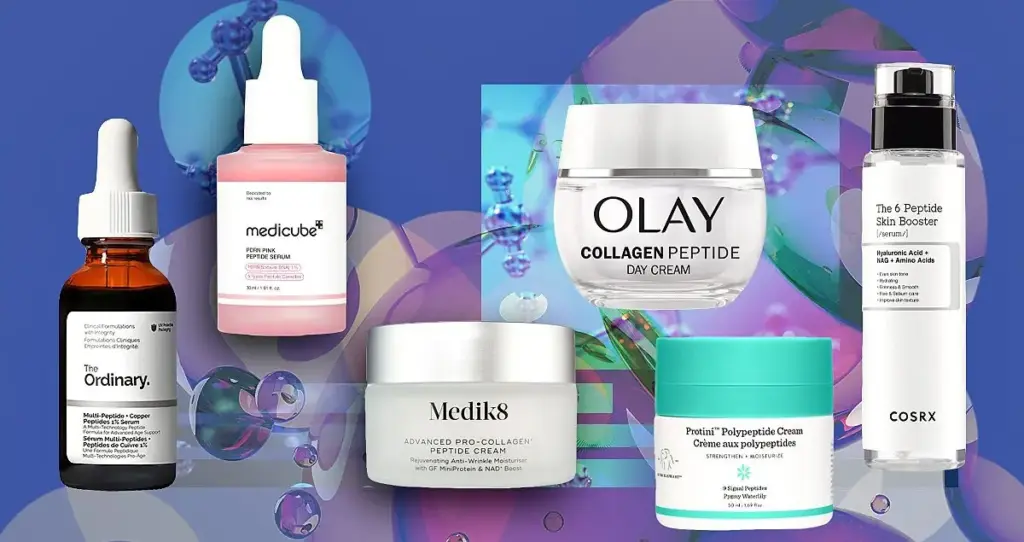
1. The Ordinary Multi-Peptide + Copper Peptides 1% Serum
- Price: £28.90 | Best For: Comprehensive multi-action repair and firming
- Overview: A powerhouse in advanced peptide technology, this formulation combines a sophisticated matrix of signal peptides with 1% pure copper peptides. Designed to target multiple signs of ageing simultaneously, it supports firmness, accelerates skin repair, and utilizes argireline to soften expression lines. Added hyaluronic acid ensures a surge of deep, surface-level hydration.
2. Drunk Elephant Protini™ Polypeptide Face Moisturiser
- Price: £62.00 | Best For: Luxurious, bouncy hydration and barrier reinforcement
- Overview: A undisputed cult-favorite in the luxury skincare space, this lightweight gel-cream delivers an intensive shot of nine distinct signal peptides. It supercharges collagen production while nourishing the skin’s moisture barrier, leaving the complexion noticeably bouncier, firmer, and re-energized without any heavy residue.
3. Beauty of Joseon Revive Eye Serum (Ginseng + Retinal)
- Price: £15.00 | Best For: Targeted undereye rejuvenation on a budget
- Overview: While primarily celebrated for its 2% retinal liposome and nourishing ginseng root extract, this targeted eye serum incorporates a robust peptide complex. It works synergistically to boost collagen production around the delicate eye contour while niacinamide tackles dark circles and pigmentation.
4. Olay Collagen Peptide Day Cream
- Price: £18.99 | Best For: Accessible, everyday anti-ageing care
- Overview: Proving that advanced science doesn’t have to break the bank, Olay’s bestselling day cream pairs a smoothing collagen peptide complex with deeply penetrating niacinamide. The formula encourages surface cell renewal while delivering antioxidant protection via Vitamin E.
5. Medicube PDRN Pink Peptide Serum
- Price: £24.00 | Best For: Radiant, glass-skin elasticity and tissue repair
- Overview: Standing out visually with its distinctive pink hue, this serum pairs a plumping multi-peptide complex with PDRN—a trending ingredient derived from salmon DNA known for accelerating cellular turnover and deep tissue repair. The result is an intensely radiant, bouncy, and youthful complexion.
6. Medik8 Advanced Pro Collagen+ Peptide Cream
- Price: £82.00 | Best For: High-end, intensive anti-sagging treatment
- Overview: For those seeking clinical-grade luxury, Medik8’s advanced cream targets deep-set wrinkles, loss of elasticity, and skin sagging. By combining a potent matrix of collagen, anti-ageing peptides, and an NAD+ longevity booster, clinical data suggests this formula can increase natural collagen production by up to an impressive 45%.
7. Byoma Longevit-8 Peptide Serum
- Price: £21.99 | Best For: Sensitive skin and budget-conscious barrier health
- Overview: A standout budget option that punches well above its weight class, the BYOMA Longevit-8 serum unites firming copper peptides with niacinamide and a proprietary Tri-Ceramide Complex. It improves elasticity and smooths fine lines while actively reinforcing the skin barrier, making it an ideal choice for easily irritated or rosacea-prone skin.
Future Outlook
As we look toward the remainder of the decade and beyond, the trajectory of peptide science points toward even greater customization and delivery precision.
Cosmetic chemists are currently exploring biomimetic peptides—molecules engineered to mimic specific human growth factors with unprecedented accuracy. Furthermore, advancements in delivery systems, such as advanced encapsulation technologies and microneedle-patch delivery, promise to transport these amino acid chains deeper into the dermis than ever before.

What is certain is that peptides have permanently altered consumer expectations. The era of accepting irritation as the price of admission for youthful skin has officially drawn to a close. By bridging the gap between clinical efficacy and gentle, barrier-friendly biochemistry, peptides have secured their place not just as a 2026 trend, but as a permanent cornerstone of modern dermatological health.