Executive Overview
For generations, the month of December was heralded by the simple, uniform pleasure of opening a small cardboard door to reveal a generic square of milk chocolate. Today, however, that nostalgic daily ritual has undergone a radical transformation. The modern Advent calendar market is a booming, multi-million-dollar seasonal retail juggernaut defined by luxury, hyper-specialization, and staggering diversity.
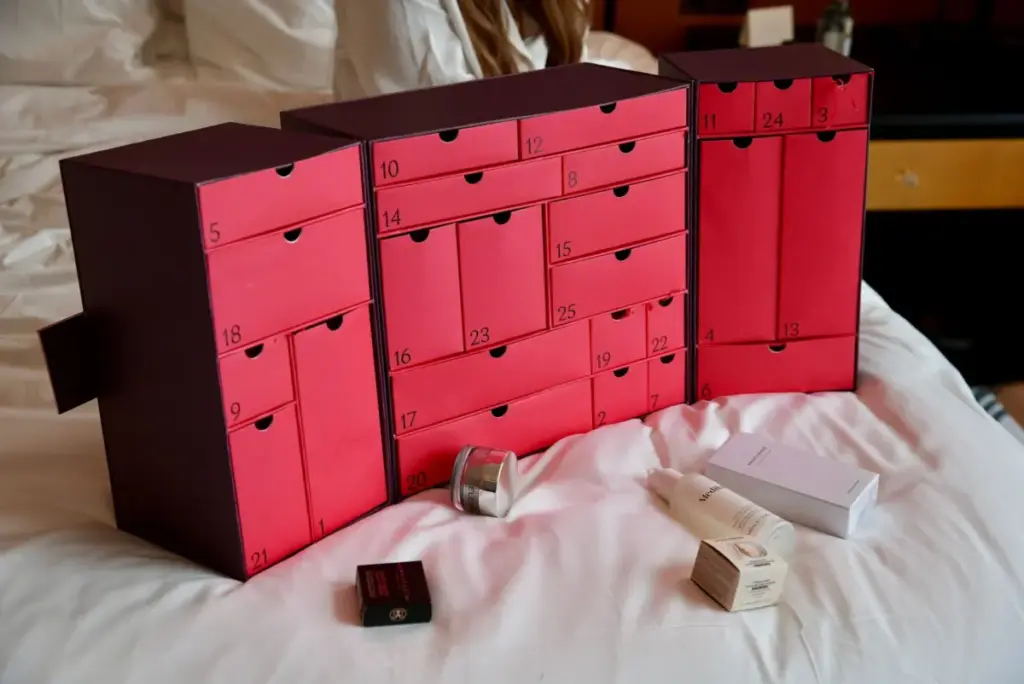
As consumers look for ways to personalize their holiday traditions, the market has expanded far beyond basic confectionery. Shoppers in 2025 can choose from gourmet jam selections, artisan cheese hampers, popcorn countdowns, high-end skincare, trending makeup, fine jewelry, LEGO sets, and even adult novelty items from brands like Lovehoney.
Behind this cultural shift lies a complex retail ecosystem driven by rigorous consumer testing, expert curation, and a growing consumer appetite for experiential holiday shopping. This report examines the fascinating origins of the Advent calendar, the meteoric rise of alternative countdowns, the meticulous criteria experts use to evaluate them, and what the future holds for this enduring festive tradition.
Detailed Chronology: How the Advent Countdown Evolved
To understand how the modern Advent calendar became a staple of contemporary holiday culture, it is necessary to trace its roots back more than two centuries. The timeline of the calendar’s evolution reveals a steady journey from austere religious observance to mainstream commercial phenomenon.
The 19th Century: German Protestant Roots
While many modern holiday traditions are eagerly claimed by various cultures, the Advent calendar is definitively rooted in 19th-century Germany. German Protestants sought tangible ways to mark the solemn and anticipatory season of Advent—the period leading up to Christmas Day.
Lacking printed materials or commercial goods, families improvised. Early practices included:
- Chalk Marks: Parents would draw 24 chalk lines on walls or doors, with children wiping away one line each day until Christmas Eve.
- The Lighting of Candles: Families lit a new candle each day on makeshift wreaths or burnt a special multi-sectioned candle down to a designated daily marker.
- Early Visuals: Some households hung small religious pictures on the wall day by day, combining visual art with the spiritual countdown.
The Early 20th Century: Printed Doors and Immigrant Trails
The transition from chalk and candles to paper occurred around the turn of the 20th century. The credit for the first printed Advent calendar is widely attributed to Gerhard Lang, a German printer who, as a child, had a mother who sewed 24 small biscuits onto a cardboard backing for him to eat day by day. As an adult in 1908, Lang produced a commercial calendar featuring 24 little colored pictures that could be glued onto a cardboard backing. By the 1920s, he introduced the iconic innovation that defines the format to this day: little cardboard doors that could be swung open to reveal hidden illustrations or Bible verses.
During the early 1900s, German immigrants brought these early traditions across international borders, introducing them to communities in the United Kingdom and the United States. However, widespread adoption was delayed due to paper shortages during World War II, which temporarily halted the production of cardboard calendars.
The Mid-to-Late 20th Century: Commercialization and Chocolate
The post-war era saw the commercial revitalization of the Advent calendar. By the mid-1950s, printed calendars were being mass-produced and heavily advertised in both the UK and the US, cementing them as a beloved secular-religious hybrid tradition.
A major turning point occurred in 1971, when British chocolatier Cadbury revolutionized the market by launching the first mainstream chocolate Advent calendar in the UK. This innovation merged the visual anticipation of the calendar with immediate, edible gratification, turning a daily paper reveal into a sweet treat. For decades, the chocolate calendar reigned supreme as the undisputed king of December countdowns.
The 21st Century: The Era of Hyper-Specialization
Fast forward to the 2020s, and the market has exploded. Ten years ago, finding an alternative to standard milk chocolate was a challenge for vegans, the lactose-intolerant, or those simply indifferent to sweets. Today, consumers are spoiled for choice.
Driven by the rise of "unboxing" culture on social media platforms like TikTok and Instagram, brands across every retail sector have realized the marketing power of the 24-day countdown. The Advent calendar has evolved from a children’s novelty into a sophisticated marketing vehicle for luxury brands, beauty conglomerates, and lifestyle labels.
Supporting Context & Metrics: Decoding the Modern Advent Market
The contemporary Advent calendar market operates on strict retail economics, consumer psychology, and meticulous product curation. To understand why these seasonal products command such intense consumer loyalty—and high price tags—we must examine the underlying metrics of how they are chosen, reviewed, and valued.
The Anatomy of a Quality Assessment
Reviewing Advent calendars is far more complex than simply opening and closing doors. Industry experts, such as the product testing teams at prominent lifestyle publications, employ rigorous evaluation frameworks to separate genuinely valuable holiday investments from overpriced marketing gimmicks.
When a new wave of Advent calendars arrives for testing ahead of the holiday season, testers score each product against four core pillars:
- Contents & Curation:
- Core Questions: Are the included items things consumers genuinely want and will use? Is there a balanced variety, or is there excessive repetition? What is the baseline quality of the products?
- The Expert Insight: Premium calendars must avoid "filler" products—cheap, low-value items included simply to pad out the 24-day count.
- Design & Aesthetics:
- Core Questions: Does the exterior stand out in a crowded market? What is the packaging quality, and did it survive transit without damage?
- The Expert Insight: Presentation is paramount. Because calendars often sit in prominent locations in the home throughout December, visual appeal and robust construction are non-negotiable.
- Ease of Use:
- Core Questions: Are the drawers or doors easy to open? Is the calendar simple to store? Can it stand independently, or does it require external support?
- The Expert Insight: Flimsy packaging that tears or jams during opening ruins the daily ritual, resulting in lower consumer satisfaction scores.
- Price and Value Proposition:
- Core Questions: What is the retail price, and do the contents exceed that value? What is the cost per day or per item? Are the products full-sized, or exclusively miniatures and sample sizes? Does the price feel justified compared to purchasing the items individually?
- The Expert Insight: The best beauty and lifestyle calendars often offer a total product value two to three times higher than the retail price, making them attractive investments for deal-savvy shoppers.
The Diversification of Tastes
Market data indicates that consumers are increasingly seeking personalization over uniformity. While traditional chocolate remains a massive seasonal seller, alternative categories have captured significant market share:
- Gourmet Food & Drink: Beyond standard chocolate, the market features luxury condiments, artisan cheeses housed in festive hampers, gourmet popcorn varieties, fine teas, and craft spirits.
- Beauty & Skincare: Beauty calendars allow consumers to sample prestige cosmetics, trending skincare serums, and luxury fragrances at a fraction of their standard retail cost.
- Fashion & Accessories: Jewellery calendars offer daily trinkets—such as rings, bracelets, and necklaces—providing a long-lasting fashion fix.
- Niche & Novelty: From LEGO sets that build into winter wonderlands to adult wellness items from brands like Lovehoney, the boundaries of what can be placed behind a calendar door have effectively vanished.
Official Perspectives & Expert Insights
Navigating the overwhelming sea of holiday options requires trusted guidance. Industry insiders emphasize that smart holiday shopping is less about buying into trends and more about strategic curation.
Sophie Donovan, a prominent shopping and lifestyle expert whose work has featured across leading publications including Glamour, Women’s Health, Men’s Health, and Cosmopolitan, has spent years decoding the seasonal gift market. Drawing on thousands of hours of product testing, press day drop-ins, and direct consumer insights, Donovan advocates for a shift away from mindless consumerism toward intentional gift-giving.
Reflecting on modern holiday fatigue during a live appearance on BBC Radio 4, Donovan challenged traditional gift-giving norms, suggesting that consumers collectively step away from predictable, obligatory purchases—such as routine sock restocks—in favor of meaningful alternatives. She champions experiential gifts, DIY holiday hampers, and thoughtfully curated bucket-list experiences that create lasting memories rather than seasonal clutter.
According to retail analysts, this philosophy reflects a broader macroeconomic trend: consumers are becoming more discerning. With household budgets under scrutiny, shoppers demand transparency, genuine value, and high utility from the seasonal products they purchase. Brands that fail to deliver authentic value within their Advent calendars—relying solely on clever packaging rather than quality contents—are increasingly exposed by rigorous third-party reviews.
Future Outlook: Where Is the Advent Calendar Heading?
As the holiday retail landscape continues to evolve, the future of the Advent calendar points toward hyper-personalization, sustainability, and technological integration.
1. Sustainability and Eco-Friendly Packaging
For decades, traditional Advent calendars generated significant waste through single-use plastics, excessive cardboard, and non-recyclable foils. In response to mounting consumer pressure and environmental regulations, manufacturers are rapidly pivoting toward sustainable design. Future calendars are increasingly built using fully recyclable cardboard, biodegradable inserts, and reusable wooden chests or fabric hanging pockets that can be refilled year after year. This shift not only appeals to eco-conscious consumers but also elevates the calendar from a disposable seasonal item into a cherished family heirloom.
2. Hyper-Personalization and Customization
The rise of direct-to-consumer e-commerce has paved the way for fully customizable Advent calendars. Rather than purchasing a pre-packaged box curated by a brand, consumers are increasingly buying empty, reusable calendar structures and filling them with bespoke items tailored specifically to the recipient’s tastes—whether that involves specific coffee pods, custom handwritten notes, luxury skincare samples, or miniature toys.
3. Phygital Integration
As augmented reality (AR) and QR code integration become standard across the retail sector, future Advent calendars are expected to bridge the physical and digital worlds. Imagine opening a door on December 12th to find not just a physical item, but a QR code unlocking an exclusive digital experience, such as a masterclass with a beauty founder, a private musical performance, or an interactive festive game.
Conclusion
What began as simple chalk marks on a 19th-century German wall has transformed into a sophisticated, highly competitive global retail category. The modern Advent calendar is no longer just a children’s countdown; it is a celebration of curation, luxury, and daily discovery. As long as consumers continue to seek moments of joy, surprise, and comfort during the darkest month of the year, the tradition of opening the daily door will remain an untouchable holiday cornerstone—continually reinventing itself for generations to come.