Executive Overview
The modern landscape of endurance sports is frequently dominated by austere narratives: tales of grueling pre-dawn wake-up calls, relentless self-flagellation, and an absolute rejection of comfort in the pursuit of athletic excellence. Yet, a quiet cultural shift is redefining what it means to be a modern runner. At the forefront of this movement is Hong, a Berlin-based graphic designer, international flight attendant, and veteran marathoner currently preparing for her seventh 42.2-kilometer race.
Hong’s journey dismantles the antiquated archetype of the suffering athlete. Rejecting the notion that high-level endurance performance requires misery, she has engineered a sustainable, joy-centric methodology that harmonizes a demanding dual-career, a vibrant social life, and rigorous marathon preparation. By prioritizing comfort, mental well-being, community connection, and holistic cross-training, Hong demonstrates that consistency and ease are not mutually exclusive.
This in-depth profile examines Hong’s meticulously structured weekly training routine, her philosophy on physical and psychological resilience, and the broader implications of her approach for the future of urban running culture. Through an exploration of her daily regimen—spanning interval tracks, canine-accompanied jogs, yoga, and community brunches—we uncover a blueprint for sustainable athleticism in an increasingly fast-paced world.
Detailed Chronology: A Week in the Life of a Comfort-First Marathoner
Balancing the erratic schedules of a commercial flight attendant with the creative demands of graphic design while logging high mileage is no small feat. Hong’s weekly routine is a masterclass in time management, self-awareness, and purposeful recovery.
[Monday: Playlist & Canine Pacing] ➔ [Tuesday: Yoga & Injury Prevention] ➔ [Wednesday: Cultural Pause & Travel]
                                                                                          │
[Sunday: Community Long Run & Dumplings] ◄ [Saturday: Urban Exploration] ◄ [Friday: Rest & Art] ◄ [Thursday: Track Intensity]
Monday: The Sonic Lifeline and Canine Companionship
The week begins with the friction familiar to millions: the temptation of the snooze button and the prerequisite dependency on morning coffee. As a designer and flight attendant, Hong’s weeks are inherently volatile. To combat potential inertia on Monday, she relies on her ultimate psychological tool: her running playlist.
"I don’t always listen to music when I run, but when I feel low-energy, it’s an absolute lifesaver," Hong explains. When fatigue threatens to derail her pace, she employs a clever self-regulation trick: she begins to sing. The act of vocalizing forces her to moderate her breathing, naturally slowing her cadence while injecting playfulness into the miles. Passersby frequently smile at the sight of the singing runner.
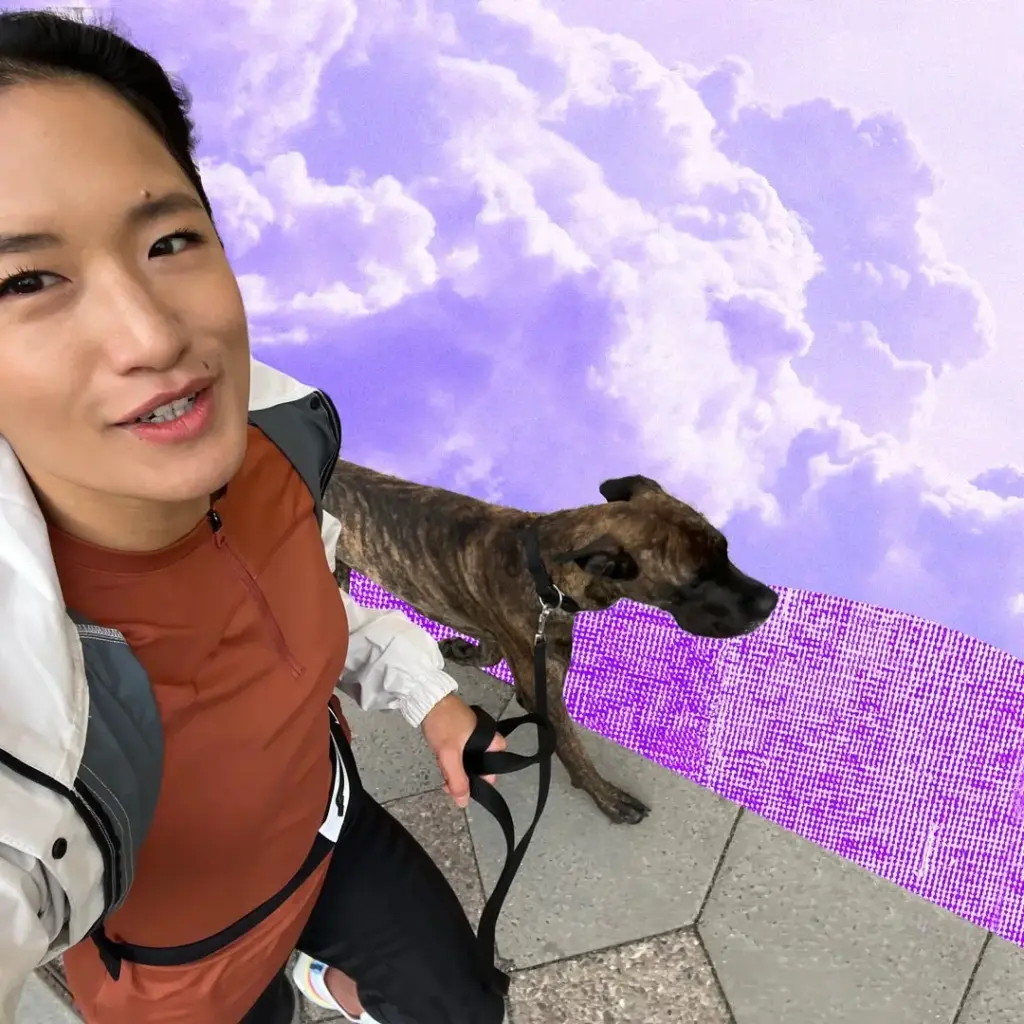
To spice up Monday’s mileage, Hong borrows a friend’s energetic dog, Mia. The canine companion introduces a dynamic interval element to the run. "In the beginning, she pulls me; at the end, I pull her," Hong notes. While the dog may hold the speed advantage, Hong wins on sheer endurance—a metaphor for her broader athletic philosophy.
Tuesday: The Architecture of Longevity—Cross-Training and Mobility
High-mileage running without supplementary conditioning is a direct path to the orthopedic ward. Tuesday marks a deliberate departure from the pavement. Hong substitutes her run for a dedicated yoga session, complemented by targeted strength training and periodic physiotherapy appointments.
This holistic conditioning trifecta provides the structural integrity required to push boundaries safely. By fortifying her musculoskeletal baseline, Hong ensures that her body can absorb the immense forces of high-intensity training without descending into chronic fatigue or debilitating injury.
Wednesday: Active Recovery and the Global Social Fabric
Wednesday serves as a strategic buffer. Recognizing that rest is an active component of athletic progression, Hong dedicates this day to her professional and social ecosystem. Given her frequent international travel as a flight attendant, maximizing face-to-face time with her Berlin network is a priority. Rather than grinding out a recovery jog, she opts for a cultural recharge, visiting a local art exhibition to feed her creative mind as a designer.
Thursday: Pushing Limits at the Track
Thursday shatters the myth that comfort-first runners shy away from hard work. Training for a marathon requires structural stress adaptations, and Thursday is designated for high-intensity track workouts.
Approaching the track with the same methodical care as her easy runs, Hong tests her anaerobic thresholds and pacing capabilities. On these demanding days, she relies on the Nike Invincible 3. "They give me a secure feeling on any terrain, and I love the bouncy sole," she remarks. The combination of high-stack cushioning and responsive foam mitigates the impact shock of rapid track loops, proving that technical gear plays a pivotal role in maintaining training comfort.
Friday: Mental Resets and Creative Exploration
Following Thursday’s track intensity, Friday is treated with respect. Aside from a gentle restorative yoga flow, Hong prioritizes recovery through urban exploration. Meeting friends to check out another gallery exhibition allows her to immerse herself back into the vibrant cultural pulse of Berlin after returning from a long-haul flight.
Saturday: The Meditative Urban Long Run
Saturday features Hong’s standard training artery: the picturesque route along the Landwehrkanal. Traversing a shifting mosaic of asphalt, grass, and occasional mud, this run serves as a moving meditation.
With an engaging true-crime or culture podcast in her ears—or sometimes complete silence to absorb the urban soundscape—Hong uses this time to detach mentally. She delights in observing the bustling weekend life of Berliners around her. True to her ethos, the run concludes with a well-earned ritual: a specialty coffee and a artisanal snack from a market stand in Kreuzberg.
Sunday: Community, Endurance, and Dumplings
The pinnacle of the training week occurs on Sunday, anchored by the Joy Run Collective. Long runs in the chilly air require careful sartorial preparation, but the social cohesion of the group transforms a grueling Tiergarten endurance effort into a shared celebration.
The physical challenge of the distance is immediately rewarded by the ultimate post-run social ritual: a group brunch. This week features homemade dumplings crafted by a fellow runner—a culinary incentive that Hong admits motivated her through the final kilometers of the route.
Supporting Context & Metrics: The Evolution of Modern Running Culture
To fully contextualize Hong’s narrative, one must examine the demographic and cultural shifts transforming endurance sports over the past decade. The global running boom, accelerated by urban wellness movements and technological advancements in footwear, has altered who identifies as a "runner."
The Demographics of the Modern Urban Runner
Historically, competitive marathon running was dominated by elite or hyper-focused amateur athletes operating under strict, often joyless regimens. Today, data from organizations like Running USA and European athletic federations indicate a significant surge in participation among creative professionals, women aged 25–40, and individuals balancing complex career paths.
- The Rise of the "Hybrid Athlete": Modern professionals increasingly reject the binary choice between career success and athletic achievement.
- Community-Led Growth: Independent running collectives (such as Berlin’s burgeoning underground and semi-formal clubs) have outpaced traditional athletic clubs, emphasizing inclusivity, mental health, and post-run socialization over strict pace-per-kilometer metrics.
- The Comfort Revolution: The footwear industry has responded to this cultural shift. The proliferation of high-stack, max-cushion trainers (exemplified by models like the Nike Invincible series) reflects a consumer demand for injury prevention and experiential comfort rather than minimalist, high-impact designs.
Hong’s Performance Metrics at a Glance
| Metric / Parameter | Hong’s Approach / Status |
|---|---|
| Current Training Phase | Preparation for 7th Official Marathon |
| Years Active | 4 Years |
| Age Milestone | Healthier and fitter at 30 than throughout her 20s |
| Weekly Composition | Mixed Terrain Runs, Track Intervals, Yoga, Strength, Physiotherapy |
| Primary Gear Choice | Nike Invincible 3 (Max-cushion, responsive foam) |
| Core Running Philosophy | "Consistency and comfort do not have to be mutually exclusive." |
Official Statements and Personal Philosophy
Hong’s transition from a self-proclaimed non-runner to a seasoned marathon veteran offers profound insights into habit formation and psychological resilience. Below are direct insights extrapolated from her philosophy on training, lifestyle integration, and athletic self-efficacy.
"I used to be one of those people who thought they weren’t a runner. Now, I’m training for my 7th marathon. I work out almost every day, and it is entirely essential to me that I feel comfortable while doing it. I like things cozy."
Reflecting on the psychological hurdles of maintaining a consistent training block amidst a demanding professional schedule, Hong emphasizes the dismantling of intimidation:
"Some people think marathon runners tumble out of bed at 5:00 AM and effortlessly knock out 20 kilometers. The truth is, I sometimes need an extra dose of motivation, too. That is why comfort is so critical for me—whether I am facing an easy recovery jog or a brutal track workout."
Perhaps her most resonant contribution to the discourse on adult athleticism centers on the redefining of age and personal capability:
"I started running four years ago. At 30, I am healthier and fitter than I ever was in my twenties. But running is so much more than physical training. As a runner, I’ve gained immense self-confidence because I now know how deeply I can push myself, even when I feel a bit low. I’ve learned a vital lesson: consistency and comfort do not have to be enemies. I can set new boundaries for myself while staying completely comfortable in my own skin."
Future Outlook: The Next Horizon
As Hong looks toward the starting line of her seventh marathon, her trajectory highlights a broader evolution in how urban dwellers interact with fitness. The traditional model of athletic endurance—characterized by ascetic self-denial—is rapidly giving way to a more sustainable, holistic paradigm.
Key Takeaways for the Modern Endurance Athlete
- Sustainability Over Suffering: Sustainable training blocks are built on recovery, enjoyment, and lifestyle integration, reducing burnout rates among amateur athletes.
- The Power of Community: Athletic ecosystems anchored by collectives (such as the Joy Run Collective) provide psychological safety nets that make daunting endurance milestones achievable.
- Gear as an Enabler: Innovations in footwear technology that prioritize impact reduction and sensory comfort allow a broader demographic of athletes to engage in high-mileage training safely.
For Hong, the finish line of her seventh marathon is not a final destination, but merely another waypoint in a lifelong journey of movement, creativity, and community. Her story serves as an authoritative reminder that anyone can become a runner—provided they are willing to lace up their shoes, embrace their own pace, and perhaps reward themselves with a warm dumpling at the end of the road.
Hong’s 3 Golden Rules for Maximum Running Enjoyment
For runners seeking to inject more joy, longevity, and sustainability into their daily routines, Hong distills her methodology into three foundational pillars:
- 1. Prioritize Footwear Comfort: Invest in reliable, supportive footwear (such as max-cushion trainers) that protects your joints and makes every stride feel secure across shifting urban terrains.
- 2. Curate Your Sonic Landscape: Build an intentional playlist—infused with disco, house, and techno—to serve as a psychological catalyst when motivation wanes.
- 3. Design the Full Experience: Pair scenic, mentally engaging routes with a deliberate post-run reward, transforming training from a solitary chore into a holistic sensory experience.