Executive Overview
As the digital curtain rose on Gamescom 2026, the global video game industry turned its collective gaze toward Cologne, Germany, for Opening Night Live (ONL). In an era defined by structural industry shifts, the demise of E3 has inadvertently crowned Gamescom as the undisputed heavyweight champion of annual gaming conventions. Hosted and produced by Geoff Keighley, the event has evolved from a regional trade expo into a marquee global stage where publishers reveal major pipeline updates, hardware roadmaps, and surprise announcements.
While ONL generally plays second fiddle to The Game Awards or Summer Game Fest in terms of earth-shattering industry disruptions, the 2026 showcase delivered an impressive, trailer-heavy broadcast. Highlights ranged from high-profile blockbusters—such as the final chapter of Square Enix’s legendary remake trilogy and a surprise remaster of a modern classic—to ambitious indie projects and experimental crossovers.
This year’s showcase proved that while traditional, stage-heavy presentations are taking a back seat to rapid-fire digital trailers, the appetite for high-end interactive entertainment remains insatiable. As the industry navigates rising development costs, shifting platform strategies, and cross-generation transitions, Gamescom 2026 served as a vital weather vane for where interactive entertainment is heading through 2027 and beyond.
Detailed Chronology of the Showcase
The two-hour broadcast wasted little time on protracted executive speeches, opting instead for a brisk, relentless cadence of trailer reveals. While the lack of deep on-stage demonstrations drew some critiques from attendees accustomed to traditional keynotes, the sheer volume of software updates kept viewers transfixed.
The Crown Jewel: Final Fantasy 7 Revelation
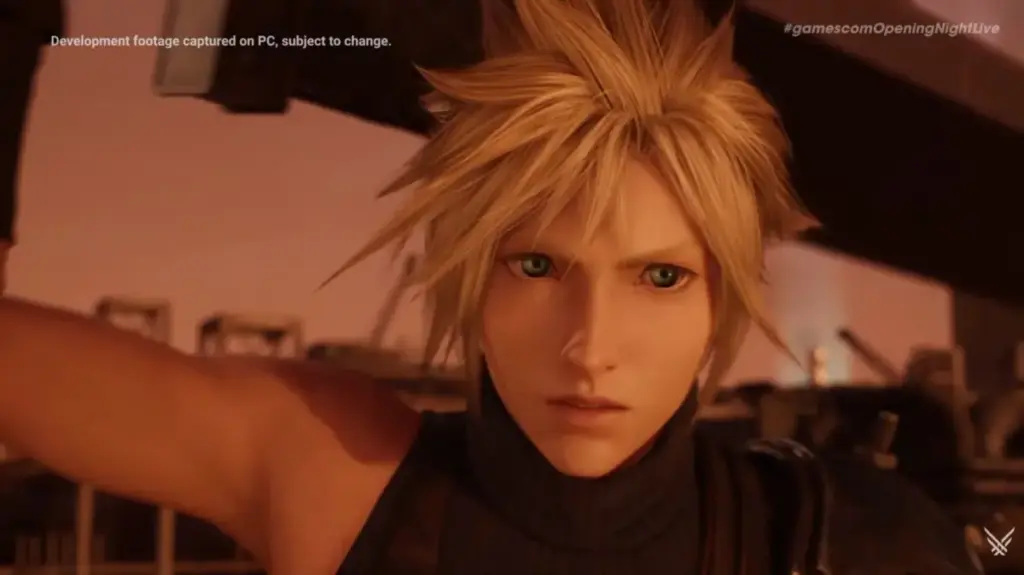
The undeniable focal point of the evening arrived courtesy of Square Enix. Director Naoki Hamaguchi took to the stage to present the latest trailer for Final Fantasy 7 Revelation, the culminating chapter of the acclaimed Final Fantasy 7 remake trilogy.
Though Hamaguchi’s on-stage remarks were brief, the implications of the announcement were seismic. Unlike its predecessors, which experienced timed console exclusivity, Revelation will launch simultaneously across a multiplatform array in the spring of 2027, heading to the PlayStation 5, Xbox Series X/S, the newly minted Nintendo Switch 2, and PC.
The first two installments of the project achieved critical acclaim by masterfully walking a tightrope between nostalgic reverence and daring narrative subversion. By fundamentally restructuring the story, gameplay mechanics, and world design, the trilogy has transcended the traditional definition of a remake, evolving into a parallel epic. Fans worldwide are now left eagerly anticipating how Square Enix will conclude this monumental reimagining.
Blockbuster Revelations and Genre Explorations
Beyond Cloud Strife’s latest outing, the showcase offered a diverse array of heavyweight announcements and intriguing genre experiments:

- The Witcher 3 Remastered: In a surprise move that stunned the community, a stunning remaster of CD Projekt Red’s masterwork was officially unveiled, featuring a simultaneous announcement that owners of the original title will receive the graphical overhaul free of charge.
- Nodus Fall: HoYoverse stepped into FromSoftware’s territory with Nodus Fall. While clearly drawing heavy inspiration from the Soulsborne blueprint, the title’s dark, punishing aesthetic and fluid combat choreography commanded attention.
- Rainbow Six Tactics: Ubisoft dipped back into its tactical roots with a major budget turn-based strategy spin-off set within the Rainbow Six universe. Slated for release next year on PS5, Xbox Series X/S, and PC, the game promises deep strategic layers without sacrificing franchise recognition.
- Warcraft and Strategic Ventures: Paradox Interactive showcased Afterworld, a grand strategy experience set in a post-apocalyptic, Mad Max-esque iteration of the United States. Meanwhile, Warner Bros. continued its curious aversion to console-based Game Of Thrones titles by highlighting War For Westeros, a PC-exclusive real-time strategy game.
- Warlock: Dungeons & Dragons: Embracing a delightfully shlocky tone, this project represents Wizards of the Coast’s ongoing, albeit turbulent, push to expand its intellectual property footprint into the interactive gaming space, working alongside titles like Exodus.
- Lofsöng and Indie Standouts: Among the indie offerings, Lofsöng captured imaginations with atmospheric, puzzle-oriented exploration reminiscent of Annapurna Interactive’s critically adored Cocoon.
- Lego Skylines and Path of Exile 2: In brief, punchy segments, Lego Skylines proved that bridging a notoriously adult-oriented urban planning simulator with the universally beloved Danish toy brand is a surprisingly coherent concept. Concurrently, Grinding Gear Games confirmed that Path Of Exile 2 1.0 will officially graduate from its beta phase on December 11, bringing its full release to eager action-RPG fans.
- Ontos: Frictional Games delivered the most haunting presentation of the evening with Ontos, the spiritual successor to their psychological horror masterwork Soma. Blending intricate puzzle design with existential dread, it stands as one of the most anticipated horror releases on the horizon.
Supporting Context & Metrics: Gamescom’s Ascent
To understand the weight of Gamescom 2026, one must contextualize the broader geopolitical and corporate shifts within the media landscape. Following the permanent cancellation and eventual closure of the Electronic Entertainment Expo (E3), the global gaming calendar lost its central pillar. Tokyo Game Show, while culturally invaluable, largely caters to domestic Asian markets and localized titles.
Consequently, Gamescom has captured the throne by design. Spanning massive exhibition halls in Cologne alongside the digital ONL broadcast, the convention serves as the premier nexus for European and international trade. Geoff Keighley’s Opening Night Live serves as the public gateway, pulling in millions of concurrent digital viewers across YouTube, Twitch, and co-streaming networks.
However, the 2026 showcase also reflected current economic pressures facing the games industry. The heavy reliance on rapid-fire, pre-recorded trailers rather than elaborate live stage demonstrations highlights a broader industry trend toward cost-efficiency and risk mitigation. Publishers are choosing to streamline their marketing pipelines, delivering direct-to-consumer digital touchpoints rather than sinking millions into physical stage theatrics.
Industry Perspectives & Strategic Shifts
The announcements at Gamescom 2026 underscored several vital transformations occurring across major publishing houses:
- Platform Agnosticism and Simultaneous Launches: Square Enix’s decision to launch Final Fantasy 7 Revelation day-and-date across PlayStation, Xbox, Nintendo Switch 2, and PC reflects a broader industry-wide abandonment of hard console exclusivity. As hardware manufacturing margins tighten and user bases fragment, maximizing software reach across all profitable platforms has become paramount.
- IP Diversification and Toy-to-Game Pipelines: The involvement of Hasbro and Wizards of the Coast through initiatives like Warlock: Dungeons & Dragons points to an aggressive corporate strategy to monetize tabletop legacies in digital spaces. However, murmurs within the industry suggest that these multi-million dollar gambits face internal restructuring, balancing soaring development budgets against shifting consumer retention metrics.
- The Survival of Deep Strategy and Tactical Genres: The prominent placement of titles like Rainbow Six Tactics, Paradox’s Afterworld, and the remake of Heroes Of Might And Magic 3 signals a renaissance for tactical and grand strategy experiences on modern hardware. Publishers are increasingly recognizing that core gaming demographics retain an insatiable appetite for deliberate, intellectually demanding gameplay loops.
Future Outlook: Navigating Toward 2027
As the dust settles on Opening Night Live and the physical halls of Gamescom open their doors to hundreds of thousands of passionate fans, industry analysts are already looking ahead to the remainder of the year.
With Tokyo Game Show looming next month expected to focus primarily on regional updates rather than global blockbusters, the pipeline for massive, paradigm-shifting game reveals for the remainder of 2026 has narrowed. Aside from potential rogue publisher livestreams, the industry’s next major global focal point will be The Game Awards this December.
Yet, the roadmap laid out in Cologne points toward a profoundly robust 2027. Between the multiplatform conclusion of Square Enix’s Final Fantasy 7 saga, the arrival of Ubisoft’s tactical ventures, and haunting psychological horror experiences like Ontos, gamers have plenty to look forward to. The transition across hardware generations—further cemented by software supporting next-gen Nintendo and incumbent Sony/Microsoft ecosystems—ensures that the technical and artistic ambitions of developers will continue to push boundaries, even as the business behind them undergoes rapid and permanent evolution.