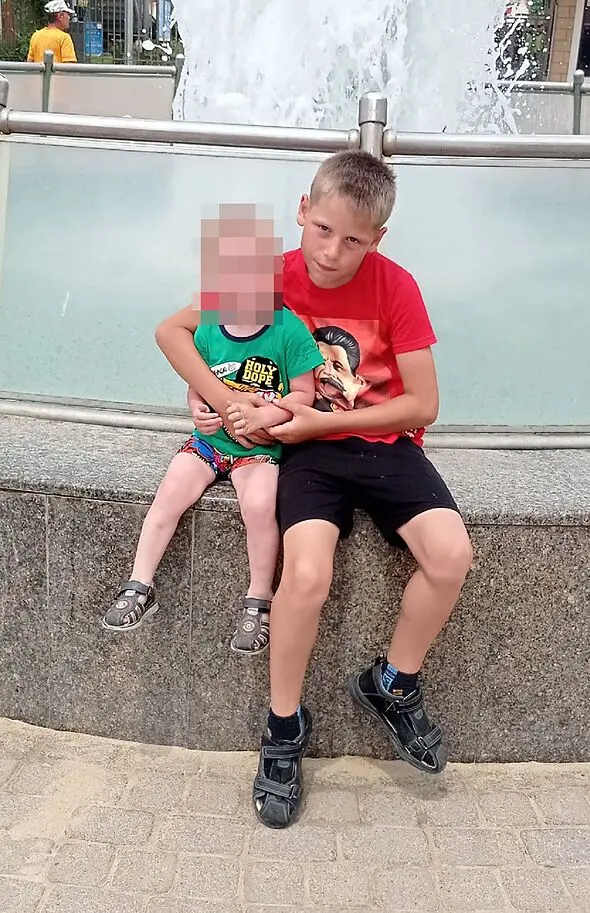
The quiet village of Kabanovo, situated in the Orekhovo-Zuevo district near Moscow, Russia, became the backdrop for an unimaginable tragedy that has sent shockwaves across the nation. Twelve-year-old schoolboy Maxim Titov was brutally lured to an abandoned building and fatally stabbed multiple times in a crime allegedly orchestrated by two teenage girls aged 15 and 16. Russian law enforcement agencies have taken both suspects into custody on preliminary charges of premeditated murder.
What elevates this crime from a localized act of juvenile delinquency to a subject of intense national and international concern are the disturbing motives revealed during the preliminary investigation. According to police sources, the teenage girls harbored a macabre curiosity, allegedly stating they "wanted to see a person die and feel like executioners" and wishing to know "what blood is and what it’s like to kill." Investigators are also probing potential links between the brutal slaying and violent, graphic content circulating on social media platforms, specifically TikTok.
The incident has ignited urgent debates regarding juvenile accountability, the psychological profiling of modern youth, online radicalization, and the adequacy of psychological screening for teenagers entering professional training programs. As the community mourns the loss of a young boy whose life was cut short, authorities continue to piece together a chilling timeline of premeditation, deception, and systemic failures.
Detailed Chronology
The Genesis of a Plot: August 20
According to statements gathered by grieving relatives and corroborated by initial police inquiries, the planning for Maxim Titov’s murder was not a spontaneous crime of passion. Sources close to the investigation indicate that the two teenage suspects—one 15 and the other 16 years old—began plotting the attack as early as August 20. Over the span of several days, the pair allegedly formulated a deliberate strategy, discussing methods to execute the crime without leaving a digital footprint or alerting authorities.
Investigators revealed that the suspects took calculated steps to evade law enforcement. In the days leading up to the attack, they purchased protective gloves and armed themselves with knives. Furthermore, police sources noted that the girls deliberately agreed to leave their personal mobile phones behind prior to the meeting. This tactical decision was made explicitly to avoid electronic tracking and cell tower triangulation, demonstrating a level of premeditation uncharacteristic of typical juvenile altercations.
The Lure: Setting the Trap
On the day of the fatal encounter, the perpetrators utilized social manipulation to draw Maxim into an isolated environment. Under the seemingly harmless and enticing pretext of meeting "for a beer"—an illicit draw for underage minors—they directed the 12-year-old boy to an abandoned, decaying building located in the village of Kabanovo.
Maxim, trusting his acquaintances and unaware of the lethal trap waiting for him, walked straight into the deserted structure. The isolated nature of the abandoned complex ensured that any cries for help would go unheard, providing the perpetrators with the concealment they desired to carry out their gruesome experiment.
The Fatal Encounter and the Final Hours
Inside the dark, derelict halls of the building, the attack unfolded with calculated brutality. Maxim Titov was subjected to multiple stab wounds. Medical examiners and police reports indicate the violence was sustained and targeted, executed with the knives the girls had procured specifically for the occasion.
Meanwhile, back at home, Maxim’s mother, 32-year-old Anzhela Titova, was growing increasingly frantic. Maxim had promised to return home by a set time, and as the evening hours bled into night, his failure to check in triggered a mother’s worst nightmare.
In an interview detailing the agonizing hours of uncertainty, Anzhela recounted her desperate attempts to locate her son:
"The phone was on, no one answered… I called, called, called. Somewhere around, probably, 11pm, the phone died…"
With the phone battery exhausted and no sign of her son, the hours of terror eventually culminated in the grim discovery of Maxim’s body within the abandoned industrial ruins of Kabanovo, shattering a family and leaving a community in profound grief.
Supporting Context & Metrics: Digital Influence and Institutional Oversight
The Digital Underworld and Social Media Influence
As investigators sift through the digital footprint of the suspects, a disturbing pattern has emerged regarding their online consumption. Reports indicate that one of the teenage suspects actively reshared and engaged with graphic TikTok content, specifically highlighting interactive "games" and simulated scenarios where digital characters inflict brutal, fatal harm on human beings.
Criminologists and digital safety experts have long warned about the desensitizing effects of unmoderated, ultra-violent media consumption among adolescents whose prefrontal cortexes—responsible for impulse control, empathy, and long-term consequence evaluation—are still developing. While direct causality between social media algorithms and violent crime remains a complex legal hurdle, the psychological profile emerging from this case suggests a dangerous blurring of lines between virtual violence and real-world execution. The suspects’ desire to "feel like executioners" directly mirrors the power dynamics often glorified in extreme digital content.
The Paradox of Future Professions
The shock surrounding the arrest of the two teenagers is compounded by their real-world aspirations and educational paths. It was revealed that one of the suspects had successfully secured a coveted placement at a medical college to train as a nurse, while the other had mapped out a career path within the tourism industry.
The revelation that a prospective healthcare worker—someone whose professional oath and training would theoretically be centered on the preservation of human life—could harbor a deliberate desire to witness death and experience the sensation of killing has sparked widespread public outrage.
Maxim’s mother voiced the collective disbelief of the community during her statements to the press, questioning the integrity of institutional screening processes:
"How did someone [like that] get into medical school [to train as a nurse]?"
This aspect of the case has widened the scope of public discourse, shifting the focus toward how educational institutions evaluate the psychological fitness and moral baseline of young applicants entering fields of public service and care.
Official Statements and Legal Proceedings
Law Enforcement and Judicial Response
The Investigative Committee of the Russian Federation immediately stepped in to handle the high-profile case. Both girls, aged 15 and 16, were apprehended swiftly following the discovery of Maxim’s body. They are currently being held in a secure juvenile detention facility facing formal charges of premeditated murder, a charge that carries significant prison time under Russian criminal law, even for minors, given the severe aggravating factors of planning and cruelty.
According to updates from law enforcement officials and statements from defense perspectives, the 15-year-old suspect has reportedly "admitted her guilt" regarding the fatal stabbing and has "expressed remorse" for her actions. However, legal analysts note that courtroom confessions under psychological evaluation often undergo rigorous scrutiny to determine whether the remorse is genuine or a maneuver to mitigate future sentencing.
Family Outcry and Call for Accountability
Anzhela Titova and other family members have remained vocal, demanding total transparency and maximum legal penalties for both perpetrators. Speaking to reporters, the grieving mother highlighted the chilling cold-bloodedness of the plot, noting intelligence gathered by family members suggesting the execution had been meticulously mapped out for nearly two weeks prior to its execution.
The family’s legal representatives are pushing for an expansive investigation that not only examines the direct actions of the two girls on the night of September 1, but also explores any peripheral individuals who may have been aware of the plot, encouraged the behavior, or shared the violent digital media that allegedly inspired the crime.
Future Outlook
The murder of Maxim Titov serves as a grim and sobering milestone in contemporary discussions surrounding youth safety, digital literacy, and psychological health in the modern era. As the legal proceedings move forward, several critical developments are anticipated:
Comprehensive Psychological Evaluations: Both suspects are expected to undergo exhaustive psychiatric and forensic psychological examinations to determine their mental state at the time of the offense, which will heavily influence whether they are tried as juveniles or face harsher adult sentencing parameters.
Institutional Reforms in Educational Screening: The public outcry regarding the medical college acceptance of one of the suspects is likely to prompt Russian educational authorities to review background-check protocols and psychological vetting procedures for teenagers entering sensitive professional tracks.
Heightened Scrutiny on Digital Platforms: Law enforcement agencies and digital watchdogs are expected to increase pressure on social media networks operating within the region to aggressively filter and remove content that promotes, simulates, or glorifies interpersonal violence among minors.
Ultimately, the village of Kabanovo and the broader Russian society are left grappling with an irreparable loss. The senseless killing of 12-year-old Maxim Titov stands as a stark reminder of the urgent need for heightened parental vigilance, robust mental health support systems for adolescents, and a concerted societal effort to combat the dark intersections of digital radicalization and youthful alienation.