If your curls, coils, or waves suddenly look, feel, or behave differently than they did a decade or two ago, you are not imagining things. For individuals over the bracket of 50, the biological reality of aging fundamentally alters not only the external aesthetics of curly hair, but its deep internal architecture. Far from being a static physical trait, curl patterns are rooted entirely in biology—specifically, the shape, orientation, and health of the hair follicle.
As we navigate major life transitions such as perimenopause and menopause, hormonal fluctuations trigger cascading changes throughout the body. These shifts directly impact the hair growth cycle, strand diameter, lipid production, and overall density. Where tight, springy coils once reigned, individuals may suddenly find themselves managing softer curls, looser waves, or altered textures that require an entirely new approach to maintenance.
This comprehensive report explores the biological science behind aging curls, the impact of lifestyle and chemical treatments, expert-recommended regimens, and actionable strategies for preserving hair integrity and scalp health past 50.
Detailed Chronology: How Curls Shift Through the Decades
Understanding why hair changes over time requires looking closely at how our biological blueprint evolves from youth to maturity.
The Biological Blueprint: Why Curl Patterns Shift
Most people are surprised to discover that a curl pattern is not fixed for life. According to celebrity colorist and hair expert Kadi Lee, everything comes down to the shape of the hair follicle.
"It comes down to the shape of the hair follicle, which evolves with age, often becoming rounder and less asymmetrical, so tight coils may loosen into softer curls or waves over time."
In youth, curly and coily hair typically grows from a curved, asymmetrical follicle, which forces the keratin structure to bend as it emerges from the scalp, creating twists and turns. As we age, however, cellular turnover slows down, and follicular geometry can shift. As follicles become more symmetrical or rounder, the hair shaft grows out straighter or less tightly wound.
The Hormonal Turning Point: Perimenopause and Menopause
Like most transitions in beauty, changes to textured hair are deeply individual, yet they share a common hormonal denominator. During perimenopause and menopause, estrogen and progesterone levels decline dramatically. These hormones play a vital role in regulating the anagen (growth) phase of hair follicles.
As these hormone levels drop, the scalp naturally produces less sebum—the natural oil responsible for lubricating the hair shaft and locking in moisture. This biological drought leaves mature hair significantly more vulnerable to environmental stressors. Sharley Viola, associate director of brand marketing and education at Curlsmith, notes:
"As we age, hair often becomes brittle, finer, drier, and more fragile because the scalp produces less natural oil or sebum. Some people experience their curl becoming looser, while others may notice their hair becoming coarser, frizzier, or more textured over time."
Simultaneously, the physical diameter of individual hair strands often shrinks, a phenomenon known as miniaturization. This reduction in strand thickness diminishes the overall structural integrity of the hair, making it less resilient to tension, heat, and chemical processing.
Supporting Context & Metrics: The Anatomy of Mature Curls
As hair matures past the age of 50, its physical properties undergo distinct transformations that demand a paradigm shift in daily care routines.
Structural Vulnerability and Reduced Margin for Error
When dealing with mature textured hair, professionals emphasize a golden rule: maximum protection with minimum weight.
As Ni’Kita Wilson, vice president of product development at Pattern Beauty, explains:
"The practical answer is that mature curls may have less margin for error. A finer, previously colored, or already weathered strand has less structural reserve to sacrifice to repeated high-heat styling."
To visualize these changes, consider the following metrics and structural shifts common in mature hair:
Decreased Sebum Production: Scalp oil production can drop significantly after age 50, removing the hair’s natural moisture barrier and leading to chronic dryness.
Cuticle Lifting: The protective outer layer of the hair (the cuticle) becomes more porous and prone to lifting, which causes moisture to escape rapidly and increases frizz.
Tensile Strength Reduction: Repeated exposure to environmental factors, UV rays, and mechanical manipulation accumulates over decades, lowering the breaking point of individual strands.
The Impact of Color Processing and Heat Styling
Many individuals enjoy expressing themselves through vibrant hair color or sleek, straightened styles. However, chemical processing—including permanent hair dye, bleaching, and highlighting—works by forcing open the cuticle to deposit or strip pigment. This process chemically breaks the disulfide bonds responsible for maintaining curl shape and elasticity.
While walking away from dye or heat styling entirely is not mandatory, experts agree that mature hair cannot tolerate careless chemical upkeep. Color-treated mature hair requires extended time between touch-ups, deeply restorative treatments, and intensive bond-building products.
Similarly, heat styling tools must be evaluated with extreme caution. High temperatures vaporize internal moisture within seconds, permanently altering protein structures. When using thermal tools, opting for specialized, low-manipulation technology—such as vibrating flat irons designed to distribute heat evenly with minimal tension, or advanced diffusers—helps preserve what little structural reserve mature hair has left.
Official Statements & Expert Guidance
Leading authorities in trichology, product development, and luxury haircare emphasize that managing mature curls requires a holistic routine addressing both internal wellness and external protection.
Tailoring Your Regimen: Moisture and Scalp Health
Experts advocate for a complete overhaul of both daytime maintenance and nighttime protection routines to safeguard delicate curls from unnecessary friction and breakage.
Hydrating Cleansing and Conditioning: Swap out harsh, stripping shampoos for gentle, scalp-revitalizing formulas that cleanse without depleting natural oils. Follow up with rich leave-in conditioners and deep-conditioning masks infused with humectants and emollients to restore moisture balance.
Nighttime Friction Defense: Cotton pillowcases absorb natural moisture and create microscopic friction that roughens the cuticle and causes breakage. Upgrading to pure silk or satin pillowcases, or wrapping curls in a silk bonnet or sleep scarf, drastically reduces mechanical damage overnight.
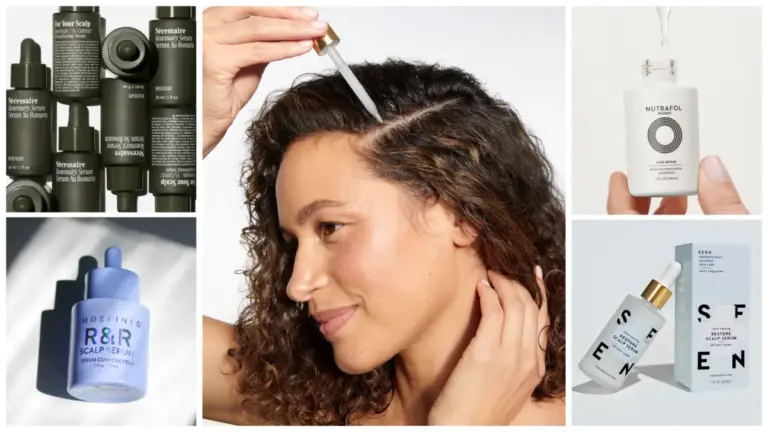
Targeted Scalp Care: Because follicle health directly influences hair density and growth, addressing the scalp topically and systemically is essential. Experts recommend specialized growth serums containing active botanical extracts to nourish the root zone, paired with internal wellness complexes designed to support hair thickness from within.
Lightweight Volumizing: For those experiencing hair thinning, heavy butters and creams can weigh down the roots. Instead, utilize lightweight mousses and volumizing foams that encourage root lift, giving curls a fuller, bouncier appearance without heavy buildup.
Future Outlook: Embracing the Evolution of Textured Hair
The narrative surrounding aging hair is undergoing a profound cultural shift. For decades, beauty standards dictated that aging hair must be subdued, straightened, or hidden. Today, a growing movement champions embracing the natural trajectory of our hair, viewing changes not as a deterioration, but as a natural evolution.
As cosmetic science advances, the beauty industry is increasingly formulating products specifically engineered for mature curls—acknowledging that a 50-plus scalp has vastly different biochemical needs than a 20-plus scalp. From bio-fermented active growth serums to intelligent thermal styling tools that protect fragile bonds, the future of mature hair care is rooted in science, empathy, and empowerment.
Ultimately, navigating the evolution of your curls over 50 is an invitation to listen more closely to your body. By honoring your hair’s changing needs with gentle cleansing, intelligent styling, deep hydration, and proactive scalp care, your curls can remain vibrant, resilient, and uniquely beautiful through every chapter of life.