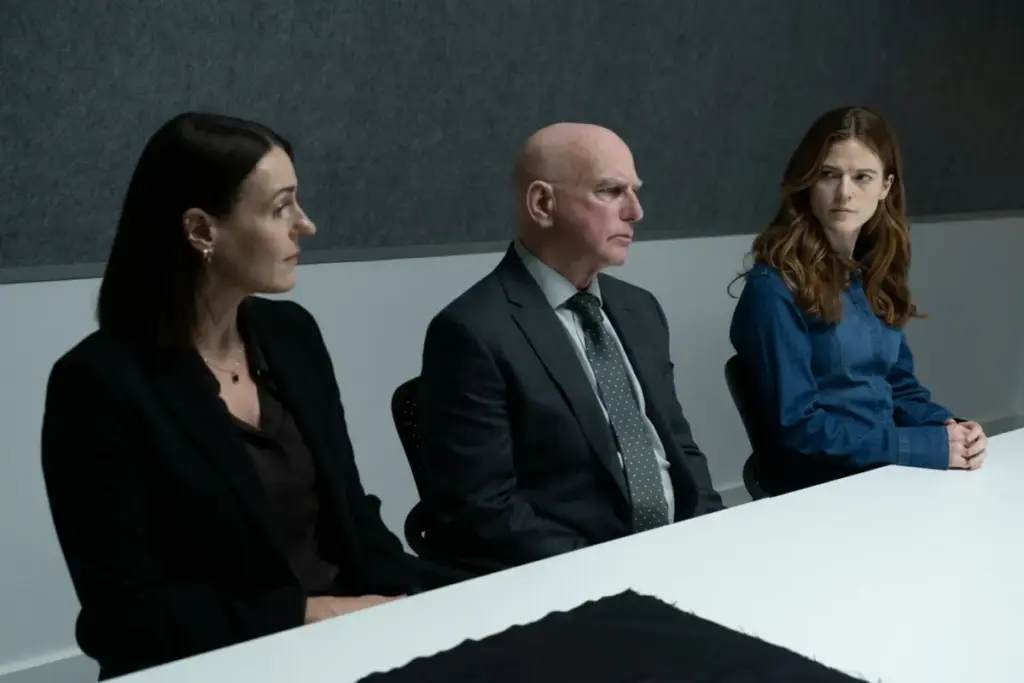
Since its explosive debut on the BBC in 2021, Vigil has established itself as a premier pillar of British television drama, weaving intricate geopolitical intrigue with deeply personal character stakes. Created by Tom Edge and produced by World Productions, the tense political thriller returns for its eagerly anticipated third season, plunging viewers into a chilling new environment far removed from the claustrophobic corridors of its foundational submarine setting.
Headlined by Suranne Jones as Detective Chief Inspector Amy Silva and Rose Leslie as Detective Inspector Kirsten Longacre, the series has continuously pushed the boundaries of the traditional procedural. Season 3 trades the murky depths of the ocean and the scorching volatility of the Middle East for the pristine, yet intensely hostile, landscape of Svalbard—a remote Arctic archipelago rapidly turning into a flashpoint for international energy competition.
With the central couple now navigating the complexities of parenting two children alongside their demanding careers, the murder of a covert British official at an isolated research station shatters their fragile domestic equilibrium. The upcoming season promises a masterclass in tension, examining complex themes of loyalty, justice, and the shifting fault lines of modern global politics. As nations like China, Russia, and Western allies lock horns over Arctic supremacy, Vigil guarantees that its return on Sunday, August 30, at 9:00 PM on BBC One will be anything but standard television.
Detailed Chronology: The Evolution of a Modern Thriller
The journey of Vigil from a contained mystery to an expansive geopolitical saga is a testament to the vision of its creators and the raw chemistry of its central cast.
Season 1: Beneath the Waves
When Vigil first premiered, it captured the zeitgeist with a premise that felt simultaneously urgent and claustrophobic. Set predominantly on board the fictional Vanguard-class ballistic missile submarine HMS Vigil, the narrative kicked off with a mysterious death that coincided with the disappearance of a local fishing trawler. DCI Amy Silva was helicoptered onto the nuclear submarine to conduct the investigation, isolated from land-based support and forced to navigate a hostile military hierarchy.
Concurrently, her partner, DI Kirsten Longacre, pursued the land-based investigation in Scotland, uncovering a web of political corruption, espionage, and institutional cover-ups. The season not only delivered relentless edge-of-your-seat suspense but also ground-breaking emotional resonance through the nuanced portrayal of Silva and Longacre’s relationship, establishing a sapphic partnership at the very heart of a high-stakes mainstream thriller.
Season 2: Middle Eastern Skies and Diplomatic Tensions
Refusing to rest on its laurels, Season 2 proved that the DNA of Vigil could successfully transition to entirely new arenas. Shifting away from the deep sea, the second installment transported viewers into the high-octane world of military aviation and international defense contracts. Following a catastrophic drone strike demonstration at a Scottish airbase that left multiple people dead, Silva and Longacre were thrust into a sprawling investigation with international tentacles stretching deep into the Middle East.
The sophomore season tested the resilience of the central characters as they confronted institutional opacity within the Royal Air Force and private military contractors, cementing the show’s reputation for tackling ripped-from-the-headlines anxieties about drone warfare, remote combat, and global power dynamics.
Season 3: The Arctic Frontier
Now, in its third iteration, Vigil expands its canvas to the literal ends of the earth. The narrative picks up with Amy and Kirsten as mothers to two children, attempting to balance the relentless demands of their police careers with the realities of family life. However, tranquility is short-lived.
When a covert British special forces operative is shot dead at a remote Arctic research station in Svalbard, Silva and Longacre are summoned to investigate. What begins as a localized murder inquiry quickly unravels into a terrifying glimpse of a potential global conflict. Svalbard—long viewed as a quiet scientific haven—is revealed as a high-stakes chessboard where the geopolitical ambitions of major world powers collide. As Kirsten re-enters the workforce following maternity leave and physical recovery from past injuries, the duo must navigate not only treacherous ice floes and sub-zero temperatures but also the lethal machinations of international espionage.
Supporting Context & Metrics: The Geopolitics of Svalbard and Cultural Impact
To fully appreciate the scope of Vigil Season 3, one must examine the real-world geopolitical significance of its setting and the cultural milestones achieved by its narrative framework.
The Svalbard Archipelago: A New Cold War Frontier
Historically sidelined in global strategic calculations, the Arctic—and Svalbard specifically—has emerged as a vital and contentious region in the 21st century. Governed by the Svalbard Treaty of 1920, the archipelago recognizes Norwegian sovereignty while granting signatory nations equal rights to engage in commercial activities and scientific research.
In recent years, however, this unique legal status has turned Svalbard into a crucible for international friction:
Chinese Ambitions: Beijing has increasingly viewed the Arctic as a critical frontier for its "Polar Silk Road" initiative, investing heavily in scientific outposts and satellite ground stations on the archipelago.
Russian Assertiveness: Moscow maintains a historic economic presence on Svalbard (principally through the mining settlement of Barentsburg) and views the militarization and security of the Arctic domain as essential to its territorial integrity and nuclear deterrence strategy.
NATO and Western Interests: For NATO members and European nations, the melting ice caps represent both economic opportunities (new shipping lanes and untapped natural resources) and profound security vulnerabilities, necessitating heightened surveillance and covert operational readiness.
By anchoring its latest murder mystery within this geopolitical pressure cooker, Vigil leverages real-world anxieties to elevate its narrative stakes far beyond a standard whodunnit.
Cultural Representation and Audience Resonance
Beyond its political machinations, Vigil has broken new ground in LGBTQ+ representation on British television. Speaking exclusively to Metro, series creator Tom Edge reflected on the profound, often unexpected emotional impact of placing a complex, unapologetically queer couple at the center of a mainstream primetime thriller.
Edge recalled moving viewer feedback from the show’s first season, noting how the authentic depiction of Silva and Longacre helped bridge generational gaps in families. Rather than serving as mere "avatars for a set of social dynamics," Edge insisted from the outset that the characters’ identities must be multifaceted. They are exceptional law enforcement professionals first, whose relationship is an organic, deeply realized component of their complex inner lives. This deliberate writing philosophy has turned Vigil into a cultural touchstone, proving that high-concept genre entertainment can simultaneously offer meaningful, resonant social representation.
Official Statements & Production Insights
Bringing the desolate, freezing expanses of the Arctic to the screen was no small feat for the production team at World Productions and the BBC. Creator Tom Edge and his collaborators spared no effort in ensuring authentic visual storytelling.
Discussing the logistical triumph of filming in extreme conditions, Edge noted:
"We were really lucky that the people backing us to make the show, particularly the BBC, were so supportive of the ambition to go there and capture the actuality of it. I was just delighted that the boats are going through real ice rather than crew members shovelling bags of ice cubes in front of a toy trawler."
This commitment to physical reality extends to the narrative arcs of the protagonists. As Kirsten Longacre steps back into active duty after maternity leave and recovery, Edge teased the internal and professional conflicts she faces:
"There is that question in returning of: Am I returning to the status quo? Is this about continuity, or is this a new chapter where I have things to prove and a sense of what I want to see change."
Furthermore, Edge highlighted the overarching philosophical throughline that has defined the series across all three seasons:
"Across three seasons, we have had a big throughline around the idea of loyalty and justice and how those two things intersect… The show takes care never to put its feet up in a hammock."
Future Outlook: What Lies Ahead for Vigil?
As anticipation builds for the August 30 premiere on BBC One, industry analysts and television critics are closely watching to see how Vigil handles its third reinvention. Moving away from the confines of a submarine and an airbase into the vast, unforgiving wilderness of the Arctic demonstrates a remarkable creative flexibility.
The overarching thematic exploration of loyalty versus justice—tested against the backdrop of shifting global alliances between Britain, China, and Russia—positions Season 3 to be the most politically resonant chapter of the franchise yet. For viewers eager to catch up, Seasons 1 and 2 are currently available to stream on BBC iPlayer, offering a comprehensive look at how DCI Amy Silva and DI Kirsten Longacre evolved from reluctant partners into an indomitable investigative unit.
Whether Vigil will continue beyond its upcoming Arctic voyage remains to be officially confirmed, but one thing is certain: with Tom Edge at the helm and Suranne Jones and Rose Leslie anchoring the drama with powerhouse performances, the franchise has firmly secured its legacy as a cornerstone of modern British television. Tune in to BBC One on Sunday, August 30, at 9:00 PM to witness the chilling next chapter unfold.