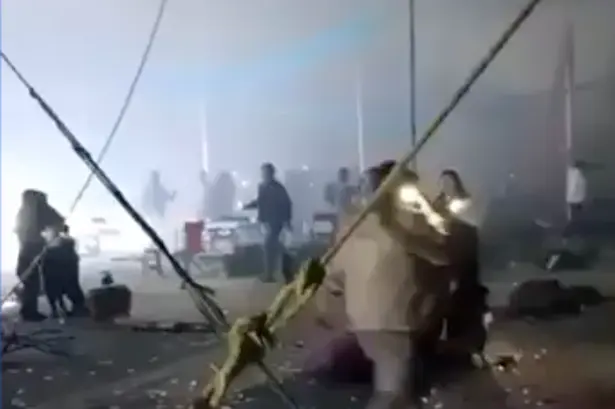
TEMASCALCINGO, MEXICO — Emergency rescue operations remain active following a devastating fireworks explosion that rocked the tight-knit community of Santa María Canchesdá on Saturday night, September 6, 2026. The blast, which occurred during local preparations for an upcoming patron saint festival, flattened structures adjacent to a historic church and left at least 20 people injured. As specialized extraction teams comb through a landscape of concrete and ash, authorities warn that the casualty count may rise as search and rescue efforts push forward into the night.
The disaster highlights ongoing safety concerns surrounding the handling, storage, and detonation of pyrotechnics during traditional celebrations throughout Mexico—events deeply embedded in the cultural calendar but frequently marred by regulatory lapses and devastating structural failures.
Executive Overview
The catastrophic blast struck at approximately dusk on Saturday, turning a moment of communal devotion and festive anticipation into a scene of chaotic destruction. According to preliminary reports from municipal and state civil protection agencies, the explosion originated from pyrotechnic materials stored or handled in close proximity to the historic Santa María Canchesda church located within the municipality of Temascalcingo, inside the State of Mexico.
The sheer force of the detonation resulted in the immediate structural collapse of an adjacent building, trapping an undetermined number of worshippers, organizers, and bystanders beneath heavy debris. Local media and initial on-the-ground estimates suggested that upwards of 30 individuals may have sustained injuries ranging from minor lacerations to critical trauma. Emergency services, including paramedics, state police, and specialized urban search and rescue (USAR) units, were rapidly deployed to the scene, establishing cordons and utilizing heavy equipment to stabilize remaining structures while searching for survivors.
As of early Sunday morning, local and state authorities have confirmed at least 20 injuries, though officials emphasize that these figures remain fluid. Crucially, no official fatalities have been confirmed at this preliminary stage, though search operations are ongoing. Civil protection agencies have implored the general public to steer clear of the disaster zone, citing structural instability and the critical need to keep access routes clear for incoming ambulances and heavy rescue machinery.
Detailed Chronology of the Event
Saturday Evening: Preparations Turn to Chaos
The events in Santa María Canchesdá unfolded against the backdrop of vibrant preparations for the community’s traditional patron saint festivities. These religious festivals typically involve days of communal gatherings, music, processions, and the extensive use of pyrotechnics—ranging from handheld sparklers to elaborate, towering wooden frames packed with fireworks known as castillos.
On Saturday night, local organizers and community members had gathered near the historic church grounds to finalize preparations. Witnesses reported a sudden, blinding flash followed by a deafening shockwave that rattled windows and shook foundations across the community. The blast was potent enough to destabilize and ultimately collapse an auxiliary building immediately adjacent to the primary church structure, burying people beneath bricks, mortar, and twisted metal.
Immediate Aftermath and First Responders
Within minutes of the explosion, panic ensued as residents rushed into the dust-filled streets to locate family members and render immediate aid. Social media platforms quickly flooded with user-generated footage depicting the immediate aftermath: thick plumes of smoke drifting into the night sky, debris scattered across cobblestone pathways, and frantic civilians attempting to clear rubble with their bare hands while waiting for professional help.
Municipal emergency services in Temascalcingo were the first to respond, quickly realizing that the scale of the disaster exceeded local response capacities. Calls for mutual aid brought state-level civil protection teams, the Red Cross, and specialized rescue squads from neighboring municipalities rushing to the scene.
Nighttime Rescue and Extraction Operations
As night fell, rescue operations shifted into high-intensity mode. Floodlights were rigged across the blast site to illuminate the zone where the adjacent structure had collapsed. Emergency personnel, accompanied by search-and-rescue canine units, began systematically lifting concrete slabs and clearing structural timber.
By the early morning hours of Sunday, September 6, rescue teams had established triage stations on the perimeter of the disaster zone. Ambulances lined nearby access roads, prepared for rapid transport to regional hospitals in the State of Mexico. While initial local reports floated figures exceeding 30 injured, official updates consolidated the confirmed injured count at 20, though teams on the ground maintained that the true scope of the disaster would only become clear once the rubble was entirely cleared.
Supporting Context & Metrics
The Geographic and Cultural Setting
Santa María Canchesdá is a historic and deeply traditional community nestled within the municipality of Temascalcingo, situated in the northwest region of the State of Mexico (Estado de México). Characterized by its tight-knit population and cultural adherence to centuries-old religious traditions, the community is anchored architecturally and spiritually by the historic Santa María Canchesda church, a focal point for regional religious life.
The Pyrotechnics Industry and Public Safety in Mexico
The tragedy in Temascalcingo is part of a recurring, tragic pattern in Mexico, where the artisanal manufacture, storage, and usage of pyrotechnics remain deeply ingrained in cultural and religious practices. Fireworks are considered indispensable to patron saint festivals (fiestas patronales), independence celebrations, and family milestones.

However, the industry operates largely through small-scale, family-owned workshops (taller) that frequently lack rigorous oversight, modern safety protocols, or standardized hazard-containment infrastructure. While major hubs—most notably the San Pablito pyrotechnic market in Tultepec—have been the sites of catastrophic historical disasters, smaller regional explosions during local festivals like the one in Santa María Canchesdá occur with distressing regularity across rural and semi-urban municipalities.
Key factors contributing to these recurring incidents include:
- Improper Storage: Storing high-density explosive compounds and finished pyrotechnic devices in temporary structures or too close to populated gathering areas.
- Lack of Regulatory Enforcement: Insufficient inspections by federal and state arms control and civil protection agencies regarding how fireworks are handled during community events.
- Spontaneous Handling: Amateurs or untrained festival committees managing volatile materials without professional pyrotechnicians present.
Official Statements and Government Response
In the wake of the disaster, local and state authorities have moved swiftly to manage the crisis and coordinate emergency relief.
The Government of the State of Mexico, through its Secretariat of Security and the State Coordination of Civil Protection, issued a joint statement confirming the mobilization of all available regional emergency infrastructure. The state government stressed that the primary objective remains the localization and extraction of any individuals remaining unaccounted for beneath the debris.
"State and municipal civil protection units, alongside medical emergency teams and security forces, are fully deployed at the site of the incident in Santa María Canchesdá, Temascalcingo," read a preliminary operational update released early Sunday morning. "Our immediate priority is the preservation of human life, the stabilization of the injured, and the secure extraction of persons from compromised structures."
Local municipal authorities in Temascalcingo have appealed directly to the community and regional media to exercise caution regarding unverified reports circulating on social media. Officials emphasized that while rumors of high casualty numbers caused widespread panic overnight, official channels will continue to provide transparent updates as hospitals report on the conditions of those admitted.
Furthermore, state law enforcement agencies have reiterated their plea for the public to remain outside the established security perimeter. The structural integrity of the church grounds and the collapsed adjacent building remains severely compromised, posing a continuous risk of secondary collapses that could endanger both onlookers and rescue personnel.
Future Outlook & Ongoing Investigations
As rescue operations transition into structural stabilization and forensic investigation phases, several critical questions loom regarding accountability and preventative oversight.
Forensic and Structural Investigations
Once the search-and-rescue phase concludes and all victims are accounted for, forensic experts from the State Attorney General’s Office (Fiscalía General de Justicia del Estado de México) are expected to launch a comprehensive investigation into the exact root cause of the explosion. Investigators will seek to determine:
- Whether the pyrotechnics involved were legally registered and stored in compliance with national firearms and explosives laws regulated by the Secretariat of National Defense (SEDENA).
- If negligence or improper handling by individuals managing the festival preparations contributed to the premature ignition.
- Whether structural permits existed for the auxiliary building that suffered catastrophic collapse.
Long-Term Implications for Community Festivals
The incident in Temascalcingo is certain to reignite national debates concerning the safety regulations governing traditional festivals throughout Mexico. While cultural preservation advocates emphasize that religious celebrations are vital to community identity and social cohesion, civil protection experts continually push for stricter municipal oversight, mandatory professional oversight for all public fireworks displays, and the absolute prohibition of storing volatile materials near public gathering spaces or historic structures.
For the residents of Santa María Canchesdá, however, the immediate focus remains firmly on healing, supporting the injured, and accounting for their missing neighbors as the community navigates the darkest hours of a weekend intended for celebration.
Further updates will be provided as official casualty numbers are verified and investigative findings are released by the State of Mexico civil protection authorities.