Executive Overview
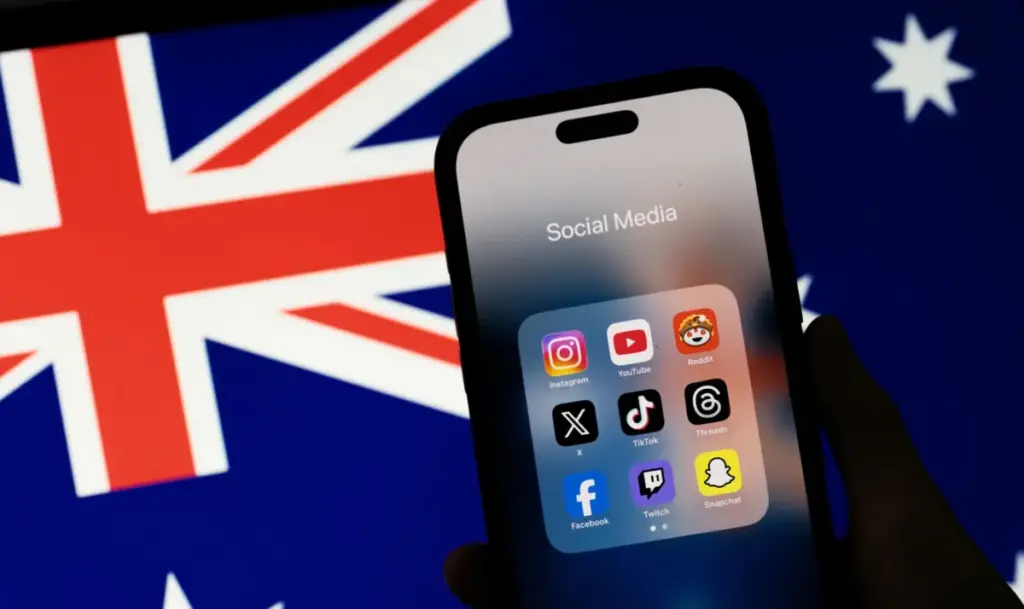
Nearly a year after the Australian government enacted some of the world’s most aggressive and sweeping restrictions on youth social media access, a sobering reality is setting in: the digital wall is leaking.
When officials in Canberra championed the legislation—designed to shield children and teenagers from the psychological perils of algorithmic feeds, cyberbullying, and inappropriate content—the policy was heralded as a blueprint for a global digital safety revolution. The core premise was simple: legislate the major platforms out of reach for anyone under 18, and childhood online safety would naturally follow.
However, comprehensive new data tells a startlingly different story. According to anonymized screen time metrics compiled by parental control software firm Qustodio from a sample of 19,000 Australian families, the nation’s youth have not vanished from the digital ecosystem. Instead, they have adapted. While the law initially succeeded in creating a brief, sharp drop in youth platform engagement, Australian minors are steadily bypassing the blockade. Using virtual private networks (VPNs), dummy accounts, alternative communication channels, and unverified workarounds, teenagers are returning to their feeds. In some demographics, usage has actually surpassed pre-ban levels.
This empirical disconnect between legislative intent and digital reality has sparked an intense international debate. As governments from Jakarta to London watch Australia’s pioneering experiment stumble, technology companies—long held liable for the addictive design of their platforms—now point to these findings as proof that top-down government bans are fundamentally unworkable.
This comprehensive report examines the genesis of Australia’s social media ban, analyzes the newly released Qustodio data, explores the technical and behavioral workarounds employed by modern youth, and evaluates what this systemic failure means for the future of global internet regulation.
Detailed Chronology: From Legislative Zeal to Implementation
To understand how Australia arrived at this regulatory crossroads, one must trace the timeline of escalating tensions between federal policymakers, Big Tech, and child advocacy groups.
The Buildup (2024–2025)
For years, Australian lawmakers wrestled with rising public concern over teen mental health, cyberbullying, and the addictive nature of infinite-scroll interfaces. Spurred by vocal advocacy groups and mounting pressure from parents, the federal government began drafting legislation aimed at placing the onus of age verification and restriction squarely on tech giants like Meta, TikTok, and Google.
Despite warnings from civil liberties organizations, digital rights advocates, and the tech industry itself regarding technical feasibility and privacy implications, political momentum proved unstoppable. In late 2025, the Australian government officially enacted sweeping restrictions barring users under the age of 18 from holding mainstream social media accounts. The law was celebrated globally as a watershed moment—the first time a Western democracy had attempted an outright usage ban rather than relying on parental consent or milder data-privacy frameworks.
The Immediate Aftermath (Late 2025 – Early 2026)
Upon the law’s formal implementation, major technology platforms rushed to comply to avoid catastrophic financial penalties. Account purges were initiated, age-estimation software was hurriedly integrated, and thousands of Australian teens suddenly found themselves locked out of profiles they had spent years cultivating.
For the first few weeks, the intervention appeared to work on paper. Metrics plummeted as automated filters flagged and suspended accounts associated with underage birthdates. Major media outlets reported an eerie quiet across Australian schoolyards as students processed their sudden digital disenfranchisement.
The Resurgence and Global Ripple Effects (Mid 2026)
As the months ticked by, however, the digital ecosystem began to find equilibrium—not through compliance, but through circumvention. By mid-2026, data analysts began noticing a persistent creep in youth screen time metrics.
Simultaneously, the Australian model began exporting its philosophy abroad. In March 2026, Indonesian officials followed Australia’s lead, implementing their own strict regulations barring children under 16 from select social media environments. Yet, even as Jakarta celebrated its new rules, international streaming and video metrics—such as those tracked by YouTube’s Global Top 50 rankings—revealed that Indonesian youth-focused channels were surging in viewership, proving that national borders are porous barriers in a borderless digital world.
Supporting Context & Metrics: What the Qustodio Data Reveals
The most rigorous assessment of Australia’s ban comes from Qustodio, a prominent digital safety and parental control software provider. By analyzing anonymized, real-world screen time data across 19,000 Australian families, Qustodio’s researchers peered past corporate compliance reports to examine actual device usage among children and teens.
TikTok’s Remarkable Resilience
TikTok has been ground zero for legislative scrutiny regarding youth addiction. Prior to the Australian ban, 27% of teens aged 13 to 15 within Qustodio’s sample were active on the platform.
Immediately following the law’s enactment, TikTok usage among this cohort dropped significantly. But human behavior, particularly among digitally native teenagers, proved resistant to static laws. According to Qustodio’s latest tracking, 26% of teens aged 13 to 15 are now active on TikTok—a mere one-percentage-point drop from pre-ban figures. Furthermore, usage among younger children (ages 10 to 12) has actually increased relative to the pre-ban era, as younger cohorts find creative ways to access content traditionally filtered away from them.
The WhatsApp Surge
While traditional broadcast and algorithmic feeds saw dips followed by rebounds, messaging platforms experienced an entirely different trajectory.
On the Australian version of WhatsApp, owned by Meta, teen usage did not just recover—it expanded dramatically. Before the ban, approximately 27% of Australian 13-to-15-year-olds were active on the messaging service. In the wake of the legislation, that figure climbed to 36%.
Experts note that as public social media feeds (like Instagram and TikTok) became harder to maintain under real-name or strict age-verification regimes, teenagers pivoted heavily toward private, encrypted communication spaces. Messaging apps are often categorized differently by regulators or are viewed as essential communication tools, making them harder to restrict without alienating parents who rely on them to contact their children.
The Mechanics of Circumvention
How are minors successfully breaching a state-sponsored digital firewall? The methods are remarkably unsophisticated yet highly effective:
- VPNs and Proxy Servers: Virtual Private Networks allow users to mask their geographic location, making it appear as though their device is accessing the internet from New Zealand, the United States, or Southeast Asia, thereby bypassing Australia-specific regional blockades.
- Falsified Credentials and Dummy Accounts: While platforms implemented age-estimation models, millions of teens simply created new accounts using older birthdates, borrowed credentials from consenting adults, or exploited loopholes in third-party single-sign-on (SSO) providers.
- Web-Based Workarounds: When native mobile applications instituted stringent identity checks, users simply migrated to mobile or desktop web browsers, where app-store-level security measures do not apply.
Official Statements and Industry Perspectives
The failure of the ban to permanently suppress youth screen time has fueled a fierce war of words between public health advocates, tech conglomerates, and digital safety experts.
The Expert View: Yasmin London
Speaking on the behavioral shifts observed over the past nine months, Qustodio Global Online Safety Expert Yasmin London emphasized the predictability of the outcome.
"What we’ve seen is an immediate drop to a degree," London observed in recent interviews. "Slowly but supportive, the numbers have started to increase again to almost equivalent levels. Kids are remarkably resourceful when it comes to maintaining their social connections and digital entertainment."
London and other digital anthropologists argue that rather than solving the root causes of digital dependency, blanket bans risk driving youth underground into unmoderated, encrypted, or entirely unregulated digital corners where safety tools are entirely absent.
Big Tech’s Defensive Posture
The technology companies targeted by the legislation—including Meta, ByteDance (TikTok), and Google—have consistently argued that the burden of age enforcement should not fall exclusively on platforms. While these corporations officially cooperated with the Australian mandates to avoid legal liability, they have repeatedly highlighted the ineffectiveness of the measures.
Tech industry representatives have noted that forcing platforms to collect highly sensitive biometric and governmental identification data from all users creates massive cybersecurity vulnerabilities and privacy risks for adult citizens. Furthermore, executives argue that the Qustodio data vindicates their previous warnings: legislation built on exclusion rather than digital literacy education is bound to fail.
Future Outlook: The Intersection of Bans and Litigation
As Australia’s social media ban stumbles through its experimental phase, policymakers face a critical reckoning. The path forward for youth digital safety remains deeply contested, unfolding across two distinct battlegrounds: legislative bans and corporate accountability lawsuits.
The Courtroom Alternative
While national parliaments experiment with outright usage bans, courts around the world are pursuing a parallel track. Federal entities and private plaintiffs are aggressively pushing forward with sweeping legal actions against Meta, TikTok, and YouTube, holding these platforms liable for the documented mental health crises, eating disorders, and addictive behaviors linked to their infinitely scrolling feeds.
In these ongoing legal battles, tech companies are frequently castigated for their perceived laissez-faire attitude toward child safety. Yet, data analytics firms like Qustodio offer a sobering counter-narrative to judges and juries alike: keeping determined users off social media is a modern-day Herculean task. If multi-billion-dollar technology corporations struggle to permanently secure their user bases against underage infiltration, national governments—hampered by bureaucracy, privacy laws, and technological lag—are proving to be no more successful.
Lessons for the Global Community
As other nations evaluate whether to follow Australia and Indonesia down the path of statutory bans, the nine-month verdict from the Southern Hemisphere offers a clear, cautionary lesson.
Prohibiting access without addressing the cultural, social, and psychological drivers of youth digital consumption creates an illusion of security rather than actual protection. Teenagers live online because their social structures, peer groups, and entertainment ecosystems have migrated there. Until policymakers bridge the gap between heavy-handed statutory prohibitions and practical digital literacy, kids will continue to find a way through the digital fence—leaving governments with little to show for their efforts save for a false sense of security.